I always thought active, liquid-based bed systems meant waterbeds. You know, the kind that were all the rage decades ago but also led to a lot of denied homeowners insurance claims.
Now I know there is a lot more to water-based bed cooling, thanks to improved technology and engineering. Both the Chilipad 2.0 and the Eight Sleep Pod 5 circulate water through a mattress cover, but they take very different approaches. Chilipad focuses primarily on direct temperature control, while the Pod 5 offers a more comprehensive, automated, and data-driven system.
I looked at both when I last upgraded my bed setup, so I wanted to share what actually stood out to me beyond all the promotional specs. Here’s how Eight Sleep Pod 5 vs Chilipad SleepMe compare when it comes to setup, thermal performance, sharing the bed with a partner, controls and automation, and long-term ownership costs.
Bed Setup, Integration, and Footprint
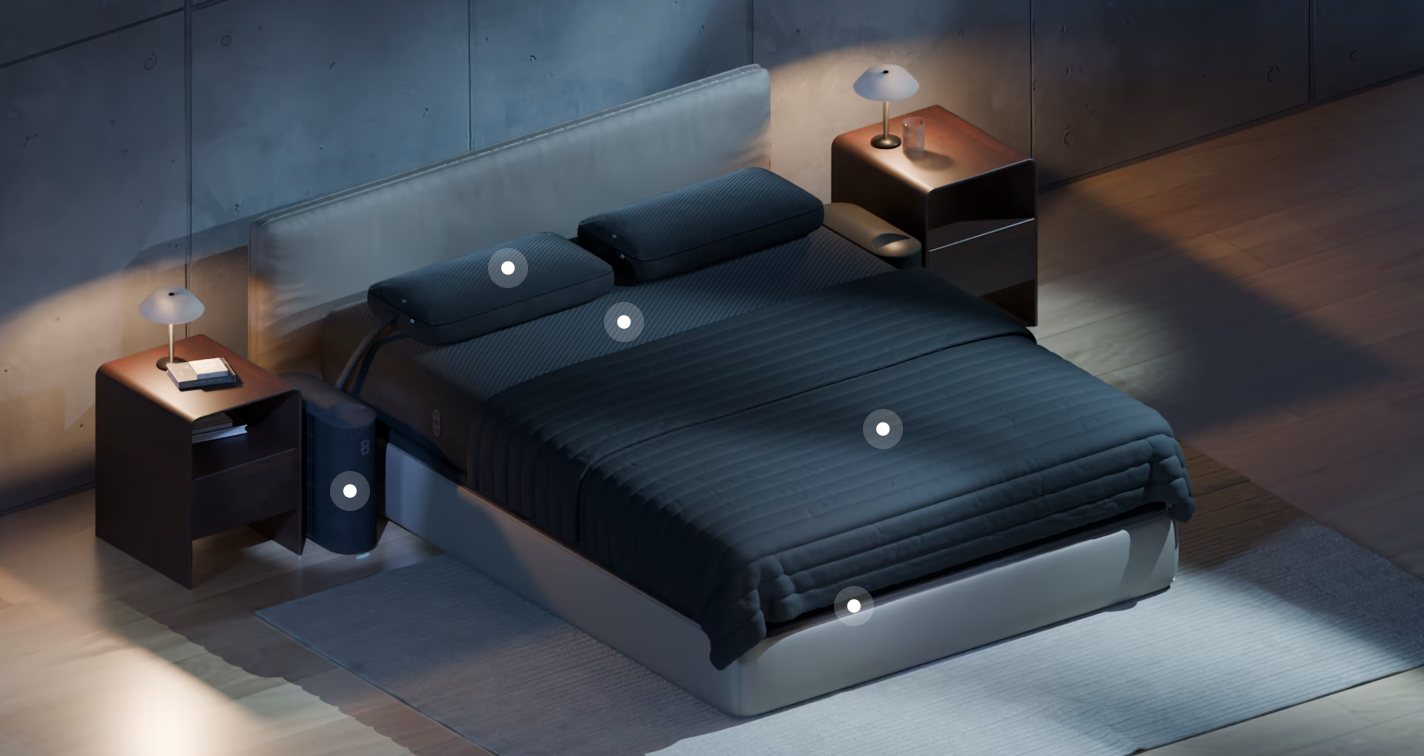
Before getting into how well each system cools, it’s worth talking about what actually shows up at your house and how much space it takes up. These aren’t just mattress covers you can toss on the bed and forget about. Integrating water tubes, electrical pumps, and power cords into a bedroom requires careful setup. I’ll admit, I wasn’t totally prepared for it. Although both brands have upgraded their form factors, their designs remain entirely different, so the space you need, the equipment involved, and the setup process are different too.
Eight Sleep Pod 5
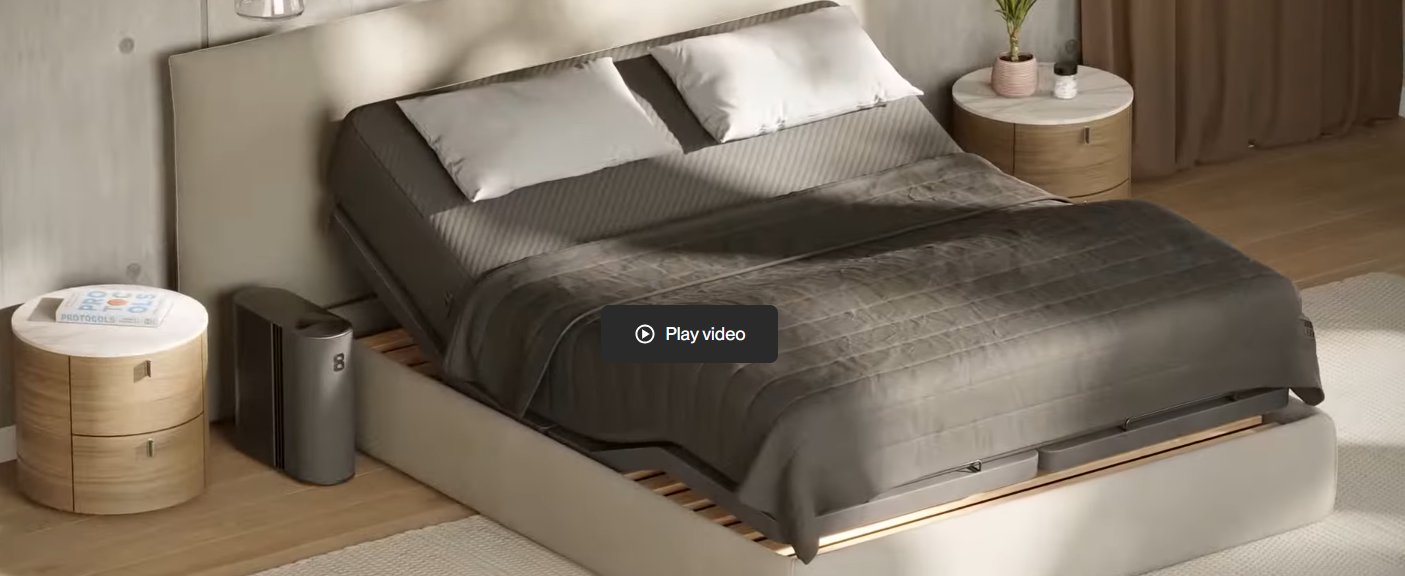
The Pod 5 comes as a unified system, with the Cover and a single, centralized Hub. The one-inch-thick Cover goes over your existing mattress like a fitted cover, so you don’t need to replace the bed you already have.
- The Feel: There is a top layer, underneath which is a dense, flexible matrix of microtubing. Eight Sleep has successfully hidden these channels; you will not feel cords, ridges, or plastic web mesh under a standard sheet. I’m basically the princess from “The Princess and the Pea,” and I still felt nothing.
- The Hub: The central tower is called the Hub. It has an elegant, premium design that honestly doesn’t look like part of a bed system so much as a modern speaker or something equally sleek. Inside are the water reservoir and the components that circulate water through the Cover.
- Footprint: In terms of space, you don’t need as much as you might think because the Cover goes over your existing mattress. That means you can upgrade your sleep without investing in a new mattress—just the Cover and Hub. The Hub does, however, need its own dedicated space on the floor next to your bed. For me, this meant moving one of my bedside tables to make room for it and then convincing the part of my brain that needs symmetry that it was totally okay to have a big black unit on one side of the bed and not the other.
Chilipad 2.0
Chilipad is made by Sleepme. Its closest comparison to the Eight Sleep Pod 5 is the modular, low-profile Chilipad 2.0, which has a redesigned, quieter Dock.
- The Feel: The Chilipad 2.0 uses a zipped, performance-grade cover that doubles as a waterproof mattress protector. This is really quite thin, at about 1/8 of an inch. It, like the mattress cover from Eight Sleep, sits on top of your existing mattress. Inside the Cover is a removable Hydrolayer that slides in and out.
- The Docks: If you buy a dual-zone system for a couple, (which you’ll want if you have different sleep preferences) you’ll get two separate control Docks, one for each side of the bed. So, instead of one big black thing on one side of your bed, you’ll have two smaller black things to find homes for.
- Footprint: While the individual docks are smaller, lower to the ground, and easily slide completely under most modern bed frames, you will have to manage two separate power cords and two water lines if you want whole-bed coverage. That’s kind of a logistical nightmare and honestly, because of where my outlets are, meant running a commercial grade, yellow extension cord around the room like a thin snake.
The Winner on Setup: Eight Sleep Pod 5
Even though the part of my brain that likes symmetry doesn’t love it, the single Hub looks a lot cleaner and is easier to set up than the two modular Docks and separate hoses.
Core Performance and Thermal Efficiency
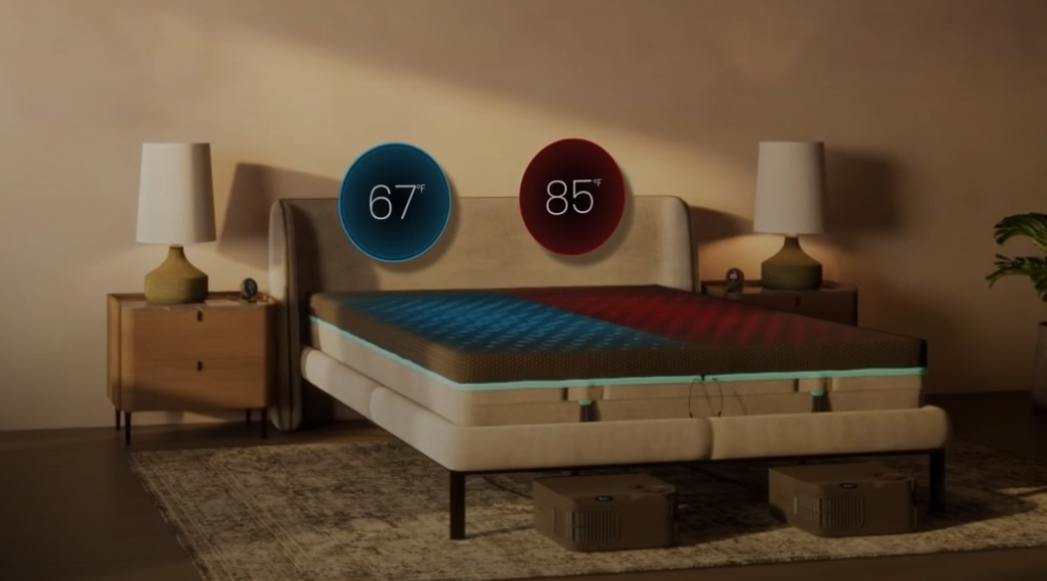
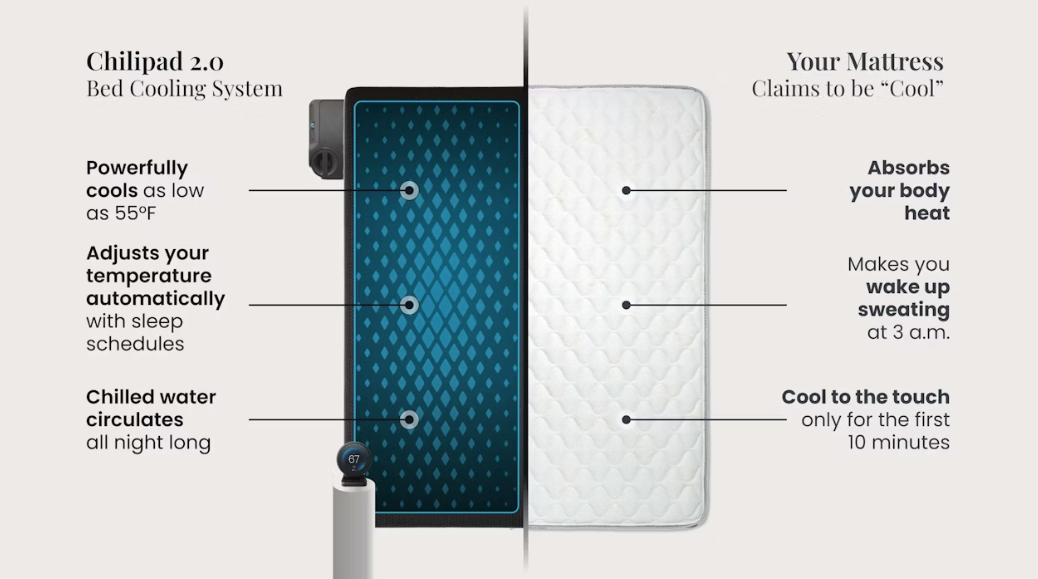
Once everything is set up, of course, the real question is how well each system actually works. Both systems cool as low as 55°F, although Chilipad heats up to 115°F while Eight Sleep tops out at 110°F. However, the way they reach those temperatures and maintain them as your body heat changes is very different, and that’s where I found the biggest gap in performance.
Eight Sleep Pod 5 Performance
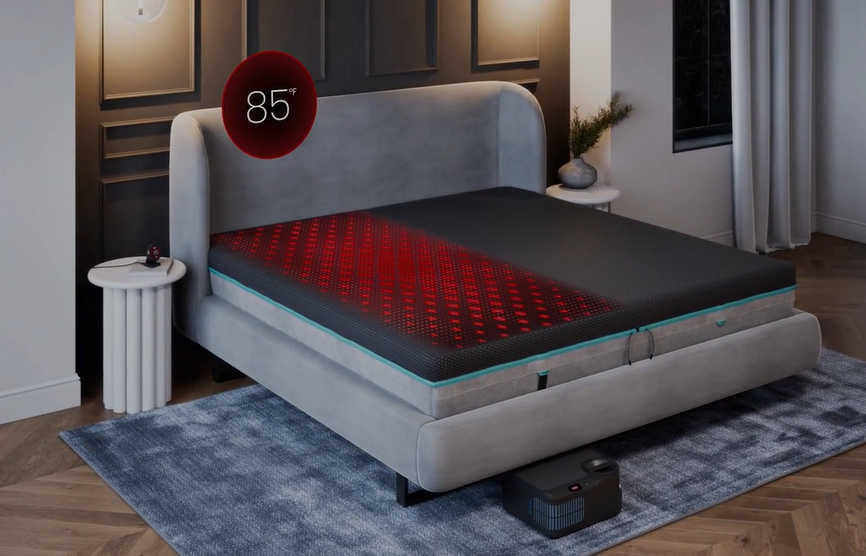
Eight Sleep has a hydro-powered design that, when paired with Autopilot, makes real-time temperature adjustments based on your sleep stages, biometrics, and environment. In my experience, I could feel the surface temperature begin to change within 30 seconds of adjusting it in the app.
The Cover provides active heating and cooling beneath you, while the optional Blanket syncs with it to extend that temperature control above you. Even during a hot California summer, the system kept the bed comfortably cool despite the warm room.
Another thing that really won me over was how quiet it is. Eight Sleep uses fluid rather than forced air to provide quiet, consistent temperature control, and that matched my experience. Even when the system was working hard to keep the bed cool, I heard, at most, a gentle hum that I barely noticed.
Chilipad 2.0 Performance
The Chilipad 2.0’s slide-in Hydrolayer can match the Eight Sleep Pod 5 in terms of temperature range, meaning it can also get down to 55°F if requested.
But the difference is how long it takes. The Chilipad 2.0 is modular, so it can take between 10 and 15 minutes to cool the bed down when the room is already warm (or hot).
The 2.0 version operates quietly, though the two Docks can occasionally produce a slight harmonizing hum. If you’re a musician, it’s kind of neat. If you aren’t, it’s kind of annoying.
The Winner on Performance: Eight Sleep Pod 5
Eight Sleep wins this one because it responds faster, distributes the cooler temperature more evenly across the mattress, and does so in almost complete silence.
The Dual-Zone Partner Question
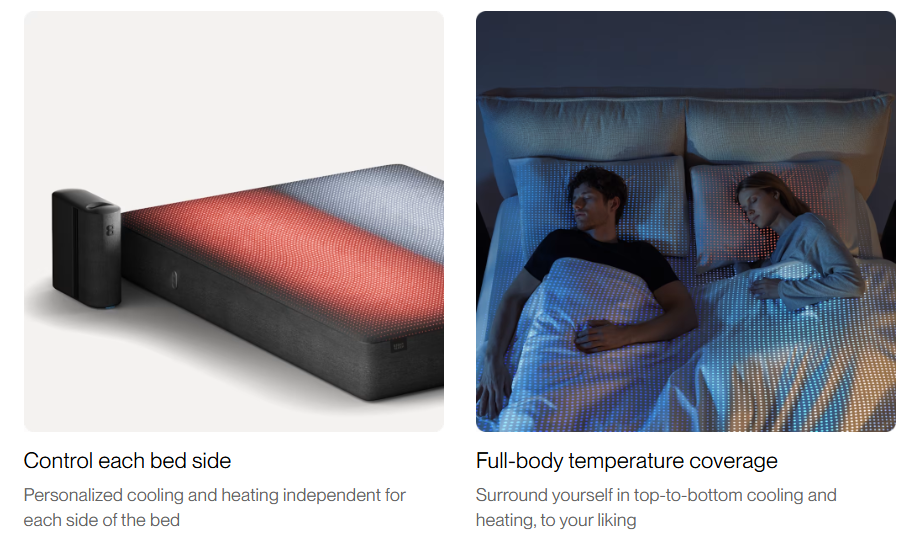
If you share your bed with a partner who has a completely different temperature preference than you do (speaking from experience), dual-zone performance might become one of your biggest considerations.
Eight Sleep’s Approach
With the Pod 5, you are buying a unified ecosystem. You can’t just buy, like, half a mattress cover for half the cost. The single Hub manages a dual-zone system, which means each side of the bed can have its own temperature settings and sleep tracking. If you sleep alone, you can adjust both sides to fit your preferences.
I see it as a pro that Eight Sleep comes with built-in dual-zone support because even when I’m alone, I still sleep across the entire bed.
Chilipad’s Modular Freedom
Sleepme, on the other hand, takes a modular approach that allows you to purchase half a system. If you want to, you can buy a One Sleeper system, such as a Half Queen or Half King, for a lower upfront cost. This comes with a single Dock and temperature control for half of the mattress. If your partner changes their mind a year later, you can buy a Chilipad 2.0 Companion for the other side and set everything up to provide dual-zone support.
The Winner on Dual-Zone Flexibility: Chilipad 2.0
Sometimes it’s best to invest in new tech without having to vote on it as a family. If you’re alone or your partner isn’t interested in the expensive upgrade, Chilipad makes it easy to start with just half of the bed and add a second zone later.
Automation, App Experience, and Smart Features
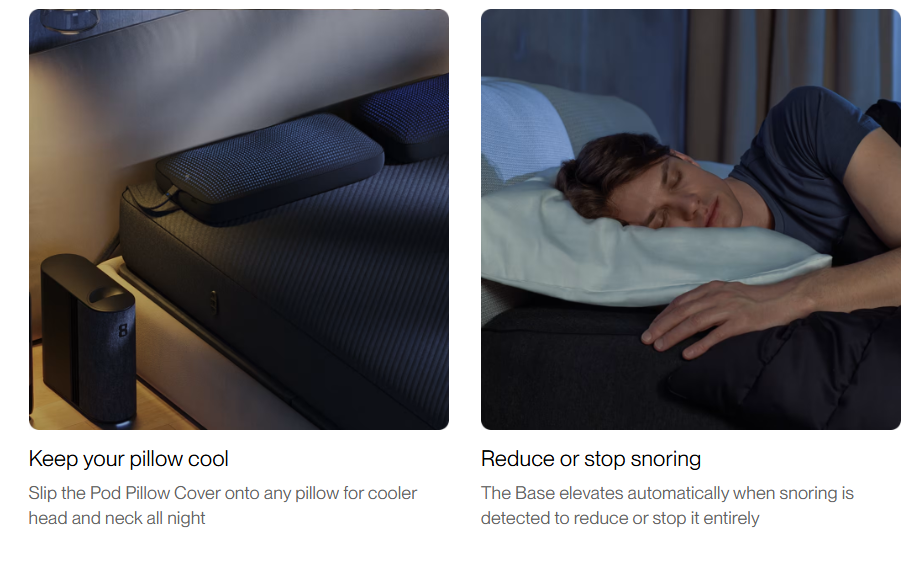
Smart automation sounds great until you wake up shivering at 3:00 a.m. and have to reach for your phone just to warm up the bed. That’s where the difference between Eight Sleep and Chilipad becomes especially important: Eight Sleep prioritizes hands-off intelligence, while Chilipad gives you more direct control.
The Eight Sleep App & Autopilot AI
Eight Sleep’s software ecosystem is highly sophisticated. It has built-in biometric sensors that monitor your heart rate, heart rate variability (HRV), respiratory rate, and movement without requiring a wearable device.
All of the data gathered here gets fed into Autopilot, an AI engine that dynamically adjusts the mattress temperature in real time based on your sleep stage, biometrics, preferences, and environment.
For example:
When you fall asleep, the bed adjusts to your preferred baseline. Throughout the night, it can cool or warm the surface as your sleep stages, body, and surrounding environment change. Toward morning, it can gradually warm the bed based on your wake-up schedule.
You can also benefit from the dual-zone thermal and vibration alarm, which uses gentle temperature changes and a pulsing vibration to wake you up.
The catch? Autopilot and sleep reports still rely on the cloud. If your home internet goes down or the brand’s remote servers experience an outage, Backup Mode allows you to make basic manual adjustments over Bluetooth, but Autopilot’s real-time adjustments pause until the connection returns.
The Chilipad 2.0 Local-First Approach
The Chilipad 2.0 starts with a physical Remote, which I really like. It has a dial you can turn left or right to adjust the temperature, so you don’t have to grab your phone every time you want to make a change. It also has a USB-C port for charging your phone or another device while you sleep.
There’s also a Chilipad app if you want to use it. You can set up customized Sleep Schedules and program temperature changes throughout the night. It’s pretty simple, though, and it doesn’t use AI to adjust the temperature based on your biometrics or sleep stages.
For example:
You can set the Chilipad to bring the temperature down to 65°F at 9:00 p.m. each night and then warm it back up later on. There’s also a Warm Awake feature, so you can skip the loud alarm on your phone and wake up to a gradual temperature change instead.
Crucially, the Chilipad 2.0 doesn’t need a constant Wi-Fi or internet connection to work. Once it’s set up, you can turn on Airplane Mode to shut off the Dock’s Wi-Fi and Bluetooth transmissions while still using the Remote and your saved schedules. So, while it isn’t completely disconnected from everything, it’s a lot less cloud-dependent than Eight Sleep.
The Winner on Automation & App: Tie
I’m calling this one a tie because the two systems are really designed for different kinds of sleepers. If you want a hands-off, AI-driven experience that handles the thinking for you, Eight Sleep is unmatched. If you want reliable physical controls and less dependence on a constant internet connection, Chilipad is the clear choice.
The True Cost of Ownership
This is where the comparison becomes a lot more evident. I loved everything about Eight Sleep until I realized it now requires a subscription for at least the first year (sorry to everyone who remembers when the system came without a required membership). To access Autopilot, sleep tracking, smart alarms, and real-time adjustments, you have to start with, at a minimum, the entry-level Standard plan at $199 a year, or about $17 a month. Heaven forbid you want advanced health metrics, because those will cost you more.
Chilipad 2.0 requires no subscription fees. Every temperature-control feature, scheduling tool, and app function is fully unlocked out of the box. But, of course, the features aren’t quite as awesome.
So, if you look at costs over the span of three years, you get around $3,000 for Chilipad and $3,600 for Eight Sleep. By year five, though, that cost for Chilipad hasn’t changed, but Eight Sleep is up to around $4,000.
As I have to remind myself and my family, though, price alone is not an adequate marker of value. I spend at least one-third of my life sleeping, and it has a direct impact on how I feel the next day, how much energy I have, and what my hormones are telling me to eat. So, if I pay for a monthly subscription that helps me sleep better, I’m going to get that ROI in terms of better energy, more focus at work, improved exercise and diet habits, and so on.
The Winner on Price Math: Chilipad 2.0
Looking at price in a vacuum, Chilipad wins. But remember, that long term cost of membership might translate to a better ROI long term.
The Honest Verdict
Both systems are exceptional thermal tools that can help you stay cool while you sleep, but choosing between them ultimately comes down to your personal preferences.
Buy the Eight Sleep Pod 5 if:
- You want a completely hands-off sleep experience powered by real-time AI adjustments.
- You want detailed sleep data, HRV tracking, and biometrics without wearing a smartwatch to bed.
- You want a small, single-hub bedroom setup that you can use with your existing mattress.
- You are fully comfortable paying a recurring subscription fee for top-tier smart automation.
Buy the Chilipad 2.0 if:
- You want to avoid any ongoing fees and don’t mind sacrificing quality and features to avoid them.
- You only want temperature controls for one side of the bed.
- You want something with a physical, tactile remote you can adjust without opening your screen.
- You prefer a less cloud-dependent system that isn’t contingent on a constant Wi-Fi connection.