Let’s paint a picture. You feel terrible, sick as a dog, and you somehow drag yourself all the way to the store. Now you’re standing in the cold medicine aisle staring at a wall of DayQuil and Mucinex boxes that all seem to promise the same thing.
Wondering how to possibly choose one? Here’s the short answer: Regular DayQuil is built for the whole cold-and-flu package, like fever, aches, and a hacking cough. Regular Mucinex does one job, which is breaking up the gunk in your chest. The catch is that both brands now sell dozens of versions of their products, and a few of them are almost identical. So the smart move is matching the box (not brand) to whatever’s bugging you the most.
Now let’s dive into the long answer.
DayQuil vs. Mucinex at a Glance
| Main Symptoms | DayQuil Option | Mucinex Option |
| Fever, aches, sore throat, and a dry cough | DayQuil Cold & Flu | Mucinex Rapid Clear Pain, Headache & Cough |
| Thick mucus in your chest | None | Mucinex |
| Chest mucus plus a cough that won’t quit | DayQuil Cough DM and Congestion | Mucinex DM |
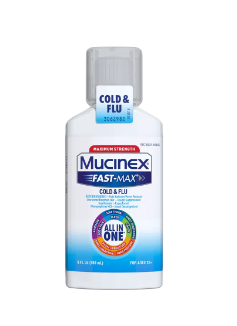
| Feeling awful all over | DayQuil SEVERE | Mucinex Fast-Max Cold & Flu (All-in-One) |
| A completely blocked nose | None | Mucinex D |
| A cold when you have high blood pressure | DayQuil High Blood Pressure | Mucinex or Mucinex DM |
| Not wanting to dose every few hours | DayQuil Intense Flu | Mucinex, Mucinex DM, or Mucinex D |
Important! These are starting points, not prescriptions. Ingredients differ between versions, so check the Drug Facts label on the box you pick up. If you’re still unsure, chat with your doctor.
Why the Choice Feels So Confusing
It’s not you, really. These aren’t two products anymore; they’re two whole families. Mucinex’s own site lists close to 70 products, and DayQuil has around 20 once you count the combo packs.
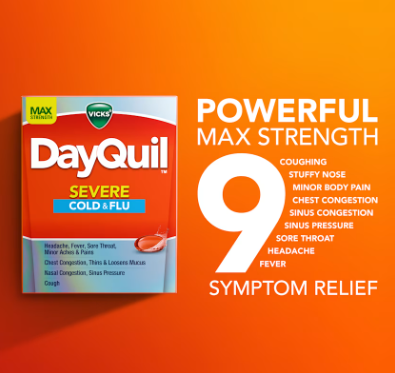
The trouble is that the same name can sit on very different medicine. Regular DayQuil Cold & Flu has nothing for chest mucus, but DayQuil SEVERE does. Plain Mucinex has just one ingredient, while Mucinex Fast-Max Cold & Flu (All-in-One) has four.
Here’s a twist: DayQuil SEVERE and Mucinex Fast-Max Cold & Flu (All-in-One) contain the same four active ingredients in the same amounts per dose. They’re basically twins in different packaging. Even then, the daily limits on the labels differ, so always follow the box you’re actually holding.
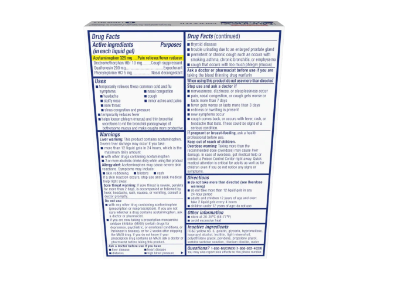
The fix is simple. Flip the box over and find the “Active Ingredients” line in the Drug Facts panel. That tells you more than anything on the front of the box. Here’s what’s inside the most common versions.
| Product | Acetaminophen(For Fever and Pain) | Dextromethorphan (For Cough) | Guaifenesin(For Mucus) | Decongestant(For Stuffy Nose) |
| DayQuil Cold & Flu | Yes | Yes | No | Phenylephrine |
| DayQuil SEVERE | Yes | Yes | Yes | Phenylephrine |
| DayQuil Cough DM + Congestion | No | Yes | Yes | Phenylephrine |
| DayQuil High Blood Pressure | Yes | Yes | No | None |
| DayQuil Intense Flu | Yes | Yes | No | None |
| Mucinex | No | No | Yes | None |
| Mucinex DM | No | Yes | Yes | None |
| Mucinex D | No | No | Yes | Pseudoephedrine |
| Mucinex Fast-Max Cold & Flu (All-in-One) | Yes | Yes | Yes | Phenylephrine |
| Mucinex Rapid Clear Pain, Headache & Cough | Yes | Yes | No | None |
What Each Ingredient Does and How Well
Once you know these five names, you can decode almost any cold medicine on the shelf.
Acetaminophen brings down a fever and takes the edge off headaches, body aches, and a sore throat. It’s the same thing that’s in Tylenol, and it reliably does what it says.
Dextromethorphan quiets the urge to cough. It’s most useful for a dry, tickly cough that keeps you up or interrupts your day.
Guaifenesin thins mucus so it’s easier to cough up. It’s the whole point of the original Mucinex.
Phenylephrine is the decongestant in many products from both brands. In 2023, an FDA advisory panel voted unanimously that it doesn’t work as a decongestant when taken by mouth. In November 2024, the FDA proposed removing it from over-the-counter pills for that reason. That’s about effectiveness, not safety, and these products can stay on shelves until a final decision takes effect.
Pseudoephedrine is the oral decongestant that does work for most people. You’ll find it behind the pharmacy counter, and you’ll need to show your ID, with limits on how much you can buy. The only product in our roundup that contains it is Mucinex D.
Which One to Grab, Symptom by Symptom
Start with whatever is making you most miserable right now. Here are a few scenarios and what we recommend.
You have a fever, aches, and a dry cough.
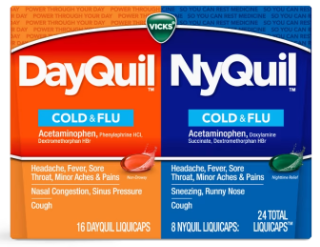
This is DayQuil’s home turf. Regular DayQuil Cold & Flu covers all three. On the Mucinex side, Rapid Clear Pain, Headache & Cough does the same job without a decongestant.
Your chest feels full of gunk.
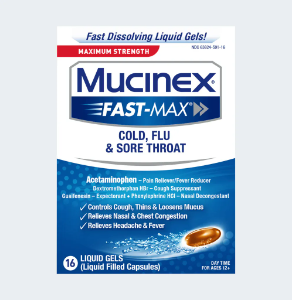
This is where plain Mucinex shines. It’s just guaifenesin, so it’s aimed squarely at loosening mucus, and DayQuil doesn’t sell a mucus-only version. One tip: If you’re coughing stuff up, that cough is doing useful work, so you may not want to shut it down with a cough suppressant.
You have mucus plus a cough that won’t quit.
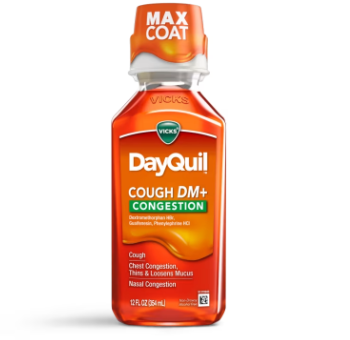
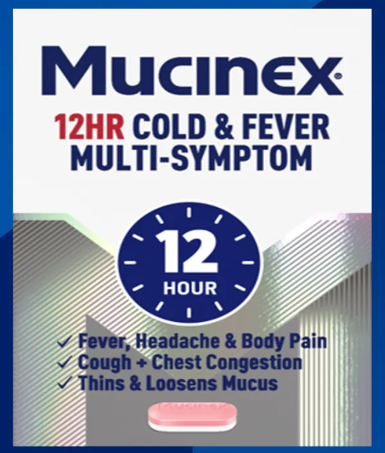
Mucinex DM pairs guaifenesin with dextromethorphan, and it lasts 12 hours. DayQuil Cough DM + Congestion has the same two, plus phenylephrine. Pick Mucinex DM if you’d rather skip the decongestant you don’t need.
You feel awful all over.
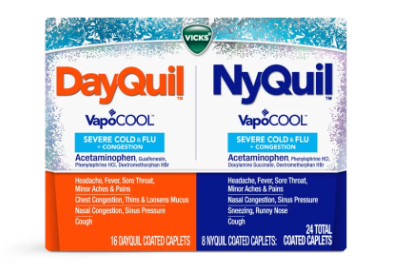
Fever, aches, cough, and chest congestion all at once? Either DayQuil SEVERE or Mucinex Fast-Max Cold & Flu (All-in-One) will cover it. Choose by price, format, or whatever your store has in stock.
Your nose is completely blocked.
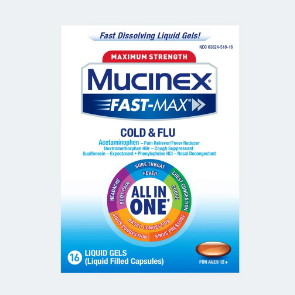
Honestly, neither brand’s standard formula is great here. Mucinex D works, but you’ll have to ask for it at the pharmacy counter. A medicated nasal spray is likely the best option, as long as you don’t use it for more than three days, or your stuffiness can bounce back worse.
You have high blood pressure.
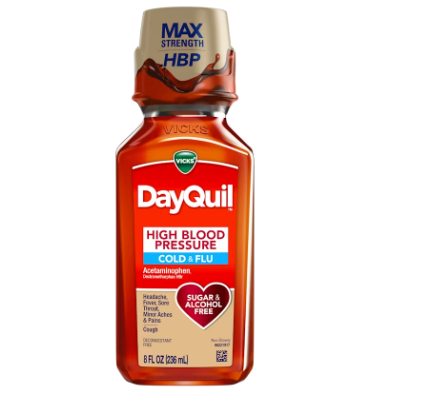
Decongestants can raise blood pressure, so they’re often off the table. DayQuil High Blood Pressure skips the decongestant entirely, and so do plain Mucinex and Mucinex DM, but it’s still worth a quick word with your pharmacist.
How Often You’ll Take It and What It Looks Like
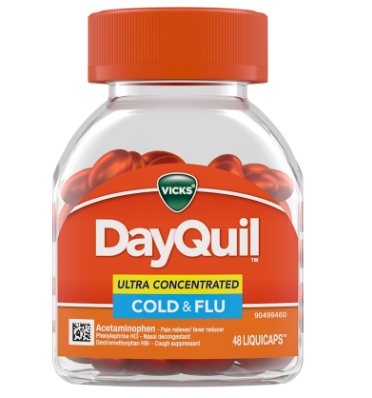
If you’re trying to get through a workday, this might decide it for you. Most DayQuil products are taken every four hours, with a limit of four doses a day. DayQuil Intense Flu stretches that to every six hours. There’s no 12-hour DayQuil.
The original Mucinex, Mucinex DM, and Mucinex D are 12-hour tablets, so one in the morning can carry you to dinner. Just don’t assume every Mucinex lasts that long. Fast-Max, Sinus-Max, and Rapid Clear are all every-four-hours products. And don’t crush or chew the 12-hour tablets; that wrecks the slow release of the good stuff.
Format-wise, DayQuil comes as liquid, LiquiCaps, caplets (including the minty VapoCOOL ones), and Hot Remedy, a powder you stir into hot water. Mucinex has tablets, caplets, liquid gels, and liquids, plus chewables and dissolving granules in its kids’ range.
Speaking of kids, both brands make children’s versions. Never give a child an adult formula, and check the age and dosage information on the box first.
Can You Take DayQuil and Mucinex Together?
Sometimes, but only if the ingredients don’t overlap. Different brand names don’t mean different medicine.
The cleanest pairing is regular DayQuil Cold & Flu with plain Mucinex. DayQuil brings acetaminophen, dextromethorphan, and phenylephrine, and Mucinex adds only guaifenesin, so nothing doubles up. Run it past a pharmacist before you try it, though.
Most other combos do double up. DayQuil SEVERE plus Mucinex means two doses of guaifenesin. DayQuil plus Mucinex DM doubles the cough suppressant. DayQuil plus any Mucinex Fast-Max product doubles at least one ingredient, and often several.
Watch the nighttime trap, too. NyQuil and Mucinex Nightshift both contain acetaminophen, so a day-and-night routine can add up fast. They also contain an antihistamine that makes you drowsy, so save them for bedtime and don’t drive after a dose.
When to Ask a Professional

A two-minute chat with your pharmacist or doctor can save you a lot of trouble. It’s worth having if:
- You have heart disease, high blood pressure, thyroid problems, diabetes, or trouble peeing from an enlarged prostate. Decongestants can make these worse.
- You take an antidepressant called an MAOI or stopped one in the last two weeks. Combining MAOIs and dextromethorphan can cause a serious reaction, so avoid cough medicines with that ingredient.
- You have liver disease, take the blood thinner warfarin, or have three or more alcoholic drinks a day. Acetaminophen can be harder on your liver if you drink regularly or have liver disease, and it can affect how warfarin works, so ask how much is safe for you.
- You’re pregnant or breastfeeding. Some medicine ingredients may not be suitable during pregnancy or breastfeeding, so check with your doctor before taking them.
These medicines ease symptoms, but they don’t cure the cold or flu itself. See a doctor if you have trouble breathing or chest pain, a fever lasting more than three days, or a cough lasting more than a week. The same goes for a cough that comes back with a fever, rash, or headache that won’t go away, or if you start feeling better and then get worse.
Read the Back of the Box, Not the Front
DayQuil and Mucinex aren’t really rivals. They’re more like two cooks working off the same handful of ingredients, just mixed in different combinations. The DayQuil family is your best bet when fever, aches, and a cough are ganging up on you, while the Mucinex line is the one for a chest full of mucus or a terribly stuffy nose. And for the days when everything hits at once, both brands have a heavy-duty option that does the job.
So next time you’re stuck in the medicine aisle, skip the brand debate. Figure out what’s bothering you most, flip the box over, and buy the one with what you need. Then go home and rest.