

Reaching the point where you realize you need to start testosterone replacement therapy (TRT) likely marks the end of a long and time-consuming “figuring out” period for you. It can be an exhausting process, both physically and mentally, to get to the root cause of symptoms like dysregulated mood, fatigue, reduced libido, brain fog, and more, and having finally found the answer, you’ll be eager to get started.
While the worst is most certainly behind you, determining the best TRT program for you can be a significant challenge in itself. There are many different routes you could take, and because this therapy requires meticulous attention to detail, you never want to simply pick the first clinic you come across.
Often one of the most difficult parts of treatment to wrap your head around is the cost, as this is something that factors into each step of the process, due to differences in types of testosterone and personalized programs. Let’s look at what today’s options offer and compare costs so you can start your TRT journey off on the right foot.
The Different Delivery Methods Explored

The first thing to consider is the delivery method, as it affects not only how you’ll experience your TRT program but also what you pay for it. Let’s get into the main methods.
Injections
Injections are the most common delivery method and are usually the cheapest. With this technique, the testosterone is administered by needle into the muscle or subcutaneous tissue (the deepest layer of the skin). In addition to being low cost, this is a nice and simple way to receive your TRT, and you’ll reach peak concentration in about 24 to 72 hours.
It isn’t for everyone, though. Many people are uncomfortable with injections, so you may prefer a different option.
Gels or Creams
Another popular option is gels or creams. Applied topically, they absorb quickly and are easy to use. They’re a less-invasive alternative to injectables, too.
Topicals are a little more expensive than injections, however, and it’s important to be aware that it’s possible to transfer this form of testosterone to other people via skin-to-skin contact. You’ll need to be extra careful when you’re around others right after use.
Oral Tablets
You can also take testosterone in oral form, therefore bypassing any topical or injectable delivery method entirely. Even if you’re fine with the idea of injections, there’s no denying the convenience of simply popping a pill. Troches are another oral option; they dissolve in the mouth rather than being swallowed.
Oral formulations have come a long way. There used to be concerns that oral testosterone could damage the liver, but due to modern variants being largely absorbed via the lymphatic system, the oral route is now much less liver-toxic. That said, tablets are more expensive than injectables and topicals, so that added convenience comes at a cost.
Pellets
Pellets are the most unique method in that they’re placed directly under the skin (usually around the hip by a healthcare professional) for sustained pulses of testosterone. Rather than having several injections over a set period of time, for example, testosterone is delivered several times automatically over a set time frame.
That being said, pellets are the most convenient treatment option because they only need to be placed every three to six months, but they’re also generally the most expensive. The upfront cost leans high, considering you’re paying for what will amount to many treatment sessions in the end.
The Types of Testosterone in a Nutshell
Not all testosterone is the same, and what you’re prescribed depends on your plan and the clinic’s preferences. Keep in mind the type of testosterone you take also affects the cost on top of which delivery method you choose.
For brevity’s sake, we won’t go through the individual nuances of the different types in this article, but this table gives at least some idea of each before you talk to a provider:
| Type of Testosterone | Description | Frequency | Cost |
| Testosterone Enanthate | Long-acting injectable form that slowly releases into the bloodstream | Once or more per week | $ |
| Testosterone Cypionate | Marginally slower-release long-acting injectable than enanthate, but largely the same | Once or more per week | $ |
| Testosterone Gel or Cream | Topical that absorbs into the bloodstream | Daily | $$ |
| Testosterone Pellets | Small pellets that are inserted under the skin at the hip or buttock for slow release | New pellet implanted every three to six months | $$$ |
| Testosterone Undecanoate | Very long-acting injectable form; remains in the body considerably longer than enanthate or cypionate. | Injection every 10–12 weeks or oral tablet twice daily | $$$–$$$$ |
*Frequencies listed above are estimations based on the majority. Individual cases may vary.
TRT Options to Consider
Now that you’ve armed yourself with the necessary questions to ask and know what forms and delivery methods exist out there, it’s time to take a look at which companies you should consider. You can always get TRT from your GP surgery or local hospital, but today, the easiest and most tailored approach is generally found online.
There are many telehealth providers to choose from, but here are the options we think you should investigate.
| Provider | Delivery Methods | Sign-Up/Initial Cost | Monthly Cost | Medication Cost |
| Lifeforce | Oral, injection, or topical | First month $25 | $99 (+ $80 for TRT) | Varies per pharmacy |
| Male Excel | Oral, injection, or topical | $99 | $99 | $95–$132 every two months |
| Hone Health | Injection, topical, or troche | $45 (initial labs) | $135 | From $28 per month |
Lifeforce

With Lifeforce, the initial evaluation starts at $25 for the first month (which includes labs, a clinical consultation, and a personalized plan) and then changes to $99 each month for ongoing assessment. Then add $80 to that for TRT. Your medication is billed separately through their licensed pharmacy program, which selects a pharmacy based on your required medication and location, and you can choose between oral, injection, or cream options.
Lifeforce offers a good bang for your buck and is particularly transparent, with clear breakdowns of what you’re paying for and why. You receive 1:1, clinician-led care that includes a personalized treatment plan, making their solution ideal for those who want to be walked right through the process with clear guidance.
Male Excel

Male Excel is another solid option for those looking for a straightforward online TRT solution.
Similar to Lifeforce, you get the option of oral, topical, or injectable testosterone, and you pay for it separately. Depending on the delivery method you choose, the cost ranges from $95 to $132 every two months (you get a 60-day supply with each order). You then pay $99 per month for your monthly membership, which grants you access to perks like unlimited messaging with your support team.
Male Excel doesn’t give you 1:1 support like you get with Lifeforce, but it’s great for those who want something that’s no-frills and low effort.
Hone Health
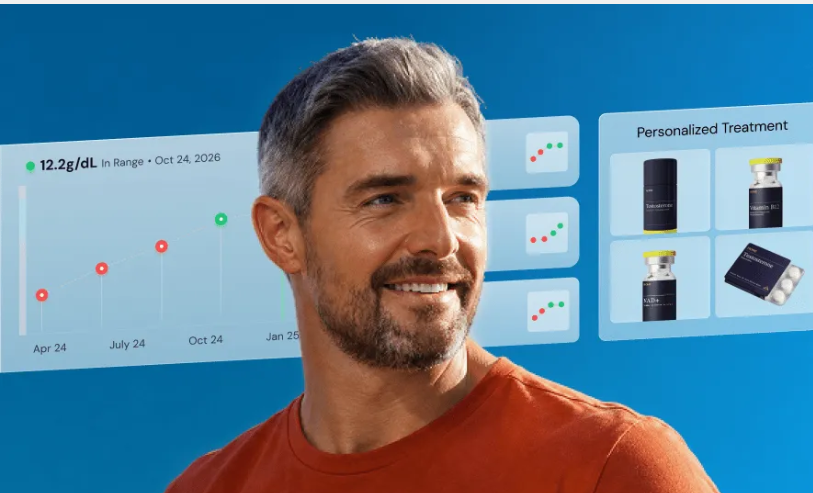
Hone Health offers an introductory package for $45, which includes an initial panel of biomarkers, including testosterone. That package also includes a clinical consultation and a personalized plan. You then pay for monthly TRT in either injectable form ($28 per month), troches, or a cream (both $60 per month).
After the initial testing, the monthly membership becomes $135 per month. There’s also a premium plan you can explore that includes extensive testing of 50+ biomarkers and a more in-depth general health workup.
Hone Health is a great option for those who want a more comprehensive health assessment alongside their TRT.
Three Questions to Ask Regarding Cost

No matter how good a deal seems, you should always vet the provider by asking a few key questions. If a company can’t answer your concerns satisfactorily, avoid it; it doesn’t matter how attractive the price is. Here’s what to ask:
1. What are the main differences between the programs offered?
It’s easy to get lost reading the descriptions of each plan a company offers, so having a representative personally explain things to you can help a lot. Ask them to break down the main differences across plans, and make your own notes to compare against other brands later.
2. How often will I need to be tested?
Testing frequency varies per provider. Some simplify the process with minimal testing, while the benefits of a different brand hinge on a deep-dive approach. Some companies offer TRT only as part of an all-encompassing plan, including testing of several other biomarkers and more complete health profiling. You’ll need to weigh the pros and cons of testing frequency against your own lifestyle and values.
3. What is the total price?
Providers can be sneaky in their marketing when it comes to price breakdowns, so once you’ve reviewed the information on your own, ask the representative exactly how much the service will cost in total, including every applicable cost and fee. That single value will be a vital factor when you’re comparing platforms, and you don’t want to get lost in a ton of numbers.
A Note on Insurance
Unfortunately, telehealth companies like those listed above are generally out of network, meaning they don’t have negotiated rates with major insurance companies. If you’re struggling to afford treatment, though, many of them do offer health savings account (HSA) and flexible spending account (FSA) payment options, which can help.
HSAs and FSAs let you set aside pre-tax money to fund eligible healthcare expenses. HSAs allow you to roll over funds year to year. FSAs are facilitated by your employer, and you’ll usually need to spend all of the money in your plan within the year, or you’ll lose it (though there’s sometimes a grace period).
Using these kinds of accounts can reduce the financial burden of therapy and mean you don’t have to shoulder the full cost of out-of-network treatment. If you’re interested in this option, your provider can explain how it works in detail.
Choosing the Best Service for You

While the costs involved in TRT can seem complex at first, they’re relatively straightforward when you break things down one step at a time.
No matter what package a company offers, your main goals should be to decide which delivery method you’re most comfortable with and how much everything will cost you over a year of treatment. TRT isn’t something you start and stop, so choosing a service you can rely on long term is imperative in your journey to a better quality of life.
Related Posts:






Linden is a keen fitness junkie and loves showcasing nutrition’s important for anyone starting a fitness journey. After his training in Sports Nutrition, Linden loves offering health recipes and workout routines for people of all fitness levels and backgrounds. He believes no matter how old you are or how far you have to go, fitness should be fun!