

Cooling products for your mattress usually get grouped together, but they actually fall into three different categories.
First are cooling mattress pads, which are breathable materials that sit on top of your existing mattress to reduce heat buildup. They don’t replace your bed and usually provide the most limited level of temperature control.
Second are cooling beds, which are full mattress replacements with cooling technology built directly into the bed itself. These systems are more consistent through the night, but they require replacing your entire mattress and come at a much higher cost.
Third are devices like the Eight Sleep Pod, which installs like a mattress pad but functions more like an active cooling system. It sits on top of your existing mattress rather than replacing it, but uses water-based temperature control to actively adjust throughout the night.
Here’s how the three options compare across the main factors people tend to weigh when choosing between them:
| Passive Cooling Pad | Active Cooling Bed | Eight Sleep Pod Cover | |
| Cooling Mechanism | Phase-change materials or gel layers absorb and dissipate heat | Built-in refrigeration or water circulation, part of the mattress system | Water-based active cooling via a bedside hub, fits over any existing mattress |
| Temperature Control | None, reacts to heat but doesn’t regulate it | Programmable, maintains a set temperature | 55°F–110°F, adjusts continuously via Autopilot based on biometrics and environment |
| Lasts The Full Night | Often fades as materials absorb heat and saturate | Yes, consistent throughout | Yes, adapts dynamically across sleep stages |
| Dual-Zone | No | Available on select models at higher cost | Standard, each side runs independently |
| Sleep Tracking | None | Varies by brand; basic on most models | Heart rate (99% ECG accuracy), HRV, breathing rate, sleep stages. No wearable needed |
| Snore Response | None | None on most models | Automatic head elevation, clinically shown to reduce snoring by up to 45% |
| Replaces Your Mattress | No | Yes | No. Fits over your existing bed |
| Setup | Minimal | Full mattress replacement and delivery | One-time hub installation and water connection |
| Price Range | $30–$300+ | $2,000–$5,000+ | One-time upfront cost plus an ongoing annual subscription required; installs over your existing mattress without replacing it. |
The table covers the headline differences. The real trade-offs show up when you look at how each one holds up across a full night.
What a Cooling Mattress Pad Delivers

The cooling pad category is a huge one. There are tons of options in many price ranges to check out.
At the entry level, you have toppers made with phase-change materials, specialty foams or gel-infused layers that absorb body heat as you sleep. They work by drawing warmth away from your body into the material itself, creating a cooler surface feel without any active mechanism.
Further up the range, water-based pad systems circulate cooled water through channels in the pad layer, offering more consistent temperature control than passive materials alone. These are closer to active systems, but most still operate at a fixed temperature you set rather than responding to how your body or the room changes across the night.
The practical appeal of both is the same: you keep your existing mattress, setup is minimal, and the cost is substantially lower than a full cooling bed. For mild heat sensitivity, or for someone who runs warm but not dramatically so, a quality cooling pad can be enough.
Cooling Pad Durability Limitations
Passive PCM materials absorb heat until they hit their limit. Once that happens, the cooling starts to fade. Some pads last longer than others, but every PCM product runs into the same issue eventually because it’s just how the material works.
That becomes a bigger problem if you tend to wake up overheated later in the night instead of right when you fall asleep. A pad that cools best during the first hour or two may not still be working when you actually need it most.
Water-cooled pads usually hold their temperature longer, but they still don’t adjust as your body changes through the night. The setting you choose at 10 p.m. is the same one you’ll have at 3 a.m., even though your sleep temperature naturally shifts over time.
What a Cooling Bed Delivers
A cooling bed solves the biggest problem cooling pads run into, which is consistency. Instead of relying on a layer that slowly loses its cooling power overnight, the temperature control is built directly into the mattress itself. That means it can keep the bed at the same target temperature all night instead of fading after a few hours.
Different models do this in different ways. Some move cooled air through the mattress, while others circulate water like a cooling pad system built into the bed. Either way, the goal is the same: keeping the sleep surface consistently cool from bedtime to morning.
The downside is that it’s a much bigger commitment. You’re not just adding something to your current setup, you’re replacing your mattress completely, even if the one you already have is comfortable.
Cooling beds also cost a lot more, with most quality models starting around $2,000 and going up from there depending on features like wider temperature ranges or dual-zone control.
And if you share a bed, dual-zone cooling is something worth checking carefully. Some mattresses let each side run at a different temperature, but that feature isn’t included on every model and usually costs extra.
Most cooling beds are also pretty focused on temperature control. Features like sleep tracking, automatic adjustments based on your body, or snore response usually aren’t part of the package. So if you’re looking at a cooling bed, it helps to think of it as a mattress that stays consistently cool all night, not necessarily a full smart sleep system.
What Might Help You Make a Decision
A lot of this decision comes down to your current mattress. If your mattress already needs replacing and cooling is high on your priority list, investing in a cooling bed makes more sense because you’re solving two problems at once. But if your mattress is still comfortable and fairly new, replacing the whole thing just for cooling can feel like a much bigger commitment.
It also helps to think about when you actually get too hot. Passive cooling pads usually work best early in the night, when you first get into bed. If that’s when overheating happens for you, a good pad may be enough. But if you’re waking up hot at 3 a.m. after hours of heat building under the blankets, passive cooling may not last long enough to help.
Active systems are designed more for maintaining temperature through the entire night instead of giving short-term relief upfront.
If you share a bed, your partner’s sleep temperature matters too. A lot of couples end up looking at cooling systems because one person sleeps hot while the other sleeps cold.
Basic cooling pads usually cool the entire bed at one temperature, which doesn’t really solve that problem. Dual-zone systems can, but they aren’t available on every product and often cost more. If separate temperature control matters to you, it’s something to treat as a must-have instead of assuming every system includes it.
Don’t Forget the Budget
Budget also changes the equation when you’re hunting for a new sleeping solution.
A cooling topper or pad is a relatively low-risk purchase. If it helps a little but doesn’t completely fix the problem, you’re usually only out a couple hundred dollars.
A cooling bed costs much more, so the decision becomes less about “Can I afford it?” and more about “Am I confident temperature is actually the reason I’m sleeping poorly?”
Should Your System Adapt or Maintain?
The last thing to think about is whether you want a system that maintains a temperature or one that adapts over time.
Most cooling products work by holding whatever temperature you manually choose. That can work well, but your body temperature naturally changes from night to night depending on stress, illness, workouts, hormones, and other factors you probably aren’t tracking closely.
More advanced systems try to adjust automatically based on what your body is doing in real time. The difference between a system that reacts to you and one that stays fixed until you change it yourself is hard to decide on if you’re unsure where to start.
When the Eight Sleep Pod Cover Might Make Sense
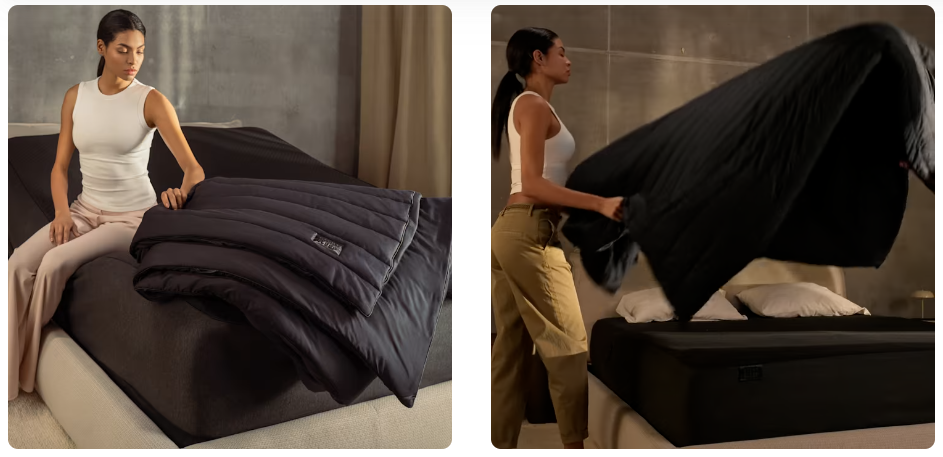
The Eight Sleep Pod Cover sits somewhere between a cooling pad and a cooling bed.
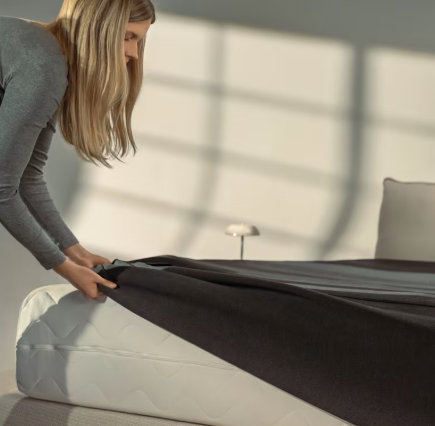
Like a pad, it fits over your existing mattress, so you don’t need to replace the bed you already have. But unlike most cooling pads, it uses an active water-based system that keeps adjusting temperature throughout the night instead of slowly losing cooling power over time.
The system connects to a bedside hub and can heat or cool the bed between 55°F and 110°F. Instead of holding one fixed temperature all night, it’s designed to adjust while you sleep based on different data points, including your sleep stages, room temperature, weather conditions, and your previous sleep patterns.
That adaptive system is part of Eight Sleep’s Autopilot feature, which is included through a paid subscription. The subscription is required for features like automatic temperature adjustments, detailed sleep tracking, and health insights. Without it, the Pod Cover still works for manual temperature control, but many of the advanced features are locked behind the membership.
Dual-zone temperature control comes standard, which means each side of the bed can run at a different temperature. That can matter for couples who sleep at very different temperatures and don’t want to compromise on one setting.
Eight Sleep Nighttime Sleep Tracking Features
The cover also includes built-in sleep tracking sensors, so there’s no wearable device required.
It tracks metrics like heart rate, HRV, breathing rate, and sleep stages throughout the night. Eight Sleep says its heart rate tracking measures at 99% accuracy compared to ECG devices. Over time, the system builds a baseline for your normal sleep and recovery patterns, then flags changes that may stand out from your usual trends.
For sleepers whose nights get broken by snoring, the adjustable base detects it and raises head elevation automatically to help open the airway. Eight Sleep’s data shows this reduces snoring by up to 45%. Most people don’t expect that from something that installs like a mattress cover, but for anyone who’s lost sleep to it, it matters.
Who Should Buy an Eight Sleep Pod Cover?
The Pod Cover isn’t the right answer for every hot sleeper.
If a passive pad has been solving the problem adequately, there’s no case for escalating. If you’re already shopping for a new mattress and cooling is the main requirement, a dedicated cooling bed might be the more direct fit.
Where the Pod Cover stands out is for people who want active temperature control and sleep tracking without replacing a mattress they already like. It’s also one of the few options that combines adaptive cooling, dual-zone control, and biometric tracking in a system that installs more like a mattress topper than a full bed replacement.
Cooling Pads vs Cooling Beds: Which Option Actually Makes Sense for You?

Cooling pads and cooling beds are built for different kinds of sleepers.
A cooling pad is usually the simpler and more affordable option. It’s easy to set up, doesn’t require replacing your mattress, and can work well if you mainly get too hot when first falling asleep. The biggest downside is that many passive materials lose their cooling effect over time, and even active systems usually stay at one fixed temperature unless you adjust them manually.
Cooling pads are the lower-commitment entry point, good for mild heat sensitivity, easy to set up, and effective for sleepers whose problem is concentrated early in the night. Their limitation is physical: passive materials saturate, and even active pad systems hold a fixed temperature rather than responding to what’s happening while you sleep.
Cooling beds are designed to solve that consistency problem by keeping the mattress at a steady temperature all night long. For people who regularly wake up overheated in the middle of the night, that can make a noticeable difference. But they also come with a much bigger commitment since you’re replacing your entire mattress, not just adding a layer on top of it.
The Eight Sleep Pod Cover falls somewhere in the middle. It installs like a mattress cover, but it offers features that go beyond most standard cooling beds, including active temperature adjustments, dual-zone control, sleep tracking, and snore response. It also requires an ongoing subscription to access features like Autopilot and advanced sleep insights, which is an important part of the overall cost to consider.
Honestly, the best option depends on what’s actually disrupting your sleep, so ask yourself or your partner what makes the most sense, and give one of these options a try! Luckily, most brands have return policies, so you really can’t go wrong with a trial period.
Related Posts:






Alt Protein Team is a team of professionals and enthusiasts committed to bringing you the most up-to-date information on alternative protein, health and wellness, workouts, and all things health-related. We’ve reviewed a lot of products and services so you don’t have to guess when you spend your hard-earned money on them. Whether you want to shed some pounds, build lean muscle or bulk, we can help you figure out what you need to do and what you need to have to achieve your goals.