

If you’re searching for the best rehab in Maryland, the good news is that there are many different facilities that can offer you or your loved one the help you need. The right facility depends on a combination of factors that are different for everyone, but often include the level of care you need, whether you have co-occurring disorders, what your insurance will cover, and where the facility is located.
When I was looking for treatment for myself, I knew I needed somewhere that handled dual diagnosis issues and that took my insurance. I ended up going somewhere out-of-network, which increased costs significantly, so it’s important to keep that in mind as well.
Maryland has multiple strong options spread across Southern Maryland, Central Maryland, and the Eastern Shore, so there’s a good chance that the right fit for you or your loved one exists.
What Should You Look for in a Maryland Rehab?
Before naming any facilities, it’s worth walking through the criteria that actually matter. Websites all tend to describe their programs with similar language. Most say that they offer continuity of care, compassionate staff, personalized treatment, dual diagnosis care, and a peaceful environment. While this might be true, it doesn’t really help you narrow down your list. Looking at the following factors can help you make the decision that’s best for you or your loved one.
Level of Care
Programs vary widely in what they actually provide. When comparing facilities, look at whether a program offers:
- Medical detox
- Residential treatment
- Partial hospitalization (PHP)
- Intensive outpatient treatment (IOP)
- Standard outpatient treatment
- Sober living or extended care
- Virtual treatment where appropriate
Someone who needs detox from alcohol or benzodiazepines, where withdrawal can be medically dangerous, should not compare programs the same way as someone looking only for outpatient support.
Dual-Diagnosis Treatment
Many people entering treatment are dealing with more than substance use. Depression, anxiety, post-traumatic stress disorder (PTSD), and other mental health conditions are often present alongside addiction. Treating one without treating the other is unlikely to be nearly as effective as treating them together.
If you or your loved one is dealing with this scenario, look for programs that offer genuinely integrated treatment for substance use and mental health conditions, and ask directly whether psychiatric care is available on site.
There’s a real difference between true dual-diagnosis programming with psychiatric providers involved in care and a program that says they handle dual-diagnosis issues but actually treats them as an afterthought.
Insurance and Affordability
This is often where the list gets narrowed down the fastest. Whether you have insurance, what kind it is, and what your finances look like will all play a major role in what’s affordable. When you are looking at places, check your insurance coverage before you get too far into the process so you know what you can realistically consider.
You’ll also want to make sure that the person you’re talking to actually knows the answers to your questions. I spoke with a few admissions teams that gave me wrong information about payment and insurance. This was frustrating because I was trying to find a place to go pretty quickly, and getting wrong information slowed that down. It also meant the place I originally decided I wanted to go to turned out not to be an option.
Continuity of Care
Recovery takes time and effort, and this means one level of care isn’t always sufficient. Someone who starts with inpatient care isn’t finished with their recovery once it’s over; they may also require outpatient treatment and other follow-up care.
One question you’ll want to consider when choosing a drug and alcohol rehab in Maryland is whether they offer a full continuum of care, or whether you’d have to switch treatment providers once you complete one stage.
With these factors in mind, here’s a closer look at some of the specific programs that many people in Maryland choose to attend.
Maryland Treatment Centers at a Glance
| Center & Location | Care Offered | Insurance | Dual Diagnosis | Best For |
| Avenues Recovery CenterPrince Frederick & Cambridge | Detox, residential, PHP, IOP, outpatient | Medicaid accepted | Yes | Full continuum of care, family involvement, staying within one treatment network |
| Recovery Centers of AmericaWaldorf & Earleville | Detox, residential, PHP, IOP, outpatient, virtual & continuing care | Commercial insurance; Medicaid/Medicare unclear | Yes | Larger programs, specialty tracks, structured treatment |
| Tranquility WoodsPasadena | Residential, PHP, IOP, extended care | No Medicaid or Medicare | Yes | Smaller setting, intensive individual therapy, chronic pain support |
| The Freedom CenterBuckeystown, Brookeville & Gaithersburg | Detox, residential, inpatient, PHP, IOP, outpatient | Insurance verification offered; Medicaid/Medicare unclear | Yes | Smaller or gender-specific residential programs, flexible outpatient care |
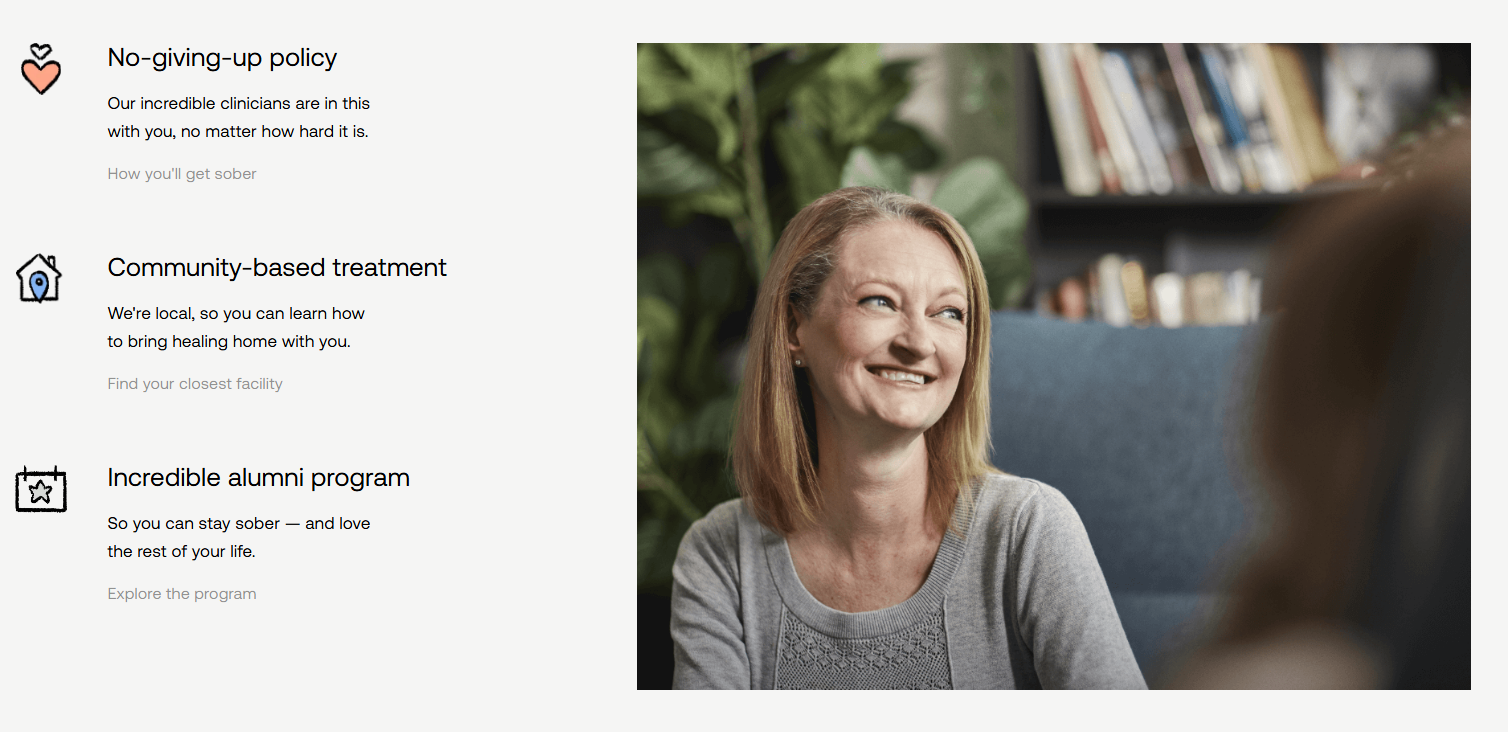
Avenues Recovery Center

Avenues Recovery has operated in Maryland since opening its Prince Frederick location in 2017, followed by Cambridge in 2020. It’s part of a larger network, which is helpful for a few reasons. First, it means someone can move from medically supervised detox through residential care and into outpatient treatment without changing organizations.
When you stay within the organization, you will probably end up with new counselors depending on the level of care, but you generally don’t have to do a brand new intake. It makes this process much more seamless, and this stability is important for someone in early recovery.
Second, a network with multiple Maryland locations means that if a campus isn’t the right fit, you can potentially transfer to another campus rather than start over with a new provider.
Prince Frederick
Prince Frederick serves Southern Maryland, drawing clients from Waldorf, Lexington Park, La Plata, Chesapeake Beach, Leonardtown, Clinton, Fort Washington, and surrounding communities. Family therapy is encouraged, and visitation is arranged with approval from the client’s primary counselor.
This is critical because having support at home and outside the treatment facility is one of the strongest predictors of whether recovery is maintained after a person is discharged. Addiction strains relationships in ways that getting sober doesn’t automatically fix, and family therapy during treatment lets everyone work through that damage with a professional in the room, so going home feels like a continuation of your recovery rather than a test of it.
The campus is described as newly renovated, private, and set in the Maryland countryside. A quieter facility can be good for someone who finds a larger place overwhelming; there will be fewer people and less to navigate as they deal with the early stages of recovery.
Cambridge
The Cambridge location is the larger of the two; it’s a 40,000-square-foot facility with 104 beds on nearly 8 acres of the Eastern Shore. The size comes with things a smaller campus can’t offer, including an indoor gym, a yoga room, a game room, and outdoor areas for basketball, volleyball, and baseball.
Treatment days contain more unstructured time than people expect, and those empty hours are exactly when restlessness, boredom, and cravings tend to surface. Having somewhere healthy to put your energy is a really good way to learn how to live sober and fill time without drugs and alcohol.
Both campuses connect you to the same Maryland alumni network, offering sober events, group activities, outreach, and real peer support that continue well after your treatment is over. This type of supportive community means you can stay connected with people who truly understand what you’ve just been through. Having regular, sober events on your calendar helps fill those stretches of free time that can often feel empty or isolating, especially in early sobriety.
Recovery Centers of America

Recovery Centers of America operates two primary inpatient campuses in Maryland. What’s distinctive about RCA is how they sort people into programs. Rather than running everyone through the same track, they offer the Foundations Pathway for people entering treatment for the first time, the Fresh Start Pathway for people returning after a relapse, and the Balance Pathway for co-occurring mental health needs.
The relapse track in particular is an important distinction. Coming back to treatment after a relapse is a different experience than arriving for the first time; there’s often shame involved when it comes to the relapse, and what’s needed is an honest look at what went wrong last time, not a re-explanation of the basics.
They also offer WorkFlex, which lets some patients maintain limited work responsibilities during treatment. For a lot of people, this addresses the single biggest reason they delay getting help, which is that they simply can’t take all that time away from their job.
RCA Capital Region — Waldorf
RCA Capital Region is a large Southern Maryland facility advertising 140 beds serving the D.C. and Maryland region. The facility itself is set up much more like a hotel than a hospital, with hotel-style rooms, dedicated spaces for group and individual therapy, and an on-site gym and wellness areas.
Many people dread rehab because they picture a sterile, hospital-like institution, and for someone who’s been putting off treatment partly out of that fear, a comfortable room and nice amenities can make a big difference.
Bracebridge Hall — Earleville
Bracebridge Hall sits on a private estate of more than 500 acres on the Sassafras River waterfront in Earleville, on the Upper Eastern Shore. The campus offers 24/7 inpatient support. There are walking trails, a pond where patients can fish, tennis courts, and outdoor recreation areas. The outdoor space gives people something to do when cravings and restlessness surface, making those difficult times a bit easier.
Tranquility Woods
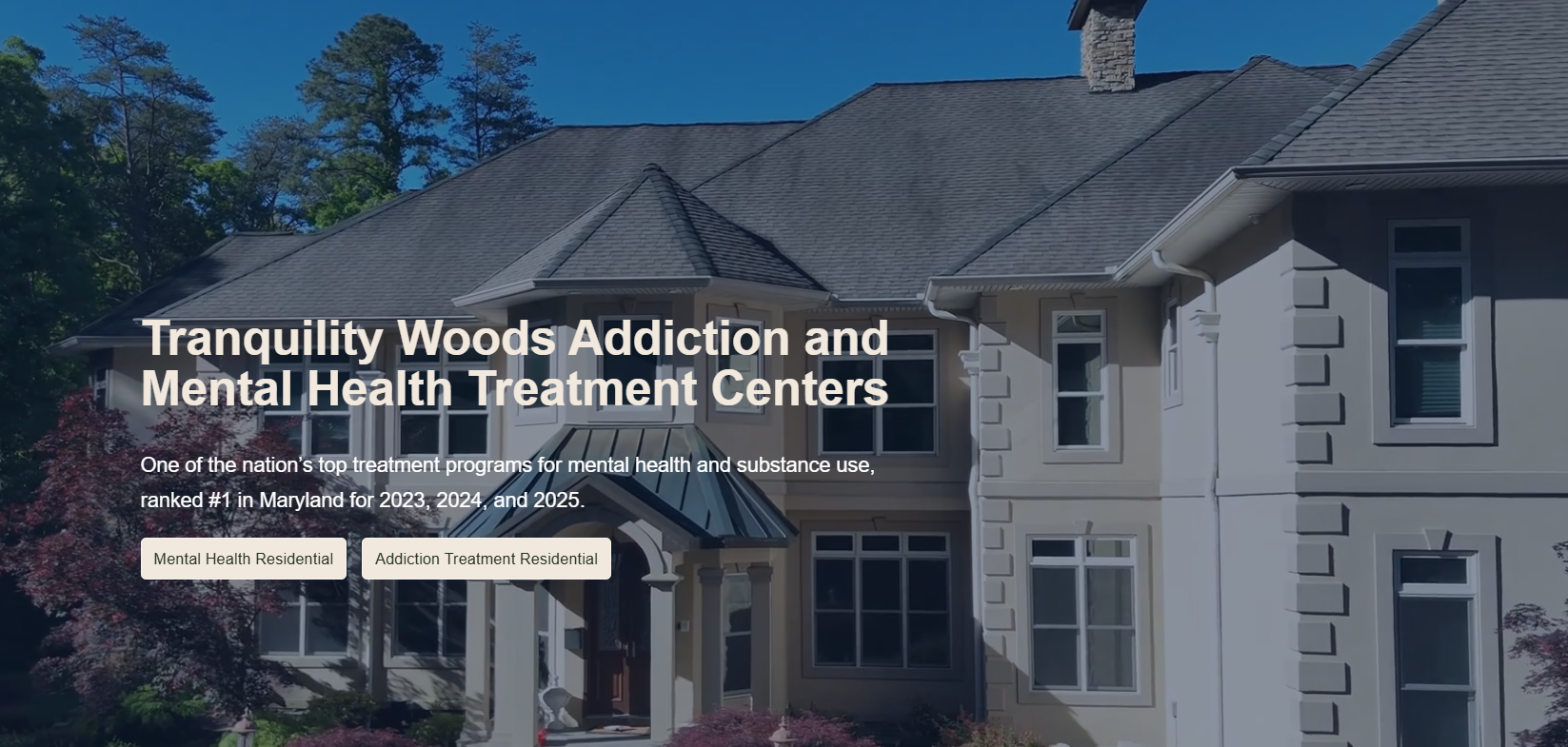
Tranquility Woods takes a different approach from the larger networks. They provide residential addiction treatment in a private, wooded setting with a strong dual-diagnosis focus. According to the facility, clients receive a minimum of four individual therapy sessions per week. For context, at many residential programs, the schedule is built around group work, and one-on-one time with a therapist happens once or twice per week.
Group therapy is incredibly valuable, but individual sessions are sometimes where the more personal work happens. That time also leaves room for specialized treatment like eye movement desensitization and reprocessing (EMDR) and other trauma-focused modalities.
Tranquility Woods limits its residential program to 40 clients at a time, spread across four homes on a 40-acre property surrounded by protected woodlands. Living in a house with 7 or 10 other people is a completely different experience than a 50- or 100-bed campus. Staff may get to know you better, and so does everyone in your house.
The facility offers both private and semi-private rooms, and family therapy is built into the experience. What stands out even more is their dedicated program for people living with chronic pain. It isn’t unusual for someone to start using substances in an attempt to cope with persistent pain, only to then find themselves facing addiction on top of their pain. Tackling both issues at the same time gets to the heart of why so many people in this position struggle to stay sober.
The Freedom Center
The Freedom Center splits its programs across three Maryland locations, with each serving a somewhat different role. Rather than housing everything on one campus, the organization separates residential care, smaller gender-specific programs, and outpatient services.
Each location is built around one level of care, so an outpatient client in Gaithersburg isn’t attending sessions at a facility organized around residential patients, and the residential settings stay small because they aren’t sharing a campus with everything else.
Buckeystown — Residential/Inpatient Treatment
The Buckeystown facility houses the residential and inpatient programs. The Freedom Center describes multiple levels within this setting: detox and an intensive inpatient treatment with 24/7 care and round-the-clock support, followed by a less intensive residential level that helps prepare clients for the next stage of recovery.
This is unique because most programs just have one level of residential treatment. These two different levels allow the amount of structure to match where you actually are in your recovery, rather than staying fixed at the intensity you needed on day one.
Brookeville — Small Gender-Specific Residential Programs
Brookeville is what gives The Freedom Center its most distinctive option – small, gender-specific residential programs rather than one larger mixed-gender campus.
The men’s program is an eight-bed residential facility described as a home-like environment for men with substance use and co-occurring disorders. The women’s program is similarly presented as a smaller residential setting.
Some of the most difficult things to discuss in treatment surround trauma, abuse, shame, and relationships, and many people find it much easier to do this in a gender-specific group. Treatment can only address what actually gets said out loud, and mixed-gender groups can lead some people to filter what they share.
Gaithersburg — Outpatient Treatment
Gaithersburg handles the outpatient side, including partial hospitalization, intensive outpatient treatment, standard outpatient treatment, and continued therapy and peer support as clients become more independent.
Finding the Right Fit
There’s no clear answer on which rehab in Maryland is best, and there’s no real shortcut to choosing the right one. You’ll have to do a bit of research and sift through a lot of information. Make sure you ask the right questions and figure out insurance coverage before committing to anything. For many Maryland families, especially those relying on Medicaid or needing a full continuum of care without switching providers, the practical realities will quickly narrow the list.
I’ve been on the other side of this search, and I know how easy it is to get stuck comparing facilities because you’re afraid of making the wrong choice. You don’t have to find the perfect rehab to get better. By beginning to search for the right facility for you, you’ve already taken such an important step toward getting your life back, rebuilding relationships, feeling better physically and mentally, and creating a future that isn’t controlled by alcohol or drugs.
Related Posts:





Rachael Goldstein is a licensed attorney who spent six years as a public defender in Philadelphia, handling a wide range of cases. That work gave her a close, firsthand look at how addiction and mental health affect people’s lives, and it’s shaped her writing ever since. Her writing focuses on mental health and wellbeing, drawing on both her legal background and hands-on experience in the field. She knows how high the stakes are when someone is searching for help, so she digs into the research and lays out the facts in a way that’s clear, honest, and easy to act on.
When she’s not writing, Rachael spends her free time traveling, hiking, and exploring new places.