
For decades, women have been struggling to navigate perimenopause and menopause in a conventional health care system with limited scheduling availability and equally limited specialization.
But today, that landscape has fundamentally shifted, and now women have access to an ecosystem of specialized virtual care platforms that help fill a decades-long need, offering things like evidence-based hormone replacement therapy and clinical support.
Among those top pioneers sits Alloy Health, a direct-to-consumer platform that has helped streamline FDA-approved hormone therapy delivery through a messaging-based care model. I’ve found that Alloy Health is one of the benchmarks for low-friction access to medication, and yet, a growing number of women, myself included, are now looking for more specialized platforms- Alloy alternatives that meet insurance requirements, communication preferences, or versatile diagnostic offerings.
At the intersection of these needs are alternatives like Lifeforce, a longevity-oriented program with a distinct biomarker testing option and continuous oversight, or Midi Health, an insurance-integrated virtual care option for older women.
Here are my top 6 picks and when to consider each:
- Midi Health or Gennev for insurance-covered Alloy alternatives
- Winona or Evernow for messaging-based alternatives
- Lifeforce or Elektra Health for ongoing clinical support alternatives
Alloy Alternatives At a Glance
| Alloy Alternative | Primary Care Model | Financial Options | Cost | Diagnostic Requirements | Top Feature |
| Midi Health | Synchronous Video Consultations | In-Network Commercial Insurance & Medicare | ~$10-50+/mo for copays and medications (highly variable based on your plan) | Clinic-Led (Ordered as needed via local labs) | Full integration with traditional insurance benefits and local screening centers |
| Gennev | Synchronous Video Consultations | In-Network Commercial Insurance & Medicare | ~$15-$50+/mo for insurance copays and medications | Clinic-Led (Ordered as needed via local labs) | Medical HRT management with insurance-covered registered dietitian coaching |
| Winona | Asynchronous Text Messaging | Out-of-Pocket Cash Pay | ~$45-$149/mo depending entirely on your product formulation | None (Symptom-Led Paradigm) | Extensive use of compounding pharmacies for customized formulas |
| Evernow | Asynchronous Text Messaging | Monthly Cash Membership | ~$49-$109+/mo (combined membership and medication fees) | None (Symptom-Led Paradigm) | Continuous, app-based symptom tracking for dynamic dosage changes |
| Elektra Health | Synchronous Video + Messaging | Monthly Cash Membership | Insurance copay rates only for clinical visits; ~$0 out-of-pocket if covered entirely through an integrated employer benefit plan | None (Symptom-Led Paradigm) | Built around dedicated Nurse Guides and a structured educational curriculum |
| Lifeforce | Synchronous Video + Messaging | Upfront Diagnostic + Monthly Cash Membership | ~$149/mo + separate medication costs | Mandatory 50+ In-Home Biomarker Panels | Direct integration of quarterly home blood monitoring with dedicated lifestyle coaching |
Insurance-Covered Alternatives
The cash pay subscription model offered by Alloy has a lot of convenience to it, especially for people who want to bypass health insurance prior authorization requirements or co-pays. However, for women who have reliable health insurance, not being able to apply those benefits to comprehensive perimenopause or menopause care can feel like leaving money on the table.
Several companies have now integrated with traditional payer networks to provide access to virtual clinics and digital interfaces while still applying insurance benefits to those costs.
Midi Health
Midi Health is my top pick if you are looking to use your insurance. This is one of the leaders in virtual care for women 40 and older.
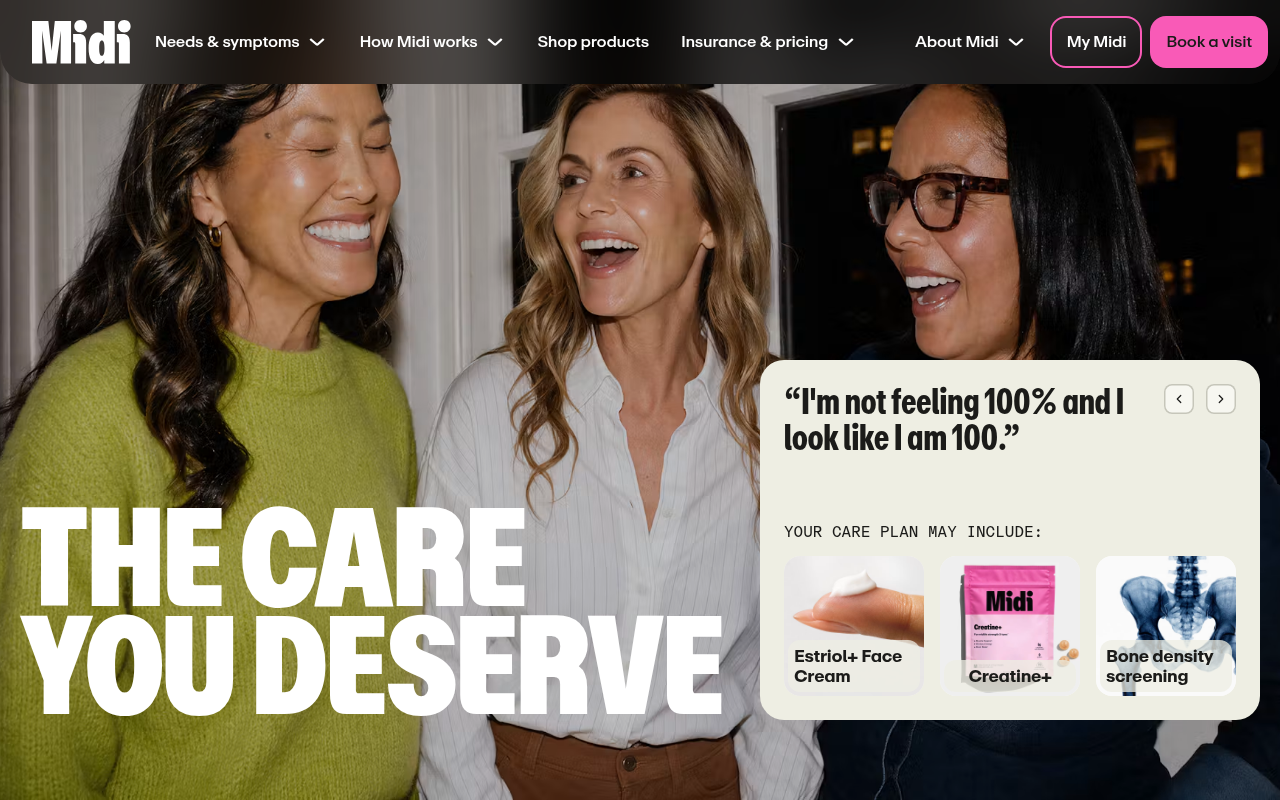
Midi stands apart as an Alloy alternative specifically for people who want something more than just a text-only interface and who want face-to-face video consultations. Midi books virtual visits with nurse practitioners and physicians who have undergone specialized training in menopause, perimenopause, and midlife disease prevention.
Midi’s structural advantage is the expansive network of insurance partnerships they maintain, including private insurers and Medicare. This means things like the initial evaluation, routine follow-ups, and other clinical discussions get billed to your insurance provider, and all you have to fork over is a copay.
Midi also writes prescriptions that are sent directly to a local pharmacy instead of setting up a subscription for medication. This means you can maximize your insurance coverage for prescriptions, especially for things like estradiol patches or progesterone capsules.
Speaking as someone who’s had difficulty scheduling preventative screenings that aren’t at least 6 months out, I can greatly appreciate that Midi acts as a full-service virtual clinic with things like bone density scans, mammograms, colonoscopies, and preventative screenings available at local imaging centers. I was able to book a preventative cancer screening at an imaging center less than 5 miles away, and they got me in within one week. My primary care provider said the same referral would take at least 4 months.
Best For: Women who want to maximize their commercial insurance or Medicare benefits through face-to-face video visits and use their local retail pharmacy.
Gennev
Gennev is another insurance-friendly Alloy alternative. They have a similar setup to traditional healthcare infrastructure, so they provide a virtual menopause clinic available in all 50 states, and they match you with board-certified OB/GYNs and certified menopause practitioners.
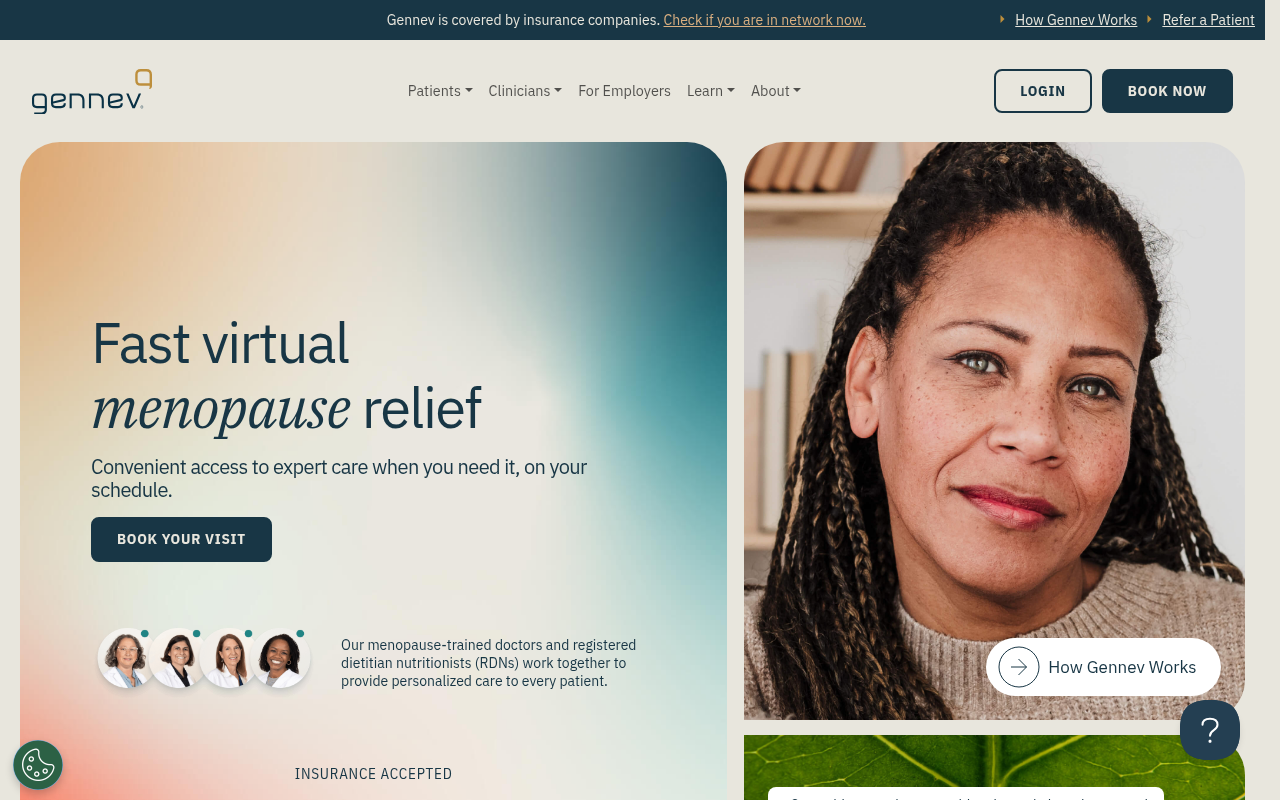
Your sessions take place through real-time video consultations. Like Midi, Gennev accepts an array of commercial health insurance plans, so you can lower your out-of-pocket cost for care.
Where they stand out is the dual emphasis on medical management and intensive lifestyle medicine. In addition to hormone replacement therapy, you can work with a registered dietitian to help with metabolic adjustments, bone preservation strategies, and other metabolic changes that happen at midlife. Even better, you can use your insurance, assuming your coverage extends to this, to offset the cost of the nutritional counseling sessions.
If you are someone with medical contraindications to estrogen and you’re looking for an alternative, maybe because, like me, you have a personal history of breast cancer or because you have active liver disease, you can use their clinical model to find a non-hormonal prescription alternative and lifestyle modifications that are likely covered by your insurance.
Best For: Women with complex health profiles or estrogen contraindications who want insurance-integrated care combined with holistic nutritional and lifestyle coaching.
Subscription & Messaging-Based Alternatives
Alloy is really good at messaging, with the option to send things like text messages as part of your communication. However, a lot of women out there are looking for that same type of communication efficiency with a wider array of prescription options. If you aren’t as worried about managing insurance claims or coordinating video calls, but you are worried about continuous symptom tracking, Winona or Evernow are Alloy alternatives worth considering.
Winona
Winona has a text-based model similar to Alloy.
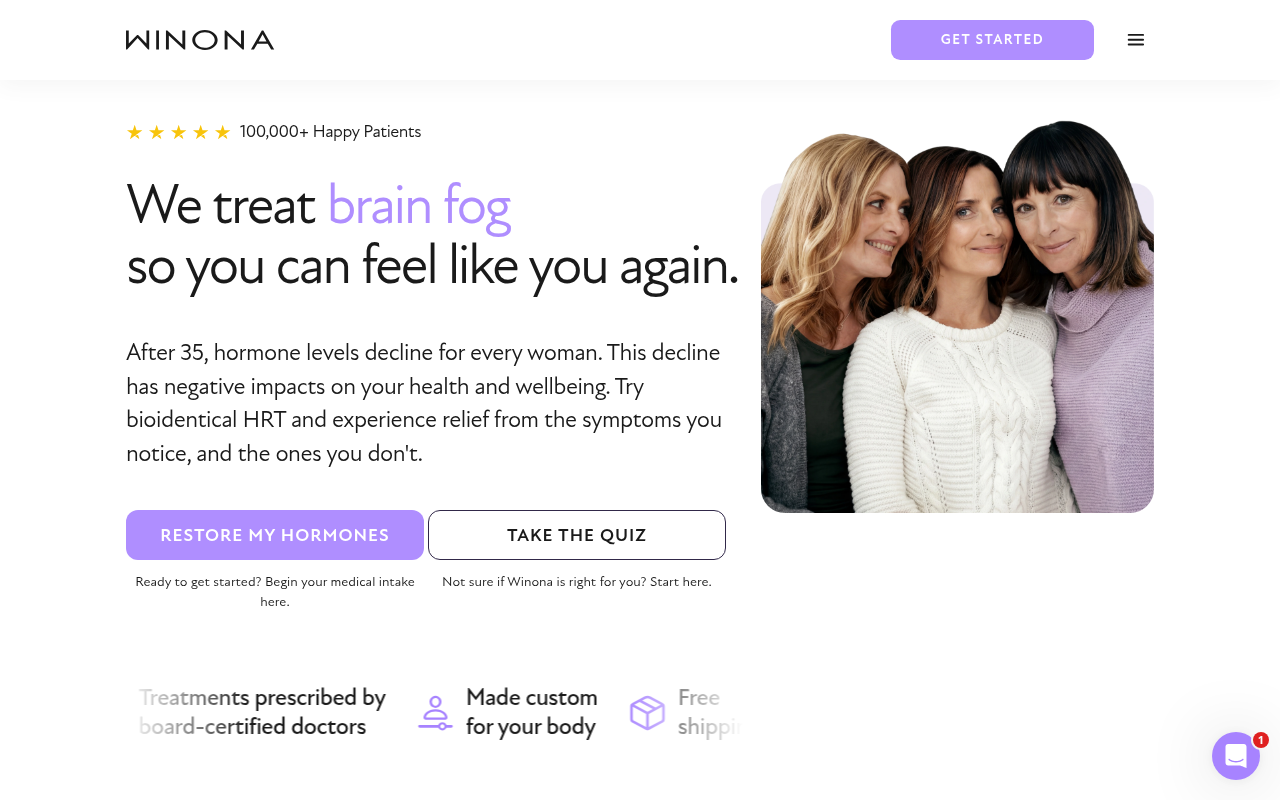
Where Winona differs is the option for customizable pharmaceutical options. After a digital medical intake reviewed by a physician, Winona provides the same type of text-based communication, but coordinates with specialized compounding facilities to produce customized formulations.
Winona can offer bioidentical estrogen and progesterone combinations combined into a single daily topical cream, specialized DHEA formulations, and localized estriol treatments for vulvovaginal atrophy.
So if you want that type of highly customized topical delivery system with multiple prescriptions combined into a single application, this can be a good alternative to consider.
Best For: Women who prefer text-based convenience but want highly tailored compounding pharmacy options over mass-manufactured, separate prescriptions.
Evernow
Evernow is similarly built around secure, asynchronous text communication, but it differentiates its service with a focus on long-term care continuity and symptom tracking. Their symptom tracking is what drew me to them in the first place because I love the opportunity to use my insurance benefits and get medication right away, but I also want to know how efficiently that medication is working, something that I can only track if I’m also logging symptoms.
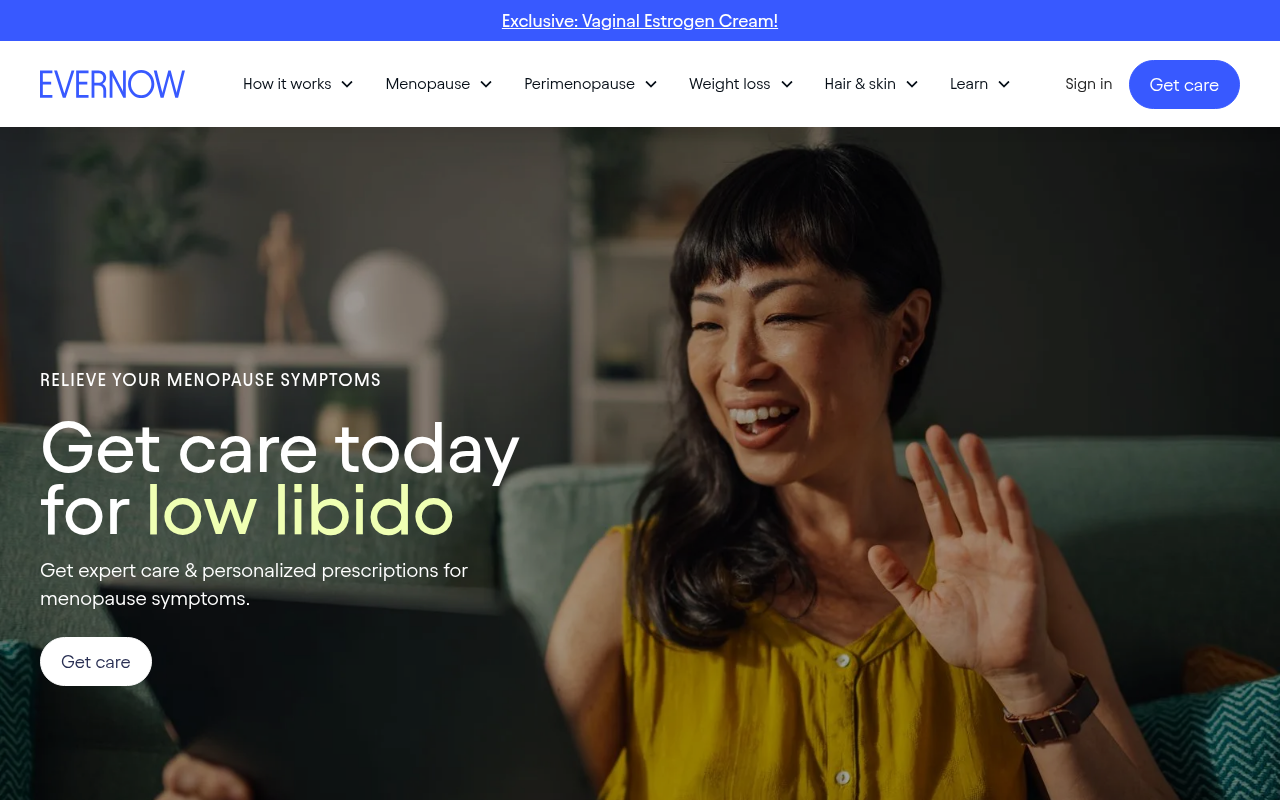
Evernow doesn’t treat their telemedicine offerings as transactions to get a prescription but rather as a subscription to invest in an ongoing health monitoring service.
When you sign up, you complete your digital Health assessment, get paired with a midlife specialist clinician, manage communication within the app-based messaging interface, and regularly log your symptoms. For example, you can check into the digital symptom platform to record things like sleep quality, joint pain, hot flashes, and mood shifts.
All that data gets compiled into a visual health profile so both you and your clinician can see changes in your symptoms trending over several months or years depending on how long you maintain your subscription. That can go a long way toward helping your clinicians change your dosage or adapt your treatment plan based on where you are in your phase of perimenopause, menopause, or postmenopause.
Best For: Women who want continuous, asynchronous text communication and structured, long-term digital symptom tracking.
Ongoing Clinical Support with Data-Driven Models
Alloy is great for getting prescriptions quickly, but a lot of women want to be proactive in their symptom management instead of reactive, with lifestyle changes, ongoing clinical support, and comprehensive education. Lifeforce and Elektra Health are two Alloy Alternatives that offer multi-layered support structures.
Elektra Health
Elektra Health has a more educational focus, building a virtual ecosystem that matches women with university-trained menopause experts, who are usually advanced practice clinicians or specialized nurses. When you sign up, you get a guide that provides information on the pros and cons of HRT, offers evidence-based lifestyle changes, and options for prescription medications.
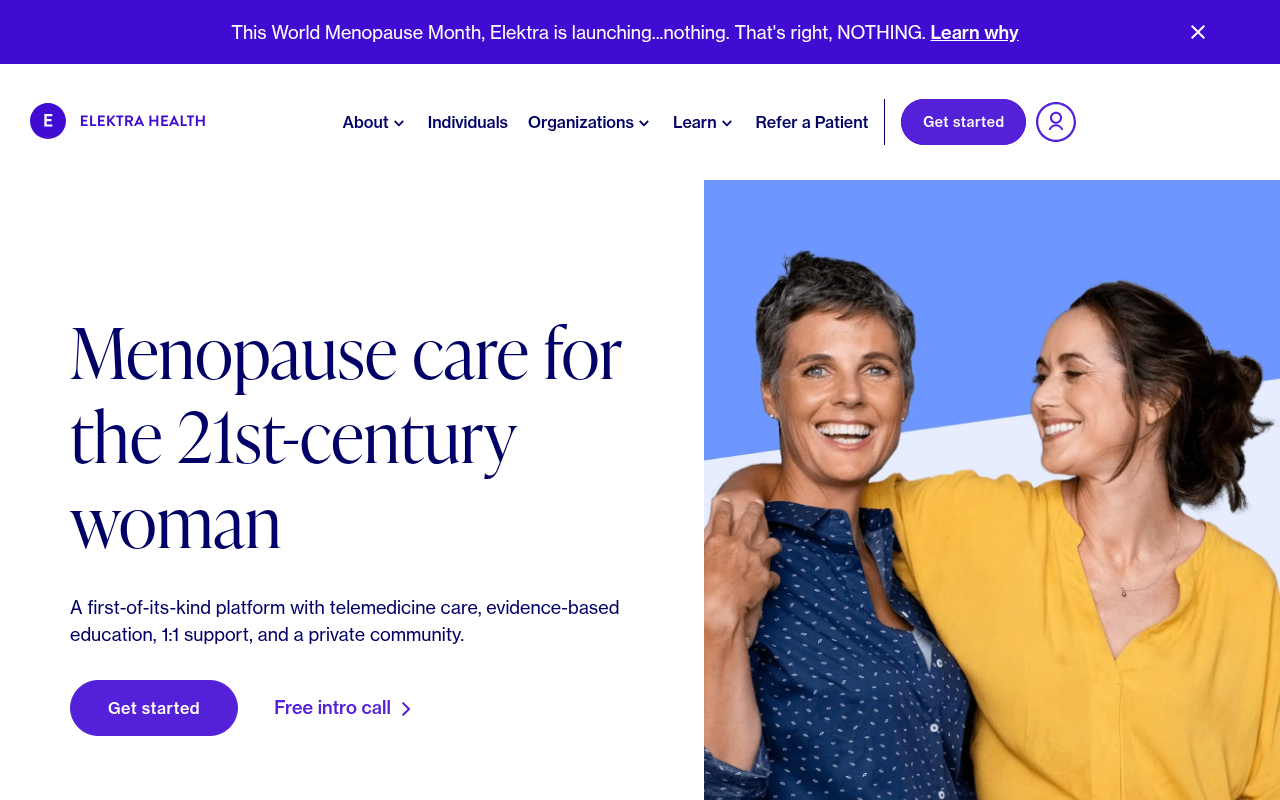
This setup focuses on clinical telemedicine visits, behavioral modification, and education. Elektra provides members with a proprietary, evidence-based curriculum called “Menopause 101” and peer support circles so women don’t just get quick prescriptions filled for symptoms of menopause, but instead receive access to education pertaining to menopause.
Best For: Women who view menopause care as an educational journey and prefer a high-touch mentorship ecosystem featuring a dedicated Nurse Guide and community peer support.
Lifeforce
Where Elektra provides education on menopause itself, Lifeforce provides education on individual biomarkers. Lifeforce stands at the intersection of longevity science and specialized midlife medicine, providing women with one of the only programs that incorporates diagnostic data, continuous clinical support, and behavioral coaching.

The defining characteristic of Lifeforce is its entry requirement: a mandatory, comprehensive diagnostic biomarker panel. Lifeforce bases symptom profiles on a questionnaire and a blood draw to review over 50 biomarkers. These biomarkers are broken down into categories like sex hormone status, including Baseline tracking of progesterone, DHEA-S, and your free and total testosterone. The biomarkers extend to things like metabolic and cardiovascular health like advanced lipid profiles and fasting insulin levels that frequently play a role in weight resistance among women in midlife, thyroid function, organ health, micronutrient loads, and inflammation.
Once the biomarker results are finalized, Lifeforce continues to deliver support in the form of real-time video consultation with a certified clinician specializing in longevity and hormone optimization, FDA-approved bioidentical hormones (such as transdermal estradiol patches and micronized progesterone), specialized testosterone therapies, quarterly retesting, and a dedicated, certified health coach to provide support with dietary changes, resistance-training structures, and sleep hygiene practices
These regular blood draws come with the benefit of in-home service so you can arrange your quarterly blood draws on a schedule that works for you, without having to travel anywhere.
Best For: Women who want a premium, data-driven longevity framework that manages menopause by measuring internal biomarkers and tracking progress with quarterly blood draws and behavior coaching.
Summing Up: Finding the Right Alloy Alternative
The expansion of virtual menopause services has made women’s autonomy much greater. Midlife doesn’t force women into one health service or another. Whether your primary constraint is financial accessibility, scheduling efficiency, pharmaceutical customization, or data-driven optimization, you can now find a clinical model that meets your needs.
- If your goal is insurance-covered telehealth networks, go with Midi Health or Gennev.
- If your goal is subscription- and messaging-based models, try Winona or Evernow.
- If your goal is ongoing clinical support and high-touch designs, try Elektra Health or LifeForce.