

If you already track your recovery, there’s a realization that tends to emerge eventually: your wearable can tell you what kind of night you had, but it can’t really influence what happens while you’re asleep.
That becomes especially noticeable once you start paying attention to HRV trends over time. You adjust your routine, caffeine timing, room temperature, maybe even your bedtime habits, and eventually you start wondering whether the bed itself should be doing more than just sitting underneath all that data collection.
The problem is that searching for a smart mattress with HRV tracking gets messy fast. Most lists barely separate HRV from general sleep tracking, and some products advertise recovery tracking despite offering little more than sleep stage estimates and overnight heart rate averages.
Once you narrow the search to systems that genuinely handle HRV well, the category gets surprisingly small.
After reviewing the current landscape, three products stand out: the Eight Sleep Pod, the Sleep Number Smart Bed, and the Withings Sleep Analyzer. They take meaningfully different approaches to passive HRV tracking, and understanding those differences requires a quick look at what HRV actually adds to a sleep system and how in-bed sensors compare to wearables.
What HRV Tells You Overnight
Overnight HRV is essentially a window into how hard your body is working to recover while you sleep. Higher readings generally mean your system is absorbing stress well. Lower ones tend to signal the opposite, that your body is still under load from training, illness, alcohol, or fatigue.
HRV gets more useful the longer you track it. One isolated reading rarely means much on its own. What matters is your normal range and how your body moves away from it over time.
A sustained dip after poor sleep, stress, or heavy training means something very different from an unexplained drop during an otherwise normal week. The value comes from the pattern, not the individual score.
Nighttime is also the cleanest environment to measure it. During the day, your nervous system is constantly reacting to inputs: stress, movement, caffeine, work, meals, heat. Overnight, those variables settle down enough for longer-term trends to become easier to spot.
That consistency is where in-bed tracking starts to make sense. The system runs automatically every night, whether you think about it or not. No charging dock. No forgetting to put something on before bed. No waking up to discover the battery died halfway through the night.
For anyone building a baseline over months rather than collecting scattered data points, that reliability matters.
In-Bed Sensors vs Wearables: What’s the Difference?
The biggest difference isn’t necessarily where the sensor sits but how the data gets collected and whether the system behind it has been validated properly.
Most wearables use photoplethysmography (PPG), which measures changes in blood flow through the skin. In-bed systems typically use ballistocardiography (BCG), which detects the subtle mechanical movement your heartbeat generates through the mattress surface.
Both methods can produce reliable HRV data when implemented well.
Where in-bed systems have a practical advantage is adherence. The best recovery tracker in the world becomes less useful if you only wear it four nights a week. Mattresses and under-bed sensors remove that part entirely because the tracking happens automatically in the background.
The Best Smart Mattresses With HRV Tracking
The products below cover three very different approaches to passive HRV tracking. One actively adjusts the sleep environment in response to your biometrics, one integrates tracking into an adjustable smart mattress, and one focuses on affordable passive monitoring with apnea detection included.
If you want a quick comparison, here’s how they stack up.
| Eight Sleep Pod | Sleep Number Smart Bed | Withings Sleep Analyzer | |
| Sensor type | BCG (in-cover) | BCG (in-mattress) | BCG (under-mattress pad) |
| HRV tracking | Continuous | Nightly average | Nightly average |
| Active adjustments | Yes, temperature via Autopilot | Firmness; temperature on Climate360 models | None |
| Wearable required | No | No | No |
| Validated against ECG | Yes, heart rate and HRV | Heart rate only, HRV methodology not publicly documented | Heart rate only, HRV validation limited |
| Sleep apnea screening | No | No | Yes |
| Subscription required | Yes | Yes | No |
| Price tier | Higher, hardware plus subscription | Higher, hardware plus subscription | Low, one-time purchase |
| Works with existing mattress | Yes, cover fits over any bed | No, integrated into mattress | Yes, pad slides under any mattress |
Here’s what’s behind each one.
1. Eight Sleep Pod (Pod 5 / Pod 4)
The sleep system most fully built around recovery tracking
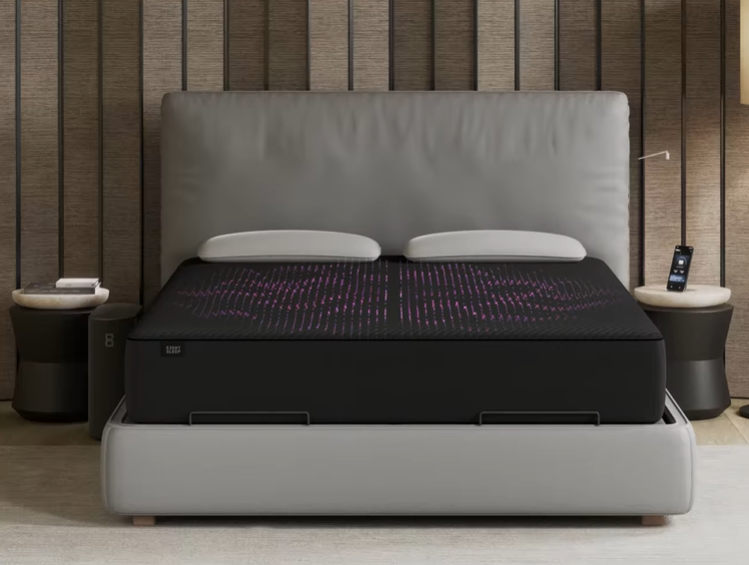
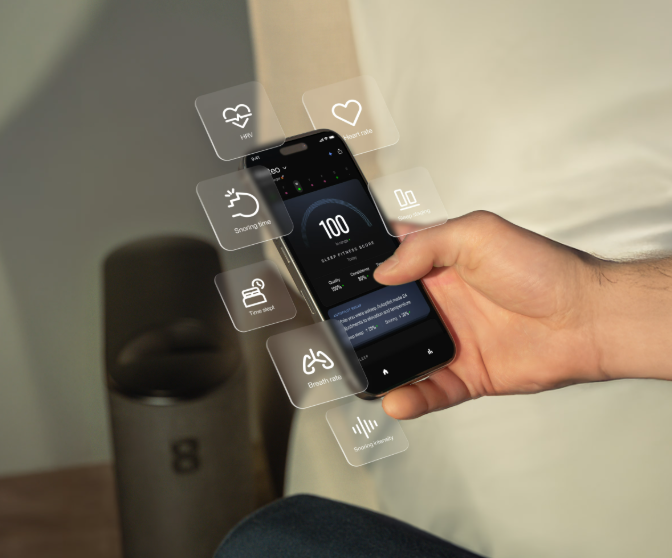
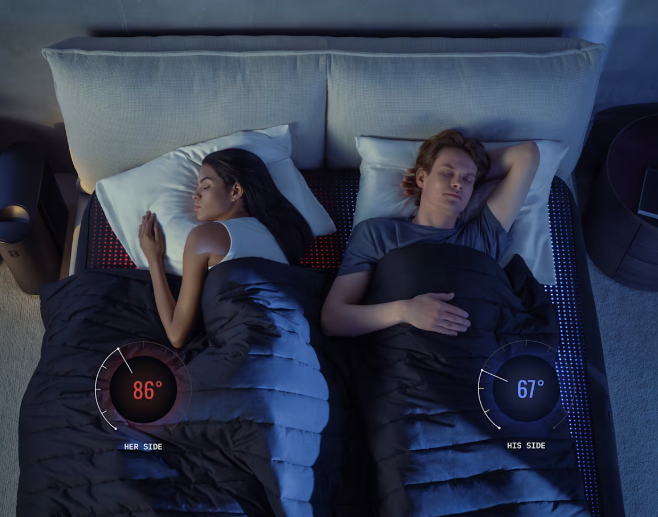
The Eight Sleep Pod is a temperature-controlled mattress cover that fits over your existing bed. A bedside hub circulates water through the cover throughout the night while embedded sensors track heart rate, HRV, breathing rate, sleep stages, and movement passively in the background. No wearable required.
Eight Sleep has published validation data comparing the Pod’s biometric tracking against ECG measurements across 474 nights from 163 subjects. According to that testing, heart rate accuracy reached 99% relative to ECG, with HRV correlation measured at r = 0.953.
That’s important because plenty of sleep systems claim recovery tracking, but far fewer publish meaningful validation data around it.
Where the Pod separates itself is that the biometric data feeds directly into the sleep environment. Autopilot uses your sleep stages, historical trends, room temperature, biometric readings, age, and other contextual inputs to adjust bed temperature throughout the night automatically. According to Eight Sleep’s own research, the right temperature directly improves HRV and resting heart rate, which is why the connection between tracking and temperature adjustment matters beyond convenience. Each side of the bed can run independently between 55°F and 110°F, which matters if you share a bed with someone whose ideal sleep temperature looks nothing like yours.
Health Check is the other major differentiator. Rather than focusing on single-night scores, it builds a personal baseline over roughly two to four weeks and flags meaningful changes in resting heart rate, HRV, and breathing patterns once enough trend data exists to make those shifts useful. That approach makes more sense than obsessing over individual nightly fluctuations, especially for people already tracking recovery seriously.
The system is expensive, setup is more involved than a typical sleep tracker, and full Autopilot requires an ongoing subscription.
It’s also worth acknowledging that older Eight Sleep generations developed a reputation for leaks, particularly around the Pod 3 era. Eight Sleep redesigned the tubing structure and pressure management system in the newer Pod 4 and Pod 5 models specifically to address that, but the older reputation still follows the brand around for understandable reasons.
If your goal is simply passive sleep tracking, the Pod is probably more system than you need. But if you’re already deep into recovery metrics and want the sleep environment reacting dynamically instead of just reporting numbers back every morning, this is the clearest fit in the category.
Best For
- People already tracking HRV, recovery, or sleep quality consistently
- Hot sleepers and couples with different temperature preferences
- Buyers who want the sleep environment actively adjusting overnight
- Performance-focused or health-conscious users building long-term biometric trends
Not For
- People who only want basic overnight sleep tracking
- Buyers looking for a low-cost or low-maintenance setup
- Anyone uncomfortable with subscriptions or connected ecosystems
- People who prefer a simpler “set it and forget it” mattress experience
2. Sleep Number Smart Bed (360 Series / Climate360)
Solid in-bed biometrics, with adjustable firmness at its core
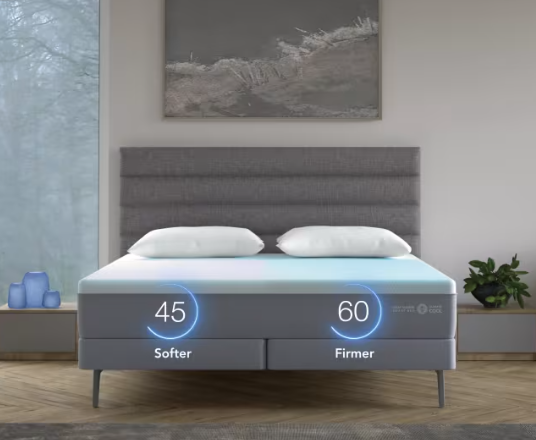
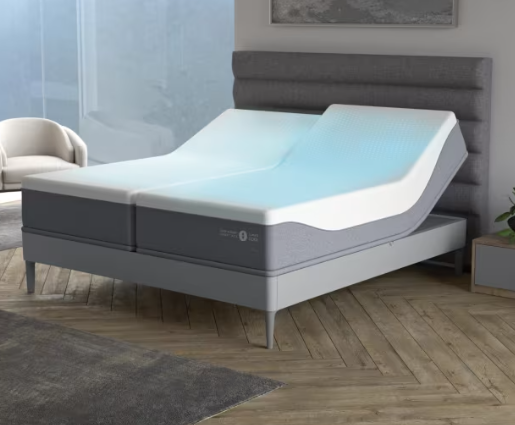
Sleep Number approaches the category from the opposite direction. The core product here is still the adjustable smart mattress itself, with HRV tracking layered into the broader SleepIQ ecosystem.
The beds use integrated BCG sensors to measure heart rate, breathing rate, and HRV overnight, with trend reporting available inside the app across longer time windows.
One detail worth understanding before buying is that Sleep Number calculates HRV differently from most wearables and from Eight Sleep. The readings are directionally useful for trends, but the numbers themselves won’t necessarily line up with what you’re used to seeing elsewhere, and that disconnect catches some buyers off guard.
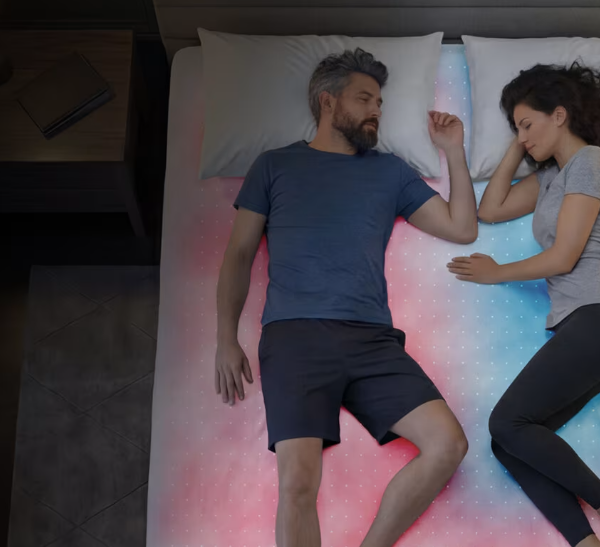
The system also focuses more on nightly summaries than continuous overnight responsiveness. The bed records the biometrics, surfaces the trends, and leaves the interpretation to you. Climate360 models do add temperature regulation, but the features and the HRV tracking operate more like parallel systems than one tightly integrated recovery platform.
Sleep Number’s biggest strength has always been adjustability. If customizable firmness, elevation, and sleep position matter more to you than recovery automation, that may be the better priority.
Unlike Eight Sleep or Withings, this isn’t something you add to your existing mattress setup. You’re buying into the full bed ecosystem, and the advanced SleepIQ functionality also sits behind a subscription. For buyers already interested in an adjustable smart mattress who also want passive biometric tracking built in, Sleep Number makes a lot of sense. Just don’t go into it expecting the same recovery-focused ecosystem approach that Eight Sleep is aiming for.
Best For
- Buyers prioritizing adjustable firmness and comfort customization
- Couples with different support preferences
- People who want passive biometric tracking built into the mattress itself
- Existing Sleep Number shoppers who also want HRV trend tracking included
Not For
- Buyers specifically looking for a recovery-focused sleep system
- People expecting continuous overnight environmental adjustments based on biometrics
- Anyone wanting to keep their current mattress
3. Withings Sleep Analyzer
The simplest and most affordable way into passive HRV tracking.
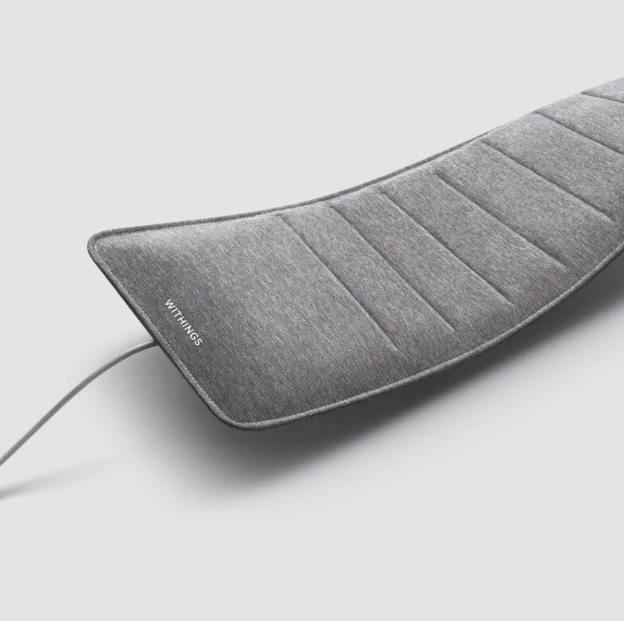
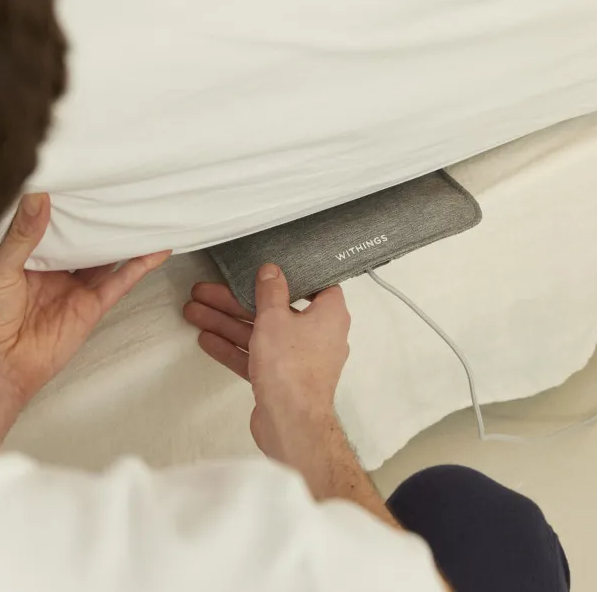
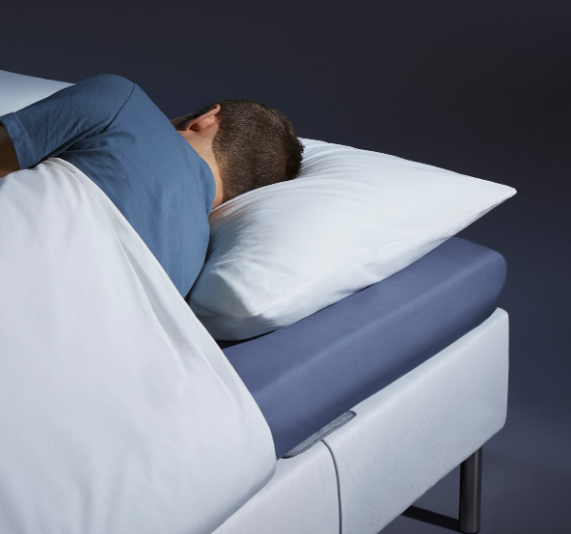
The Withings Sleep Analyzer takes a lighter approach than the other two. It’s a thin under-mattress pad that slides beneath your bed and tracks sleep passively without changing anything about the mattress itself. No cover, no hub beside the bed, no active temperature management.
At roughly $169, it’s also operating in a completely different price bracket from the other two options.
HRV support arrived relatively recently through a firmware update, so the feature is newer and carries less of a validated track record than the systems above. Withings has published heart rate validation data, but long-term independent validation around the HRV tracking specifically is still fairly limited right now.
Where the Sleep Analyzer earns its place in this category is sleep apnea detection. It’s the only product here with clinical validation against polysomnography for apnea screening, and for some buyers, that’s more important than temperature control or recovery automation. The fine print worth knowing: the FDA-cleared version is the prescription-only Sleep Rx, available through healthcare providers. The consumer Sleep Analyzer carries strong clinical validation behind its breathing disturbance detection, just without the FDA designation attached.
What you’re not getting with the Sleep Analyzer is an adaptive sleep environment. Withings tracks trends, surfaces the information, and leaves the rest to you. Whether that’s enough depends entirely on what you’re trying to solve.
If you mainly want passive overnight HRV tracking without wearing a device, and you’d rather avoid the cost and complexity of a full smart bed ecosystem, this is probably the most sensible entry point in the category.
Best For
- People wanting wearable-free HRV tracking at a much lower cost
- Buyers interested in sleep apnea screening alongside recovery metrics
- Users building a baseline before committing to a more involved system
- People who want overnight biometric tracking without changing their mattress setup
Not For
- Buyers expecting active temperature control or environmental adjustments
- People wanting deeply integrated recovery automation
- Anyone wanting a full smart-bed experience
What Separates These Systems
Some systems are essentially passive monitoring tools that include HRV among a broader set of metrics. Others are trying to build a feedback loop between your biometrics and the sleep environment itself.
The practical question is whether you want more recovery data or whether you want the sleep environment adjusting dynamically around what it’s detecting overnight. If your current setup is already giving you reliable recovery trends, there may not be much reason to replace something that isn’t broken.
But for people already heavily invested in sleep and recovery optimization, especially those dealing with overheating, inconsistent sleep quality, or the friction of nightly wearables, that’s where passive tracking starts feeling a lot more useful.
Final Thoughts
The gap between “smart mattress with sleep tracking” and “smart mattress with meaningful HRV integration” is larger than most comparison pages acknowledge.
All three products here track overnight biometrics without requiring a wearable, but they solve different problems. Withings is the low-friction, lower-cost option focused on passive monitoring and apnea detection. Sleep Number centers the experience around adjustable comfort with biometric tracking layered in alongside it.
Eight Sleep is the one system built around recovery optimization as the primary goal. Not because it tracks HRV, all three do that in some form, but because the tracking connects directly into how the sleep environment responds throughout the night. For anyone who has outgrown a sleep tracker that just watches and reports, and wants a system that actually responds, that’s the gap Eight Sleep is built to close.
Related Posts:





Alt Protein Team is a team of professionals and enthusiasts committed to bringing you the most up-to-date information on alternative protein, health and wellness, workouts, and all things health-related. We’ve reviewed a lot of products and services so you don’t have to guess when you spend your hard-earned money on them. Whether you want to shed some pounds, build lean muscle or bulk, we can help you figure out what you need to do and what you need to have to achieve your goals.