

Sleep is the highest-leverage recovery variable most athletes still can’t control. That is the gap these two products are trying to close, and it’s one of the reasons they get compared so often.
The difference between them comes down to one thing: WHOOP tracks your recovery, while Eight Sleep actively improves your sleep in real time. Both are often used together in a performance-focused recovery stack, but each one works at a different layer of the problem.
Below, we’ll walk through what each product actually does, where their tracking overlaps, and where it splits. The goal is simple: by the end, you’ll know exactly which one belongs in your stack, and why.
Eight Sleep vs WHOOP: What Each Measures (Side-by-Side)
| Feature | Eight Sleep | WHOOP |
| Environmental control | Actively regulates bed temperature throughout the night | No environmental control |
| Strain tracking | No strain score | Core metric, scored daily |
| All-day tracking | Sleep only | 24/7, on and off the body |
| Wearable required | No; tracks sleep only | Yes |
| Temperature data | Tracks and adjusts bed temperature based on sleep patterns and preferences | Skin temperature trends |
| Sleep stages | Yes | Yes |
| Heart rate, HRV, and respiratory rate | Yes | Yes |
| Sleep latency + efficiency | Yes | Yes |
| Active intervention | Yes; adjusts bed temperature automatically | No; provides insights and recommendations |
At a Glance: Which One is Right for You?
Eight Sleep and WHOOP are built for different recovery priorities. The better option depends on whether your main goal is improving sleep quality itself or managing overall training and recovery trends.
Here’s how that breaks down by use case:
- Best for Hot Sleepers: Eight Sleep: Temperature has a direct impact on sleep quality, and Eight Sleep actively cools the bed throughout the night. For anyone who tends to overheat, that means fewer nighttime wakeups and less disrupted sleep.
- Best for Training Load Management: WHOOP: WHOOP is built around strain and recovery scoring. For athletes balancing workout intensity against readiness, those daily metrics make it easier to adjust training, avoid overtraining, and manage performance over time.
- Best for People Who Dislike Wearables: Eight Sleep: Eight Sleep tracks passively through mattress cover sensors and optimizes your sleep on autopilot. There’s nothing to wear, charge, or remember, and no behavior changes needed for it to work.
- Best for Full-Day, Anywhere Tracking: WHOOP: WHOOP works continuously, on and off the body, at home or traveling. It tracks activity, strain, recovery trends, and stress around the clock, wherever you are.
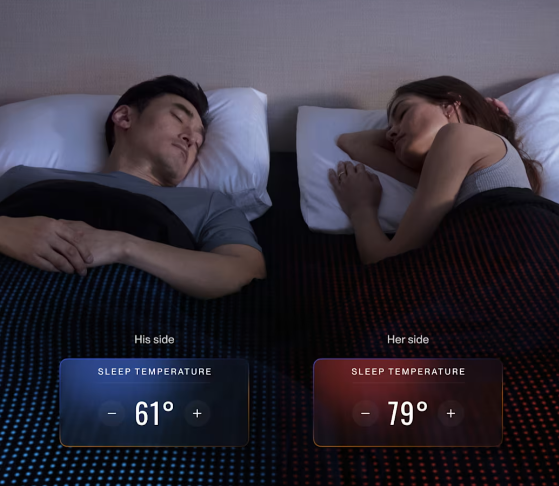
- Best for Couples: Eight Sleep: Each side of the bed adjusts independently, so two people with different temperature preferences can each sleep at their own ideal setting.
How Eight Sleep Works as an Active Sleep Optimization System
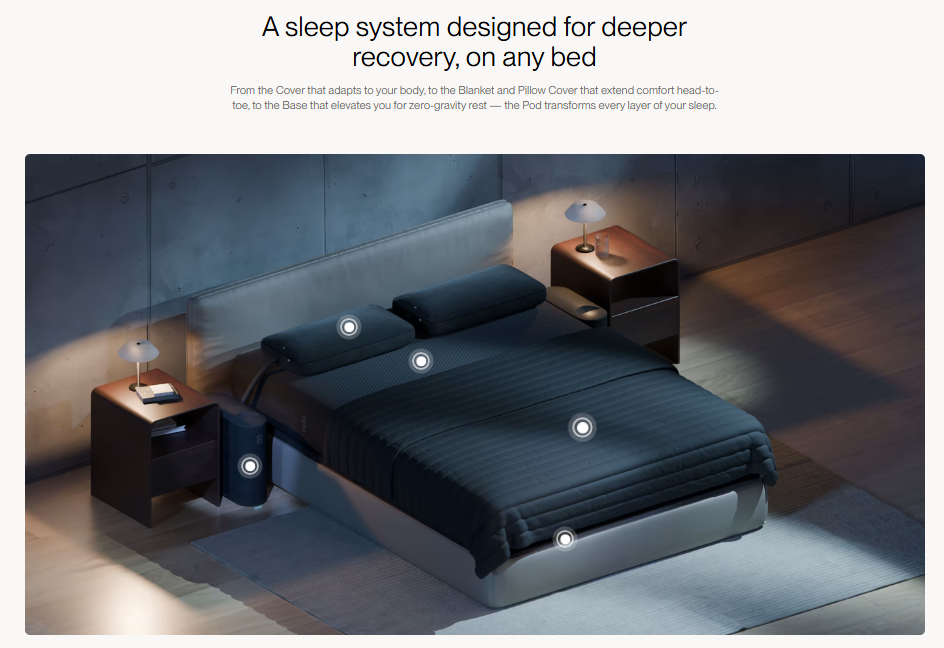
Eight Sleep is a smart mattress system that goes beyond tracking. It also adjusts your sleep environment throughout the night.
It does this using a sensor-enabled mattress cover, a control hub and an app that work together to monitor and optimize your sleep environment in real time. Eight Sleep tracks core biometrics like heart rate, heart rate variability (HRV), respiratory rate and even how you’re moving through the stages of sleep without being a wearable device.
Most trackers give you a simple report when you wake up of how you slept, and the rest is left to you. Eight Sleep takes it one step forward by continuously adjusting bed temperature in real time based on your sleep stages, physiological signals and environmental conditions. Its autopilot system learns your patterns over time, automatically adapting and creating a more optimal sleep environment night after night. Instead of just delivering better data, Eight Sleep works to improve the quality of your sleep itself.
How WHOOP Tracks Recovery, Strain, and Sleep
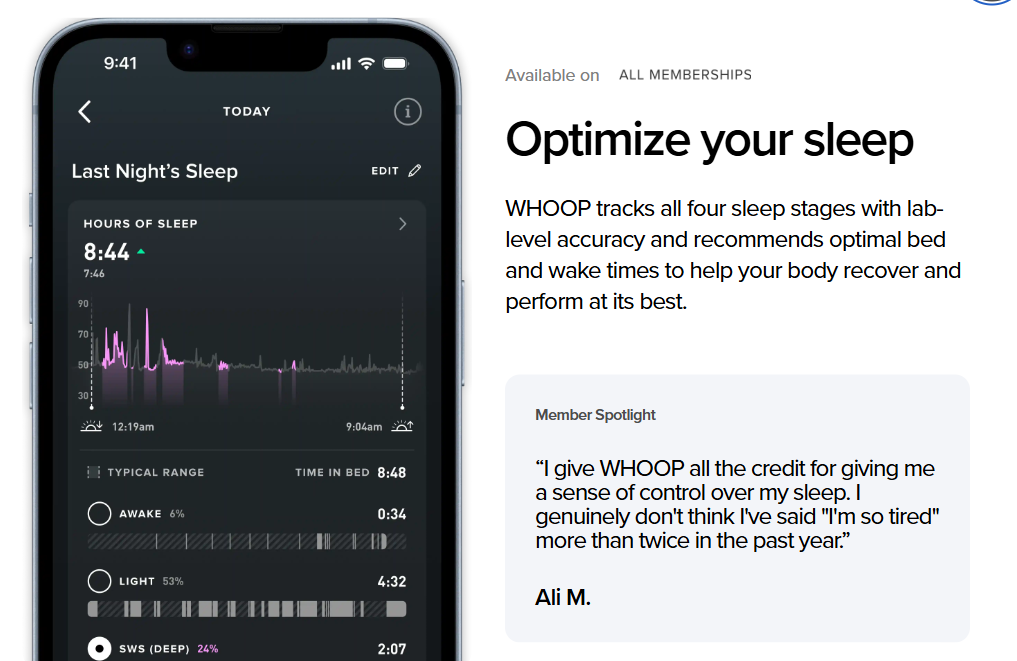
WHOOP is a wearable built around continuous recovery and performance tracking.
Like Eight Sleep, it collects biometric data (heart rate, HRV, respiratory rate, and sleep metrics), but it does it 24/7. It then translates that data into daily scores to help guide your decision-making. Everything centers on two metrics: strain, which reflects the physical load you’re putting on your body, and recovery, which reflects how ready you are to perform.
Sleep feeds directly into this. WHOOP tracks sleep duration and efficiency by sleep stage, factors it into your recovery score, and gives you recommendations for getting better rest.
Rather than changing your environment, WHOOP focuses on helping you understand how your body is responding, so you can then adjust your behavior. For example, you might need to modify your training intensity, adjust your sleep timing or improve your consistency.
WHOOP helps guide you to make better decisions, but making those changes is up to you.
Active Cooling vs Wearable Recovery
Eight Sleep and WHOOP approach recovery differently, and that difference changes how they might fit into your routine.
WHOOP works as a system that observes what is happening in your body and provides insights after the fact. It helps you identify patterns over time, so you can adjust your training, sleep timing, or recovery habits based on the data.
Eight Sleep works the other way. Instead of only showing you what happened overnight, it continuously adjusts bed temperature in real time to help support deeper, more consistent sleep.
That distinction matters because recovery isn’t always limited by awareness. Many people already know they need more sleep or better habits, but environmental factors like overheating at night can still disrupt sleep quality even when routines are consistent.
That’s why the two end up serving different needs. WHOOP is especially useful for people focused on training load, strain, and long-term performance trends. Eight Sleep is built for improving overnight recovery by creating a sleep environment that adapts automatically throughout the night.
Eight Sleep Pod: Why Temperature Control Changes How You Sleep
Body temperature regulation is directly tied to sleep quality. Your core temperature naturally drops to help you fall asleep, fluctuates throughout different sleep stages, and rises again before waking.
A disruption in that process, such as a warm room or heavy bedding, can cause sleep quality to decline. You might find that it takes longer for you to fall asleep, that you experience lighter sleep, or that you wake up more frequently in the night.
Temperature matters even after you fall asleep. That sounds minor, but it can make a big difference. A small increase in body heat can wake you up without you realizing it, and still drag down your sleep quality.
This is where Eight Sleep focuses its impact. The active Sleep System adjusts bed temperature throughout the night to support each phase of sleep. It cools the body to help you fall asleep faster, holds a lower temperature during deep sleep, then gradually warms you as you wake.
This is especially helpful for people who:
- sleep hot
- experience night sweats
- wake up too early
- share a bed with someone who prefers a different temperature
- experience daytime sleepiness
Temperature is one of the biggest factors in sleep, and it’s one of the hardest to control manually. Eight Sleep automates that process.
No Wearable Required
Eight Sleep tracks your biometrics (heart rate, HRV, respiratory rate, and sleep stages) using sensors embedded in the mattress cover, so there’s nothing to wear or charge. For people who dislike wrist straps or rings, or just don’t want another device to manage overnight, having the sensors in the cover removes the main friction of long-term tracking.
Optimization That Runs on Autopilot
What sets Eight Sleep apart is what it does with your data. Its autopilot system learns from your sleep history, physiological signals, and environmental conditions, then adjusts bed temperature automatically as your body moves through each stage of the night. The longer you use it, the more personalized those adjustments become.
WHOOP: Built for Continuous Performance Tracking
WHOOP focuses on performance optimization through continuous tracking. By measuring strain, it shows you how much physical load your body is taking on, and its recovery score reflects how ready your body is to perform. Both of these metrics are based on data like HRV, heart rate, and sleep.
That’s what makes WHOOP especially valuable for people who train regularly and want to manage intensity, avoid overtraining and improve consistency. WHOOP is less about changing sleep directly and more about understanding how your sleep fits into overall recovery.
Strain and Recovery Scoring
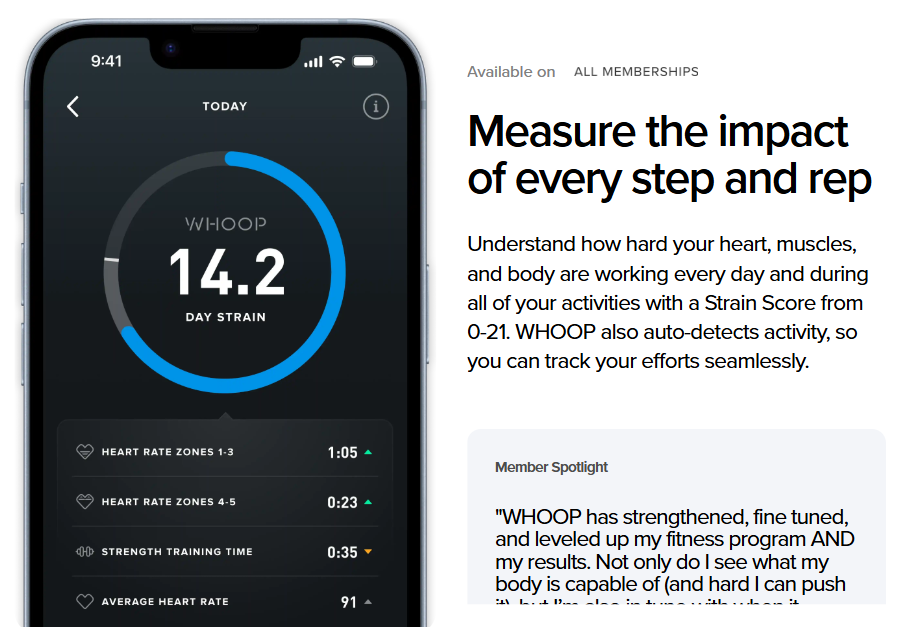
WHOOP’s daily scores are where the data actually becomes useful. Strain tells you how hard you pushed yourself, and recovery tells you how ready you are to go again. Put those two together and you’ve got a simple read on when to train hard and when to ease off, which is really the whole goal when it comes to not overtraining.
All-Day Wearable Tracking
WHOOP’s biggest strength is that it works all day, not just while you sleep. As a wearable, it follows your activity, stress, and physiological responses all day, wherever you go. That gives you a much fuller picture of your health than any sleep-only system could, though it’s worth remembering that WHOOP only shows you your trends. Changing your habits is up to you.
Can You Use Eight Sleep and WHOOP Together?
Yes, and many recovery-focused users do.
It’s easy to see these two as competitors, but they actually solve different parts of the puzzle. WHOOP focuses on measuring recovery, strain, and performance trends, giving you a clear read on how stress, sleep, training, and habits affect your recovery over time. Eight Sleep focuses on improving the quality of sleep itself, using temperature regulation and environmental optimization to work directly on one of recovery’s biggest drivers.
So when you run them together, you’ve got both ends covered. WHOOP shows you where your recovery stands and why, and Eight Sleep goes to work on the conditions behind it, adjusting your sleep environment for you all night long. For athletes and anyone serious about performance, that pairing gives you the best of both worlds: a clear read on your recovery, and better sleep to actually back it up. There’s no need to pick just one.
Which System is Best for You?
WHOOP and Eight Sleep aren’t really interchangeable. They solve different parts of the same problem, so the right pick comes down to what you’re actually trying to fix: getting better insight into your recovery, or finding a more direct way to improve your sleep.
If you love having the full picture, WHOOP is probably your match. It’s the stronger choice for anyone who wants deep performance and recovery analytics all day long, and if managing your training load, keeping an eye on strain, and watching your long-term trends is what matters most, it gives you exactly the information you need to make informed decisions.
Eight Sleep, on the other hand, is all about the sleep itself. By adjusting your temperature automatically through the night, it goes straight after one of the biggest things shaping your sleep quality and overnight recovery, and it does it without asking you to overhaul your habits.
So if better sleep is the goal, then Eight Sleep is the most direct way to get there. If it’s daytime performance tracking you want, WHOOP makes more sense. And honestly? For a lot of athletes and recovery-minded people, the strongest setup is simply both.
Related Posts:





Alt Protein Team is a team of professionals and enthusiasts committed to bringing you the most up-to-date information on alternative protein, health and wellness, workouts, and all things health-related. We’ve reviewed a lot of products and services so you don’t have to guess when you spend your hard-earned money on them. Whether you want to shed some pounds, build lean muscle or bulk, we can help you figure out what you need to do and what you need to have to achieve your goals.