

Most men begin noticing negative hormonal shifts in their mid-30s. Their energy drops off, recovery from workouts takes longer than it used to, and sleep stops being restorative even when you’re getting enough of it. Motivation fades, body composition shifts, and the usual fixes stop working.
So they go to the doctor and hear that they’re “fine.” They might even persuade their doctor to run a panel of bloodwork, only to be told a few weeks later that everything is within “acceptable ranges.”
As a result, these symptoms often get written off as stress, aging, or poor sleep hygiene. Sometimes, those are indeed contributing factors, but in many cases, the root cause can be traced to hormonal and metabolic shifts that standard annual bloodwork simply doesn’t measure.
As a medical community, we can do better than this. Research has borne out time and again that tracking the right biomarkers over time provides a clearer picture of health and its trajectory than one-time tests.
With that in mind, let’s go over some of the most important biomarkers that men should be paying attention to.
At a Glance: The Key Biomarkers Men Should Track
| Standard Range | Optimal Range | What It Does | |
| Total Testosterone | 264–916 ng/dL | 500–900 ng/dL | Impacts energy, body composition, mood, and recovery |
| Free Testosterone | 9–30 pg/mL | >15 pg/mL (age dependent) | Influences muscle mass, energy levels, and sex drive |
| SHBG | 10–50 nmol/L | 20–40 nmol/L | Determines how much testosterone is available |
| ApoB | 55–140 mg/dL | <90 mg/dL (lower for high risk) | Reflects how much cholesterol is going into the arterial walls |
| HbA1c | <5.7% (non-diabetic) | 4.8–5.2% | Indicates your 90-day average blood sugar and overall metabolic health |
| hs-CRP | <1.0 mg/L (low risk) | <0.5 mg/L | Detects low-grade inflammation tied to chronic disease |
| Vitamin D | >30 ng/mL | 40–60 ng/mL | Impacts immune function, bone health, inflammation, and mood |
| Vitamin B12 | 200–900 pg/mL | >500 pg/mL | Influences nerve function, energy, and red blood cell production |
| *Standard and Optimal ranges listed in this guide reflect those commonly used in longevity medicine and may differ from medical “gold-standard” reference ranges. These are not intended to be diagnostic thresholds. Individual targets should be discussed with your healthcare provider | |||
Total Testosterone

When men start thinking about hormone health, testosterone is often the first thing that comes to mind. That makes sense; testosterone affects energy, body composition, mood, libido, and recovery. But when it drops, you feel it in ways that are hard to pin on any single cause.
The standard lab reference ranges for total testosterone are very wide from a medical standpoint, but sitting near the bottom of the normal range feels a lot different than being near the top — especially at a younger age.
But we can’t rely on total testosterone alone; it doesn’t tell you the full story. That’s where the next two markers come in.
Free Testosterone
Only roughly 2% to 4% of your total testosterone circulates in your blood as “free” testosterone, unbound to other proteins. This is the fraction that enters your cells and does the real work, like building muscle from protein, elevating energy levels, and maintaining sex drive.
That’s how two men with identical total testosterone levels can feel completely different. If their free testosterone levels are significantly different, one can feel incredible and the other terrible.
It’s also why free testosterone is often a better indicator of how you’re functioning hormonally than total testosterone — especially for men over 40. However, most standard panels don’t include it. You have to either ask for it to be tested or use a testing service that builds it into their standard panel.
SHBG
SHBG (sex hormone binding globulin) is intrinsically tied to testosterone and free testosterone. It’s a protein produced by the liver that binds to testosterone, making it unavailable to your cells. The higher your SHBG, the less free testosterone you have circulating, regardless of what your total testosterone reads.
Depending on your overall health and condition, SHBG levels can fluctuate like any other hormone. Conditions like insulin resistance, obesity, and hypothyroidism tend to lower SHBG, while hyperthyroidism, calorie restriction, and certain medications raise it.
SHBG levels also tend to rise with age, so even if your total testosterone stays relatively stable, your usable testosterone is shrinking year after year. This is one of the reasons why some clinicians argue that free testosterone is a more honest marker of hormonal status than total testosterone.
ApoB

Most annual physicals test your LDL cholesterol, which is a good snapshot of your vascular health and diet. But this really just tells you how much cholesterol is being carried — ApoB (Apolipoprotein B) tells you how many “vehicles” are carrying it.
Think of it like cars on the highway. Traffic isn’t really congested by the number of passengers on the roadways but by how many cars are on the road at a specific time. Similarly, the atherogenic particles in your blood (measured by ApoB) are what determine how often cholesterol gets deposited into your arterial walls. As such, ApoB tends to be a stronger predictor of cardiovascular events than HDL and LDL readings alone.
ApoB responds to diet, exercise, and lifestyle changes, and tracking it over time will give you the best view of your cardiovascular trajectory. Specifically, making targeted interventions when ApoB levels are below 90 mg/dL can make a big difference in reducing the risk of early heart disease.
HbA1c
HbA1c measures the percentage of your red blood cells that have “glycated” hemoglobin (meaning sugar has attached to it). It reflects your average blood sugar control over the previous months, making it a more reliable marker for health over time than a single fasting glucose reading.
The clinical threshold for diabetes is 6.5%, and pre-diabetes starts at 5.7%. But elevated HbA1c, even within the “normal” range, is associated with increased risk of cardiovascular disease, cognitive decline, and metabolic dysfunction. If you’re tracking biomarkers with the goal of staying ahead of problems, this is one of the most informative numbers you’ll get. However, it’s not always in standard panels, so you’ll need to make sure it’s included.
hs-CRP
hs-CRP (high-sensitivity C-reactive protein) measures systemic inflammation. Not the acute inflammation you get from a cut or an infection, but the kind that builds up in response to a poor diet, excess body fat, chronic stress, or metabolic dysfunction. This is a slow process, but it promotes chronic disease over time.
hs-CRP is valuable because it responds to the same lifestyle factors you’re likely working on already: better nutrition, regular exercise, proper stress management, and quality sleep. A hs-CRP that drops over multiple tests is a strong signal that what you’re doing is working at a systemic level.
Vitamin D and B12
In our increasingly sedentary lifestyle, vitamin D deficiency is everywhere, with an estimated 60% of men over 50 being deficient. Low vitamin D is associated with higher HbA1c, poor immune response, depression, increased inflammatory markers, reduced muscle strength, and poor physical performance. Luckily, this is often an easy fix with supplementation, but you need to know your starting point to dose correctly.
Vitamin B12 plays a role in nerve function, red blood cell formation, and energy metabolism. Deficiency symptoms include fatigue, brain fog, and mood changes, overlapping heavily with low testosterone symptoms. B12 injections are being offered at most health and wellness spas right now, but they’re largely unnecessary, especially if you eat a balanced diet that includes animal products.
Testing both vitamins together might give some insight into what is and is not contributing to your symptoms.
Why a Single Blood Test Isn’t Enough, and Where a Structured Program Fits In

Getting bloodwork done once tells you where you stand on one particular day — it doesn’t tell you where you were or where you’re heading. This is because biomarkers fluctuate in response to sleep, diet, stress, training/activity load, time of day, and dozens of other variables. So a single snapshot is useful data, but it’s not the full story.
Data trends are where the value lives.
This is where most guys hit a wall. They get motivated, order a panel, see the results, and then they have no idea what to do next. Or they do make changes, but they never retest to see whether those changes are working.
Structured testing programs have become an increasingly common solution to this problem. The model is pretty straightforward: patients undergo a more comprehensive panel, review results with a clinician who specializes in interpreting those markers, build a game plan, and then retest a few times a year to track how those interventions are working.
The clinical component is really key. With the help of a medical expert who understands optimal ranges (not just standard reference ranges) and will connect your numbers to your symptoms and goals, adding a layer of confidence that a results email just doesn’t provide. Following that, pairing your results with a health coach who can help you execute on the plan sets you up for success and best results.
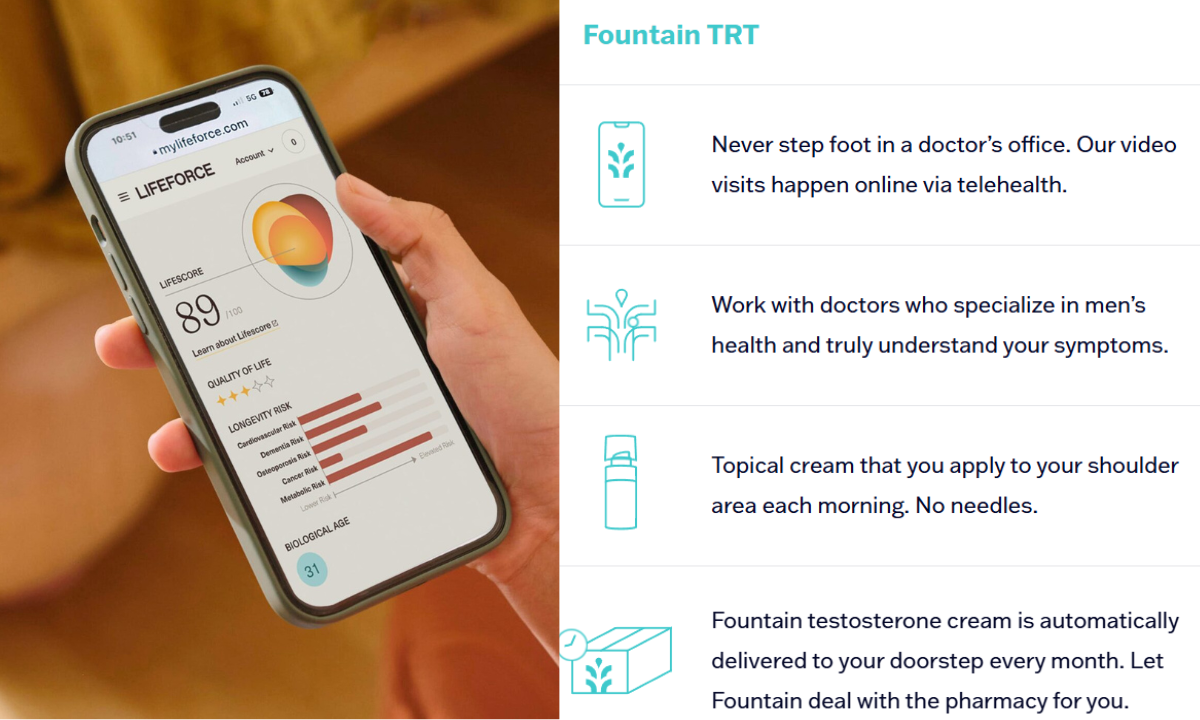
Lifeforce is a common, robust program that’s built around this model, sitting between a basic at-home testing kit and expensive concierge medicine. Members get over 50 biomarkers tested by a licensed phlebotomist. You then meet one-on-one with a clinician via telehealth to review your results and build a personalized plan, and you retest every quarter to track progress. The plan may include lifestyle modifications, supplements, peptides, or prescription therapies when clinically appropriate. They also assign a dedicated health coach who works with you between visits to turn recommendations into daily action.
The lesson: if you’re going to track your biomarkers, do it over time, with expert interpretation, and with a plan attached to the results.
Start with the Basics, Then Build Up from There
You don’t need to test every biomarker in existence to get a useful read on your health. Start with the markers covered in this guide, which will give you a solid baseline across hormone health, cardiovascular risk, metabolic function, inflammation, and nutritional status. Make some changes, and then retest. Compare your numbers over time, and pay attention to how changes in your training, nutrition, sleep, and stress impact your body.
If at all possible, start reclaiming your health with a structured program that will test and track all your markers (not just the standard ones) so you can get back to doing the things that you love to do!
Related Posts:





Trevor is a licensed chiropractor with a Master’s degree in Sports Medicine and hands-on experience in rehabilitation and physical therapy. He works daily with patients to restore movement, reduce pain, and improve performance. His real-world experience in injury recovery, mobility training, and evidence-based care allows him to translate complex musculoskeletal and sports medicine concepts into clear, practical guidance so people can move better, recover smarter, and stay active for the long term.