
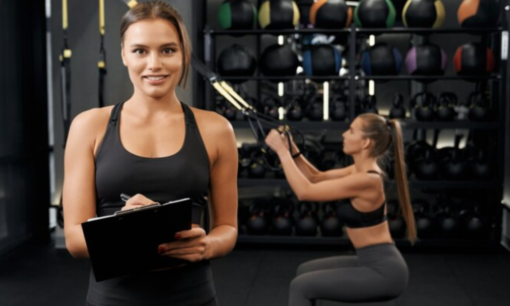
I remember the first all-female group fitness class I taught at a women’s-specific gym. Participants ranged in age from 25 to 65, and athleticism was just as wide a gap.
After that first class, I thought to myself that my personal training certification didn’t prepare me for what I’d just gotten myself into. I needed a certification specifically designed for coaching women. Unfortunately, at that time, the women’s-specific movement was still gaining traction, so I had to learn by doing.
Fast forward to today, and most certifying personal trainer organizations offer a women’s fitness specialization. While this is good news, choosing which one to take can be overwhelming.
I’ve narrowed the selection to a few leading organizations offering women’s fitness certification pathways, including NASM WFS, Girls Gone Strong, and ISSA Women’s Health. This guide will summarize those different pathways. It will also cover what trainers should know before committing to a women’s fitness specialty and how to incorporate it into your personal training business.
Why Add a Women’s Fitness Specialization?
Women are the most influential and fastest-growing demographic in the fitness industry. However, few feel confident finding a trainer who can support them. As a 48-year-old woman who has been an athlete since a young age, I have learned to seek out coaches and trainers who specialize in working with women, as they seem to have a better understanding of the female body across different life stages.
I realized the importance of this when I turned 40 and started to notice my body changing. My joints were sore in the morning; it became harder to build muscle; flexibility decreased; and now it takes longer to lose those extra pounds you gain from having fun on vacation.
Even though I have the knowledge and experience coaching women, I still like to work with a trainer who specializes in women’s fitness, understands these challenges, and knows what strategies work. This alleviates a lot of frustration and speeds up progress.
What to Consider Before Choosing a Certification
If you’re already a personal trainer, a specialty certification can be valuable. While a general personal trainer certification gives you a solid foundation, a specialty certification focusing on women’s fitness can help you develop a deeper understanding of the unique challenges women experience at different life stages and how to help them meet their fitness goals during those times. If a large portion of your client base is women, or you would like to start working with more female clients, it might be worth considering a women’s fitness specialty certification.
Your goals should be the deciding factor in choosing a women’s fitness specialization, so before committing, it is important to think beyond the course material and continuing education credits you will earn.
Consider:
- The current women’s fitness landscape in your area
- Why you want to specialize in women’s fitness
- If this new certification fits with any of your other certifications
- How adding a women’s fitness specialization will affect your services
- If changing your client intake assessment is necessary
- How you will communicate your new expertise to existing and prospective clients
- How you structure and price your services. Your market may not value your specialty
- Your learning style and whether a self-paced program is right for you. You may need more of a peer community to hold you accountable
Women’s Fitness Certification Pathways for Trainers
Over the years, I’ve worked with women of all ages and fitness levels as a personal trainer, group fitness instructor, and coach. Every one of them has different goals, challenges, and life experiences but one thing is consistent: they all benefit from coaching that recognizes their unique needs at their specific stage in life.
That growing awareness has led to increased demand for education specifically focused on women’s fitness. Today, fitness professionals have a wide range of certification pathways to expand their knowledge and better serve female clients.
NASM – Women’s Fitness Specialization
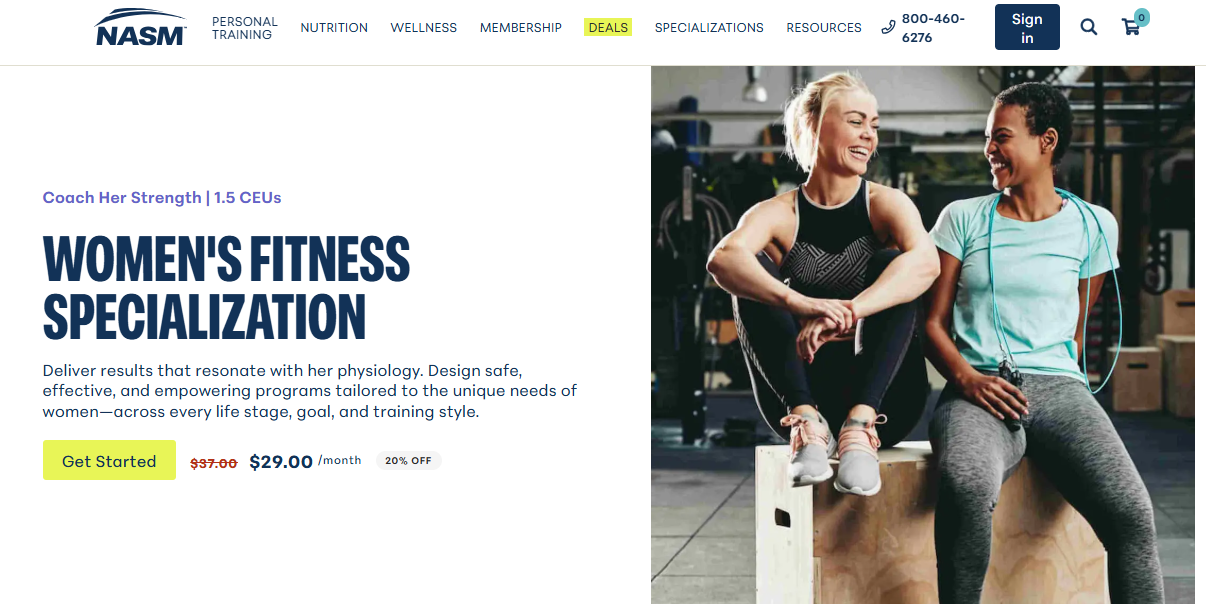
NASM stands for National Academy of Sports Medicine. NASM is a globally recognized organization specializing in personal trainer certifications and nutrition and wellness education, with specialization courses available, such as Women’s Fitness.
There are no prerequisites for this course; however, NASM recommends that participants have a wellness credential or a bachelor’s degree.
The course is intended for certified personal trainers, wellness professionals, nutrition coaches, group fitness instructors, and PE teachers. Upon completion and passing the exam, participants earn CEU’s.
Course Details:
Key chapters included that are specific to working with women at later life stages include:
- Hormones and Weight Control
- Pregnancy and Postnatal
- Menopause
- Psychological and Motivational
Flexibility, cardiorespiratory fitness, core strength, balance, plyometrics, resistance training, and nutrition are also covered with a women-specific focus.
I appreciate that NASM has included chapters on program design, business, and professionalism. This information can be helpful when designing your program.
This course is self-paced and can be started immediately.
Girls Gone Strong – Women’s Health Certification
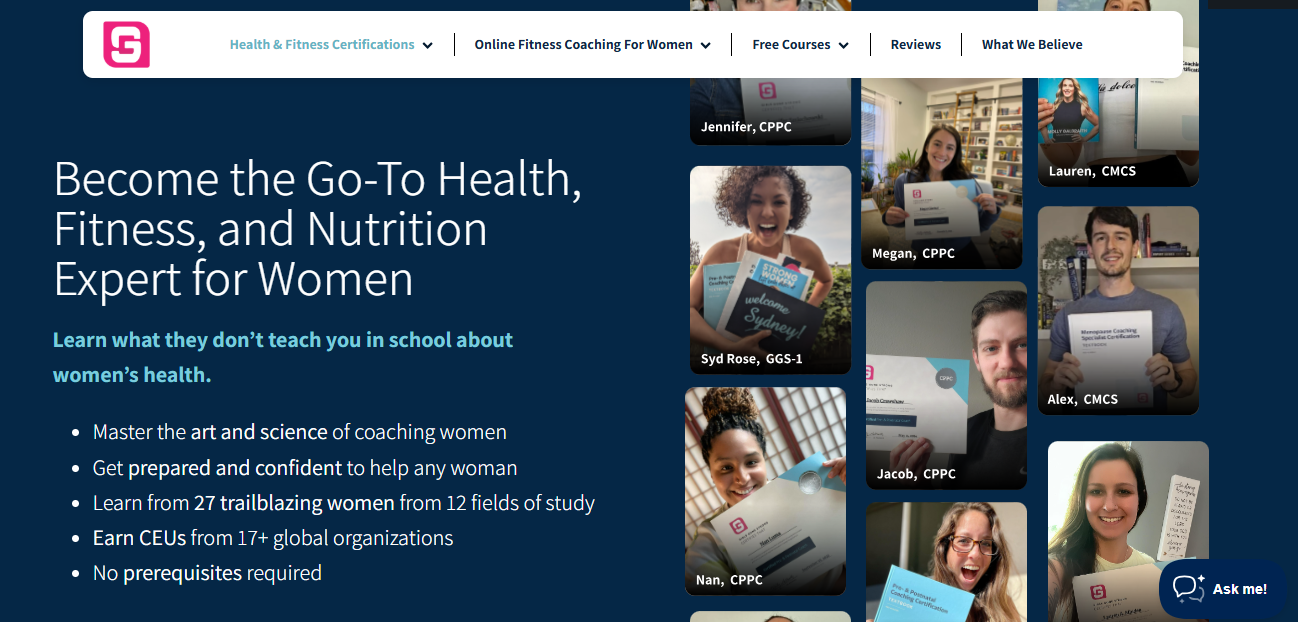
Girls Gone Strong was founded by seven women in 2011 and is 100% focused on women’s health and fitness. Contributors include PhD’s, MD’s, OB/GYN’s, Pelvic Health physios, university researchers, psychologists, strength coaches, and more experts who are knowledgeable in different women’s life stages.
GGS offers seven paid certifications focused on working with women at different life stages, as well as free courses and cheat sheets for women’s-specific topics such as menopause, pregnancy, hormones, pelvic health, and nutrition, to name a few.
Course Details:
This course is broken into five units and is self-paced.
- Unit 1 – Foundations of Coaching Women
- Unit 2 – Female Anatomy and Physiology
- Unit 3 – Nutrition and Eating Skills
- Unit 4 – Movement, Exercise, and Program Design
- Unit 5 – Coaching in the Real World
Spots are limited for joining the course. If you miss the current enrollment period, you will have to wait until the next available enrollment period to begin the course.
ISSA – Women’s Health Specialization
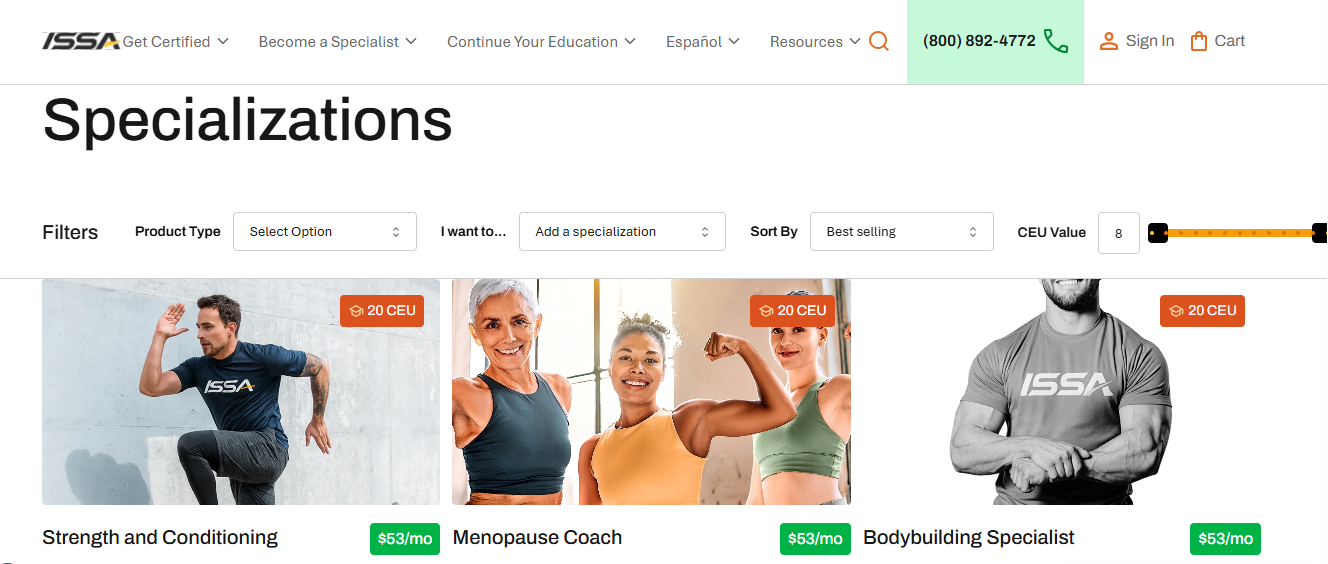
ISSA stands for International Sports Sciences Association. They are a globally recognized organization that specializes in personal trainer certifications as well as specialty certifications in nutrition, yoga, pilates, weight management, and more.
ISSA’s biggest advantage is flexibility. Trainers who already hold a CPT and simply want to add a women’s fitness specialty without committing to a larger coaching ecosystem may find ISSA appealing. The course is designed to layer onto an existing training business rather than replace it, making it a practical option for trainers who want to expand their service offering while maintaining their current client roster.
The women’s health specialization is intended for trainers who want to add a women’s specific niche to their existing business.
Course Details:
Key areas of focus:
- Training women in the midlife stage
- Focus on pre, peri, and post menopause fitness
- Coaching for long-term lifestyle changes
- Science-based understanding of women’s physiology
This course is self-paced and can be started immediately.
Which Certification Is Right for You?
If you’re still deciding which course to take, you may want to ask yourself:
- Do I want to simply have a basic understanding of the female body across different life stages for my existing clients?
- Do I want to add a women’s small group training class to my schedule?
- Do I want to work with women over 40 or focus more on pre- and postnatal fitness?
- Or do I want to be considered the “go-to” women’s fitness specialist at my gym?
All three organizations have committed to focusing on the midlife stage of women’s fitness and are recognized globally. NASM and ISSA are similar in course content and generally more affordable than GGS.
In addition to the midlife stage, NASM has a section on pre- and postnatal life stages.
I would choose NASM or ISSA if my goal was to better understand how to work with my existing female clients who are going through the midlife stage, or even the pre- and postnatal stages, or if I wanted to add a women’s small-group training class to my schedule.
GGS is a commitment, community, and lifestyle. I would choose this pathway if I were a newer fitness professional, or if I were planning to reroute my business to focus solely on women-specific health and fitness and wanted to be known as the “go-to” women’s fitness professional.
Final Thoughts
All three pathways focus on women’s fitness. However, they each take a different approach. Take the time to compare the options and curriculum so you can make an informed decision and choose the pathway that aligns with your goals and the direction you want to take your business.
Once you decide, you should also give some thought to logistical factors such as:
- Course format
- Time commitment
- Individual sessions vs small group training classes
- Class length
- Cost
Adding a women’s fitness specialization can be a meaningful way to expand your knowledge and better support the clients you already work with. For many trainers, it can be incorporated into existing services rather than creating an entirely new business model.
This new certification may also provide an opportunity to better support existing female clients by refining assessments, intake conversations, programming, and coaching strategies, while potentially creating justification to increase session rates as your expertise grows.
As with any continuing education decision, there is no single pathway that is right for everyone. You’ll want to base your decision on your professional goals and the type of services you intend to provide.
Before making your decision, take the time to carefully review the available options, consider how the credential will fit with your existing business, and think about how you plan to apply what you learn.
Becoming a fitness specialist is an investment of both time and money, one of which you can’t ever get back, so it makes sense to choose a pathway that aligns with where you are today and where you would like your career to go.
Related Posts:



Alt Protein Team is a team of professionals and enthusiasts committed to bringing you the most up-to-date information on alternative protein, health and wellness, workouts, and all things health-related. We’ve reviewed a lot of products and services so you don’t have to guess when you spend your hard-earned money on them. Whether you want to shed some pounds, build lean muscle or bulk, we can help you figure out what you need to do and what you need to have to achieve your goals.