
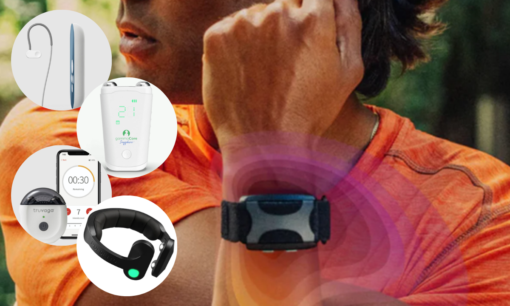
If you’ve been looking into ways to improve your sleep, focus, and stress resilience, you may have stumbled across the growing universe of wellness wearables. One of the most talked-about options is Apollo Neuro, a device that uses gentle vibrations designed to support relaxation and stress regulation throughout the day.
Despite its popularity, Apollo Neuro may not be the ideal fit for everyone. There are a few causes for hesitation; some users may be apprehensive about the higher cost, others find the idea of wearing a device on their wrist or ankle all day off-putting, and others seek tools with a stronger clinical backing. Most importantly, people typically consider comfort, convenience, and long-term usability before they make a decision.
As interest in nervous system wellness has grown, the market has in turn expanded beyond vibration-based wearables. Today, alternatives include a much broader array of approaches, including non-invasive vagus nerve stimulation (VNS) devices, ear-based neuromodulation systems, and other relaxation-focused technologies designed to support calm, recovery, and autonomic balance through different physiological pathways.
Informed by my background in human physiology and research experience, this guide reviews leading Apollo Neuro alternatives to help you compare options based on goals, preferences, and budget.
At a Glance
- Apollo Neuro is a wearable that uses gentle vibrations to support overall wellness.
- Alternatives differ mainly in mechanism. Some use direct vagus nerve stimulation (VNS), while Apollo relies on vibrotactile feedback stimulation.
- Apollo Neuro does not belong to the vagus nerve stimulation or neuromodulation category.
- Nuropod is often positioned as a leading alternative. It uses ear-based stimulation at the tragus, a site associated with vagal nerve branches involved in autonomic regulation, and is linked to ongoing clinical research and neuromodulation studies.
- Other devices, including gammaCore, Truvaga, and Pulsetto, use cervical (neck-based) VNS approaches. While clinically relevant within the broader vagus nerve stimulation category, these systems generally introduce more variability in real-world use due to dependence on neck positioning, contact precision, and anatomical differences between users. This can make consistent day-to-day stimulation less predictable compared to ear-based approaches.
Understanding Apollo Neuro Better
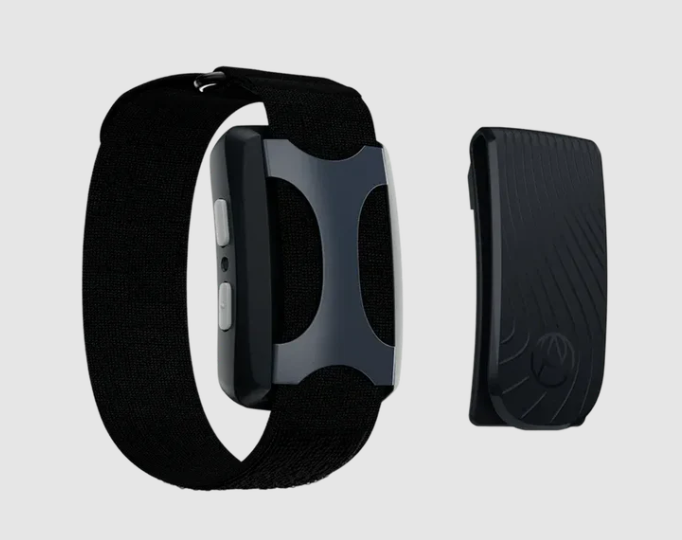
Apollo Neuro is a wellness device that is popular among biohackers, wellness-focused users, and athletes. It is worn on the wrist or ankle to support stress management, sleep, focus, and recovery through vibrotactile stimulation (gentle vibration patterns). However, Apollo Neuro does not deliver vagus nerve stimulation and is not classified as a neuromodulation device in the same way as VNS-based technologies.
The biggest advantage is that the device is non-invasive, easy to use, and comes in a wearable format similar to a smartwatch or a fitness tracker. It connects with an app that has multiple modes for sleep, focus, relaxation, and recovery, making it a popular option for users interested in a vibration-based approach.
Why look for Apollo Neuro alternatives?
Cost
Price can be one of the biggest reasons why people start searching for alternatives. Apollo Neuro belongs to the premium wellness wearable category, priced at $448 plus separate membership charges. Buyers often want to explore other competing devices that offer better performance, more comfortable designs, or similar benefits at a lower cost.
Comfort
Apollo Neuro is worn on the wrist or ankle, like any other fitness tracker or smartwatch. Some users enjoy the wearable format, while others find it bulky and inconvenient for everyday use. For some, it can be difficult to sleep with the wrist device. So, many buyers are now looking for alternatives that offer passive placement options, such as ear- or session-based devices that do not need to be worn all day.
Different Technology
Another major reason people might look for alternatives is the underlying technology. Apollo Neuro uses vibrotactile stimulation, which is a patterned vibration intended to support relaxation and stress regulation through sensory stimulation.
Other devices use direct vagus nerve stimulation through mild electrical impulses applied to either the neck or ear. This translates to a markedly different physiological targeting strategy, where stimulation is intended to directly engage vagal pathways rather than indirectly influence the nervous system through sensory input.
Clinical Positioning
Buyers these days are informed and particularly interested in devices that are backed by solid clinical data and research. While some devices are marketed as wellness and lifestyle-focused, others are more research-forward and clinically validated. Some buyers will want to prioritize devices with larger bodies of published vagus nerve stimulation research and seek alternatives that are positioned more heavily around clinical studies and autonomic nervous system research.
Best Apollo Neuro Alternatives
Finding the right alternative to Apollo Neuro is not straightforward, as competing devices differ considerably in their technology and goals.
Here’s a list of some of the non-invasive vagus nerve stimulation devices on the market, based on mechanisms, research depth, comfort, portability, and long-term usability.
Nuropod
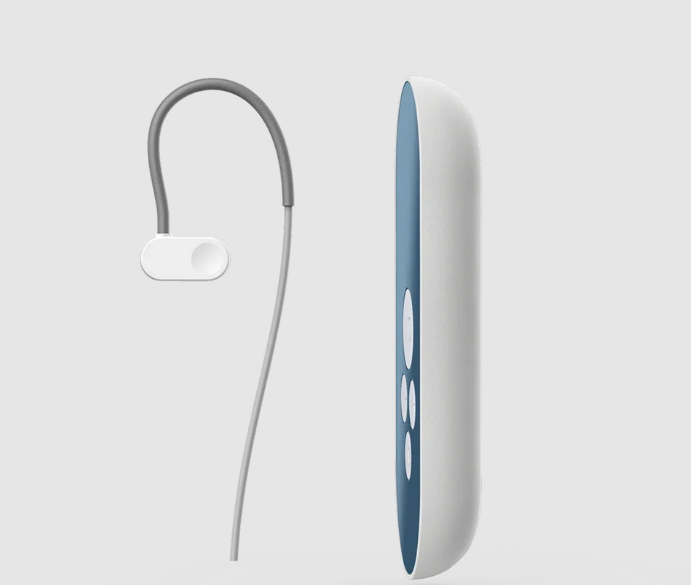
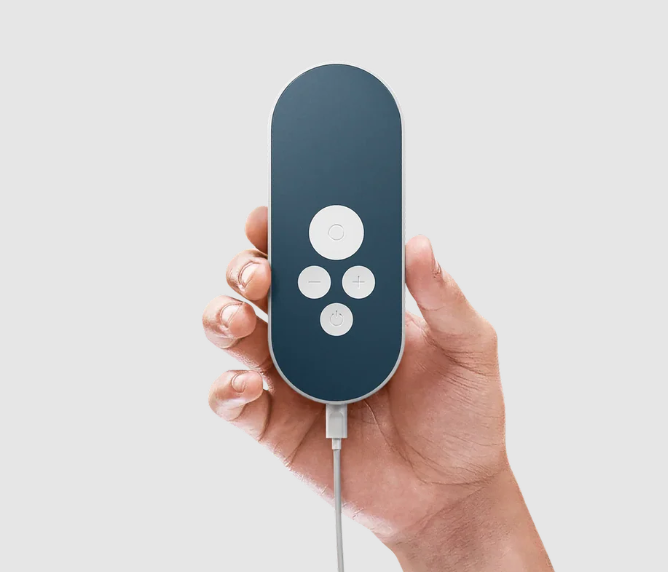
What: Nuropod is an ear-based vagus nerve stimulation device that uses Parasym’s patented Auricular Vagal Neuromodulation Therapy (AVNT™). The company has benefited from more than 10 years of research and development, 60+ completed clinical studies, 100+ ongoing studies, partnerships with 150+ research organizations, and more than 5 million user sessions.
The device delivers gentle electrical stimulation at the tragus, a part of the ear associated with the auricular branch of the vagus nerve. It is designed to support nervous system regulation and help the body shift between stress and recovery states.
Why: While Apollo Neuro and Nuropod can both be used by people interested in stress management, recovery, and overall wellness. However, they take fundamentally different approaches. Apollo Neuro uses patterned vibrations delivered through the wrist or ankle, whereas Nuropod uses targeted electrical stimulation delivered at the tragus of the ear. The tragus provides an externally accessible stimulation site, which reduces reliance on precise repositioning and supports more repeatable activation of the intended neural pathway across sessions.
Price: Nuropod comes at the price of $810, with a $100 subsidy available when joining their remote study. It is also FSA-eligible, offering a budget-friendly solution for buyers.
Key Advantages: Nuropod is backed by more than 10 years of research and development, over 60 completed clinical studies, and more than 100 ongoing research partnerships. It is designed to support multiple wellness goals, including stress management, relaxation, sleep quality, fatigue and burnout, focus and cognitive clarity, and overall nervous system regulation. Its tragus-based design also provides a convenient, gel-free alternative to many neck-based VNS devices.
Nuropod vs. Neck-Worn Vagus Nerve Devices
Nuropod is often compared with neck-based vagus nerve stimulation devices including Pulsetto, GammaCore, and Truvaga because they all fall under the category of non-invasive vagus nerve stimulation. However, they differ considerably in where and how stimulation is delivered.
However, rather than stimulating the vagus nerve through the neck, Nuropod delivers gentle electrical stimulation at the tragus of the ear. This site is associated with the auricular branch of the vagus nerve and has been widely investigated in auricular neuromodulation research due to its anatomically accessible location.
The difference in access point (ear vs. neck) greatly affects how reliably stimulation can be reproduced on a daily basis. Cervical (neck-based) stimulation requires accurate placement over a deeper anatomical region, where small changes in positioning, posture, pressure, and skin contact can all influence the stimulation quality. By contrast, auricular (ear-based) stimulation at the tragus offers a more surface-level, accessible entry point, which removes some of the pressure of dependency on user placement skill or repeated calibration.
Nuropod’s placement at the tragus avoids neck placement entirely and does not require gels, which can also contribute to a more standardized and repeatable set-up for everyday use.
Ultimately, Nuropod not only differs for its access point, but also for its intended comfort, convenience, and its ease of reproducibility.
Downsides: Nuropod comes with a premium price point, which may not suit all budgets. It does not provide a sensory or vibration-based feedback experience, which some users prefer in wearables like Apollo Neuro. Users may experience effects differently, and results may depend on consistent use over time.
gammaCore
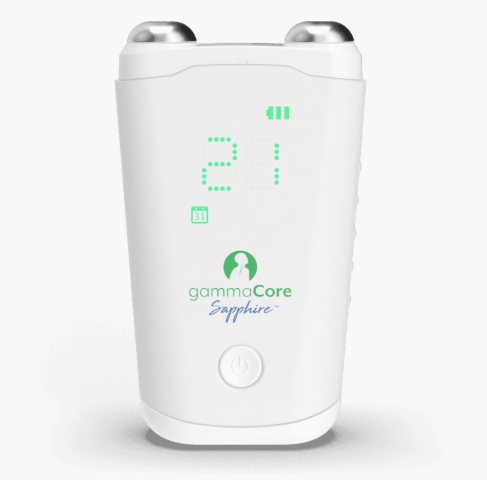
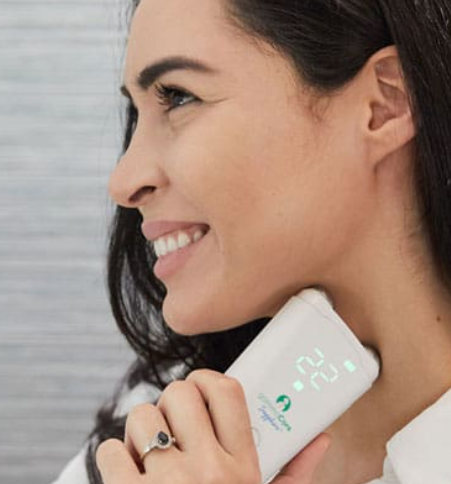
What: gammaCore is a non-invasive vagus nerve stimulation (nVNS) device that delivers mild electrical stimulation through the neck for treating and preventing migraine and cluster headaches. Research suggests that non-invasive vagus nerve stimulation may modulate pain-processing pathways involved in migraine and cluster headache, although the exact mechanism is not fully understood.
Why: gammaCore is compared to Apollo Neuro, as they are both non-invasive vagus nerve stimulation devices that influence the nervous system. Despite sharing the same underlying mechanism of vagus nerve stimulation, they differ in their application and primary medical use.
Price: gammaCore costs about $598/month, with eligible patients able to save up to $100/month for 12 months.
Key Advantages: gammaCore’s strength is its formal research and regulatory positioning in migraines, cluster headaches, and hemicrania continua (HC) & paroxysmal hemicrania (PH)-related applications. Vagus nerve stimulation has been studied for its potential role in modulating pain pathways involved in these conditions.
Downsides: The device is specifically designed and marketed to provide relief for migraines and headaches, unlike Apollo Neuro, which promotes benefits across multiple areas such as sleep, focus, energy, and recovery.
Truvaga
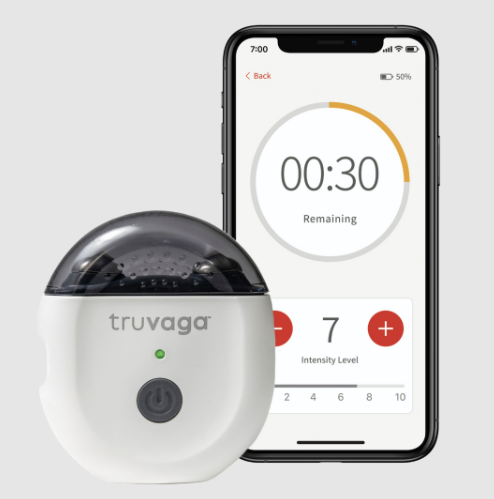

What: Like gammaCore, Truvaga delivers mild electrical stimulation through the neck in short sessions designed for ease of use. By sending electrical signals directly to the vagus nerve trunk, the device provides short, targeted stimulation intended to engage vagal pathways, making it suitable for short sessions and general wellness use.
Why: Both Truvaga and Apollo Neuro target the same wellness goals, such as nervous system support, recovery, better sleep, and stress management, so buyers often compare them. The difference is in their mechanism. While Apollo Neuro uses vibration-based stimulation through the wrist or ankle, Truvaga stimulates the vagus nerve through a mild electrical impulse applied to the neck.
Price: Truvaga is priced at $325 to $499, depending on whether you choose Truvaga Plus or Truvaga 350.
Key Advantages: Truvaga is based on multiple peer-reviewed studies and randomized controlled trials related to its VNS technology platform. The device is handheld, portable, and designed around short two-minute sessions rather than continuous wear, with an app that is relatively straightforward to use.
Downsides: Some users may find the neck-based stimulation unfamiliar and need time to find the correct position and intensity level. Results can vary among individuals, and the sensation is different from the calming feeling you get from Apollo Neuro.
Pulsetto
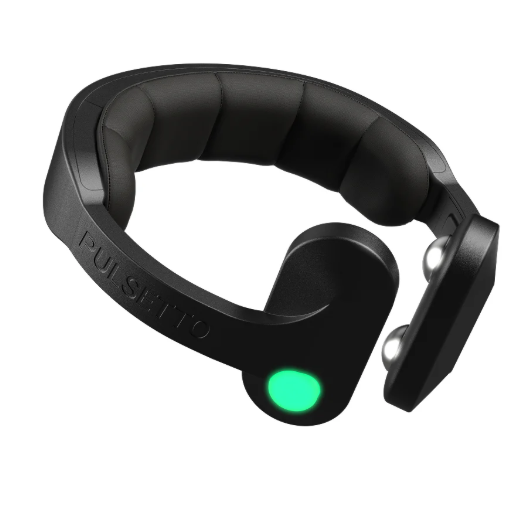

What: Pulsetto is a non-invasive vagus nerve stimulation (VNS) device that delivers mild electrical stimulation through the neck-based wearable to support stress, focus, mood, and sleep, and is designed for relaxation-focused wellness routines. It works through short app-guided sessions.
Why: Pulsetto is often compared to Apollo Neuro because both target similar wellness concerns, including stress management, nervous system regulation, recovery, and better sleep using noninvasive techniques. However, Pulsetto uses direct vagus nerve stimulation (VNS), unlike the Apollo Neuro, which delivers low-frequency, rhythmic vibrations to the skin.
Price: Pulsetto comes in two models at $262 and $283, respectively.
Key Advantages: Pulsetto is intended to support relaxation and parasympathetic activity. The device works with guided routines and structured wellness sessions where you can choose programs for stress, anxiety, and more. The device seems more accessible and consumer-oriented compared to other clinically focused products on the market.
Downsides: Pulsetto’s neck-based design is more noticeable and less discreet than the ear- or wrist-based alternatives, and the stimulation may feel stronger than Apollo Neuro’s gentler vibration patterns. Applying gel before use can be inconvenient for some users. While it draws on broader VNS research, its device-specific clinical evidence remains more limited than medically oriented systems.
Final Thoughts
Apollo Neuro takes a vibration-based, wrist- or ankle-worn approach to support stress, sleep, focus, and recovery. However, users may eventually start looking beyond it due to price, comfort, and placement, or a desire for technologies that feel more directly connected to vagus nerve research.
The alternative devices included here vary considerably in both mechanism and usability. Neck-based VNS systems are generally intended for structured, session-based stimulation but frequently require more setup precision and more active user involvement, which can reduce the ease of long-term integration compared to ear-based approaches.
Among these tools, Nuropod is a promising alternative that combines tragus-based vagus nerve stimulation with a research-forward approach and ease of use. While it undeniably comes at a high price, what it decidedly offers is comfort and a strong research foundation.
Ultimately, of course, there is no one-size-fits-all option. The best choice will depend on whether you value comfort, wearability, clinical orientation, or long-term integration into your daily routine.
Related Posts:





Neha Rai is a PhD-trained scientist with extensive experience in both academic and industrial research, as well as science education. As a medical writer, she creates SEO-friendly, clear, and evidence-based content. She is passionate about making complex health information accessible and promoting health equity.