As a bodybuilder, powerlifter, or athlete, you already know how to train to failure, track your macros, and nail your supplement timing. But if you are still sleeping on a standard mattress with stuffy sheets, you are bottlenecking your muscle growth.
Sleep is when your body releases the majority of its natural growth hormone and synthesizes new protein. For a bodybuilder carrying significantly more mass than the average person, a standard bedroom setup will not cut it. Instead, you should optimize your entire sleep-environment stack for muscle hypertrophy and performance.
My Quick Breakdown
You don’t need to run out and buy everything out there to get a good night of rest and rebuild. But here is my quick breakdown of the primary components you need for an effective stack:
| Layer | Component | Price Range | Function |
| Foundation | Heavy-duty frame and zoned hybrid mattress | $75 to $300 and $800 to $2,200 | Prevents spinal misalignment and accommodates heavy body mass |
| Passive Thermal | 100% Bamboo Lyocell sheets | $170 to $340 | Wicks sweat and allows maximum airflow from the cooling layer below |
| Active Thermal | Eight Sleep Pod Cover | $1,500 to $2,999 and subscription | Regulates core body temperature to maximize deep sleep and HRV |
| Positioning | High-loft contour pillow and Knee pillow | $40 to $120 and $20 to $50 | Supports cervical spine and removes torque from the lower back and hips |
| Atmosphere | Blackout curtains and 65°F ambient room setting | $15 to $80 per pair and highly variable | Triggers natural melatonin production; complements active bed cooling |
Now let’s look at each of these recommended layers in more detail.
Foundation: Mattress and Frame for Heavy Frames
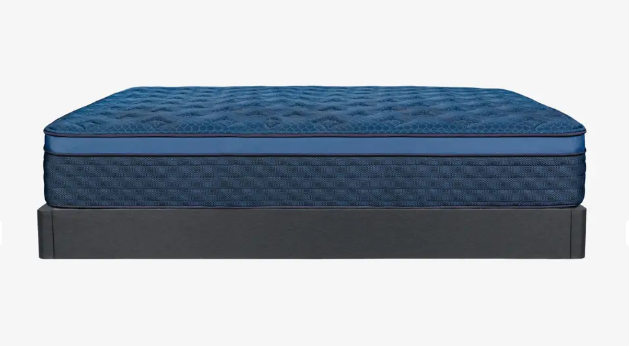
At the very bottom, you’re starting with the right type of foundation both literally and figuratively. You need a heavy-duty frame that can support the denser muscle of an athlete and, on top of that, you need a zoned hybrid mattress that accommodates heavier body mass with alignment support in key areas like the spine, hips, and shoulders, where a lot of that denser muscle tends to reside.
Carrying 200, 250, or over 300 pounds changes how a bed responds to your body. Standard mattresses are built for average-weight individuals, so they will quickly sag under bodybuilding physics.
The downside is that this means you struggle with a misaligned spine and lower back pain.
You’ll want to avoid standard memory foam mattresses; this will cause your body to sink more than you want, trapping your heat and leaving you stuck. Instead, go for a high-density hybrid mattress, something like the Titan Plus Luxe Hybrid mattress engineered for heavy sleepers with a contour to the most important muscular joints on your body. You can also try the Winkbed Plus Hybrid mattress which, again, is built for high-density support, with pocketed coils, structural support where you need it most, like the hips and the shoulders, and an ultra-durable lumbar zone that ensures your spinal alignment stays where it should.
Thermal Controls: Temperature Regulation and Deep Sleep
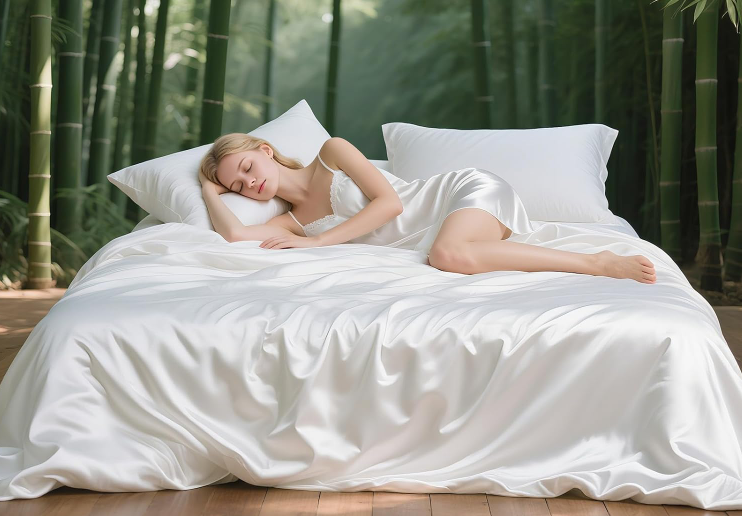
My biggest issue as an athlete is temperature regulation when I’m sleeping. Your core body temperature has to drop by about two degrees to initiate and maintain deep sleep.
That might sound easy, but because muscle tissue is highly metabolic and generates significant heat even at rest, bodybuilders run much hotter than the average person. So it’s not uncommon to get trapped in a hot bed, and that destroys slow-wave (deep) sleep, which is the exact phase where tissue repair occurs.
That’s why I recommend starting with passive cooling controls, adding active cooling if you have the option, and keeping your environment cool.
Passive Thermal Controls
The best passive temperature controls are things like 100% bamboo or eucalyptus sheets. You want to avoid low-grade cotton blends because these trap moisture and heat, but eucalyptus and bamboo are breathable, so they will move that heat away from your skin.
Also consider an open-cell mattress protector that is designed for better airflow. If you try to get a standard waterproof protector, it’s going to act like a plastic bag and trap more heat when you want the exact opposite.
Active Thermal Controls
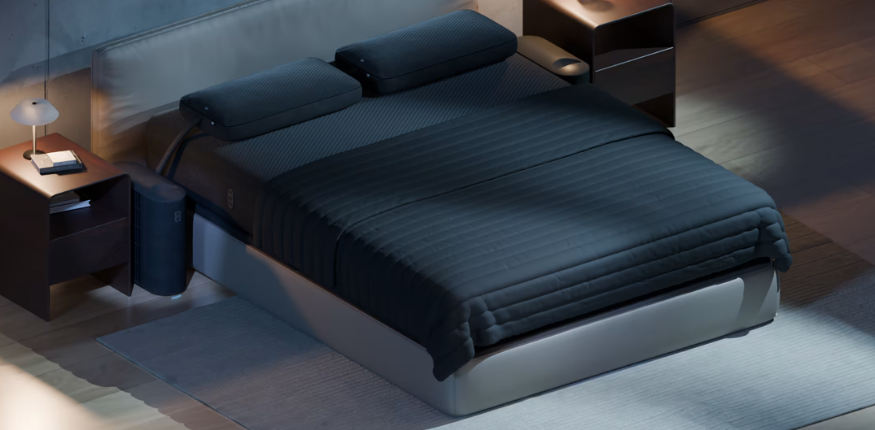
If you can afford to splurge, there are data systems like the Eight Sleep Pod, with a Cover that can go on top of the hybrid mattress you already have and work to actively regulate the mattress temperature based on the ambient temperature in your room. This type of adjustment can go significantly farther from hot to cold than passive systems.
The Eight Sleep Pod Cover fits over any existing mattress so you can keep your foundation the same. With the monthly subscription, the Eight Sleep Pod collects biometric and environmental data through an array of invisible sensors embedded directly into its Active Grid cover. This tracking includes continuous monitoring of your heart rate, heart rate variability (HRV), respiratory rate, and sleep stages without requiring any wearable devices. Then the advanced AI engine processes this real-time data alongside ambient room temperature and your historical sleep patterns to dynamically adjust the water temperature in the pod throughout the night, automatically cooling down or warming up to optimize your sleep cycles and keep you in deep sleep longer.
If it detects your heart rate is struggling to drop—a classic sign of central nervous system (CNS) fatigue from heavy lifting—it can automatically lower the bed temperature to assist your body’s recovery and lower your resting heart rate faster. Plus, it’s great for couples where only one of you is an athlete; it has dual-zone independent control so a bodybuilder running a high metabolic rate can freeze their side without disturbing a partner.
Positioning: Aligning Your Body
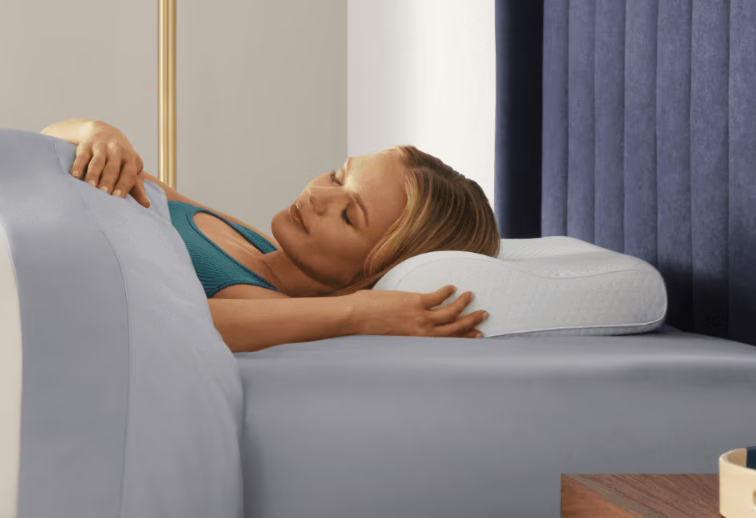
Having the right mattress keeps pressure where it should be and helps with spinal alignment, but there are other things you can do to create the right sleep stack. That extends to positioning your body the right way to accelerate muscle tissue repair, prevent microtrauma in your joints, and maximize cell recovery.
If you end up forcing your body into a twisted or asymmetrical position, assuming you don’t wake up while doing so, you’ll end up struggling with muscle stiffness and an elevated injury risk later in the day when you train.
To avoid all that, you can get things like the Tempur-Pedic TEMPUR-Neck pillow, which goes on top of any mattress and active thermal setup you have, supporting the natural curve of your neck. The Contour Legacy leg pillow is a crescent-shaped wedge that I use because it fits between my thighs and stops my upper hip from rotating forward so that I keep a neutral lower back while I sleep. This helps maximize my tissue repair and prevent any chemical imbalances because of localized muscle tightening. I also don’t want to wake up with joint torsion from those small end-range rotational angles that sometimes happen while I sleep.
I’ve also tried the Cushy Form knee pillow for side sleepers and the Coop Home Goods adjustable knee pillow. The latter was really good at supporting better squat depth and agility with balanced hip flexors because it had removable foam inserts that I could adjust to the thickness I wanted based on my hip width and weight.
Atmosphere: Creating the Right Space
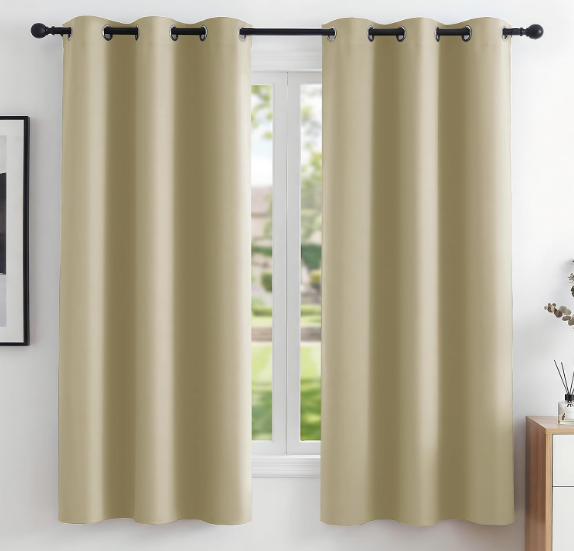
With all of these layers established in your sleep stack, the final layer is having the right atmosphere.
I fought my spouse on blackout curtains for so long because I liked the security of being able to immediately open my eyes and look outside at any random noise.
But really, that just meant I didn’t get a lot of slow-wave sleep, and I had a bad resting heart rate. Once we made the switch, that absolute darkness made a significant difference. I was able to fall asleep faster because of the increased melatonin release, I didn’t deal with sleep fragmentation because I wasn’t woken up by ambient light flashes from cars passing by, and all of this meant lower cardiovascular stress on my body, so I felt recovered when I woke up instead of exhausted.
Blackout Curtains
I recommend Nicetown’s 100% Blackout Curtain Panels because they have a double layer with a sewn-in black liner that blocks light and dampens noise.
If you want to kill two birds with one investment, the Deconovo Thermal Insulated Total Blackout Curtains have a layer of thermal insulation that not only keeps out light but helps maintain low temperatures.
But blackout curtains aren’t just for nighttime. You’d be surprised how much heat can accumulate in your bedroom if you leave your blinds wide open and have bright sunlight filtering in. Try to find good blackout curtains not just to keep your environment relaxing but to help block out that extra heat during the day. This helps systems like a fan or an AC unit work more effectively.
Cool Temps in the Room
Keeping your room around 65° F is the ideal temperature for high-quality sleep. For that, you need more than just temperature regulation tools like the Eight Sleep Pod. Consider opening windows (if it’s not too bright or loud where you live), turning on a fan, or setting your AC to maintain 65. If you just want to manage your daily habits and automatically lower the temperature in your room, you can invest in a Google Nest Learning Thermostat.
Final Tips
And of course, you should create a nighttime routine that supports your recovery. This means no screen time at least one hour before bed. Try light stretching, gentle yoga, or meditation to ease your body and mind into relaxation. If you take supplements like pre-workout, they typically increase your blood flow during a workout, so try supplements like melatonin or valerian root (warning: it smells and tastes like cat breath, but you get used to it) about 30 minutes before bed.
Summing Up
I love my blackout curtains, but they are only part of the equation. With the right knee pillow and temperature controls, I’m able to see noticeable improvement in my recovery and my gains. This helps make every workout more efficient and every sleep more comfortable. By treating your sleep environment as an integrated stack of important and overlapping layers, you can turn the hours you spend sleeping into hours spent recovering.