

Low energy, reduced libido, slower recovery after training, or changes in body composition can send you down a long online rabbit hole. You may quickly find yourself comparing peptide therapy with testosterone replacement therapy, usually called TRT. Online, they are often placed side by side as though they are competing versions of the same treatment. They aren’t, and understanding their distinct uses helps clarify the difference. TRT gives the body testosterone directly. Peptide therapy is a much broader category. It includes medications that work in different ways, are used for different purposes, and vary considerably in both evidence and regulatory status.
So the first question should be what may be causing your symptoms and whether a particular treatment has a sensible role.
Peptide Therapy vs TRT: a Quick At-a-Glance Comparison
| TRT | Peptide therapy | |
| What is it? | Treatment using external testosterone | A broad category of medications made from short chains of amino acids |
| How does it work? | Raises testosterone by supplying it directly | Depends on the peptide. Some imitate natural signals, activate receptors, or prompt the release of another hormone |
| When is it considered? | When symptoms occur alongside confirmed testosterone deficiency | When a specific peptide has a defined role for a clearly identified problem |
| Is it FDA-approved? | Several testosterone products are approved | It depends on the molecule, formulation, and intended use |
| What monitoring is needed? | Testosterone levels, blood count, blood pressure, symptoms, and risk-based checks | There is no standard panel. Monitoring varies by medication |
| Can it affect fertility? | Yes. TRT can substantially suppress sperm production | Effects vary and cannot be generalized across all peptides |
One Is a Treatment. The Other Is a Category.

TRT is relatively straightforward to define. It supplies testosterone through an injection, gel, patch, oral capsule, or another prescribed formulation. “Peptide therapy” is much harder to pin down because it is not a single treatment at all. Peptides are short chains of amino acids involved in many biological processes. Peptide-based medications may act on appetite, metabolism, sexual-desire pathways, growth-hormone signaling, or other specific biological systems.
You may see the difference described as replacement versus signaling: TRT replaces a hormone, while a peptide sends or imitates a biological signal. That shorthand is useful, but it can also make peptides sound gentler or more sophisticated than TRT. Biology is rarely that tidy. A clever-sounding mechanism does not tell you whether a treatment is safe, effective, or suitable for you. Evidence for one peptide also does not automatically tell you how another will perform. Each medication has to be considered on its own.
When Is TRT Considered?

TRT may be worth discussing when a man has symptoms or clinical signs associated with testosterone deficiency and repeatedly low testosterone results measured under appropriate conditions.
The symptoms alone are not enough. Reduced libido, fewer spontaneous erections, low energy, reduced muscle mass, low mood, and difficulty concentrating can also occur with:
- obstructive sleep apnea
- thyroid problems
- depression
- anemia
- chronic illness
- medication side effects
- heavy alcohol use
- poor sleep
- a high training load
- inadequate recovery
What the Diagnosis Involves

The American Urological Association uses a total testosterone level below 300 ng/dL as a reasonable diagnostic threshold. This should be confirmed on two separate early-morning measurements and considered alongside relevant symptoms or signs. Using the same laboratory and testing method can make the results easier to compare.
Testosterone levels vary during the day and can differ from one blood draw to another. A single slightly low result taken in the afternoon is not enough to establish a diagnosis.
The number is only part of the story. A clinician also needs to ask why it is low, because treating the result without investigating the cause can miss the real problem.
For a man with confirmed hypogonadism, testosterone therapy may improve low sexual desire and may support lean body mass, bone density, or anemia in selected cases. It is not intended to treat low motivation or slower gym progress in men whose testosterone levels are normal.
What TRT Requires

TRT requires individual risk assessment and regular follow-up. Monitoring may include blood pressure, blood count, testosterone levels, symptoms, and other checks based on your health history and the formulation prescribed.
Other considerations depend on your medical history and the formulation you use. They may include changes in red blood cell concentration, prostate symptoms, sleep-related breathing problems, fluid retention, or skin irritation from topical gels.
That does not necessarily make TRT inappropriate. It highlights the need for follow-up and safety monitoring throughout treatment.
When Might Peptide Therapy Be Considered?
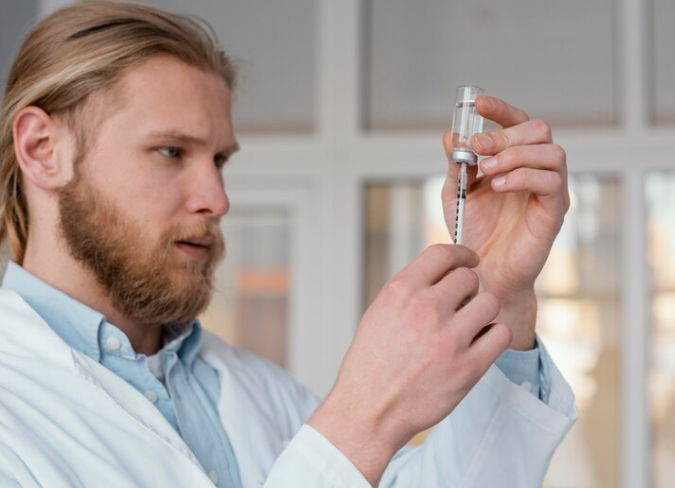
There is no useful answer without first naming the peptide.
Some peptide-based medications have well-established, FDA-approved uses. Others are marketed for recovery, body composition, or longevity despite being compounded, investigational, or unapproved. The word “peptide” alone tells you little about the quality of the evidence.
Before beginning peptide treatment, you should be able to get clear answers to a few basic questions:
- What is the medication called?
- What is it supposed to do for your particular problem?
- Is that use FDA-approved?
- What human evidence supports it?
- Where is the medication prepared?
- How will benefits and side effects be monitored?
A provider who cannot answer those questions plainly is giving you useful information, although perhaps not the kind you hoped for.
Mechanism matters, but it can also be oversold. A peptide may influence a pathway connected with muscle, metabolism, or recovery in laboratory research without producing a meaningful benefit in people. This is particularly relevant when the doses, populations, or formulations studied bear little resemblance to what is being marketed.
Approved, Off-Label, Compounded, and Unapproved
These terms describe different situations.
An FDA-approved medication has been reviewed for particular uses, doses, and patient groups. A clinician may prescribe an approved medication off-label when they consider it medically appropriate, but that particular use has not been approved by the FDA.
Compounded medications are not FDA-approved or reviewed before marketing for safety, effectiveness, or quality. Products sold online as “research use only” should not be treated as substitutes for properly prescribed clinical treatment.
Start with the Problem, not the Product

Low Libido or Sexual Difficulties
Low libido does not reliably indicate low testosterone. Sexual desire and function can be influenced by sleep, stress, mood, alcohol, medication side effects, cardiovascular health, diabetes, and relationship factors. TRT is most relevant when sexual symptoms occur alongside consistently low testosterone. Erectile dysfunction also deserves its own assessment because it can be a marker of underlying cardiovascular disease or another health condition.
Some peptide medicines act on sexual-desire pathways, but approved indications may be sex-specific. They should not be treated as substitutes for assessing testosterone deficiency, vascular erectile dysfunction, or medication-related sexual difficulties.
Fatigue and Difficulty Concentrating
Fatigue and poor concentration send plenty of men searching for a hormonal explanation. Unfortunately, they are also two of the vaguest symptoms in medicine. Depending on your history, an assessment may need to look at sleep apnea, iron status, thyroid function, depression, medication effects, alcohol intake, metabolic health, and recovery patterns before focusing on hormones. TRT is unlikely to resolve fatigue when testosterone deficiency is not the cause. A general promise that a peptide will improve energy is not enough to justify starting one.
Strength, Body Composition, and Recovery
Both TRT and peptide therapy are marketed heavily around muscle, fat loss, and recovery. Neither replaces resistance training, adequate protein, sufficient sleep, and recovery time.
Testosterone may produce modest changes in lean and fat mass in men who are deficient. It is not intended as a performance treatment for men with normal testosterone production. For any peptide promoted for recovery, look for research on the exact medication, dose, population, and outcome. Animal studies, laboratory findings, and changes in hormone levels are not the same as demonstrated improvements in healing, strength, or long-term health.
Fertility
Fertility needs to be discussed early. External testosterone can substantially suppress the hormonal signals involved in sperm production. The AUA recommends discussing the potential effect on fertility before treatment and advises against prescribing external testosterone to men who are actively trying to conceive.
Tell the clinician at the first appointment if you may want children in the next few years. That information can change the treatment they recommend.
Men who want to preserve fertility may also benefit from input from a reproductive urologist or endocrinologist. A peptide should not automatically be viewed as a fertility-preserving substitute. Its effects depend on the medication and the underlying cause of the fertility concern.
Can Peptide Therapy and TRT Be Used Together?
Sometimes, although each medication should have a separate reason for being prescribed.
A man could have confirmed testosterone deficiency that supports TRT and another condition for which a particular peptide medicine may be appropriate. That is very different from adding several treatments because an online clinic or influencer has packaged them as a “stack.” Starting two medications together makes it harder to identify side effects or work out which one helped. It also increases the cost and complexity of monitoring.
When a clinician suggests beginning both, ask why each one is needed and what would happen if you started with only one.

What Monitoring Is Needed?
TRT has a fairly established follow-up pattern. This may include appropriately timed testosterone measurements, hemoglobin and hematocrit, blood pressure, prostate assessment where relevant, and a review of symptoms and side effects.
The schedule will depend on the formulation, your results, and your medical history.
There is no equivalent standard for peptide therapy because there is no standard peptide treatment. Monitoring has to be built around the specific medication.
That makes it reasonable to ask the prescriber exactly what will be checked and why. More blood tests do not automatically mean better care. The value lies in choosing relevant tests and interpreting them alongside your symptoms, history, and goals.
While it’s possible to find low-cost, testing-only options like SiPhox, it’s often better value in the long term to find a provider that can also provide guidance and support through your journey with any recommended medication.
Questions to Ask at Your Appointment
- What specific problem or diagnosis are we treating?
- What in my results supports that conclusion?
- What is the exact medication?
- Is this use FDA-approved, off-label, or compounded?
- What human evidence supports it for someone like me?
- What are the established alternatives?
- How might treatment affect fertility, blood pressure, blood count, or sleep?
- What will you monitor, and what would make you stop or switch treatment?
A useful consultation does not have to end with a prescription. Further investigation, treatment of another condition, an established alternative, specialist referral, or no medication may be the more appropriate outcome.
Finding a Provider Who Can See the Whole Picture

Monitoring works best when the person reviewing your results can also see your health history, earlier bloodwork, and how your symptoms have changed. That continuity can be harder to arrange than it sounds, particularly when testing, prescribing, and follow-up normally sit with different providers.
One way to make that continuity easier is to use a provider that coordinates the assessment, blood testing, and follow-up. For example, longevity program Lifeforce has a membership model built around this sequence. Members complete a health questionnaire and have blood drawn at home or at a lab before a virtual consultation with a clinician to discuss their symptoms, goals, and results.
The resulting plan may include lifestyle changes, supplements, coaching, or prescription treatment when clinically appropriate. If the findings require care beyond what a telehealth membership can provide, primary care or specialist follow-up may still be needed. When symptoms have several possible causes, that broader assessment may be more useful than choosing a medication first.
Depending on the program, repeat testing, clinician consultations, and health coaching can also be coordinated through the same service. However, testing and consultation frequency, coaching access, and medication arrangements vary. Lifeforce’s dedicated TRT pathway is also structured and priced separately from its broader membership, so check exactly what your chosen program includes before joining.
This approach may suit you if you want a broader assessment rather than a testosterone-only pathway, value clinician interpretation alongside blood testing, are comfortable with telehealth, and want ongoing monitoring. It may be less suitable if you already have a confirmed diagnosis and primarily want a medication-only service, need urgent or face-to-face evaluation, or require specialist fertility or complex endocrine care.
If you’re looking for a premium membership that includes MRI screening, in-person consultations, and a concierge-style experience, you can also consider higher-end providers like Fountain Life, whose memberships start around $3000 and go up to $85,000.
Membership of any other reputable telehealth provider does not guarantee that TRT or a peptide will be recommended, and should sit alongside rather than replace appropriate primary or specialist care.
The Bottom Line
TRT and peptide therapy are not interchangeable. TRT supplies testosterone and is most relevant when symptoms occur alongside consistently low levels and an appropriate diagnostic assessment.
Peptide therapy is not something you can judge as a single category. You need the name of the medication, the reason it is being offered, the evidence behind that use, and a clear plan for monitoring it.
You do not need to arrive at the first appointment having chosen a side. A better starting point is to work out what might be driving the symptoms and what evidence supports the options being suggested. That process may lead to TRT, a particular peptide medication, another form of treatment, or no prescription at all. The useful outcome is a decision that fits the problem, not simply the product you first searched for.
Written by Danielle Mathieu, health writer, MA (Hons) Psychology graduate and MSc Adult Nursing student.
Related Posts:






Danielle (Dani) Mathieu is a health and medical writer who works with global health and wellbeing businesses to deliver insight-driven, research-backed content at the intersection of psychology and nursing. She has 18+ years of experience in communications, holds an MA in Psychology, and is currently studying for an MSc in Adult Nursing.
Dani is happiest when she’s translating complex health and nutrition science into plain-English stories that feel genuinely useful without being overwhelming. When she’s not juggling clinical placements on the ward, she’s usually writing. She lives on the Scottish coast, loves a cold sea breeze, and is often accompanied by a very opinionated dog.