

If you have symptoms of low testosterone and have decided to get checked out, you may debate between booking an appointment at a local men’s health clinic or signing up with an online service.
Both routes can lead to legitimate testosterone replacement therapy (TRT). The treatment itself does not change just because the consultation happens online, although the formulation, pharmacy arrangements, and prescribing process may differ. What changes is the care around it: how you’re assessed, where your blood gets drawn, how the prescription reaches you, and who picks up when something feels off three months in.
This guide walks through the TRT clinic vs. online telehealth decision one stage at a time, so you can judge which setup fits your schedule, your health history, and your patience for logistics. A careful clinician with a real monitoring plan matters more than whether you meet face-to-face or through a laptop.
Clinic vs Telehealth TRT at a Glance
| Local in-person clinic | Online / telehealth service | |
| First consultation | Usually face-to-face | Usually video, with online intake forms |
| Scheduling | Clinic hours, plus travel and waiting time | Often wider appointment windows, though lab visits still take time |
| Blood tests | Drawn on site at some clinics; others use an outside lab | Usually a partner lab near you; some offer at-home phlebotomy in certain areas |
| Physical exam | Can happen during a routine visit | Requires a separate in-person visit if needed |
| Prescriptions | Sent to a pharmacy; some clinics dispense or give injections on site | Sent electronically, then filled locally or shipped, depending on the service |
| Follow-up | Office visits, phone, or patient portal | Video visits, messaging, or app-based portal |
| Insurance | Some accept it; many men’s clinics are cash pay | Often cash pay or membership; insurance coverage varies |
What Changes Online?

Whichever route you use, the diagnosis should still be based on the same clinical standards, and a given testosterone product works the same way, however it was prescribed.
What really changes is the logistics. With telehealth, the consultation happens on a video call, blood is drawn at a lab or at home, and medication usually comes from a pharmacy. At an in-person clinic, more of that may happen under one roof, and a clinician can examine you during the visit.
How the First Assessment Should Work Either Way

Fatigue, low libido, poor sleep, weight gain, and low mood are common reasons men get tested, but these symptoms may have other causes, such as sleep apnea, depression, thyroid problems, and medication side effects. Symptoms alone don’t establish that you have low testosterone.
The American Urological Association guideline uses a total testosterone level below 300 ng/dL as a reasonable cutoff, confirmed with two separate early-morning blood tests, alongside symptoms. The Endocrine Society similarly recommends confirming a low result with a repeat morning test before diagnosing hypogonadism.
Before seriously considering TRT, the assessment should cover:
- health history, including medications and past steroid use
- properly timed testosterone testing, repeated if needed
- tests that help identify a cause, such as LH, with additional testing depending on the results and fertility goals
- baseline hemoglobin and hematocrit, with PSA testing before treatment in men over 40
- a discussion of benefits, risks, alternatives, and fertility
In person, much of this can be covered in one or two visits. Online, it’s usually split across an intake questionnaire, a lab appointment, and a video consultation. Either can be done well. I’d be more wary of a service, local or remote, that offers a prescription after a questionnaire alone or treats one borderline result as a diagnosis.
How Bloodwork Gets Done
Telehealth does not mean the blood tests disappear. Legitimate online services still order blood tests; they just arrange them differently.
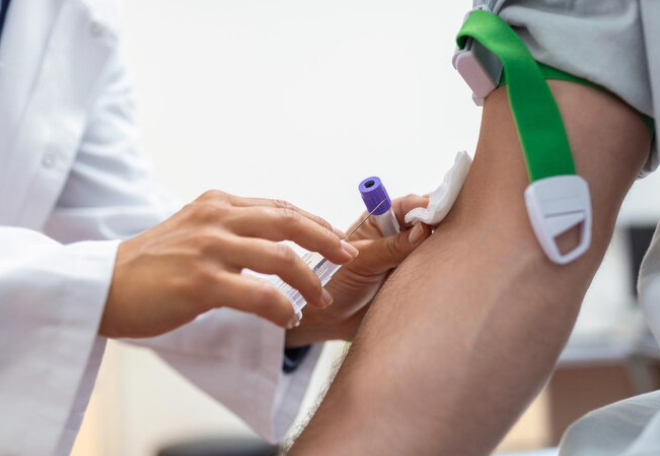
A local clinic may draw blood on site, send you to a commercial lab, or review recent results from your primary care doctor. A telehealth service will typically send an order to a lab location near you, and some can send a phlebotomist to your home in areas where that’s available.
Timing matters in both models. Testosterone is usually highest in the morning, and MedlinePlus notes that samples are typically drawn between 7 and 10 a.m. If your blood is drawn late in the day, the result may be harder to interpret, particularly in younger men.
A long list of biomarkers can look impressive, but more tests don’t automatically make the care better. What matters is whether the right tests are ordered and someone explains what they mean for you.
Prescriptions, Pharmacies, and Federal Rules
Testosterone is a Schedule III controlled substance, so federal DEA rules apply to telehealth prescribing. As of November 2026, temporary federal flexibilities allow eligible DEA-registered clinicians to prescribe controlled medications through qualifying telemedicine without a prior in-person evaluation, subject to federal and state requirements. Those flexibilities currently run through December 31, 2026, so this is one detail worth checking before you enroll with an online provider.
After that, what happens depends on the provider:
- Some services send it to your local pharmacy, where insurance may help with the drug cost.
- Some ship medication from a partner pharmacy, often with supplies such as syringes.
- Some in-person clinics give injections in the office or dispense medication directly.
Ask whether you’ll receive an FDA-approved testosterone product or a compounded version. Compounded drugs can serve an important medical need, but they aren’t FDA-approved, and you should know which one you’re getting.
Follow-Up and Continuity: Who Is Reviewing Your Lab Results?

TRT needs follow-up after the prescription is written. Once testosterone levels are stable, the AUA recommends checking them every 6 to 12 months. Hemoglobin and hematocrit should also be monitored, with the frequency adjusted if previous values are concerning. In 2025, the FDA required class-wide testosterone labeling changes that included warnings about increased blood pressure, making blood pressure an important part of ongoing monitoring.
How that monitoring happens differs more by provider than by format. Many telehealth services offer secure messaging and scheduled video check-ins, and some build repeat lab panels into a membership. In-person clinics may rely on office visits, nurse calls, or a portal.
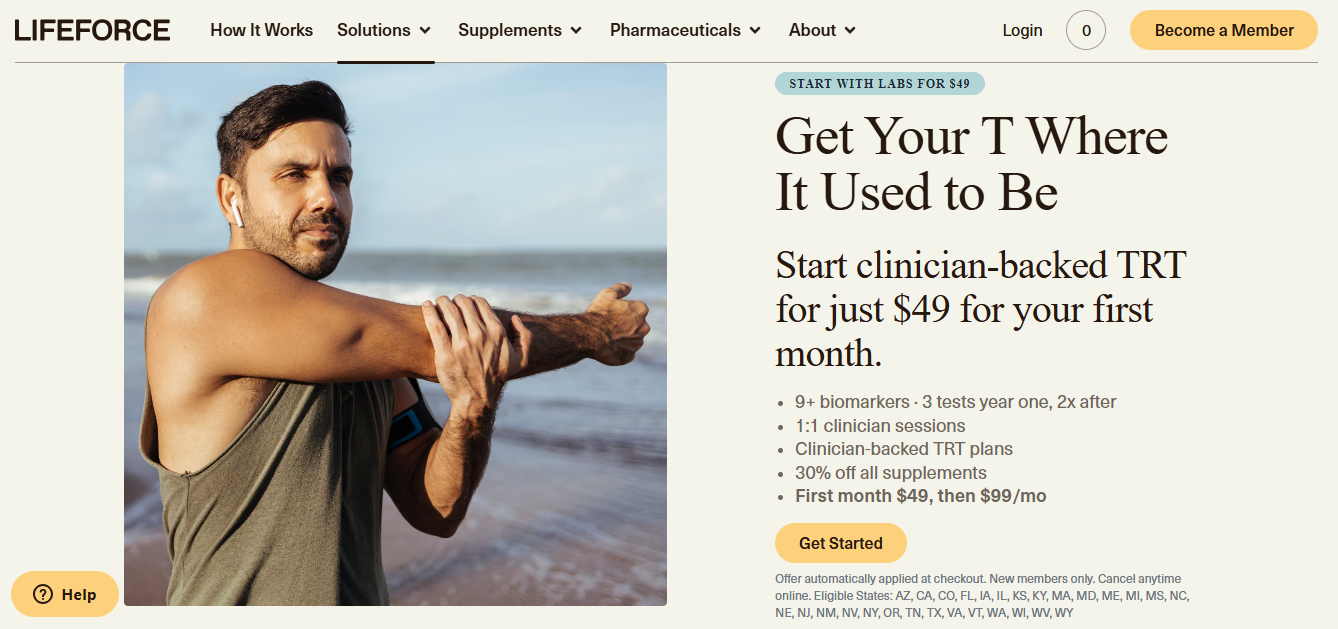
Some online programs are built around more than prescribing and refills. Lifeforce is one example. Recurring blood tests, virtual clinician consultations, and health coaching can all sit within the same membership, and prescription treatment comes into the plan only when a clinician decides it’s clinically appropriate, so joining doesn’t guarantee a testosterone prescription. The appeal goes beyond the visits being on video. Because testing repeats over time, results can be interpreted as a trend rather than as a single snapshot. That kind of setup may suit you if you want broader ongoing interpretation and support rather than a simpler prescription-and-refill model.
The amount of contact varies considerably between providers. Some online services are easy to reach between appointments; some local clinics are not. What matters more is who reviews your results, how quickly you can reach them, and what happens if your hematocrit rises or you develop side effects between appointments.
If you already have a primary care doctor you trust, ask whether they’ll prescribe or monitor TRT, or at least receive copies of your labs. Some will. Keeping your regular doctor informed matters no matter which model you choose, because TRT can affect other conditions and medications.
When Telehealth May Need In-Person Backup
Online services handle a lot of TRT care well, and telehealth and local care often overlap. Some problems really do need hands-on assessment. A new testicular lump or pain, significant urinary symptoms, new headaches with vision changes, or certain physical findings can’t be examined through a screen, and a good online provider will tell you so and help arrange local care.
Other situations, including fertility concerns, complex cardiovascular disease, or an unclear endocrine diagnosis, may call for input from a urologist, endocrinologist, cardiologist, or your regular doctor alongside whichever TRT service you use.
Chest pain, shortness of breath, or sudden leg swelling need urgent in-person care regardless of who prescribes your testosterone.
What About Cost and Insurance?
Online care isn’t automatically cheaper. Advertised monthly prices don’t always cover everything, and the total can include consultation or membership fees, initial and follow-up labs, the medication, supplies and shipping, and add-ons such as supplements.
The broader membership programs that bundle repeat testing, coaching, and regular consultations can cost more than a simpler service focused on labs, prescribing, and refills. Whether the extra support is worth it depends on how much of it you’ll actually use.
Insurance can be one of the bigger practical differences. If you see an in-network primary care doctor, endocrinologist, or urologist, your plan may cover visits, labs, and generic testosterone. Many standalone men’s clinics and online services are cash pay. Ask for a full estimate of the first year, not just the first month.


Questions to Ask Any TRT Provider
Whether you’re researching a clinic or reading a sign-up page, these questions reveal a lot:
- What testing do you require before considering TRT, and do you repeat low results?
- Who reviews my labs, and will I see the same clinician at follow-up visits?
- How often will you repeat labs once I start, and which ones?
- Who do I contact about side effects, and how fast do they respond?
- Where is my medication filled, and is it FDA-approved or compounded?
- What costs aren’t included in the price you advertise?
- What happens if I need a physical exam or a specialist referral?
- How do you handle fertility concerns?
Vague answers to these questions are a more useful warning sign than whether the provider has a physical office.
Which Model May Suit You?
Online care may suit you if you:
- have limited time for clinic visits or live far from a specialist
- are comfortable discussing your health on video
- can get to a lab for morning blood draws, or have home phlebotomy available
In-person care may suit you if you:
- prefer to talk face to face
- have a complex medical history or symptoms that need examination
- want TRT coordinated with doctors you already see locally
- want to use insurance with an in-network physician
Plenty of men end up with a mix, such as an online prescriber plus a local lab and a primary care doctor who gets copies of everything.
TRT Clinic vs Online Telehealth: The Bottom Line
Whichever route you choose, look for a provider who confirms the diagnosis properly, explains what they’re prescribing and why, monitors you on a set schedule, answers when you reach out, and has a plan for the moments when you need to be seen in person. Once those basics are covered, choosing between online and in-person care is mostly about which setup you can realistically stick with.
Related Posts:






Danielle (Dani) Mathieu is a health and medical writer who works with global health and wellbeing businesses to deliver insight-driven, research-backed content at the intersection of psychology and nursing. She has 18+ years of experience in communications, holds an MA in Psychology, and is currently studying for an MSc in Adult Nursing.
Dani is happiest when she’s translating complex health and nutrition science into plain-English stories that feel genuinely useful without being overwhelming. When she’s not juggling clinical placements on the ward, she’s usually writing. She lives on the Scottish coast, loves a cold sea breeze, and is often accompanied by a very opinionated dog.