

The phrase “dual diagnosis” is everywhere in addiction treatment marketing today. For families and individuals seeking help, this can make the search for quality care overwhelming and confusing.
Many treatment centers say they offer dual diagnosis services, but there’s sometimes a gap between what they claim to offer and what they actually provide. If you need help for yourself or a loved one, it can be difficult to tell the difference.
Dual diagnosis treatment is so important for many people, so it’s helpful to understand what integrated care actually means and how to recognize it before making a choice.
What Dual Diagnosis Actually Means Clinically

Understanding what dual diagnosis means is a really good start.
This is a term used to describe someone who has “co-occurring disorders,” which could mean that they have both a substance use disorder and a mental health condition that they are dealing with simultaneously. These conditions tend to appear together, and each significantly affects the other.
Using drugs or alcohol can worsen the symptoms of a psychiatric disorder, and a psychiatric disorder can lead to heavier use of drugs and alcohol.
Common co-occurring mental health challenges (which occur alongside addiction) include:
- PTSD (Post-Traumatic Stress Disorder)
- Anxiety disorders
- Major depression
- Bipolar disorder
- Other trauma-related disorders
Three Popular Dual Diagnosis Programs – National vs. Community-Based:
1. American Addiction Centers (AAC): Large-Scale Treatment, Nationwide Choices
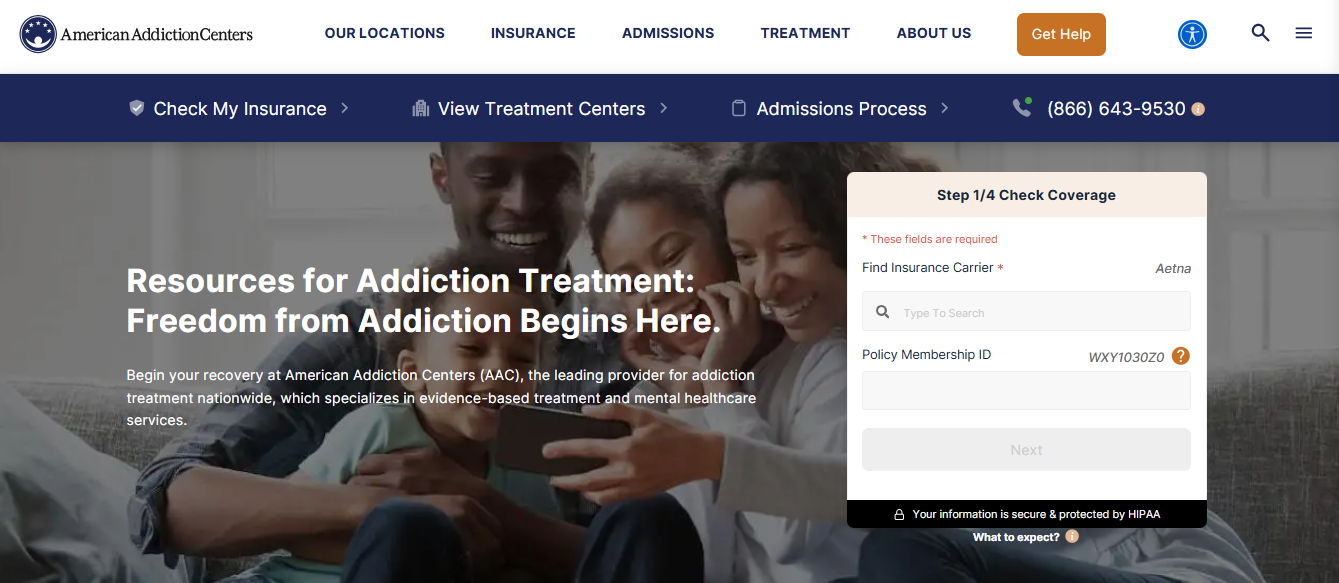
American Addiction Centers (AAC) is a well-known national network with treatment facilities scattered across the country. From detox and inpatient care to outpatient groups and mental health services, AAC offers a broad range of treatment options for many people seeking help.
One reason some families gravitate toward larger organizations like AAC is the flexibility that comes with scale. If someone needs detox, residential care, outpatient treatment, or specialized mental health support at different stages of recovery, a larger network may make those transitions easier to coordinate within the same overall system. AAC can provide support across many different parts of the country.
That said, bigger isn’t always better for everyone, and the feel of each campus can be different.
At some locations, a large staff and busier routine can make treatment feel less personal than at a local facility where everybody knows your name. Before deciding, check reviews and ask questions about the specific AAC center you’re considering.
AAC May Be a Good Fit For:
- People who may need flexibility moving between detox, residential, outpatient, or mental health services over time
- Families who feel more comfortable with a large national treatment network and broader location availability
- People who value established processes, extensive resources, and treatment availability across different regions
Potential Drawbacks:
- Larger settings might feel less personal or more “by the book”
- Culture, quality, and staffing rely a lot on the specific location
- Family contact and counselor access aren’t always the same everywhere
2. Avenues Recovery: A Hybrid Model Combining Community Connection and Clinical Resources
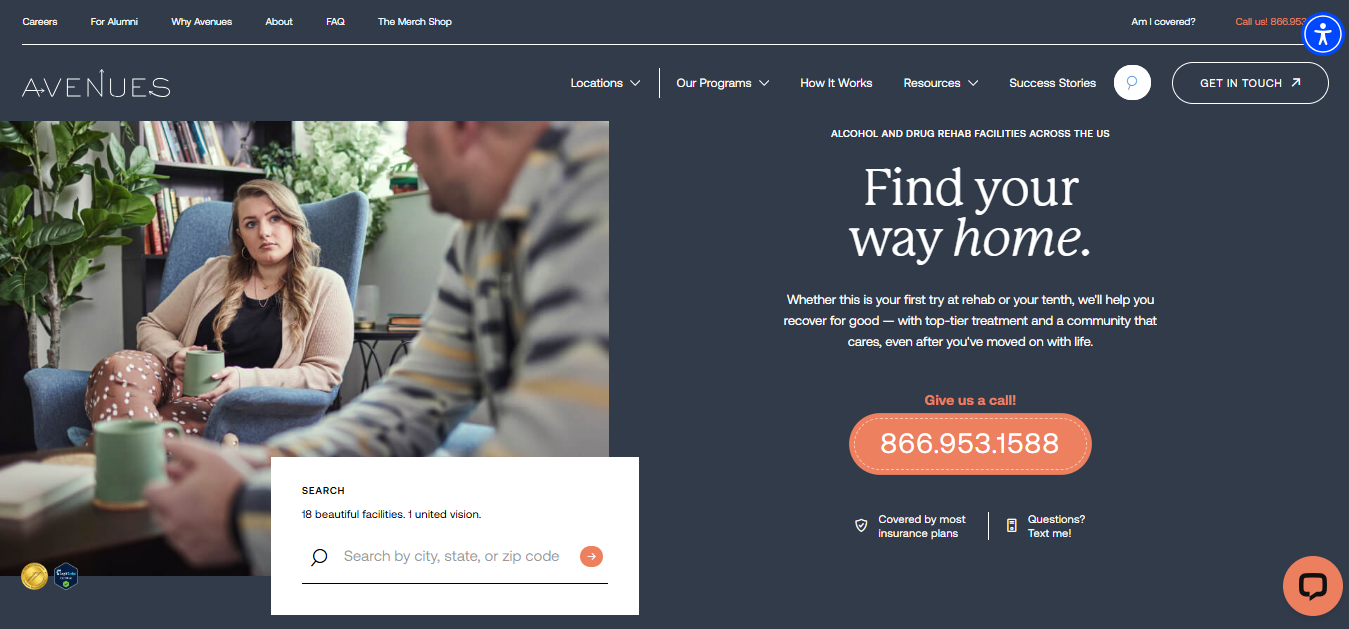
Avenues Recovery blends regional infrastructure with the intimacy of community engagement.
They have facilities in several states, with multiple locations in Pennsylvania, Maryland, New Hampshire, Colorado, Louisiana, Virginia, and Indiana. Their facilities span the full continuum of care, including detox, residential, and outpatient treatment.
Unlike some larger national systems, Avenues places a strong emphasis on personal connection and long-term community support throughout recovery. Their overall philosophy is centered around the idea that recovery is not a quick fix or isolated experience, but something people sustain through ongoing relationships, accountability, and support from others who understand what they’re going through.
Their model is focused on making recovery feel less isolated by encouraging continued counselor check-ins, family involvement, peer support, and long-term community connection after discharge.
Avenues Recovery has a significant focus on their alumni network, where families and clients keep in touch and support each other long after formal treatment ends.
The emphasis on alumni involvement, peer connection, and long-term community support stood out to me because ongoing social support and recovery community involvement are often associated with stronger long-term recovery outcomes and lower relapse risk after treatment ends.
They also seem to place a lot of emphasis on reducing barriers to treatment, even helping arrange transportation for people who otherwise might struggle to get to a facility safely.
This integrated care model feels a bit like the middle ground between a large corporation and a local neighborhood facility.
Avenues Recovery May Be a Good Fit For:
- People who want recovery to feel more community-oriented and relationship-driven rather than highly institutional
- Individuals looking for stronger continuity between detox, residential, outpatient, and alumni support
- Families who want to stay actively involved throughout treatment and recovery
- People who benefit from peer accountability, alumni involvement, and long-term recovery community support
- Individuals seeking integrated dual diagnosis treatment without feeling disconnected from family or everyday support systems
Potential Drawbacks:
- The more community-oriented environment may feel less structured for people who prefer highly formal clinical settings
- Specialized services and amenities can vary depending on the specific location
- Because programs emphasize local culture and community integration, the experience may differ somewhat between campuses
3. Recovery Centers of America (RCA): Clinically Structured Programs With Strong Medical Support
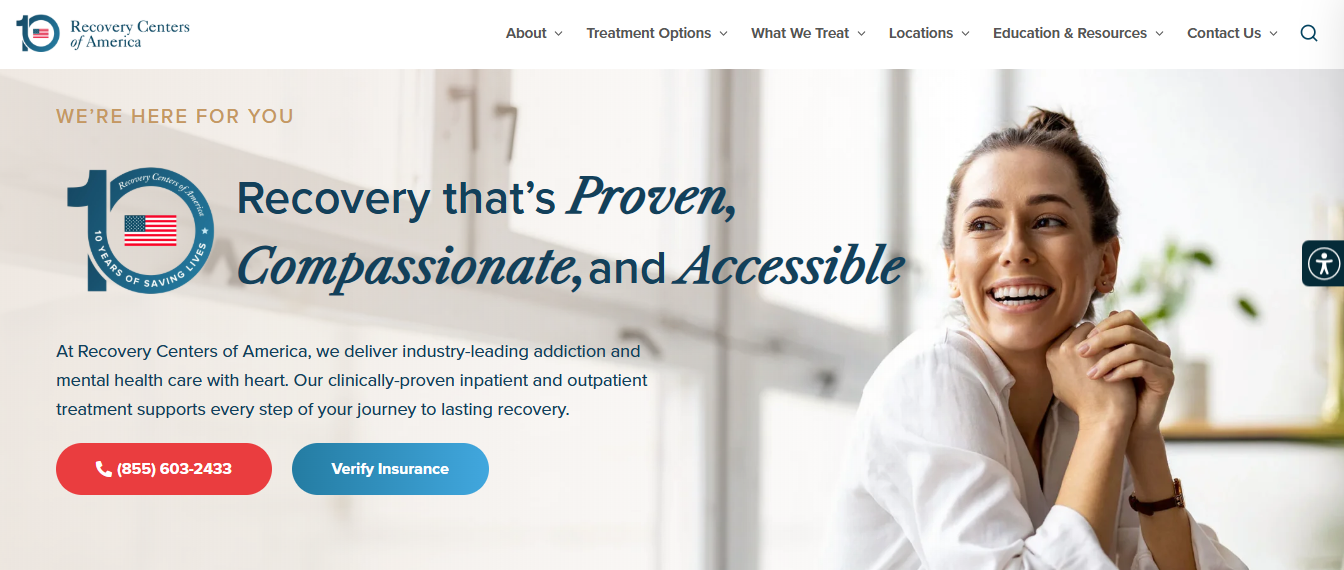
Recovery Centers of America (RCA) has earned its name for its clinical structure and medical support, especially.
Their main locations stretch through the Northeast and Mid-Atlantic. RCA often seems to appeal to families who want a highly structured environment, especially early in recovery when stabilization and consistent routines can feel extremely important.
Most RCA campuses are a bit larger and offer multiple levels of care, including detox, inpatient and outpatient services, and medication-assisted treatment.
With their concrete processes and larger facilities, RCA can feel more structured, even a bit institutional for some. For people who are used to personal, “everyone knows you” treatment, a day here may be more formal, while those who like clear routines and lots of resources can feel at home.
RCA May Be a Good Fit For:
- People who feel more comfortable in highly structured treatment environments with clear routines
- Families looking for larger campuses with extensive healthcare infrastructure and multiple levels of care
- Individuals who benefit from organized schedules, clinical consistency, and more formal treatment settings
Potential Drawbacks:
- Larger campuses and highly structured routines may feel overwhelming or impersonal for some individuals
- Individual site experience varies; ask about support, contact, and transition resources
- May be too large or formal if you’d prefer a small-town/community approach
What Separates Strong Dual Diagnosis Programs From Weak Ones?
Understanding the differences between a strong program and a less effective one is really important for anyone looking for help. Here’s what you’ll typically find in truly integrated, strong dual diagnosis programs:

One Treatment Team:
The ideal situation is where all therapists, counselors, doctors, psychiatrists, and anyone else involved in your care are essentially on one team, working together. They should meet regularly to share concerns and progress updates throughout your treatment time.
Coordinated and Individualized Treatment Plans:
A dual diagnosis facility should provide coordinated and individualized treatment plans. With co-occurring disorders, there’s really no one-size-fits-all plan. Your treatment team should meet to develop a plan that makes sense and ensure it includes mental health care and addiction treatment services.
Psychiatric Care Within Recovery:
Psychiatric care is also a big part of dual diagnosis treatment. When you or your loved one starts the process, a full evaluation should happen early on. It’ll ideally look at mental health, substance use, and physical health all together.
A psychiatrist should stay involved the whole way through, not just at the beginning, to make sure the plan is working and nothing gets missed.
Medication-assisted treatment, or MAT, is another important part of this process, and of getting well. It uses FDA-approved medications along with therapy to help with withdrawal, cravings, and mental health symptoms.
Trauma-Informed Care:
Many integrated dual diagnosis programs provide trauma-informed care. This is because so many people who are dealing with substance use disorders and mental health conditions have experienced significant trauma, and trauma-informed therapy approaches like EMDR, ART, and the like can be very powerful.
Behavioral Therapy Integrated with Recovery:
Cognitive-behavioral therapy (CBT), dialectical behavior therapy (DBT), and related approaches are commonly used to address the whole person rather than just one set of symptoms.
Family Involvement and Education
Leading programs recognize that recovery doesn’t happen in isolation, and actively include families in the process. This means regular family sessions, education on mental health and addiction, clear family communication policies, and guidance on rebuilding trust and support systems.
Providing families with tools and information can be one of the strongest predictors of long-term stability, helping loved ones remain supportive, knowledgeable, and connected throughout recovery.
Continuity of Care After Residential Treatment
The best dual diagnosis programs establish bridges to follow-up care after residential treatment. This involves well-organized transitions to outpatient programs (such as PHP or IOP), relapse-prevention and life-skills preparation, and long-term support through alumni networks or integration with local recovery communities.
How Parallel or Separate Care Is Different
In contrast, some programs only provide mental health services separately or as an occasional supplement:
- Occasional Mental Health Workshops: These programs might offer group workshops or a general class on mental health, but without true coordination.
- Outsourced Psychiatry: Psychiatric care may be provided off-site or by referral, making communication with the addiction treatment team more challenging.
Programs with a fully integrated approach are generally better equipped to address both substance use and mental health challenges together.
Questions to Ask Before Choosing a Dual Diagnosis Program
Knowing which questions to ask and what to listen for in the answers can help you gauge the depth and quality of a dual diagnosis program. Below are important questions to consider, along with guidance on what a strong answer looks like.

Is psychiatric care integrated into treatment planning?
You want to hear that psychiatrists are regularly involved from the beginning, providing ongoing assessments, medication management, and crisis support directly within the facility.
How often do therapists and psychiatric providers communicate?
Look for programs where therapists and psychiatric staff communicate frequently and in a structured way, ideally through regular meetings or daily check-ins on each client’s progress and changing needs.
Is dual diagnosis standard treatment or a separate track?
Seek a facility where integrated treatment is the norm for most clients, not just an optional or occasional support track available to a select few.
What happens after discharge?
The best programs have established transition plans that include referrals, step-down care, follow-up appointments, alumni groups, or local recovery community involvement to support long-term stability.
How involved are families?
Ask whether the program offers family education, emotional support, and regular family therapy sessions, as active family involvement is a key factor in many people’s long-term recovery.
What levels of care are available?
Strong responses will highlight a full continuum of care, including detox, residential, PHP, IOP, and outpatient, allowing clients to move safely and seamlessly through different stages of recovery.
What types of mental health conditions are commonly treated?
It is important that staff regularly support clients facing depression, anxiety, trauma, bipolar disorder, PTSD, and other common co-occurring diagnoses.
How long do patients typically stay?
Find out how long their typical program is and how long most clients stay. Research generally shows that longer engagement in treatment and recovery support is associated with better long-term outcomes.
You don’t want a facility that focuses only on very short-term treatment or doesn’t even offer long-term stays.
By carefully listening to how centers answer these questions, you can more clearly identify which programs are deeply committed to comprehensive, integrated dual diagnosis care and which may not offer the level of support you need.
Choosing the Right Diagnosis Treatment Center

Choosing a dual diagnosis treatment program is a significant decision, and there is no single “best” option that fits everyone. Speaking directly with admissions or clinical staff can give you a clearer sense of how a program truly operates and how it responds to your unique needs.
Take the time to ask thoughtful, specific questions about how care is delivered, how the treatment team communicates, and what support looks like after discharge.
Listen for Specific Answers
When you speak with admissions or the intake team, listen to what they’re saying. You want more than basic reassurances that they work with dual diagnosis clients. If you have a question, make sure the answer you get is specific and not just a general response.
Notice How Intake Staff Makes You Feel
Another incredibly important piece of choosing the right facility is making sure it feels right.
If you speak with someone at the facility and they aren’t listening to you or you just don’t feel comfortable with them for some reason, this could be a sign to keep looking.
The treatment process is an incredibly vulnerable one and can be a difficult time for the person seeking help and their family members, so making sure you find the right choice is crucial.
Remember, no matter what program you choose, seeking integrated care and long-term support will give you or your loved one the best foundation for lasting recovery.
Related Posts:





Rachael Goldstein is a licensed attorney who spent six years as a public defender in Philadelphia, handling a wide range of cases. That work gave her a close, firsthand look at how addiction and mental health affect people’s lives, and it’s shaped her writing ever since. Her writing focuses on mental health and wellbeing, drawing on both her legal background and hands-on experience in the field. She knows how high the stakes are when someone is searching for help, so she digs into the research and lays out the facts in a way that’s clear, honest, and easy to act on.
When she’s not writing, Rachael spends her free time traveling, hiking, and exploring new places.