

If you’re trying to find the “best” rehab in Virginia, it’s going to be a difficult search. What’s best for one person isn’t always going to be best for another person. It usually comes down to what level of care you need, whether you need mental health treatment at the same time, and whether a treatment facility accepts the type of insurance you have or if you’re able to self-pay.
The good news is that Virginia has a wide variety of quality treatment centers, and there truly are strong programs across the state.
What Makes a Good Rehab in Virginia?
Choosing a rehab center can feel overwhelming, especially with so many options across Virginia. The right choice is always going to be very personal, but the most effective programs tend to share a few important features.

Accreditation
When you choose a rehab, you want one that has been accredited by recognized organizations, like the Joint Commission or CARF. These show that the program meets high standards for safety and the care they provide.
Approach to Treatment
A reputable treatment facility will offer evidence-based therapies and customize a treatment plan based on what the person needs, not offer a one-size-fits-all plan. Attention to co-occurring disorders (like depression or trauma along with addiction) is a good sign that staff understand the complexities many people face.
Family Involvement and Support
Research tends to support the idea that long-term success in sobriety and dealing with mental health concerns improves when there is family support, especially for youth. Look for programs that include family therapy and educational sessions if that’s appropriate in your situation.
Aftercare and Recovery Support
Treatment isn’t over when you leave the facility. It’s just as important that you continue focusing on recovery when you leave the facility, and the best places will prepare you for the struggles you’re inevitably going to face once you return home. They can do this by offering resources like support groups, connections to sober living, alumni groups, or referrals for ongoing help.
The treatment facility I went to was far away from home; I had to fly over 5 hours to get there. They offered some Zoom meetings and virtual alumni support, but it wasn’t the same as if I had been able to get together with people in person. I stayed sober, but coming home after months away and feeling like I was on my own with everything was definitely difficult.
If you travel to a facility for treatment, ask about their alumni offerings and how they keep people connected if they don’t live nearby. Some facilities operate in multiple states and run alumni programming around each of their locations, which can make staying connected after you return home much more realistic.
Insurance and Accessibility
It doesn’t matter how good a program is if you can’t access it because of financial constraints. The “best” program for you is one that works with your financial reality and insurance, if applicable. Whether you’re self-pay, have private insurance, or are working with Medicare or Medicaid, you need to find a place that you can actually attend.
I learned this pretty early on in my search for treatment. I had pretty decent insurance, but some facilities I wanted to go to either didn’t accept insurance or they were out-of-network. The ones that didn’t take insurance, I had to cross off my list right away.
Also, making sure the location is manageable for you or your support network is important, so that completing treatment is logistically possible and not overwhelming.
Not every top-rated facility will be the best fit for you, but there are many different facilities that share these qualities and can help you get the treatment you deserve.
Avenues Recovery
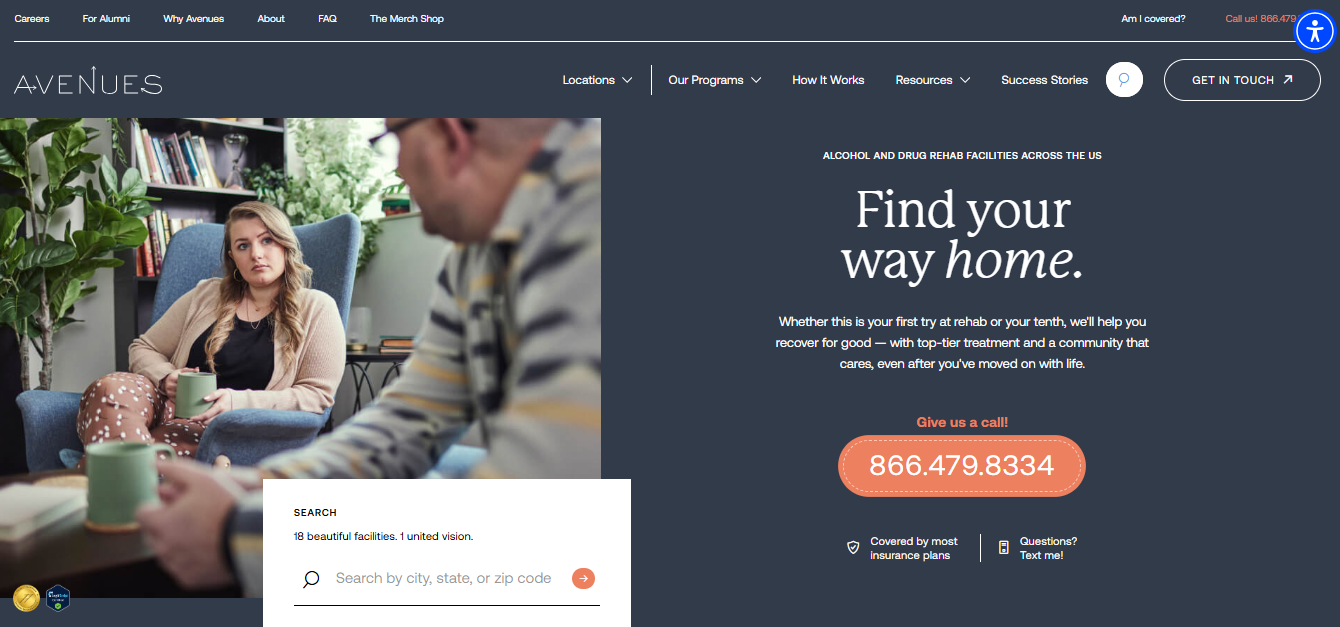
Best for: A full continuum of care with lasting alumni support and multiple Virginia locations
Avenues Recovery operates two Joint Commission-accredited facilities in Virginia in Norfolk and the Richmond area, with an extended care location in Norfolk coming soon. All Avenues Virginia locations accept Medicaid, which immediately makes it one of the more accessible full-continuum options in Virginia.
Norfolk Location
Avenues Recovery Center at Norfolk serves the Hampton Roads region, drawing clients from Virginia Beach, Chesapeake, Portsmouth, Newport News, Hampton, Suffolk, Williamsburg, and surrounding communities. The campus is a newly remodeled facility with light-filled bedrooms and open common spaces, and treatment runs from medical detox for drugs and alcohol through residential care with 24/7 medical support.
Richmond Location
Clinical services include psychiatric care, individual and group therapy, dual-diagnosis treatment, family and couples counseling, CBT, DBT, motivational interviewing, and medication-assisted treatment, with a full-time physician, psychiatrist, and licensed counselors on staff. The program also includes a workforce re-entry track, independent living skills, immersive 12-step programming, and a holistic arts track with yoga, art, music, and meditation.
Avenues Recovery Center at Richmond, located in North Chesterfield, brings the same model to Central Virginia; they offer detox, residential treatment, and outpatient care in what they call a spacious, freshly remodeled facility.
The Richmond program describes its care as evidence-based, dual diagnosis-informed, and trauma-informed, and its clinical leadership includes a psychiatrist as medical director. Veterans and military families are notably well served across both locations; Avenues runs a dedicated military and veterans program, and the Virginia facilities are in-network with Tricare and the VA Community Care Network.
Ongoing support for alumni plays a major role at both Avenues Recovery locations, with active outreach and regular sober events that bring former clients and staff together even once treatment formally ends. Instead of viewing aftercare as just an add-on, Avenues continuously creates opportunities for people in recovery to maintain peer connections, share real-world advice, and support one another through recovery.
Avenues also operates facilities in several other states, including Pennsylvania, Maryland, New Hampshire, Louisiana, Indiana, and Colorado, with alumni programming being offered around its locations. That means the support network extends beyond Virginia, and for people who travel for treatment, this can be important.
If you’re looking for a place with genuine alumni involvement, a clear path from inpatient to outpatient care, solid mental health resources, and Medicaid acceptance, Avenues is worth considering among Virginia’s rehab options. Also, according to the facility’s website, 92% of active alumni report staying sober after a year.
Virginia Recovery Centers
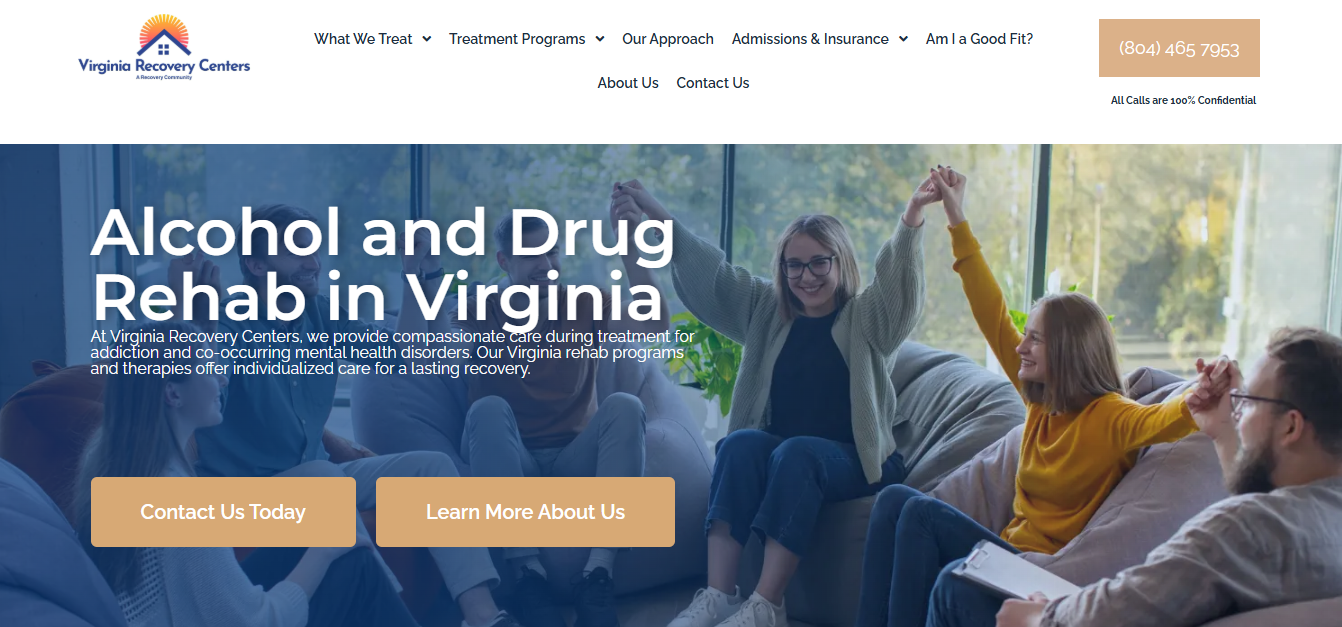
Best for: Outpatient flexibility and reducing barriers to care
Virginia Recovery Centers, located in Mechanicsville just northeast of Richmond, provides accessible outpatient treatment options. The program accepts Medicaid, can often accommodate same-day admissions, and helps arrange transportation to and from treatment, which can be a truly meaningful service for people who have difficulty finding transportation.
The programming covers partial hospitalization (PHP), intensive outpatient treatment (IOP), standard outpatient care, and medication-assisted treatment, along with individual and group therapy and treatment for co-occurring mental health conditions.
The center also runs court-mandated treatment programs and incorporates holistic offerings such as meditation, yoga, and art and music therapy alongside its foundational evidence-based therapies. An alumni program and sober living support are offered as well.
This is a good potential fit for people who need structured addiction treatment while continuing to live at home. For someone balancing treatment against family responsibilities, work schedules, transportation gaps, or financial concerns, Virginia Recovery Centers has built its model around exactly those barriers.
BeBold Recovery
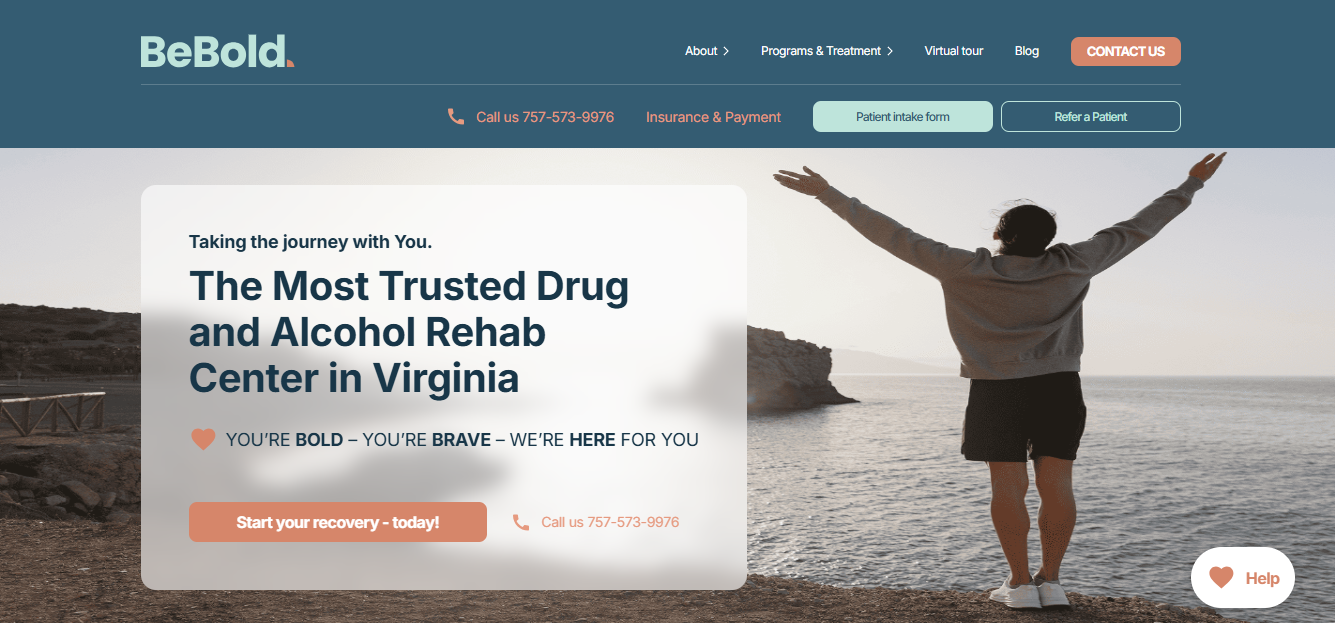
Best for: A comprehensive outpatient treatment continuum in Hampton Roads
BeBold Recovery, located in Norfolk and serving the greater Hampton Roads region, is a CARF-accredited provider offering a comprehensive outpatient continuum of care. Its direct programming includes PHP, IOP, standard outpatient treatment, and medication-assisted treatment using FDA-approved medications such as Suboxone, Vivitrol, and Sublocade.
They also provide dual-diagnosis treatment with psychiatric care integrated directly into programming, telehealth options, case management, and peer recovery support. The program also accepts Medicaid.
BeBold is primarily an outpatient provider, with PHP running five days per week at roughly 25 to 30 clinical hours, functioning as full-day treatment without an overnight stay. From there, clients step down into IOP and then standard outpatient care, with aftercare planning, sober living coordination, and alumni peer support built into each stage.
When someone requires detox or residential treatment first, BeBold coordinates placement with outside programs, handling referrals and transitions, and then continues care when the patient is ready to step down. Free transportation and virtual programming extend their reach well beyond Norfolk itself.
For someone who needs structured treatment with several intensity levels and substantial recovery support, but doesn’t need to enter residential care, BeBold offers one of the more complete outpatient pathways in the Hampton Roads region.
Arrowwood Addiction Treatment Center
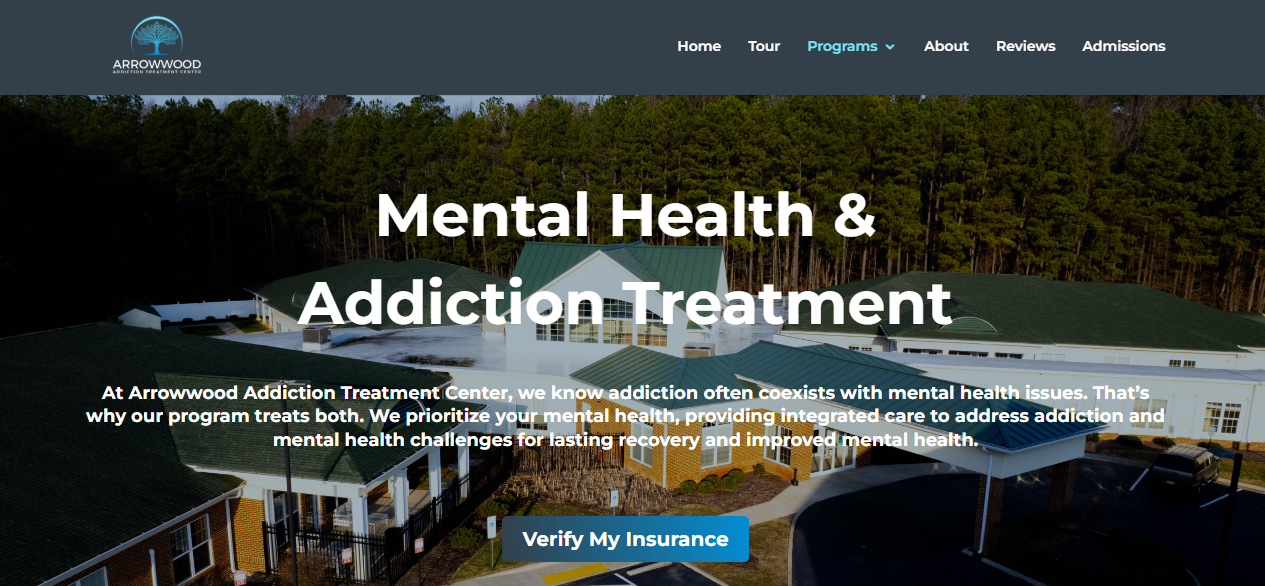
Best for: Multiple levels of addiction treatment in Central Virginia
Arrowwood Addiction Treatment Center in Hopewell, in the woods southeast of Richmond, covers the full continuum of treatment at one single campus. They offer medically supervised detox, residential treatment, PHP, IOP, standard outpatient care, and aftercare support, with help arranging sober living when the time comes. The facility serves adults 18 and older and holds Joint Commission accreditation.
Clinically, the program is evidence-based, providing individual and group therapy drawing on approaches like CBT and DBT, family counseling and education, medication management, and treatment for co-occurring conditions including anxiety, depression, trauma, and PTSD.
The newly built campus has a more residential than institutional feel, with amenities that include semi-private rooms, an on-site salon and spa, a client lounge and library, a wellness center, and a 24/7 cafeteria serving nutritious, chef-prepared meals, along with wellness activities.
The program also incorporates less conventional offerings, including wilderness therapy and animal-assisted therapy, and runs programming attentive to specific populations such as veterans, first responders, professionals, students, and LGBTQ clients.
There is nothing on their website that indicates they accept Medicaid, but insurance participation should be verified directly with the facility.
Arrowwood may be especially appealing to someone in Central Virginia looking for multiple levels of care through one treatment center.
Should You Stay Close to Home or Travel for Rehab?
Virginia is a large state, and the facilities covered above sit in different regions, including Hampton Roads, Central Virginia, and the Richmond suburbs. That raises a question many families struggle with, and that’s if it’s better to choose the closest option, or to travel for a program that seems like a stronger fit. There’s no universal answer, but there are considerations to take into account.

Benefits of Staying Close to Home
Staying local carries advantages that are easy to underestimate, especially for the stages of treatment that come after the residential phase. Staying close to home typically means:
- Easier family involvement, since loved ones can actually attend therapy sessions and visit
- Less transportation difficulty getting to and from treatment
- A smoother transition into local outpatient care when it’s time to step down
- The ability to build a recovery network – peers, meetings, sponsors – in the place where you’ll actually live
- Less disruption to work and family life when outpatient treatment is the appropriate level of care
Recovery ultimately has to be sustained in the place where a person lives after treatment, so being near home and building that community can be a significant benefit.
Reasons To Travel For Treatment
Proximity alone isn’t a reason to choose a facility, and there are situations where it might make sense to get a little farther away from home. Some examples include:
- The nearest facility doesn’t provide the level of care actually needed; detox and residential treatment aren’t available everywhere
- Another center specializes in a particular diagnosis or treatment that matches your situation
- Insurance or Medicaid coverage is better at a facility farther away
- Temporary distance from the environments and people associated with substance use would genuinely help
- A different location offers a stronger continuum of care, so treatment doesn’t have to be pieced together across organizations
Any one of these reasons could potentially outweigh the convenience of a closer program.
When I went to treatment myself, I traveled from Philadelphia to a facility in Colorado, a place I had never even been before. The distance itself wasn’t the deciding factor for me, and looking back it wasn’t necessarily good or bad. What made the decision for me was that it seemed like the best fit.
The Colorado facility was one of the few I found that was genuinely trauma-focused, which was what I needed, and they accepted insurance; I had out-of-network benefits that made it workable. The admissions team also made a pretty significant difference. They answered when I reached out, they were friendly and helpful and answered all of my questions.
I also spoke to someone who personally went to the facility and had a good experience, so that made my decision easier as well.
So my experience sits somewhere in the middle of whether a person should travel or stay close to home. I traveled because the program felt like the right fit, but if it had been 20 minutes or an hour from home, I still would have gone there.
Ultimately, the closest facility is not necessarily the best one, but traveling farther only makes sense when there’s a meaningful clinical or practical advantage behind the decision.
Questions To Ask When Comparing Virginia Rehab Centers

Once you’ve narrowed your list to a few facilities, the fastest way to separate them is a phone call with direct questions. There’s no reason to make your choice before you have all the information, because you could end up picking a place that turns out not to be an option for you after all. It helps to have some of the questions thought up beforehand so you don’t forget anything important. You can use the following as a guide:
- Are you licensed to provide addiction treatment in Virginia?
- Are you accredited by The Joint Commission, CARF, or another recognized organization?
- What levels of care do you provide onsite?
- Do you offer medical detox?
- Do you accept my specific Medicaid or private insurance plan?
- What will I have to pay out of pocket?
- Do you offer medication-assisted treatment?
- Can you treat addiction and mental health conditions at the same time?
- How often will I receive individual therapy?
- What credentials do your clinical and medical providers have?
- How do you determine which level of care I need?
- Can I move into a less intensive program as I improve?
- What happens after I complete treatment?
- Do you provide alumni or continuing-recovery support?
- How is my family involved in treatment, if appropriate?
- How quickly can I get into treatment?
Once you have the answers, you can get a better idea of which facilities are realistic options for you, and then you can start to make your decision.
Finding the Right Rehab in Virginia
There may not be one best rehab center in Virginia, but there is a right one for your situation, and getting there is more straightforward than it feels at the start. Figure out what level of care is needed, confirm what your insurance or Medicaid will cover before you get attached to anywhere, and call the facilities on your short list with real questions.
When I was searching, the process felt endless, and I second-guessed everything, but the facility I chose ended up changing my life. All of the difficulties you’re dealing with now by trying to find the right facility will pay off when you get the help you truly deserve.
Related Posts:





Rachael Goldstein is a licensed attorney who spent six years as a public defender in Philadelphia, handling a wide range of cases. That work gave her a close, firsthand look at how addiction and mental health affect people’s lives, and it’s shaped her writing ever since. Her writing focuses on mental health and wellbeing, drawing on both her legal background and hands-on experience in the field. She knows how high the stakes are when someone is searching for help, so she digs into the research and lays out the facts in a way that’s clear, honest, and easy to act on.
When she’s not writing, Rachael spends her free time traveling, hiking, and exploring new places.