

Alcoholics Anonymous is often seen as the go-to resource for people needing help to stop drinking or using drugs. It’s certainly the best-known peer-support program in the world, but this means that other programs often go overlooked, including those that may be just as effective (if not more so), depending on the specific person.
For example, SMART Recovery is another widely available option that is worth learning more about. Like AA, it’s free and built around people in recovery supporting one another.
The difference is in the method. AA is organized around the Twelve Steps and a spiritual framework. SMART Recovery, on the other hand, teaches practical tools drawn from cognitive behavioral therapy (CBT), rational emotive behavior therapy (REBT), and motivational psychology. Neither program is the same as professional addiction treatment — they are there to provide support, not clinical care.
Some people connect with one approach right away, while others try several meetings before deciding which is best for them. Which is “better” comes down to each individual person and what they need out of a program.
What Is Alcoholics Anonymous?

With its origins reaching back to 1935, Alcoholics Anonymous has no dues or fees, and the only requirement for membership is a desire to stop drinking.
It’s built around the Twelve Steps, which include acknowledging that life with alcohol has become unmanageable, relying on a power greater than oneself, taking an honest personal inventory, making amends to people who were harmed, and helping others who are still struggling.
While these Steps are described as spiritual principles and the “higher power” language gets a lot of negative attention, AA does not require belief in a particular religion. In fact, members hold a wide range of views, including religious, agnostic, and atheist perspectives.
Besides the focus on the spiritual, AA has several other facets that members find beneficial:
- Sponsorship: A more experienced member guides a newer one through the Steps and is available between meetings. Having one person to call during a difficult moment gives many members a sense of accountability that a weekly meeting alone can’t provide.
- Community: Members build long-term relationships with people who understand what they are going through. For someone whose social life used to revolve around drinking, the group can become a new circle of friends and a place where they feel like they belong.
- Shared stories: Hearing how others got through similar situations is a central part of most meetings. Listening to someone further along in recovery can make change feel possible, and telling your own story helps you make sense of it.
- Service: Helping other members is treated as part of staying in recovery. That can be as simple as setting up chairs or greeting newcomers; later, it may mean sponsoring someone else.
Because each AA group is autonomous, meeting formats vary. Common types include:
- Discussion meetings: A member chooses a topic related to recovery, and others take turns sharing their thoughts and experiences with it.
- Speaker meetings: One or more members share their experience, strength, and hope, describing what drinking was like, what changed, and what life looks like now.
- Beginner meetings: These are geared toward people who are new to AA and usually cover the basics of the program and the first few Steps.
- Big Book or Step study meetings: The group reads from AA’s main text (The Big Book) or focuses on one of the Twelve Steps, then talks about how it applies to their own recovery.
Open meetings welcome anyone who is interested, while closed meetings are for people who have a desire to stop drinking.
Most meetings are about an hour, and they are held in person, online, and by phone. It’s also helpful for some people to know that you generally don’t have to say anything at all. You can show up and just listen to what other people have to say, so there’s no pressure to share.
What Is SMART Recovery?

Self-Management and Recovery Training (SMART) is secular and describes its approach as grounded in CBT, REBT, motivational psychology, and other evidence-informed methods.
Its Four-Point Program focuses on:
- Building and maintaining motivation: Participants look at why they want to change and what they stand to gain, which helps them stay committed when it gets difficult.
- Coping with urges: The program teaches that urges are temporary and gives people specific ways to ride them out without acting on them.
- Managing thoughts, feelings, and behaviors: Members learn to notice the beliefs and emotions that lead to substance use and to respond to them differently.
- Living a balanced life: The focus shifts to building a life that supports recovery, including relationships, health, work, and interests outside of substance use.
The philosophy centers on self-management and personal agency. People who participate learn specific tools and exercises for handling cravings, examining unhelpful beliefs, and planning for difficult situations, and then practice applying them to what is happening in their lives.
SMART meetings are built around a set of practical tools. Some of the most commonly used include:
- Cost-benefit analysis: Writing out the short-term and long-term advantages and disadvantages of using versus not using drugs or drinking, so the trade-offs are clear.
- The ABC tool: Breaking down a difficult situation into what happened, what you believed about it, and how you reacted, in order to challenge the belief in the middle.
- Change plan worksheet: Setting a specific goal and mapping out the steps, obstacles, and support needed to reach it.
Of course, participants are encouraged to keep using these tools between meetings, not just during them. The idea is that the skills become part of how you handle everyday situations so that you rely less on the group over time.
Unlike in AA, there are no sponsors, and meetings are generally led by trained volunteer facilitators. In another divergence from the popular format, participants are not asked to adopt a particular label for themselves, like an alcoholic or addict.
A typical meeting runs 60 to 90 minutes and often follows a set structure:
- Checking in, where participants share how the past week went
- Identifying the challenges people want to work on
- Strategizing tool work focused on those challenges
- Sharing possible solutions as a group
- Planning for the week ahead
Meetings are available online and in person. SMART also says that people can use the program alongside therapy, medication, AA, Narcotics Anonymous, or other mutual-help groups, so choosing it does not mean giving up anything else that may be working.
About Cognitive Behavioral Therapy
Because CBT is so integral to much of SMART’s approach, it’s worth diving a bit farther into the methodology to get a better idea of how the program works.
Cognitive behavioral therapy is based on the idea that situations, thoughts, feelings, and behaviors are connected. That is, what you tell yourself about a situation shapes how you feel, and how you feel influences what you do.
Here is how that can play out with alcohol:
- Trigger: A stressful day at work
- Thought: “I can’t deal with this without drinking”
- Feeling: An intense urge
- Behavior: Alcohol use
CBT-based work focuses on the thought in the middle. If a person can notice it, question whether it is true, and practice a different response, the chain can be interrupted before it reaches the last step. For example, “I can’t deal with this without drinking” might become “Today was rough and I want a drink, but I’ve gotten through bad days before without one. This feeling will pass, and I can call someone or go for a walk until it does.” The goal isn’t to pretend the stress or the urge isn’t real; it just allows a person to try to make a different choice.
SMART builds its tools around this model, offering tools to help its members:
- Identify triggers
- Examine the beliefs behind an urge
- Challenge unhelpful thinking
- Manage cravings as they happen
- Weigh short-term and long-term consequences
- Problem-solve difficult situations
- Build routines and goals that support recovery
And as you practice, these skills get easier and help you in difficult moments.
Who Might Connect More with AA?

There is no single type of person who AA works for best, and people arrive with very different backgrounds and beliefs.
That said, it may appeal to someone who:
- Values a strong recovery community: AA offers a built-in network of people who are working toward the same goal and who tend to look out for one another.
- Gets a lot out of hearing other people’s experiences: Much of each meeting is spent listening to members describe what they have been through and how they handled it.
- Wants a sponsor or one-on-one guidance from a peer: A sponsor provides a personal point of contact, which can be especially helpful early on.
- Connects with spiritual ideas, or is comfortable interpreting them in a personally meaningful way: Members define a higher power for themselves; for some, that is simply the group.
- Appreciates having a structured set of Steps to work through: The Steps give a clear sequence to follow, which some people find reassuring when everything else feels uncertain.
- Wants access to a large number of meetings: AA meetings are held in most communities at many times of day, as well as online and by phone.
- Finds meaning in service such as helping newcomers: Supporting others is built into the program and gives many members a sense of purpose.
- Is looking for long-term involvement in a community: Many members continue attending for years, sometimes forever, and form lasting friendships.
It’s definitely worth trying more than one meeting before deciding whether AA is a fit. You don’t even need to try again with the same group if you want to branch out; groups are run locally, so the format, the mix of people, and the overall feel can differ a great deal from one room to the next. In general, a meeting that doesn’t feel right might say more about that particular group than about the program as a whole.
Who Might Connect More with SMART Recovery?

SMART has a very different feel from AA, and some people prefer it because they:
- Prefer a secular framework: The program does not involve spiritual concepts or a higher power.
- Like specific exercises and practical coping tools: Meetings involve working through worksheets and techniques that can be used again on your own.
- Already connect with CBT-style therapy: People who have done CBT with a therapist often find the approach familiar and easy to build on.
- Want to focus on identifying and changing patterns of thinking and behavior: The emphasis is on what is happening now and what to do about it.
- Prefer a facilitated discussion over meetings centered on speakers and personal stories: A trained facilitator guides the conversation, and participants respond to one another directly.
- Do not connect with the idea of sponsorship: Support comes from the group and the tools, without a one-on-one mentoring relationship.
- Are drawn to self-management and personal agency: The program treats each person as capable of directing their own recovery.
Like with AA, SMART meetings vary depending on the facilitator and the group, so attending a few different ones, in person or online, gives a more accurate picture than just going to one.
Can You Attend Both SMART Recovery and AA?

Doing both at the same time isn’t necessarily unusual, and it can work well. For example, you might use SMART Recovery meetings to practice specific skills for handling urges and stressful situations, and AA meetings for the relationships, sponsorship, and sense of belonging. Of course, there’s no rule against double-dipping in either program, and you can just do whatever feels like it’s working for you.
Are SMART Recovery and AA Replacements for Professional Treatment?

Meetings and groups can be extremely valuable, but at the end of the day, they’re run by peers and volunteers, not medical or mental health professionals.
Professional treatment can address needs that these programs are not designed for, including:
- Withdrawal and medical detox when necessary
- Co-occurring mental health conditions
- Trauma
- Medication
- Individual and family therapy
- Relapse prevention planning
- Structured levels of care
With that said, you can attend peer-support meetings while also receiving professional treatment, and the two can complement each other. Some treatment programs incorporate approaches that overlap with what people may find helpful in both SMART Recovery and AA.
Avenues Recovery, for example, builds CBT and other evidence-based therapies into their treatment programs, along with dual diagnosis care and trauma-informed care. Some of their facilities also include 12-Step programming and on-site AA and NA meetings. So someone can work on CBT-based skills in treatment and still go to AA for the fellowship, sponsorship, and community they get there.
How Do I Decide Which Recovery Meeting to Try?
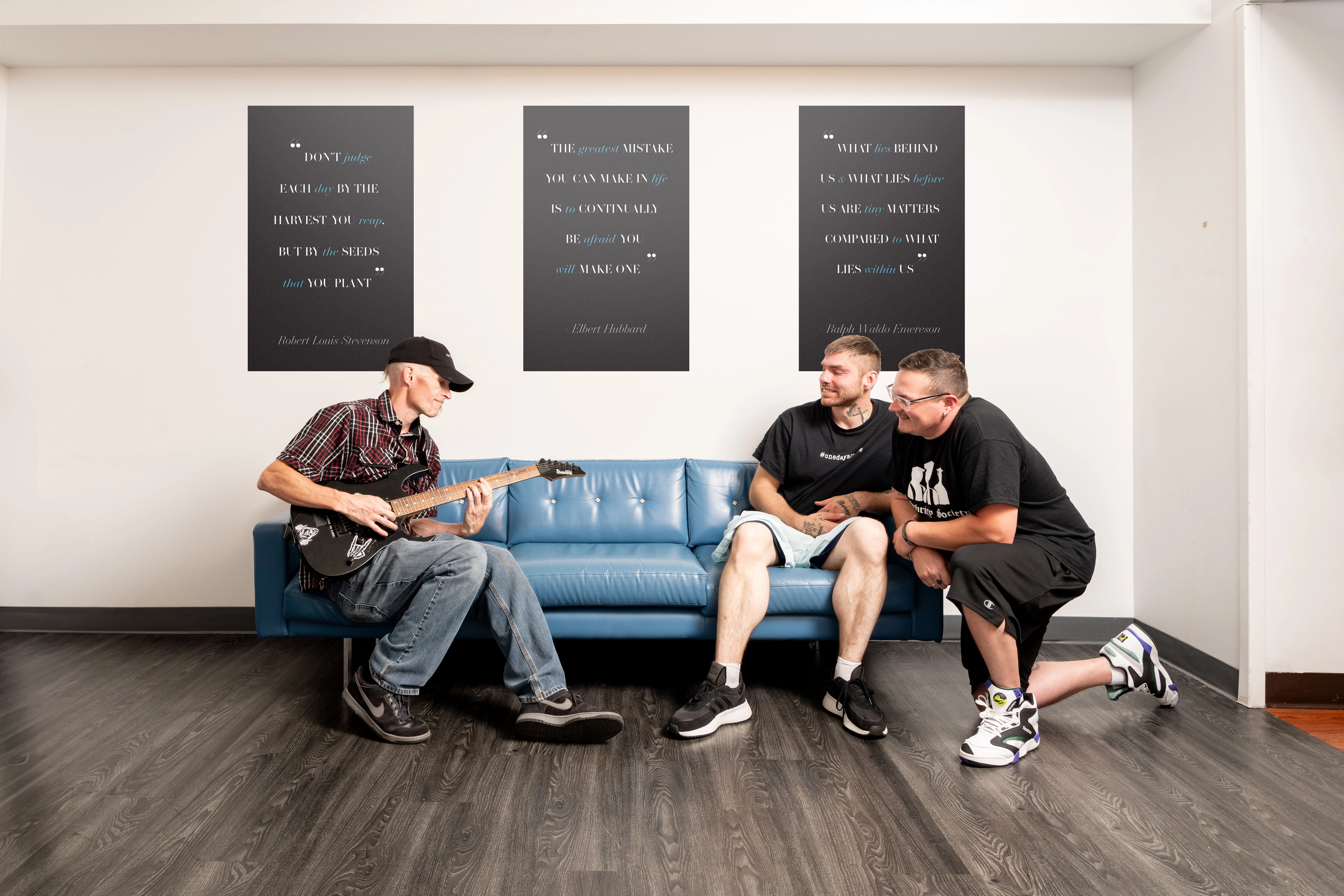
The most reliable way to find out is to go. A few suggestions can make the process more useful:
- Attend multiple meetings of each before deciding
- Try different AA groups, since their formats can vary quite a bit
- Try both online and in-person meetings
- Notice whether you leave feeling supported or judged
- Consider whether you prefer storytelling and community, active skills work, or both
- Think about whether having a sponsor appeals to you
- Consider what would complement any professional treatment you are receiving
After each meeting, it can help to ask yourself:
- Did I feel comfortable enough to come back?
- Could I relate to the people?
- Did I leave with something useful?
- Does this approach make sense to me?
- Could I see myself participating regularly?
- What am I getting here that I’m not getting elsewhere?
It’s encouraged to try multiple meetings before deciding whether any approach fits, whether it’s SMART or AA. A first meeting is often uncomfortable no matter where it is, so give yourself a few visits before making a decision.
AA and SMART Recovery take different approaches to a very similar goal, which is helping people build a life in recovery. Neither one is objectively better than the other, and you can always go to both if you can’t decide which one is the most helpful for you. Some people also need more support than a peer group alone can offer. In that case, professional treatment can provide you with the clinical side of things that AA and SMART Recovery can’t provide.
Related Posts:





Rachael Goldstein is a licensed attorney who spent six years as a public defender in Philadelphia, handling a wide range of cases. That work gave her a close, firsthand look at how addiction and mental health affect people’s lives, and it’s shaped her writing ever since. Her writing focuses on mental health and wellbeing, drawing on both her legal background and hands-on experience in the field. She knows how high the stakes are when someone is searching for help, so she digs into the research and lays out the facts in a way that’s clear, honest, and easy to act on.
When she’s not writing, Rachael spends her free time traveling, hiking, and exploring new places.