
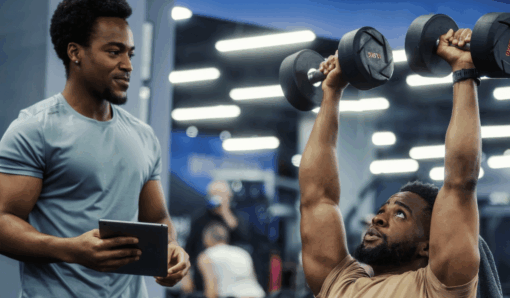
Today, we’re reviewing one of the most popular PT specialization courses: ISSA’s Bodybuilding Specialist certification.
As a personal trainer, you’ll know how varied this role can be. You work with people from all walks of life, each with their own goals, struggles, and motivations. After working with enough people, you’ll develop specific interests in certain areas, or you may find yourself gravitating toward a subset of clients with a unique reason for training.
This might lead you to explore the variety of specialization courses available to expand your knowledge, but with so many out there, it can be difficult to know what’s worth your time. Having spent years working in gyms as an instructor and then as a personal trainer, primarily coaching people with muscle-building goals, I have direct experience in this area. I also hold a BSc in sports and exercise nutrition, so I’m familiar with much of the science underpinning a course like this.
With that in mind, today we’ll analyze whether this course content is up to scratch. You’ll delve into hypertrophy and how to maximize the muscle-building process (both from a training and nutritional perspective), learn how to program for aesthetic-oriented goals, explore how psychology plays into this fitness niche, and more. It aims to give you the tools you need to coach beginners, rising stars, and anyone keen on building muscle.
But is it actually worth the money? Or would you be better placed just heading to YouTube to learn what you need? Let’s take a look.
Bottom Line Up Front
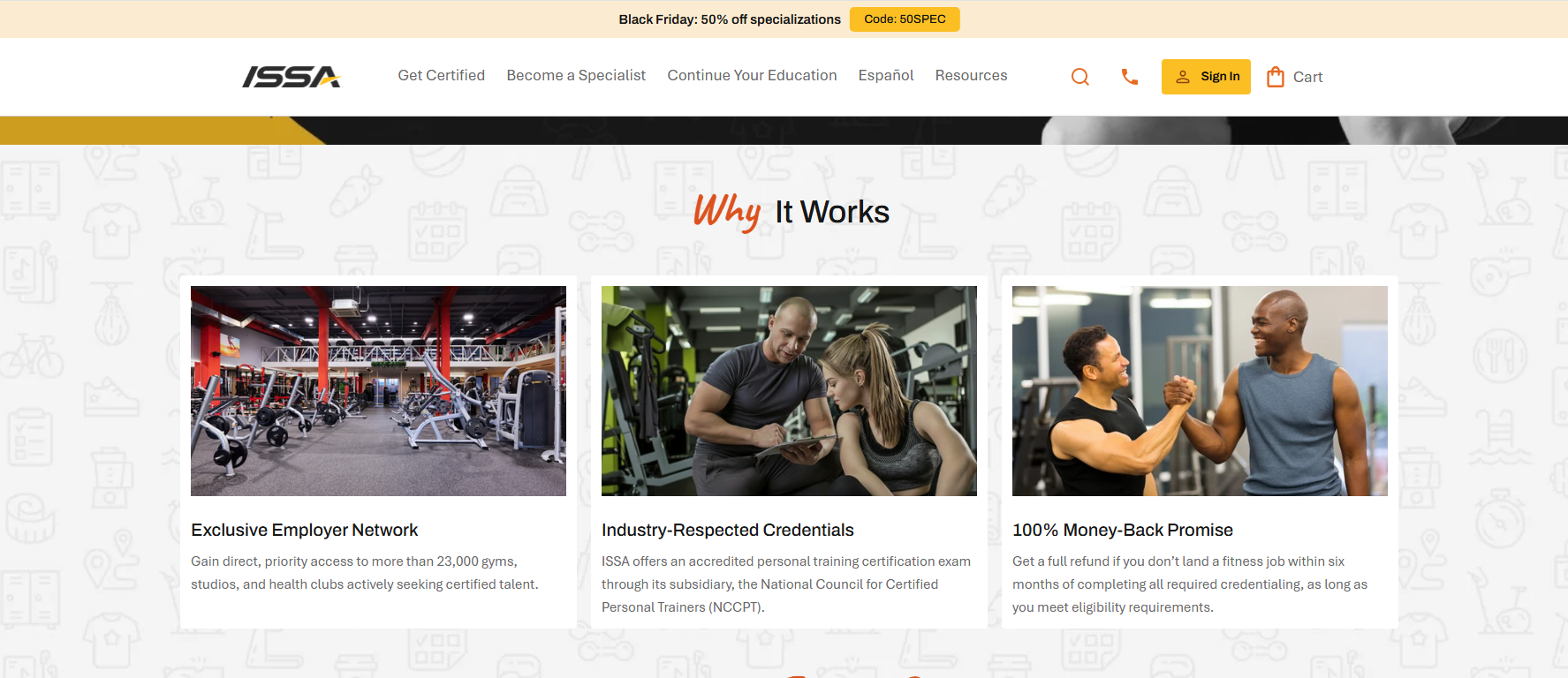
In a nutshell, this course is worth it if you want to broaden your knowledge of muscle-building science, physique-focused programming, and nutrition. Industry experts back the material, and everything’s presented in an accessible format with a mix of content types to keep learners engaged.
If you’re a personal trainer with a considerable amount of knowledge on the topic, though, you might not find quite enough here to justify the price. This program also doesn’t provide much guidance on the competition side of bodybuilding. There’s certainly some worthwhile information (covered below), but you’ll likely want to look elsewhere if you’re looking to niche into this area specifically. It’s a worthwhile qualification, but keep these two things in mind before enrolling.
If you’re not already well-versed in bodybuilding science and programming (and you don’t have an aversion to online learning), it’s a great way to get started in this area. If you have a lot of practical experience and a deep understanding of the theory, though, passing this course likely won’t significantly improve your career prospects.
What Does the ISSA Bodybuilding Specialist Course Offer?
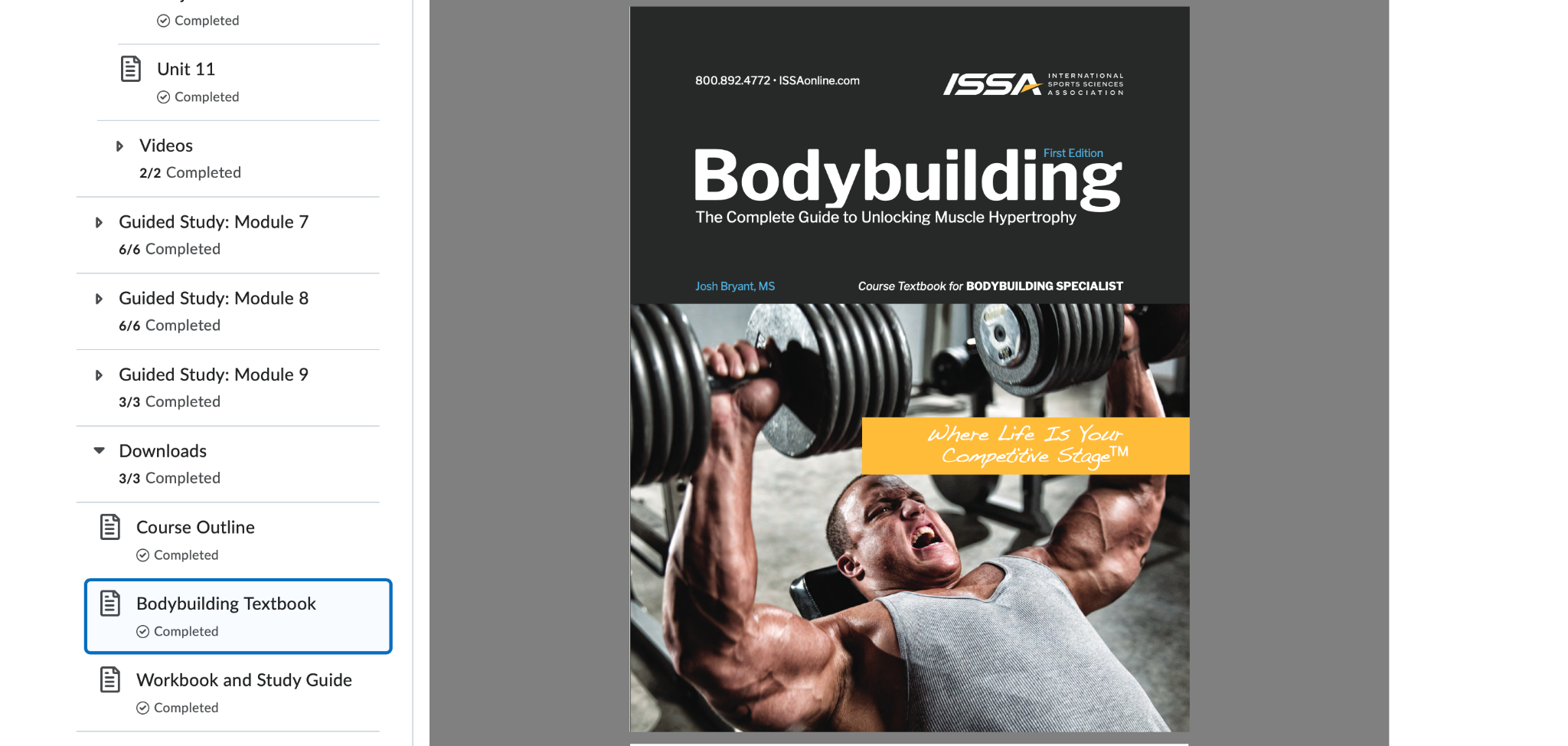
Across 9 modules, you’ll get instruction on:
- Human movement and physiology
- Foundational lifts and the hormonal response to training
- Exercise selection and variation
- Aerobic training and stretching
- General assessments, evaluating progress, and periodization
- Bodybuilding methods and traditions, and muscle shaping and muscle symmetry
- Nutrition, supplementation, and drugs
- Recovery and injuries in bodybuilding
- Sports psychology for bodybuilding
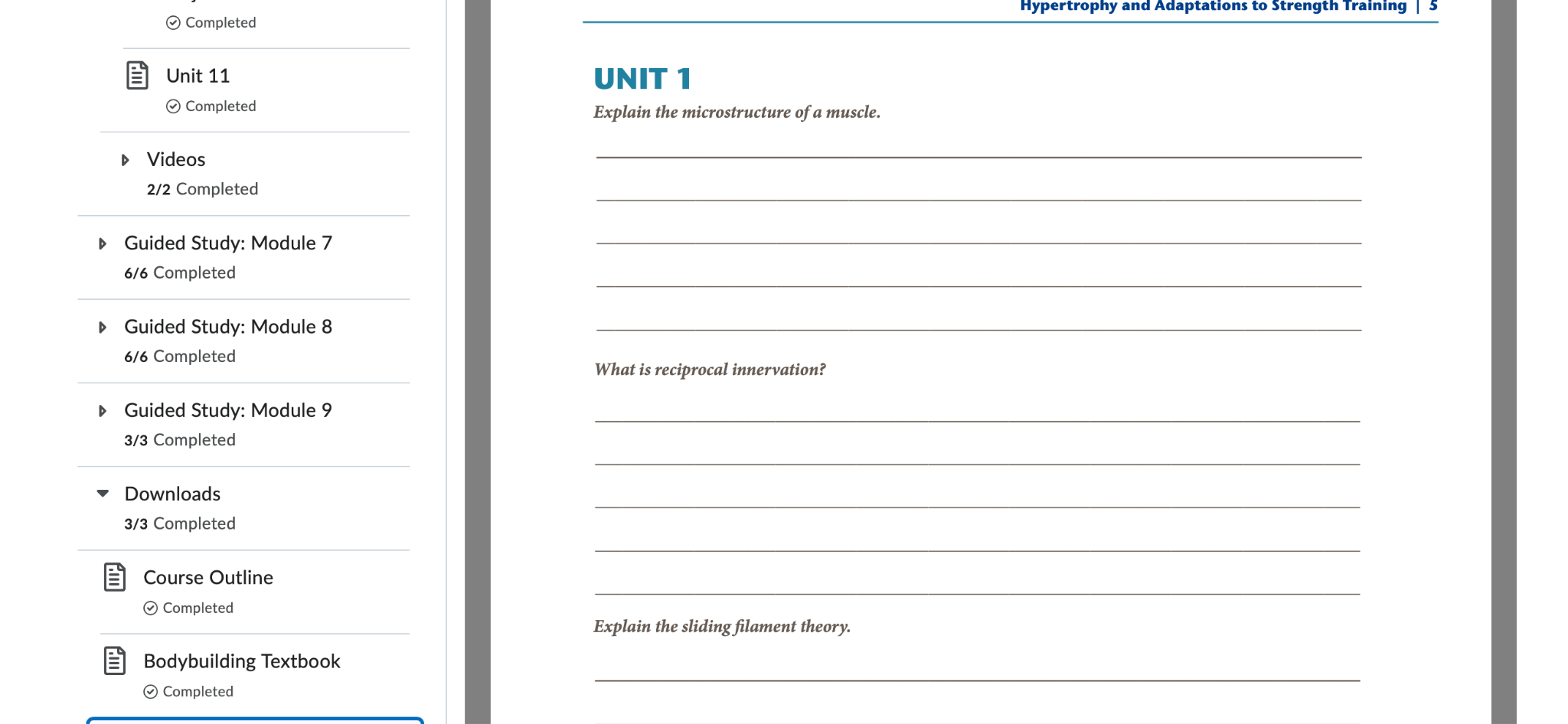
Across these fundamental topics, you’ll get the core framework you need to coach bodybuilding from a theoretical standpoint. You also gain access to a workbook and study guide that you’ll use as a companion to each module. A series of module-specific questions gets you actively engaging with the material, complemented by end-of-module quizzes.
These quizzes are the assessments for each module. 70% or higher is considered a pass, and you’ve got unlimited attempts. There are 16 quizzes in total, each with 6 to 8 multiple-choice questions.
Just because a course has a good framework doesn’t mean the content is worth your time, but thankfully, this one has a solid foundation.
Strength coach and professional powerlifter Josh Bryant, MS, wrote the textbook students use for the course. You might wonder why someone with a background in powerlifting and other strength sports is covering bodybuilding, but Bryant has extensive experience working with physique athletes. He was associated with Metroflex Gym, home to many greats, including eight-time Mr. Olympia Ronnie Coleman. During his time there, he worked with IFBB pros like Branch Warren, Cory Matthews, and Johnnie Jackson.
Throughout his 30+ year career, he’s become known for his powerbuilding approach to training bodybuilders, taking what he learned from the strength and conditioning world and applying it to aesthetics-oriented training. In this text, he blends strength-focused and muscle-building training to offer useful information you can use with a wide range of clients.
The hypertrophy and programming knowledge you’ll gain will assist you in helping clients pursue any muscle-building goal, irrespective of whether or not they actually plan to compete. There’s broad utility here, and when considering any course, how many clients the information within is relevant for is a big factor.
In terms of the content itself, you’ll be covering old ground in a few areas, but that’s always going to be the case with add-on courses. The important thing is that each topic goes deeper than your PT course did, and this one has plenty of fresh content.
This is a nice and varied program. The textbook learning is broken up with video lectures, so you’re not spending all your time reading, and having the workbook and quizzes helps crystallize the information in your mind before you move from one section to the next. This should be a familiar approach if you’ve completed an online course like this before, and the format goes a long way in making the course accessible to a wide variety of people, as it caters to different learning styles.
One notable limitation, however, is the lack of information on bodybuilding competition. The material mainly teaches you how to coach a prospective trainee in the early or mid stages of their journey, giving them a solid foundation for whatever aesthetic goal they’re training for. Getting contest-level lean to make a show, learning how to pose, and how bodybuilding competitions actually work aren’t really covered beyond the basics. You’ve got some information on cutting, muscle shaping, and symmetry, and some of the psychology stuff could be useful, but that’s about it.
If your main goal is to coach competitive bodybuilders through the complex process of preparation and getting stage-ready, you’ll need to supplement what you learn here with something else. Learning directly from another experienced coach is one option (many of these coaches have been professional bodybuilders themselves).
Bodybuilding is a sport, after all, and what’s covered here is the core science of building a physique befitting the sport, not how to coach someone to win a competition. They’re similar disciplines, but it’s key to make that distinction.
The 9 Subject Areas Explored
Now that we’ve covered the gist of what the course offers, let’s take a look at the content in more detail. Here’s a breakdown of what you’ll learn across 9 core modules:
Human movement and physiology
Naturally, the first module covers the very basics. You’ll learn how the musculoskeletal system supports movement through biomechanics, and how bone, tendons, ligaments, and muscles work at the macro and micro levels. You’ll then learn how the science applies to bodybuilding, covering hypertrophy, neural adaptations, satellite cells, and more.
Even though this is the first module, it’s one of the most complex, and I was impressed with how the course struck an appropriate balance between detailed explanations and not presenting so much information that your brain gets overloaded. This section of the textbook is particularly well laid out, and the video lectures go a long way in solidifying the information.
Foundational lifts and the hormonal response to training
Personal training programs are usually noticeably light on their teaching on foundational lifts, so what’s offered in this module should be a nice addition to your knowledge. The module covers the three types of limit strength and their importance for bodybuilders (i.e., it’s not just for powerlifters), then explores a series of key lifts such as the squat, bench press, overhead press, deadlift, and more, from their origin to technical proficiency. It finishes by covering the hormonal response and adaptations to these lifts.
Exercise selection and variation
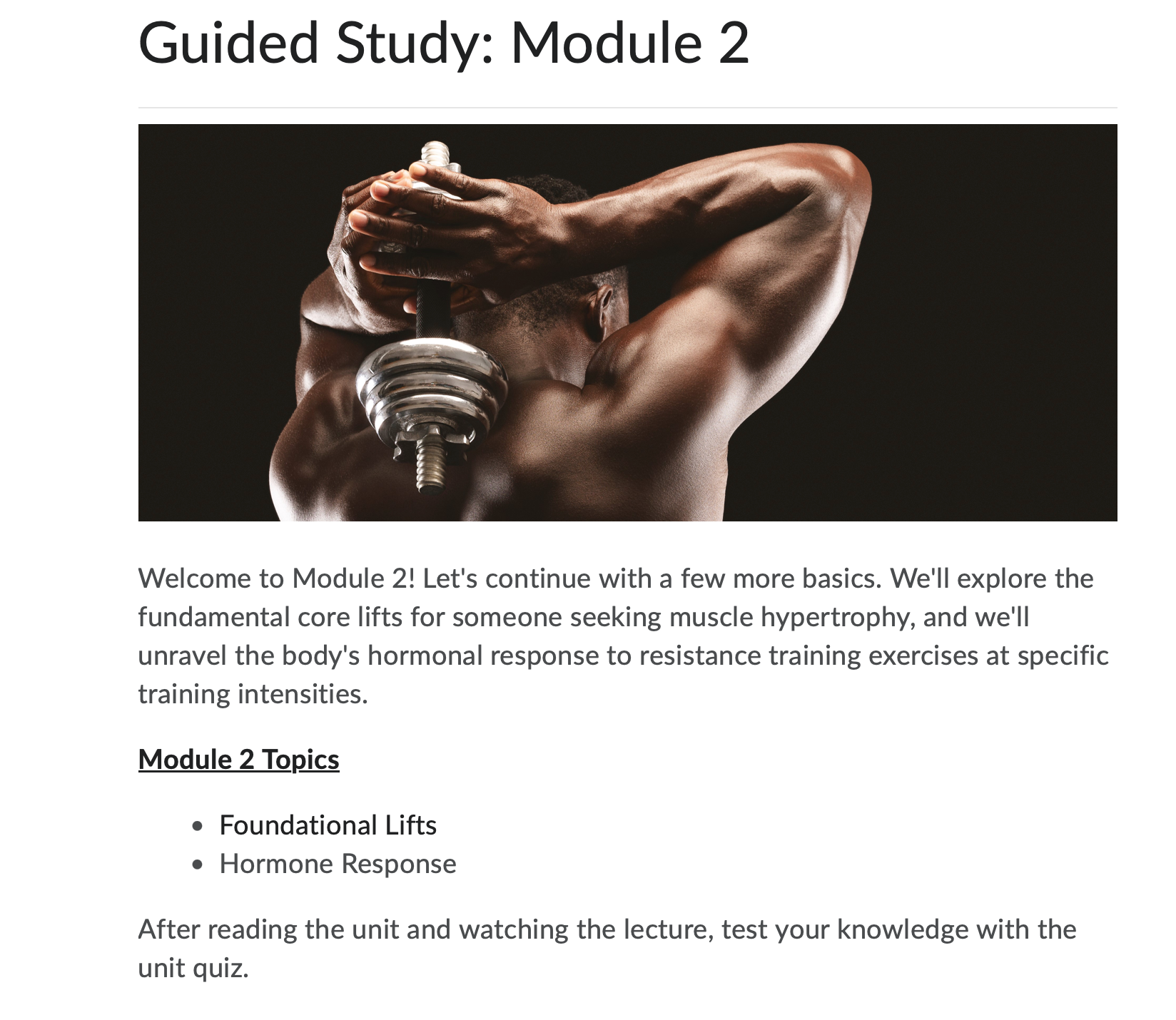
The third section is very useful from a practical perspective, as the textbook covers the top ten exercises for each major muscle group. While you could head to YouTube, where you’ll find dozens of videos covering this exact topic, here you’re given scientific research to back up the claims. It’s all EMG (electromyography) data, and while EMG isn’t a perfect measure, it’s nice to see cited evidence supporting the recommendations alongside Bryant’s own opinions.
You’ll also get clear form instructions in the text, and there’s some more niche information about bands and chains in there, too. It would’ve been nice to see more information on machines, though for the sake of keeping things focused, I can see why they’ve been omitted.
Aerobic training and stretching
Module four covers the important topic of aerobic conditioning and stretching. Given how often this topic gets neglected, it’s great to see it included here.
You’ll learn about the importance of conditioning as it relates to bodybuilding, discovering the benefits of strongman training, intervals, barbell complexes, and other worthwhile forms of exercise. You also get a good history lesson and insight into how these types of training came about.
There’s a succinct section on stretching in the latter half of the module to work through, and while it’s well written, I think this area could’ve used a few more diagrams to break things up. That said, the video lecture on the topic sums it up well and helps you consolidate everything.
General assessments, evaluating progress, and periodization
I particularly enjoyed the fifth module’s explanation of periodization and how to evaluate progress. Bodybuilding is an intense style of training, and far too often, people don’t emphasize how to program properly to take a trainee through several months of hard work safely and effectively.
You’ll learn how to perform a variety of testing procedures to assess your client’s progress (such as measuring strength and how to use skinfold calipers), and then in the latter half, there’s a full breakdown of applying the most up-to-date periodization principles (from the history of periodization and the different types to bulking to cutting).
Bodybuilding methods and traditions, and muscle shaping and muscle symmetry
Module six starts with a detailed look into improving symmetry, bringing up weak points, and using isolation exercises, before moving onto bodybuilding methods – elements of training you’ve likely heard but don’t fully understand. What’s great about the latter section, in particular, is that you’ve got everything in one place.
From drop sets to DC training, it’s very useful to have the history of bodybuilding methodology outlined like this, and the information is presented engagingly.
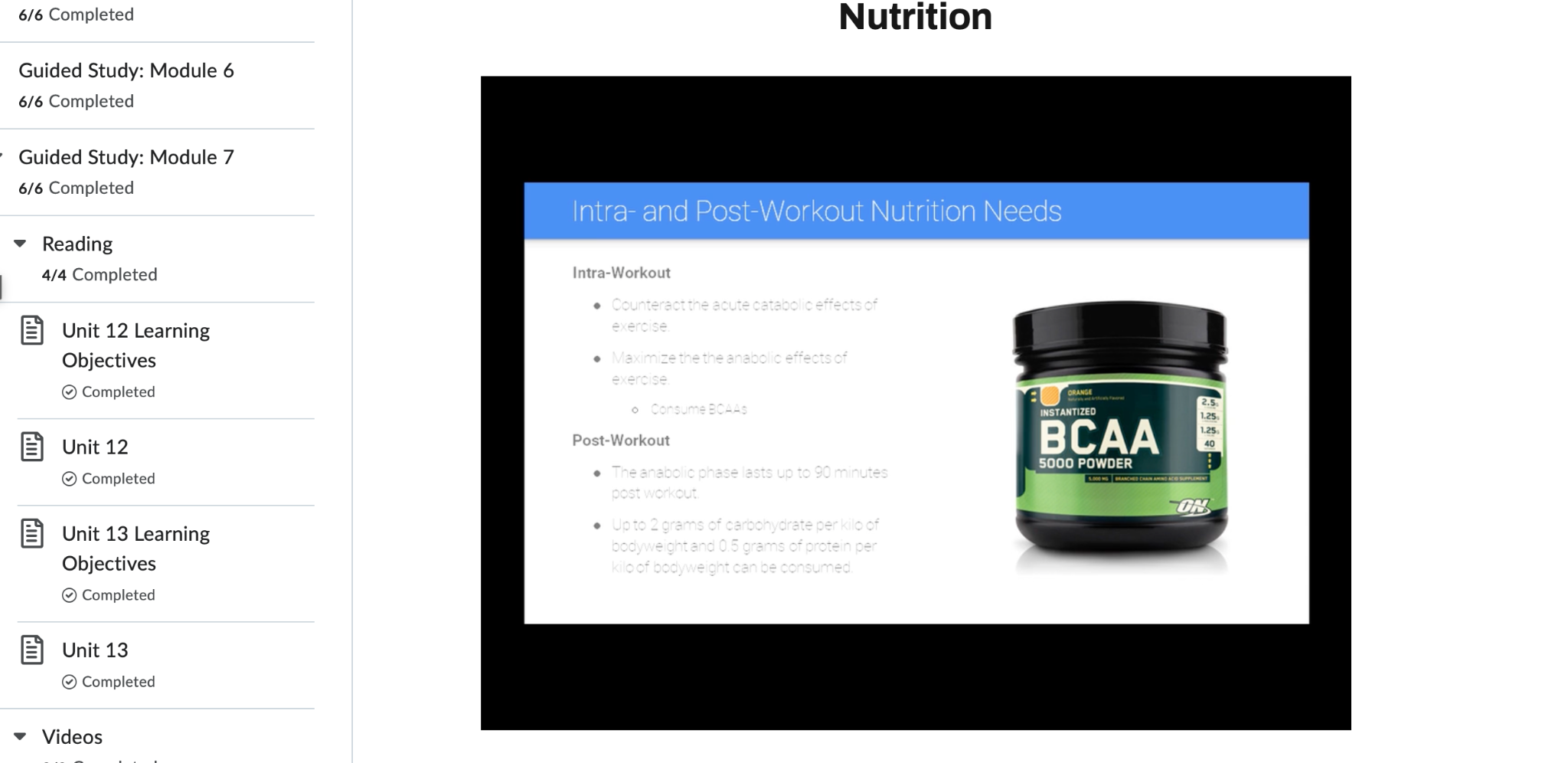
Nutrition, supplementation, and drugs
The course’s nutrition section begins with a well-designed high-level overview of the topic; you’ll be covering old ground to some extent, but this course goes into much greater detail overall. You’ll then move on to the bodybuilding guidelines section that covers caloric distribution, calorie expenditure, meal frequency, and so on, which offers some really valuable, evidence-based information.
The section on supplementation and drugs was also very interesting. You’ll learn which supplements on the market have actually demonstrated true efficacy, and the text gets you up to speed on the physiology behind the drugs bodybuilders are using today (including the clear risks).
Recovery and injuries in bodybuilding
One of the clearest signs of a bad trainer is pushing a client to the point of true exhaustion or injury, and this section does a good job of teaching you the underlying principles that help you avoid that.
You’ll discover the differences between acute and long-term fatigue, as well as how deloads work and methods that can be used to enhance recovery, such as massage and foam rolling.
The deload section was particularly insightful (it covers the famous Weider system, which is nice to see), and the last section of the module goes into injury prevention and management, primarily through the lens of applying sound progressive overload. Joe Giandonato, MS, wrote this section, and his 13 tips for injury prevention – as well as his detailed ‘areas of concern’ section – offer very valuable information.
Sports psychology for bodybuilding
The final module delves into bodybuilding psychology, and it was interesting to see the context of bodybuilding explored specifically (mainly the inverse difficulty curve from prep to event versus other sports), rather than rehashing mental conditioning associated with athletics in general.
It’s a short selection, but the insights on mental preparation, along with the twelve motivational strategies provided, give prospective coaches a toolset to help their clients reach their goals not only in the gym, but also outside of it.
The Final Exam
ISSA’s Bodybuilding Specialist course ends with a single open-book exam you take online. Unlike your PT course, it doesn’t include a practical assessment. You’ll need to score 75% to pass, and you can take it twice (for a third attempt, you’ll have to purchase another attempt for $99).
In terms of the exam structure itself, you’ve got 100 multiple-choice questions, 2 matching questions, 2 fill-in-the-blank questions, 1 multi-select question, and then 5 case study multiple-choice questions. The test is marked out of 110 points in total, and as you can see, you’ve got quite the breadth of question types throughout.
I think the exam format is going to be appealing to a lot of people. It makes everything convenient from start to finish, and it’s ideal for busy people, allowing them to fit the course and assessment around their other commitments.
That said, some may feel that open-book doesn’t offer enough reassurance that they can apply their knowledge in the real world. Given that you’ve already completed a PT course, this one assumes you’re able to put what you’ve learned here into practice.
Value vs Price
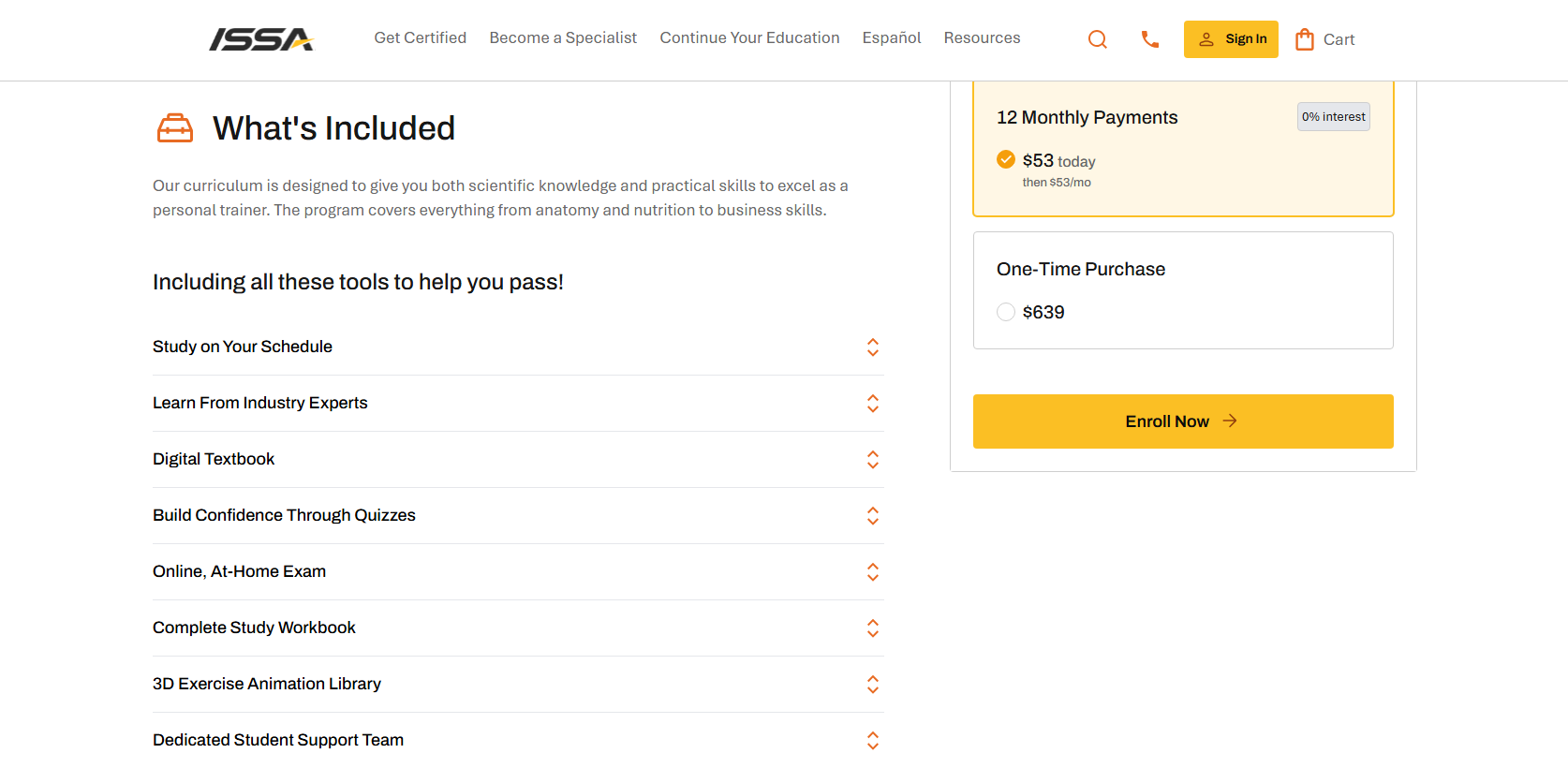
As ISSA is known for, you get good content for your money, but the up-front price of $639 is still substantial.
This isn’t an outright extortionate price, but it’s enough that you want to be very clear about whether this is something that will be valuable to you. While specialization courses can be a great idea for the right person, it’s not simply a matter of bolting on more to your existing qualifications to become better equipped.
This program is a good fit if a large proportion of your client base are bodybuilders or want to prioritize building muscle. If the certification will help you enrich the experience of existing clients and attract additional interest, the $639 is a worthwhile investment.
If you decide this is for you, the 12 Monthly Payments option may be an easier pill to swallow. It’s priced at $53 per month, and unlike other courses, you’re not paying any interest by spreading the cost.
The main takeaway here is to spend plenty of time thinking about how beneficial a course like this would be for you and your clients. Being able to say you have a bodybuilding certification in your marketing material could theoretically help (and in certain gyms, it may play a small role in getting your foot in the door), but completing the course for that reason is likely to lead to disappointment.
That said, ISSA does offer additional career support via its Career Connect program – a career platform designed to connect those who have completed an ISSA course with an employer. While it won’t guarantee a job, it can help with that all-important networking component, and if there’s a gym near you specifically looking for someone with expertise in this area, it could help push you forward.
Is the ISSA Bodybuilding Specialist Course Worth It?
ISSA’s Bodybuilding Specialist certification is worth considering if you’re a personal trainer looking to develop the knowledge needed to support aesthetic-focused clients. The mix of traditional textbook material, videos, quizzes, and a self-paced format makes studying streamlined and accessible for most.
The course is best viewed as a foundation. You’re not going to be delving into the nitty-gritty of bodybuilding as a sport, but by the end of it, you should have a good grasp of how to help a client transform their physique successfully. The textbook is a truly well-written manual with great information, and the supporting videos and quizzes do a good job of making it stick. If you’re already knowledgeable in this area, though, or you’re specifically looking for something that will help you get to grips with the ins and outs of contest prep and the like, you’ll need to look elsewhere.
If you can soak up the knowledge offered here and apply it to a wide range of clients, the $639 investment is worth it. Just make sure you understand what it is and isn’t before you enroll.
Related Posts:





Linden is a keen fitness junkie and loves showcasing nutrition’s important for anyone starting a fitness journey. After his training in Sports Nutrition, Linden loves offering health recipes and workout routines for people of all fitness levels and backgrounds. He believes no matter how old you are or how far you have to go, fitness should be fun!