
By Danielle Mathieu, MA Psychology, MSc Nursing (Student) and Health Researcher
Anxiety rarely stays in your head. It settles into your shoulders, tightens your jaw, keeps your breath shallow and your sleep light, and it has a frustrating habit of lingering long after whatever you were worried about has passed.
I’ve been thinking about this body-mind overlap for most of my career. With a background in psychology and partway through an MSc in nursing, I find it one of the most interesting things about anxiety. We talk about it as a mental health condition, but for many of the people I encounter, it behaves more like a nervous system that has lost its off switch.
Vagus nerve stimulation (VNS) targets the autonomic nervous system. This network manages a person’s heart rate, digestion, sleep, and stress recovery. Stimulation ideally shifts the body out of chronic alertness and into a state that actually supports rest and repair.
If you’ve already worked through therapy, meditation, breathwork, supplements, or medication and still feel permanently braced for impact, this category is worth your time. While VNS isn’t a replacement for those approaches, many people are adding it to their treatment plan.
Let’s talk about the leading VNS devices and compare them. I’ll explain what matters when choosing a particular device, and why I think Nuropod stands out as the best overall option.
Why Vagus Nerve Stimulation Matters for Anxiety
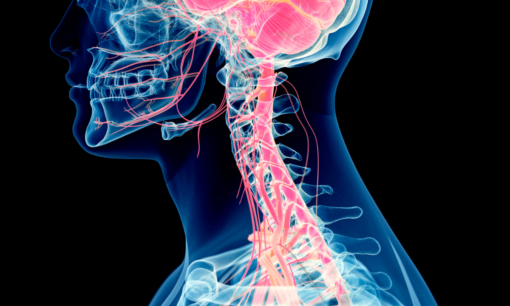
The vagus nerve is the longest cranial nerve in the body. It runs from the brainstem down through the chest and into the abdomen, connecting the brain to the heart, lungs, and digestive system. Its job is running the rest, digest, and recovery side of your parasympathetic nervous system.
When it’s working well, you don’t really notice it. Your heart rate often settles after stress, your breathing deepens, and you can start to feel grounded without having to do anything to get there.
But when it’s underactive, the opposite is true, and it’s something I see a lot. A person’s body stays alert long after it should have stood down. The mind keeps circling, and emotions sit closer to the surface than they “should”.
Non-invasive vagus nerve stimulation (nVNS) is a way of engaging this system directly. Unlike implanted vagus nerve stimulators, these devices are external and don’t require surgery. They work by sending small electrical impulses, delivered through the skin, to a branch of the vagus nerve to support autonomic balance.
Right now, research is still evolving, but the findings are encouraging. A 2024 randomized trial published in JAMA Network Open found that transcutaneous auricular vagus nerve stimulation improved sleep in people with chronic insomnia. A 2020 consensus review in Frontiers in Human Neuroscience helped establish clearer reporting standards for the field. Taken together, studies like these are building a stronger evidence base around stress resilience, sleep, and broader well-being.
Non-invasive auricular vagus nerve stimulation has generally been reported to be well tolerated when used appropriately, which is worth knowing before you spend several hundred dollars on a device.

What to Look for in a VNS Device for Anxiety
Here’s what I focus on when evaluating a device.
- Evidence: Peer-reviewed, independent research matters.
- Placement: Devices that target the tragus align with the published taVNS literature, whilst wrist- or chest-based alternatives work through a different mechanism.
- Comfort: A device you find unpleasant is a device that ends up in a drawer.
- Ease of use: The best tools fit around your existing life rather than asking you to reorganize it.
- Session length: You’ll find everything from two-minute resets to 30-minute passive sessions.
- Cost: This category ranges from under ~$300 to nearly ~$1,000.
- Accessibility: Warranty, return policy, and genuine customer support all matter, particularly at the premium end of the market.
I’ve also included Apollo Neuro and Sensate below. Strictly speaking, neither is a vagus nerve stimulation device because they don’t deliver electrical stimulation to the vagus nerve. But they’re often considered by the same people looking for practical tools to feel calmer, sleep better, and support their nervous system, so it felt right to include them for comparison.
Best Vagus Nerve Stimulation Devices for Anxiety (At a Glance)
| Body Placement | Typical Session | Approx. Price (USD) | Best For | |
| Nuropod | Ear (tragus) | 30–60 minutes | $699–$899 | Best overall |
| Pulsetto | Neck | 4–20 minutes | $250–$500 | Lower-cost entry point |
| Truvaga Plus | Neck | 2 minutes | $499 | Quick sessions |
| Apollo Neuro | Wrist or ankle | Variable | $349 | Wearable stress support |
| Sensate | Chest | 10–30 minutes | $299 | Relaxation and meditation |
Prices are approximate and subject to change.
1. Nuropod
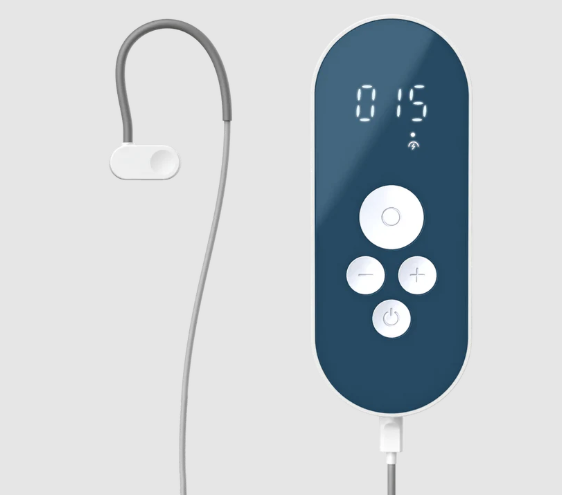
Nuropod is the North American version of Parasym’s flagship device, sold internationally as Nurosym – both run on the same underlying technology.
What separates Nuropod from most devices in this category is that it reads as a scientifically developed system rather than a wellness product with a science-themed marketing layer. It’s one of the most extensively studied consumer VNS devices available, and it uses the same technology evaluated in published research, not a consumer adaptation.
Parasym reports more than 10 years of research and development, 60+ completed scientific studies, and over $10 million invested in R&D. The brand also points to 5 million+ user sessions and use and recommendation by 1,000+ licensed health experts, backed by a 30-day money-back guarantee.
Its proprietary Auricular Vagal Neuromodulation Therapy is delivered through a patented, scientifically tested waveform (AVNT™), and that’s part of what sets it apart from more general wellness devices. The device is designed to support nervous system regulation, helping your body shift out of stress mode and into relaxation and recovery.
In practice, the clip sits on your tragus and doesn’t need any gel. You’ll feel a gentle tingling sensation that you can turn up to whatever feels comfortable for you. There’s nothing to hold in place and nothing to fuss with once it’s running.
Sessions last around 30 minutes, and most people find it easy to fit them into time they’d already be sitting down anyway, like reading before bed, working through emails, or winding down on the sofa in the evening.
Part of why it feels this simple comes down to where the stimulation happens. The ear is a far more accessible spot for reaching the vagus nerve than the neck, where the nerve sits deeper beneath more complex tissue.
That accessibility is what lets Nuropod skip the gel, the precise positioning, and the guided setup that neck-based devices typically need to get a reliable connection.
2. Pulsetto
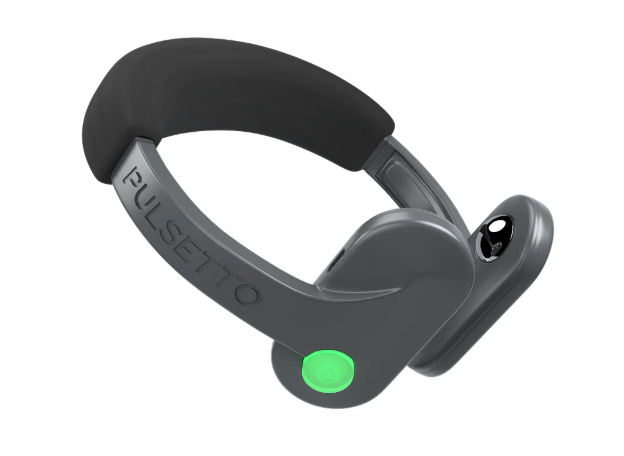
Pulsetto is a neck-worn device built around stress and sleep support. It’s built up a solid following on the back of a clean design, app-guided sessions, and a lower price point, and for some people, that combination is enough.
The trade-offs are that its evidence base draws largely on company-funded studies rather than independent, peer-reviewed research, and the body of published literature specific to Pulsetto is thinner than that of the leaders in this space.
The neck is also a trickier place to stimulate in the first place. Getting a clean, consistent signal depends a lot on things like collar positioning, skin contact, and your own neck anatomy. It’s also why neck-based devices tend to rely on conductive gel and shorter, tightly guided sessions instead of the easier daily use you’d get from stimulation at the ear.
For someone on a budget who wants an entry point into this category, Pulsetto is a reasonable place to start. But in terms of independent evidence, it doesn’t currently sit in the same bracket as Nuropod.
3. Truvaga Plus
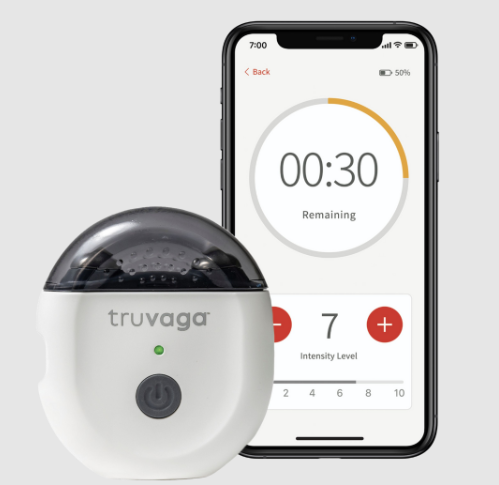
Truvaga Plus is a handheld cervical device from electroCore, the company behind gammaCore, which is FDA-cleared for certain headache disorders when prescribed.
Sessions run for two minutes, which suits people who want a quick reset rather than a longer wind-down. The catch is that you have to hold the device against your neck for the entire duration, which might not be very relaxing.
For someone looking for a fast, portable reset, Truvaga may be a good option for managing anxiety, but the holding requirement and brief session length can be limitations.
4. Apollo Neuro
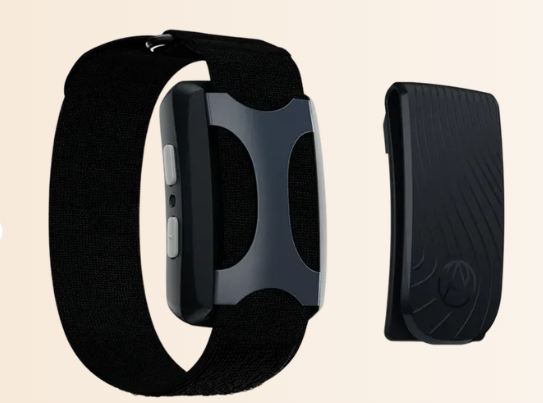
Apollo Neuro sits on the wrist or ankle and uses patterned vibration, not electrical stimulation, to influence the nervous system through touch. Some people find it genuinely useful, and the ability to wear it throughout the day is a real practical advantage.
That said, it’s worth being clear on what it is: Apollo Neuro isn’t a vagus nerve stimulation device in the same way some of the other things are on this list. It’s a wearable nervous system support tool, not a taVNS device.
So, if you’re specifically looking for something aligned with the auricular VNS research literature, it isn’t the right fit, but it might still be worth considering alongside it.
5. Sensate
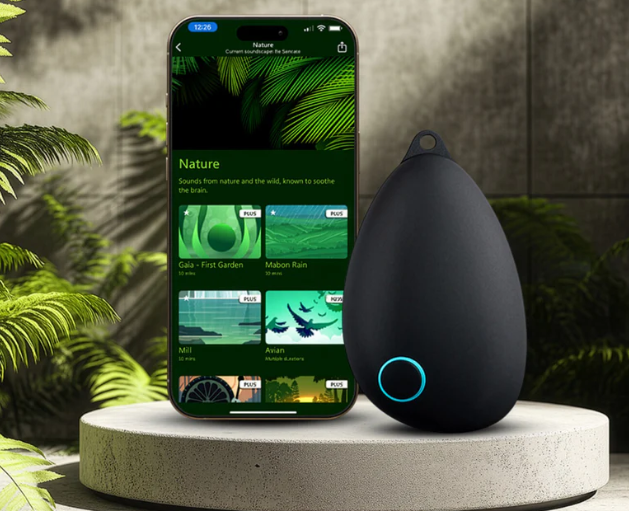
Sensate rests on the chest and pairs low-frequency vibration with curated soundscapes. It tends to resonate with people who already have a meditation or sound-based relaxation practice.
Like Apollo Neuro, it doesn’t deliver electrical stimulation to the vagus nerve, so it’s more accurately described as a relaxation aid than a VNS device. As a complement to an existing practice, it has a place. As a primary tool for nervous system support, the evidence base is limited.
Best Device for Different Needs
- Best overall: Nuropod, for research depth, tragus placement, comfort, and everyday usability in one package.
- Best lower-cost entry point: Pulsetto, if budget is an important factor and you’re comfortable with less independent evidence around the benefits
- Best for short sessions: Truvaga Plus, for anyone who wants a quick, portable reset.
- Best non-electrical wearable: Apollo Neuro, if you want something to wear discreetly during the day.
- Best for sound-based relaxation: Sensate, as an addition to an existing meditation practice.
How To Choose The Device That’s Right For You
There’s no single device here that’s right for everyone, and the best pick depends on what you’re trying to sort out.
If you want the strongest research behind you alongside comfort and everyday ease, Nuropod is where I’d start. It targets the tragus, one of the most direct and practical access points for non-invasive stimulation, and it’s among the most studied consumer devices in this category, built on more than a decade of development and 60+ completed scientific studies. It’s also easy to live with: no gel, nothing to hold in place, thirty minutes hands-free while you get on with your evening.
Your situation might point elsewhere. If budget is the deciding factor and you don’t mind a thinner, evidence-based option, Pulsetto is a reasonable entry point. If you want a quick reset rather than a longer wind-down, Truvaga Plus is built for that. If you’d rather wear something discreetly through the day, Apollo Neuro does that, and if you already have meditation or sound practice, Sensate fits alongside it.
Whatever you choose, no device can guarantee a specific outcome. Vagus nerve stimulation is best thought of as one layer in a broader approach that might also include therapy, movement, sleep support, and medical care where appropriate.
A device only helps if you use it, so be honest with yourself about what you’ll keep up with. Match the placement, session length, and price to how you live, and you’ll get far more out of whichever you pick.
Related Posts:




Danielle (Dani) Mathieu is a health and medical writer who works with global health and wellbeing businesses to deliver insight-driven, research-backed content at the intersection of psychology and nursing. She has 18+ years of experience in communications, holds an MA in Psychology, and is currently studying for an MSc in Adult Nursing.
Dani is happiest when she’s translating complex health and nutrition science into plain-English stories that feel genuinely useful without being overwhelming. When she’s not juggling clinical placements on the ward, she’s usually writing. She lives on the Scottish coast, loves a cold sea breeze, and is often accompanied by a very opinionated dog.