

If you’re looking to start a career in helping people live healthier, more fulfilling lives, you may have already considered becoming either a personal trainer or a health coach. Both roles involve coaching people through the process of building sustainable habits that profoundly affect their physical and mental well-being, and each is fulfilling in its own way.
That said, if you’ve spent a significant amount of time looking into these sorts of roles, you’ll know that different disciplines start to blur into one after a while. The differences between a health coach and a personal trainer, in particular, can be confusing, so this guide will teach you what life is like as a provider in both areas, and what you need to do to qualify.
Health Coach vs Personal Trainer: Roles and Responsibilities

Fundamentally, the difference between a personal trainer and a health coach is that the former helps people specifically with exercise. In contrast, a health coach addresses building healthy habits in a more general sense. That doesn’t mean that there aren’t crossovers, but the way these professionals work is distinctly different.
In this section, we’ll explore each role more deeply so that you have a well-rounded understanding.
What Does a Health Coach Do?
Coaching Behavior Change
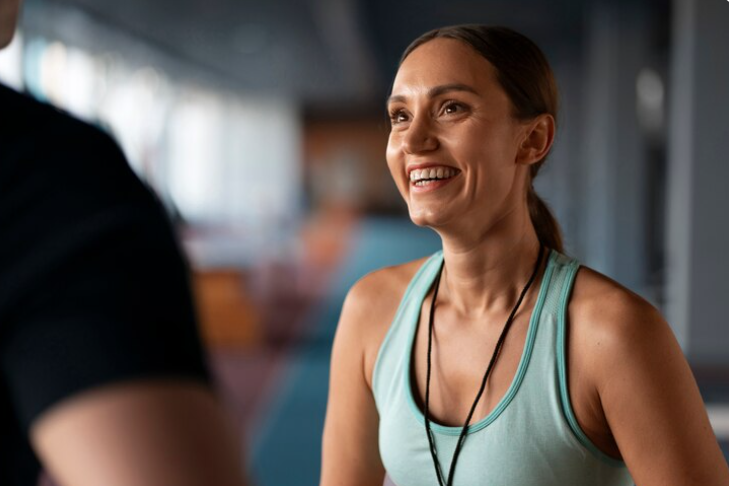
In general, the work of a health coach is less prescriptive than that of a personal trainer. You’ll put a lot of effort into helping the client challenge their belief systems by looking at the bigger picture. Rather than writing a structured blueprint, you’ll work with them directly to develop a holistic plan composed of many different elements, encompassing a broad range of strategies to tackle stress management, sleep, motivation, work-life balance, and more.
Change here initially happens through good conversation and discussion, so you’ll spend a lot of time talking to the client and slowly building rapport. Personal training is similar, but as a health coach, you’re generally tackling more complex issues that many people are reluctant to talk about.
Stress could be tied to family matters that are ordinarily bottled up and never discussed, or struggles at work could be linked with psychiatric disorders like depression, in which case, you may be working alongside a licensed psychotherapist to support their treatment plan. As such, the role requires a great deal of compassion, and it’s less about accountability and consistency above all else, and more about flexibility and providing a safe environment to grow.
Working Alongside Healthcare Professionals
It’s important to remember that a health coach is not a medical professional. They’re there to support intervention from practitioners like medical doctors, dietitians, psychologists, and so on, so a critical component of being a great coach is knowing where your role ends and another professional’s begins, as well as what you provide that a medical professional can’t offer.
What a Typical Coaching Plan Looks Like
As for actionable steps you’d provide to a client, plans are less rigid than they would be with a personal trainer. You’ll first provide a series of small, manageable steps to guide a person, which is commonly accomplished by splitting the day into parts and then addressing what can be done to make that segment more healthful. From there, you can work up to taking on greater challenges.
For example, a morning routine may be written out as a series of steps and tasks to set the person up for having a more productive day. If sleep is the bigger pain point, a dedicated bedtime routine may be implemented, with suggestions to reduce blue light two hours before bed, prioritize calming activities like reading, and establish a set sleep and wake time that best supports their lifestyle.
Essentially, you’re combining classic cognitive techniques with practical implementations, taking from many different disciplines such as psychology, business, and more to design something that works for that particular person.
What Does a Personal Trainer Do?

Building Exercise Programs
A personal trainer approaches a person’s life with much greater specificity. Naturally, exercise is the fundamental driver for change, and as such, you’ll be dealing with people who have a specific weakness in this area or a goal they’d struggle to accomplish on their own.
Through your expert knowledge, you’ll help people lose weight, build muscle, increase strength, and improve mobility. Client needs are varied; one day you might be working with someone who has just recovered from a serious illness, and the next it could be an individual looking to add muscle mass through a structured resistance training program purely for aesthetic reasons.
Coaching Cessions
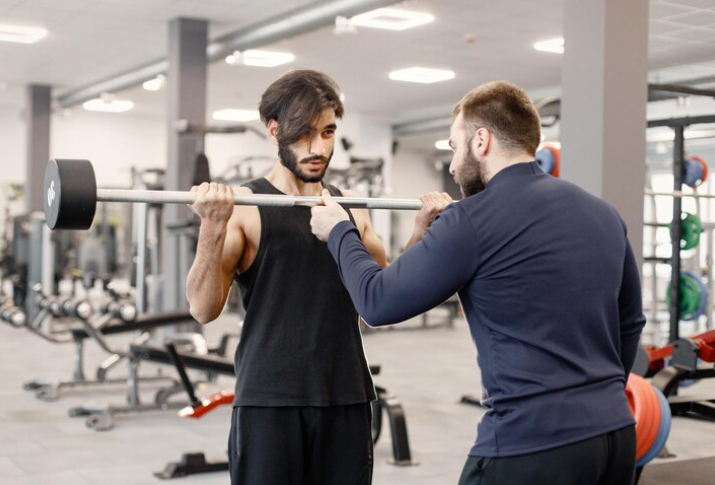
Sessions are more hands-on than they are with a health trainer, as if you’re training people in person, you’re directly instructing them. You’ll have an initial consultation to get to know them and discuss their needs, and once the program has been written, you’ll head into the gym (or their home gym) and take them through everything from start to finish (though as will be discussed below, you can also work entirely online).
Safety and Progression
Given that you’ll be instructing your client to use cardio machinery, free weights, and resistance training machines, there’s a major emphasis on safety. It’s not only your job to ensure the exercises you prescribe are effective, but also that each is performed without risk of injury.
There’s an onus on you to make sure you’ve set everything up properly or have instructed the client to do so, and have explained how to execute each exercise with good form. You’ll also need to teach them how to progress and keep things moving, and help them set short, medium, and long-term goals.
As much as personal training is about developing structured, actionable plans, a huge part of the process is building rapport and truly connecting with people. Issues around exercise and living a healthier lifestyle run deep, and you need to get people to open up and be honest if you hope to have a successful relationship. Managing the highs and lows of a client’s motivation can be one of the most challenging elements.
Health Coach vs Personal Trainer: Career Opportunities

Working as either a personal trainer or a health coach can take many different forms.
The first big change, compared with how things were done in the past, is that each role can be undertaken remotely. Given that you’re not coaching people in a set place with specific equipment, however, the process is more straightforward with health coaching.
While a good argument could be made that in-person meetings are more personable, high-quality sessions can also be completed via Zoom or other video conferencing software without compromise. Many times, the remote route is actually better than the in-person approach, as the comfortable setting of the client’s own home makes them feel more at ease.
When it comes to personal training, things are a little different. Firstly, there’s the option of providing a stripped-back version of traditional personal training, offering program design and digital consultations. Here, the client is responsible for completing workouts on their own but with regular video calls for guidance. It’s also possible to complete live sessions over video if you have your own studio, home gym, or if a local gym permits you.
Despite the obvious benefits of remote work, there’s still a lot to be said for traditional sessions in both roles. In the physical world, health coaches commonly work alongside other professionals as part of a client’s overall wellness plan: they can work within nutrition and general wellness companies, community health organizations, corporate wellness programs, and more (you can also work remotely for these sorts of places, too, or in a hybrid capacity).
Each of the above places can also hire for personal training, as types of professionals commonly work within the same spheres. On the personal training side, though, the biggest employer will of course be private and commercial gyms. Here, you’ll take on the responsibility of designing programs and coaching members, and depending on the gym you work with, you may pay rent to use the equipment, or do a set number of hours manning the gym doors and keeping things clean and tidy as an alternative.
With either role, it’s usually advised to get your feet wet working within an organization first, after which you could set up your own private business.
Health Coach vs Personal Trainer: Education and Certification
One of the most important elements of getting started as a health coach or personal trainer is education and certification, and this is commonly a point of confusion for those who are new to this.
While it used to be the case that you had to do in-person exams and practical demonstrations of your skills, these days, the entire process can be completed online. Written exams and coursework are delivered via an online portal, and any practical work can be completed through video uploads. This makes the process much smoother, freeing up your time and enabling you to complete studying and examinations with as little stress as possible. Alongside the theory and exams, you’ll also be instructed on the business side of things as part of your training.
Of course, the biggest benefit of online education is that you can work on your course at any time and from anywhere. A self-paced program fits easily into the increasingly busy lives people lead today.
There are many different providers to choose from, and we’d recommend starting your search with ISSA. They provide in-depth, accredited online courses for both personal training and health coaching, so you can directly compare the details of each by browsing their website. After you finish your course, you may decide you want to train for both, and it’s always better to stick with the same provider for continuity and familiarity.
So, Which is the Right Path for You?
Determining which path is the right one comes down to a range of factors, and the first question to ask yourself is whether you have a passion for fitness and exercise. People who live and breathe the lifestyle are the best candidates, as being a personal trainer isn’t just about your knowledge of training principles – it’s also about the passion you bring to the table to motivate others to enjoy it as you do. Becoming a personal trainer can represent the next step up from working in a gym setting in another capacity, too, such as assisting in group classes or other types of sports tuition.
At the end of the day, which you choose comes down to your interests and personality type. If you’re confused, a good place to start is YouTube: search for ‘day in the life’ for both personal trainers and health coaches to get a feel for things, and better yet, see if you can find someone in your local area to speak to in person who works in these roles. Each role is highly rewarding and fulfilling, and who knows? Perhaps you’ll decide to train for both!
Related Posts:






Linden is a keen fitness junkie and loves showcasing nutrition’s important for anyone starting a fitness journey. After his training in Sports Nutrition, Linden loves offering health recipes and workout routines for people of all fitness levels and backgrounds. He believes no matter how old you are or how far you have to go, fitness should be fun!