

At first glance, Lifeforce vs Mito Health looks like a pricing comparison. Mito has a $9 monthly membership, while Lifeforce costs considerably more. That seems simple enough, except the monthly fee does not buy the same thing.
Mito is built more like a flexible health-testing platform; you can choose the labs you want, pay for them separately, track your results, and add a clinician consultation when you need one. Lifeforce puts more of the clinical relationship inside the program itself, with scheduled testing, clinician consultations, health coaching, and a personalized plan built around tracking your markers over time.
The Short Answer

Mito Health makes more sense if you want control over what you test, want to keep the fixed monthly cost low, or primarily want better access to labs and health data.
Lifeforce makes more sense if you want someone helping you interpret those results, build a plan around them, and revisit that plan on a regular schedule.
There is overlap. Both give you access to broader testing than most people are getting at an ordinary annual physical, both track results digitally, and both bring clinician input into the process. The biggest distinction is how much of that ongoing support is built into the basic experience. That is also why I would not pick between them based on biomarker count alone.
Testing Depth

Mito has the advantage if your first question is simply, “How much can I test?” Its current catalog is extensive, with individual tests as well as bundled panels. The Mito Core Panel, for example, currently lists 138 biomarkers across cardiovascular health, hormones, blood health, metabolism, nutrients, inflammation, heavy metals, and urine testing. It is positioned as an annual baseline rather than a quarterly panel.
You can also go much narrower; if you want homocysteine, magnesium, testosterone, a hormone panel, or another specific test, you do not necessarily have to buy a giant bundle around it. Mito lets members buy testing at its stated cost, and the actual price can vary considerably by lab provider and state. There is less commitment and less pressure to use a predetermined cadence simply because you already paid for it.
That flexibility can also make Mito a sensible complement to an existing physician relationship. Someone who already has a strong primary care or specialist team may still want easier access to additional testing and a better way to track results over time. The difference is that Mito keeps that added support more à la carte, while Lifeforce builds recurring clinician guidance, coaching, and retesting into the program.
Lifeforce’s membership testing centers on 50+ biomarkers and is designed around repeat testing rather than maximizing the number on one lab order. Its ongoing membership experience includes an at-home blood draw every three months and a 45-minute clinician consultation every three months, along with health coaching. That is fewer markers than some Mito panels, but I do not think “138 beats 50+” is a particularly useful way to compare them. More data is useful when there is a reason for collecting it, but what Lifeforce is emphasizing instead is the loop between test, interpret, act, retest.
Clinical Care

The clinician relationship is where the models really separate. Both companies involve clinicians, so saying one has “medical support” and the other does not would be inaccurate; the difference is how that support is delivered. Mito members get clinician-reviewed results, personalized action plans, and year-round messaging support. A dedicated 30-minute video consultation is currently an additional $39 for members; non-members can also purchase consultations, currently listed at $99. That is a pretty appealing setup if you mostly want independent access but occasionally want a real person to go through something with you.
Lifeforce builds that follow-up into the membership through quarterly at-home blood draws, quarterly clinician consultations, and ongoing health coaching. That creates a more continuous relationship between testing, interpretation, and the changes being made between appointments. Its model is built around the clinician reviewing your biomarkers, goals, symptoms, and history and then updating a personalized health plan over time. The value is not simply seeing whether a marker changed, but having those changes reviewed in context and using them to guide what comes next.
The price difference starts to make sense when you realize you are not just comparing two lab bills; you are comparing a relatively low-cost membership wrapped around à la carte testing and consultations with a higher-touch program in which the testing, clinician relationship, coaching, and follow-up are more tightly bundled together.
Price
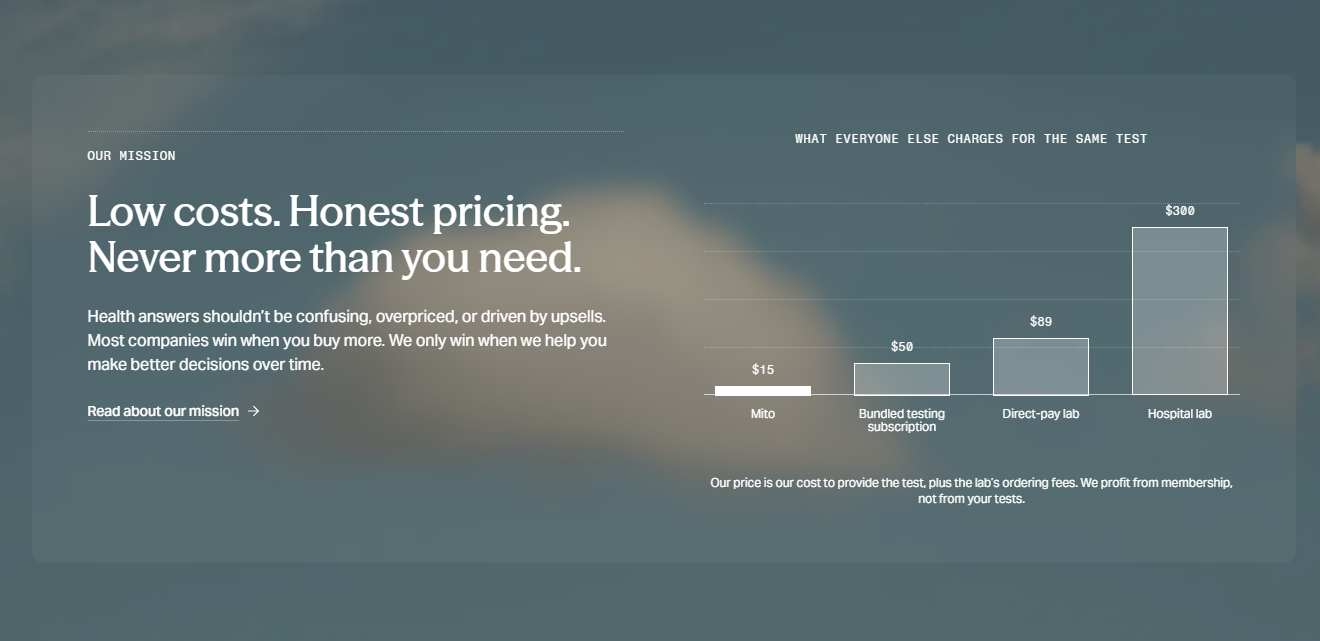
When it comes to a bare-bones entry price, Mito is difficult to beat. Its membership is currently $9 per month or $99 per year, and testing is purchased separately. Members get lower pricing on individual tests and panels, plus result tracking and access to clinician support. So if you only want one broader panel a year, or a few specific labs along the way, you are not paying for a larger ongoing care program you may not use.
Mito currently offers several bundled panels in addition to individual tests. The Core Panel, for example, includes 138 biomarkers and currently starts at $198.69 for members through Quest, although pricing varies by lab provider and state. That gives you a way to buy a more comprehensive set of labs without committing to recurring quarterly testing.
Lifeforce has more ways to buy in, and the price changes depending on how much ongoing support you want. Its Monthly Membership currently starts at $199, then costs $149 per month. That includes four at-home blood draws per year covering 50+ biomarkers, four in-depth clinician consultations, unlimited health coaching, a personalized health program, and access to prescription treatments when clinically appropriate.
The Core Annual Membership is currently listed at $599 for the year and includes two blood draws, one 45-minute clinician consultation, a personalized health program, and access to prescriptions when appropriate. The Annual Classic Membership is $1,548 per year and includes four at-home blood draws, four clinician consultations, unlimited health coaching, a personalized plan and tracking dashboard, and access to members-only pharmaceuticals. Lifeforce also offers a one-time Diagnostic for $599, which includes an at-home blood draw covering 50+ biomarkers, the results dashboard, a 45-minute clinician consultation, and a personalized improvement plan.
So the real comparison is not $9 per month versus $149 per month. Mito separates the membership from the testing and lets you decide how much you want to buy as you go, but the price increases with each test you add. Lifeforce gives you several levels of service, from a one-time diagnostic to programs that build repeat testing, clinician care, and coaching into the year. If you mainly want flexible access to labs and occasional guidance, Mito can be much less expensive. If you know you want recurring testing and a more continuous clinical relationship, Lifeforce may be worth it.
Treatment Access

Lifeforce also has a more developed treatment component built into its model. When clinically appropriate, members can have access to prescription medications, hormone therapies, peptides, and other treatments through the program. Those therapies are not simply unlocked because somebody joins; Lifeforce states that access depends on lab testing and clinician consultation. This aspect is important if you are specifically looking for a platform that can potentially carry you from testing into treatment under clinician supervision.
If you are looking primarily for information and lab results, then the treatment component may be more than you want, and this is an area where I would keep expectations grounded. Neither Lifeforce nor Mito should replace your primary care physician, specialist, urgent care, or emergency care. These platforms are additional tools for proactive testing, interpretation, tracking, and health optimization. Lifeforce itself frames its service as complementary rather than a substitute for traditional healthcare.
Who Mito Health Fits Best
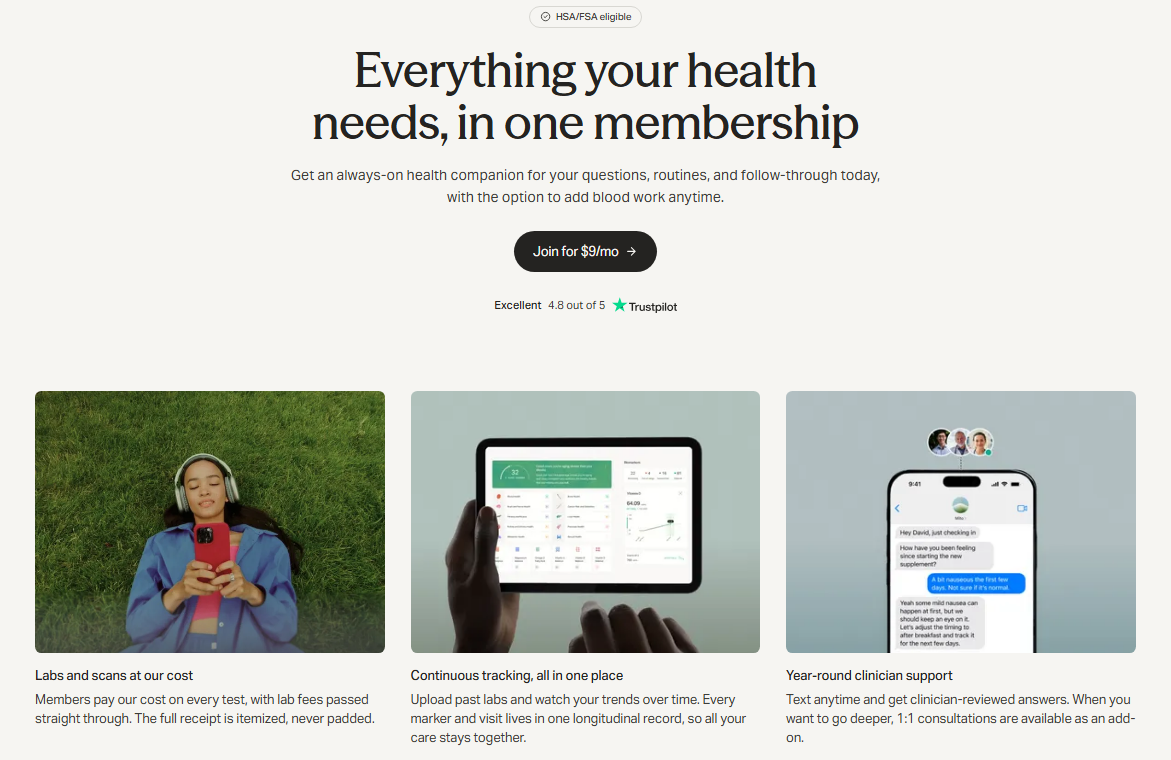
I would lean toward Mito if you:
- Want to keep your recurring commitment low.
- Prefer choosing exactly which tests you buy.
- Want a broad annual panel without committing to quarterly testing.
- Like tracking your own data and deciding when something needs to be rechecked.
- Only expect to need an occasional clinician consultation.
There is quite a bit to like about that model; it gives people access without forcing them into an expensive program before they know how much support they really want.
Who Lifeforce Fits Best
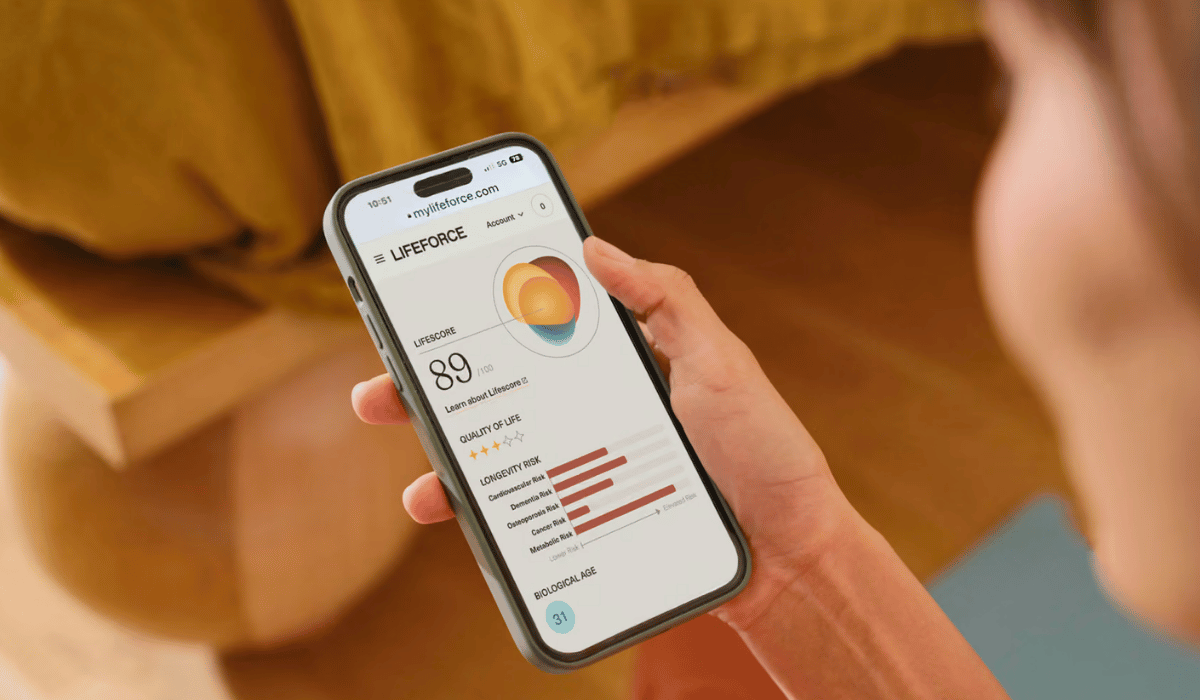
I would lean toward Lifeforce if you:
- Want regular testing rather than remembering to order it yourself.
- Want scheduled clinician conversations built into the program.
- Want one connected plan instead of assembling testing, interpretation, and follow-up separately.
- Expect to make changes and want to see how your biomarkers move afterward.
- Are interested in clinician-supervised treatment options when appropriate.
You are paying more, but you are also outsourcing more of the process, and for some people, that is exactly the point.
Lifeforce Vs Mito Health: I Would Choose Based on What Happens After the Blood Draw

If I were comparing Lifeforce vs Mito Health for myself, I would not start with the longest biomarker list. I would ask what I expect to happen after I get the results. If I want to order a comprehensive panel, understand the numbers, track them, and decide for myself when I want another test or consultation, Mito’s model is a better fit for use. It keeps the fixed cost low and lets me spend money when I actually use something.
If I want a recurring structure where testing leads into a clinician conversation, a plan, coaching, another test, and another conversation, Lifeforce is much closer to what I am looking for. Mito gives you more control over the pieces, and Lifeforce puts more of those pieces together for you. Neither approach automatically produces better health because the lab work still has to lead to decisions you can realistically follow. But knowing which kind of support you will actually use makes the choice between them considerably easier.
Related Posts:






Alt Protein Team is a team of professionals and enthusiasts committed to bringing you the most up-to-date information on alternative protein, health and wellness, workouts, and all things health-related. We’ve reviewed a lot of products and services so you don’t have to guess when you spend your hard-earned money on them. Whether you want to shed some pounds, build lean muscle or bulk, we can help you figure out what you need to do and what you need to have to achieve your goals.