
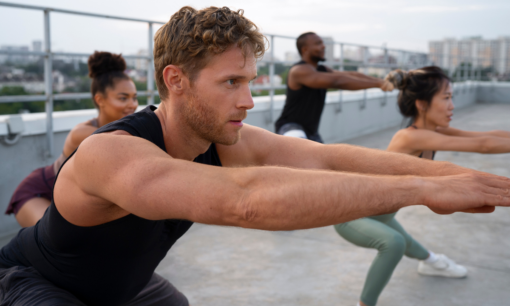
Standing at the front of a packed studio and pumping up a room through the final push of a HIIT workout demands everything that coaching one person through a set of squats does (and then some).
You still need to understand movement mechanics, program a session that builds sensibly, and spot when someone’s form is about to become a problem. The difference is that you’re doing it for thirty people at once, from ten feet away.
That’s part of what a group fitness certification is built for. On top of the exercise science, it teaches you to design a class that works for a beginner and a seasoned athlete in the same 45 minutes, to cue a room by voice alone, to time your coaching to the music, and to scale a movement on the fly for the person whose old knee injury you didn’t know about.
The trouble is that the certification market is confusing. There are broad certifications, format-specific licenses, and proprietary brand training, which makes it easy to spend real money on the wrong path.
So here, we’ll break down your realistic options so you can choose the certification that fits your goals and needs.
The Certification Landscape
A broad certification lets you pick up shifts across many class types and different gyms, but if you want to teach a specific branded program, you may need to specialize.
For example, certifications through ACE, AFAA, and ISSA will teach you how to lead almost any kind of class, covering strength, cardio, HIIT, and more under one program. They typically cover the fundamentals, such as exercise science, class structure, cueing, safety, and coaching in a group setting.
Some group classes, like yoga, Pilates, and indoor cycling, require a specific certification. These usually go deeper into one modality and are often required by boutique studios that specialize in that format.
With that in mind, let’s go over some of the most common certifications you’ll see.
ACE Group Fitness Instructor Certification
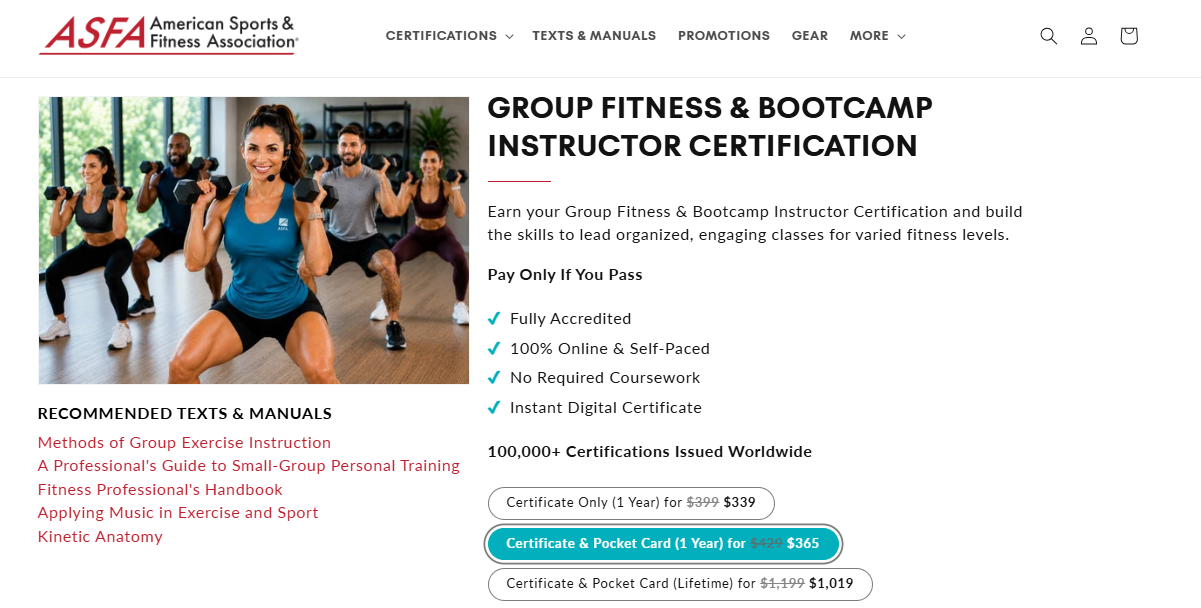
ACE’s Group Fitness Instructor certification is one of the most recognized in the industry, and it’s NCCA-accredited. It leans heavily into coaching and motivational skills, but it allows you to teach classes such as dance fitness, indoor cycling, HIIT, kickboxing, and barre.
Its 125-question multiple-choice exam covers three domains: planning and designing classes, leading and coaching, and safety and professionalism.
You need to be at least 18, have a high school diploma or GED, a current CPR/AED certification with a live in-person skills check, and a government-issued photo ID.
The exam itself costs $249, with study programs sold separately from around $300 to just under $500. You can also pay in installments to avoid a large one-time payment. ACE suggests three to six months to get certified, though motivated candidates working full time often finish faster.
To renew the certification, they ask for 20 hours of continuing education credits (2.0 CECs) per two-year cycle, current CPR/AED, plus a recertification fee of around $129.
AFAA Certified Group Fitness Instructor (NASM)
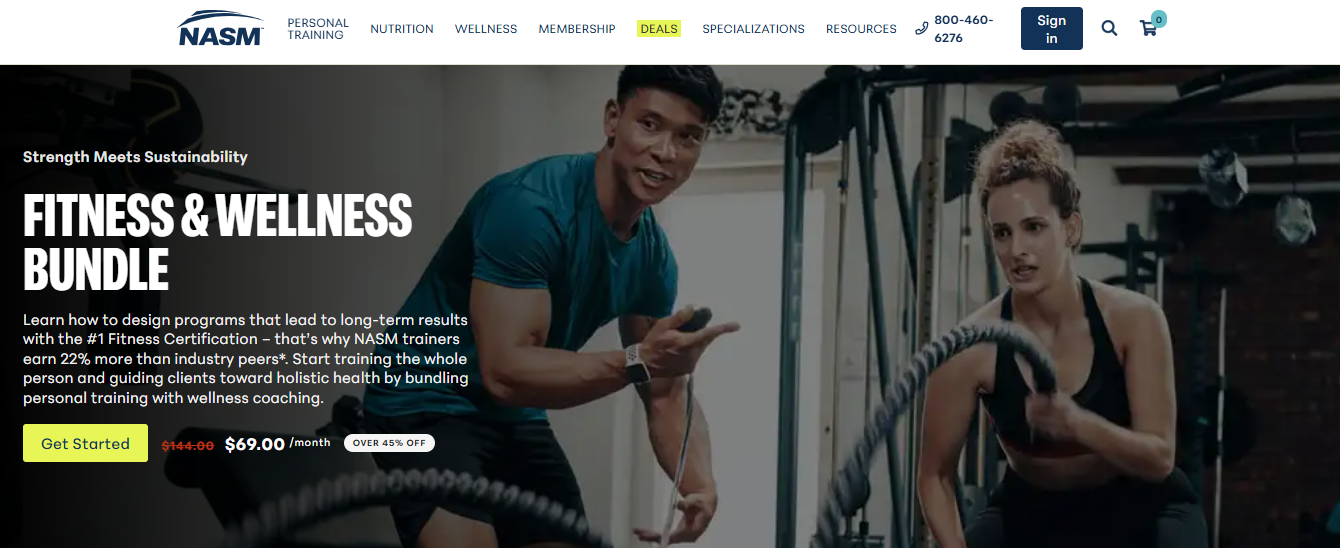
The AFAA-CGFI is NCCA-accredited and designed to prepare you for any format of group classes, from strength and HIIT to cycling and yoga. This is NASM’s option, built on more than 35 years of instructor training.
To join, you just need a high school diploma or GED and a current CPR/AED certification before you sit the exam. The exam is 2 hours long and not proctored, you have 180 days from enrollment to take it, and you need a minimum score of 70 to pass.
Packages run roughly $299 for self-study, $399 for premium self-study, and $499 all-inclusive. You can also pay in 4-, 12-, or 17-month installments. NASM says many people finish in six to eight weeks while still working full time.
NASM advertises no recertification or renewal fees, but the credential still renews every two years with 1.5 CEUs and current CPR/AED, and the fee waiver comes with paid NASM One membership.
ISSA Group Exercise Instructor Certification
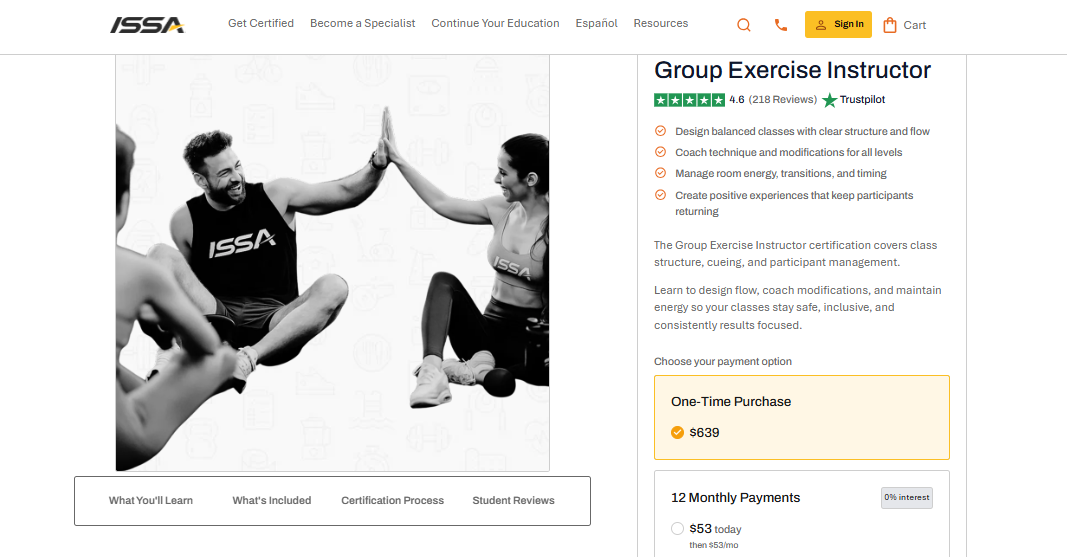
ISSA has a group exercise instruction certification that’s a popular home-study option. The course covers HIIT, bootcamp, kickboxing, step, indoor cycling, aquatic aerobics, battle ropes, and kettlebells, among other areas.
Like the other certifications, you need a high school diploma or GED, a current CPR/AED certification, and to be 18 or older. You need a 70% passing score, and the exam is open-book. ISSA offers a guided study schedule, and most people finish well within six months.
The certification typically runs $599 to $799, or you can pay monthly. Every 2 years, you need to renew with 20 CEUs. If you complete all your continuing education through ISSA, you don’t need to pay for the recertification itself.
One caveat: ISSA is accredited by the DEAC, not the NCCA, and the NCCA-accredited group exercise exam it once offered through NCCPT has been discontinued. If an employer’s posting specifies NCCA, this credential won’t satisfy it.
One benefit of ISSA is that it offers the Yoga 200 certification, a Yoga Alliance-registered school program that makes you eligible for RYT-200, which is ideal if you want to work in a yoga boutique studio.
Format-Specific Certifications
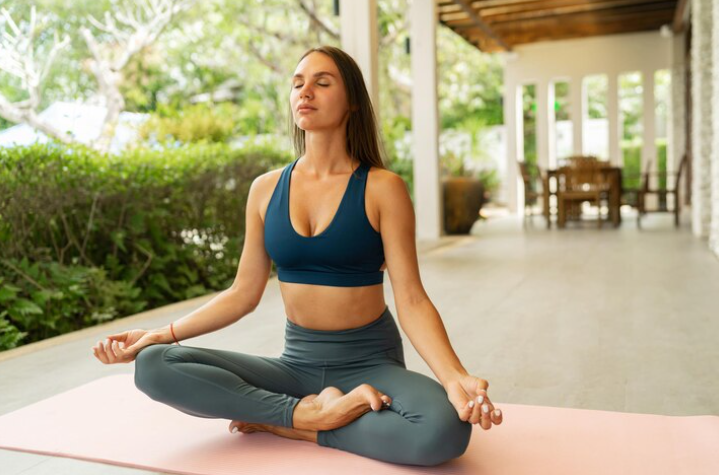
If you’re aiming for a niche, you may need more specific certifications.
- Yoga: A 200-hour teacher training runs $1,500 to $5,000-plus, depending on where you take it. Yoga Alliance doesn’t certify teachers itself; it registers schools (RYS) whose graduates can then register as teachers (RYT).
- Pilates: Comprehensive programs can cost $7,000, especially if you’re considering reformer Pilates. However, other options like mat-only certification might be more budget-friendly, costing around $1,800.
- Indoor cycling: Recognized brands like Spinning and Schwinn offer special courses to get you certified.
- Aquatic fitness: The Aquatic Exercise Association (AEA) is the standard credential for water classes.
Some programs require you to complete their in-house training before you can teach their format. CrossFit is one such program: the Level 1 certificate course costs around $1,000 and includes 2 full days of in-person training. Orangetheory also trains its coaches internally, but most locations expect an NCCA-accredited certification first.
Certifications for Gym Settings vs. Studio Settings
Another thing to consider is where you want to teach, which will also influence which certification you pursue.
Working at Commercial Gyms
Large chains and community fitness centers typically want instructors who can cover a variety of formats, which gives them more flexibility and lets them schedule with fewer staff.
Most accept NCCA-accredited group fitness credentials, so an ACE, AFAA, or NETA certification generally will get your foot in the door. However, some larger facilities even offer certification discount codes to help new instructors get qualified.
Working at Studios and Boutiques
Studios and boutiques usually play by different rules. For example, a dedicated yoga studio will expect a Yoga Alliance-registered teacher training, a cycling studio may want a specific indoor cycling credential, and Pilates studios almost always require a comprehensive Pilates certification.
So, if you’re applying or considering working at a boutique fitness center, it’s best to ask about their basic requirements.
Making Your Decision
Now that you have the options laid out, here are some questions to help you narrow your path.
- Where do you want to teach? Commercial gyms give you some flexibility that allows you to choose a broad group fitness certification. However, make sure to ask what their basic requirements are.
- What formats excite you? If you want variety, a broad certification like ISSA’s covers a dozen-plus formats under one credential. If a specific format pulls at you, look for the credential that governs it: an RYS-registered training for yoga, AEA for aquatic fitness, Barre Above or Balanced Body for barre, Spinning or Schwinn for indoor cycling.
- What’s your budget and timeline? AFAA is the most affordable accredited option at around $299 for their most basic package, and many people do it in six to eight weeks.
- Is it accredited? NCCA accreditation is the gold standard and is recognized by employers. ACE and AFAA hold it for group fitness; ISSA’s group exercise credential is DEAC-accredited instead. Plenty of gyms accept it, but check the postings you’re targeting first.
Make sure you watch out for red flags. Steer clear of any “certifications” that have no accreditation, no CPR/AED requirements, or no genuine testing standard. And if a major gym chain doesn’t recognize a credential, it won’t do much for your career.
Choosing the Path That Fits You
No single certification is best for teaching group fitness classes. The right choice is going to depend on where you want to teach, what you want to teach, and how much you’re ready to invest.
A broad certification from options like AFAA, ISSA, and ACE gives you flexibility and employer recognition. However, if you want a more specific path, you might consider a course like Yoga 200 or Pilates.
Whichever direction you choose, the investment pays off. Group fitness instructors who can fill a room and keep members coming back are among the most valuable people in the gym. Just make sure you meet the prerequisites, secure your CPR/AED certification, and pick the program that matches your goals.
Related Posts:



Brenda Peralta is a Registered Dietitian Nutritionist and Certified Diabetes Educator with over a decade of experience in clinical nutrition, health coaching, and evidence-based wellness. She specializes in weight management, metabolic health, diabetes care, and sustainable lifestyle changes. Brenda breaks down complex nutrition science into clear, practical guidance that helps readers make informed choices to improve their health.