

If you’ve done any research into aging, you’ll know that it’s a pretty complicated topic. Getting wrinkles and gray hair is where most people’s minds immediately go to, but it’s important to look a little deeper than that if you want to understand, and ultimately reduce, the worst effects.
If you’re reading this, you’re probably not a gerontologist or geriatrician; you’re someone with an inquisitive mind seeking to make the most of their life and optimize their health. Thankfully, navigating this topic doesn’t mean you need a PhD, you can gain a thorough enough understanding without pouring over hours of academic literature.
The hardest part of anything is knowing where to start, and when it comes to aging, everything begins with the fundamental metric of time. In many ways, your concerns aren’t about the process in general, but how fast it’s happening. Everyone knows aging is inevitable, so what matters most is how to slow it down as much as possible. There are countless benefits to slowing the pace at which you age, and having a solid grasp of the science behind it is key to achieving it.
Understanding the Different Types of Aging
As with any scientific topic, it’s good to learn the key definitions and terminology surrounding aging science. The three main terms to be concerned with are Chronological Age, Biological Age, and Pace of Aging, and it’s helpful to think of these terms as if they relate to a car.
Chronological Age
The Chronological Age would define the model year of the car. It’s the most basic measurement and simply governs how old you are by how many birthdays you’ve had.
Biological Age
Biological Age can be thought of as the mileage, mirroring how much wear and tear your body has had. While two people’s chronological age can be the same, their biological age can be considerably different. We’ve all seen people who appear and act younger or older than their chronological age, and differences in biological age may well drive those observable differences.
Pace of Aging
Finally, there’s Pace of Aging, which refers to how quickly you’re accumulating wear and tear. To use the car analogy, this would align with how fast the car clocks up miles and, therefore, how quickly wear and tear occurs relative to the vehicle’s age. In humans, this could represent behaviors that accelerate aging, such as excessive alcohol consumption or smoking. As such, it represents the numerical difference between chronological age and biological age.
For example, someone with a chronological age of 50 but a biological age of 40 is doing very well, as their behaviors and genetics mean that they’re aging at a reduced rate. Conversely, alarm bells should be ringing for someone who is chronologically 50 but biologically 65, as their faster rate of biological aging inherently reduces their longevity.
These numbers don’t answer the why and how on their own, however. A person could have experienced most of the extra aging described above during a particularly problematic past period in their life, and with things much better today, there isn’t much to worry about in the present. At the same time, the discrepancy could indicate continuing problematic behaviors that will only get worse and prolong the problem.
As you can see, determining how fast you’re aging requires measuring your body at different points. Special biomarker testing can identify problematic values, and repeating this testing over the long term (as changes are implemented) enables healthcare professionals to identify negative or positive trends over time as chronological and biological age is compared. Let’s take a look at how all of that works.
Biomarkers and the Process of Getting Tested
A biomarker is essentially a measurable indicator that determines the health state of a biological process. While the name sounds high-tech, you’re probably already familiar with many everyday biomarkers, such as blood pressure, which reflects the health of the heart and arteries, or blood sugar levels, which assess the risk or progression of diabetes.
There are hundreds of different biomarkers, ranging from common to specialist. Each one gives useful information on its own, but the real picture of aging comes from combining many of them, and tracking them over time is what reveals the truth.
While a single panel can tell you a lot, there can be a million and one reasons that a given marker is out of the ideal range.
Things may change considerably during periods of stress or illness, meaning that poor individual readings of unusual results may not necessarily indicate an ongoing problem. For this reason, the power of biomarkers lies in their repeatability. These tools are most impactful when data can be plotted over the long term to build a picture of someone’s health status over, and from there, actionable steps can be implemented to change things.
Of course, an initial full panel is required to establish a baseline. It’s important first to take multi-system biomarkers covering the cardiovascular system, immune system and inflammatory status, and renal and liver function, as results like this make up the bulk of someone’s health assessment. These initial tests may reveal the need for further patient-specific biomarkers that drill deeper into a specific condition or genetic anomaly, and once a robust profile is built, a holistic strategy can be put in place to hopefully improve the next tests’ biomarker results.
It’s important to understand that having biomarker testing does not constitute treatment, and it’s not a diagnosis of a given condition. Think of it as a series of signposts; they point you in a general direction, but further clarification will require a more detailed map.

The Different Types of Services You Can Explore
Let’s discuss what constitutes that detailed map. Now that you understand what biomarkers do and how basic testing works, it’s time to look at the sorts of services available to you that make use of this technology.
The most basic represent the kind of tests you’d have ordered by your GP. Generally, these are only ever done either as part of routine screening due to age or family history, or if you show signs of a specific condition. In these instances, the panel completed will likely be very limited, and only ever completed for the utility it offers for the specific task at hand.
Thankfully, if you’re looking for a more comprehensive overview of your health irrespective of current illness, most of the best services are a click or tap away. The internet has made what was once infeasible quick and easy, and there are now plenty of companies offering online biomarker testing and assessments with kits that can be ordered to your door or convenient at-home blood draws. Results are then processed and released to you via your account to utilize however you see fit.
These quick, private screening and testing services make up the bulk of what’s available, and they’re excellent for giving you a starting point. Those initial biomarkers are your guide for what’s going well and what isn’t, and the results they provide are empowering, enabling you to gain true insight into what’s going on in your body.
That said, simply having your results in front of you doesn’t get at the most important part: how to make the necessary lifestyle changes to improve them.

Beyond Testing: Turning Insight into Action
Naturally, lifestyle factors like exercise, a healthy diet, and stress management will define the main areas for kickstarting change. Exercise and diet have a profound impact in preventing oxidative damage, for example, while mitigating the harmful, telomere-shortening effects of stress can have a substantial impact on longevity. Then there are other elements, such as the importance of good-quality sleep or the harmful presence of heavy metals within the body. Most people know about these things, but creating a structured plan of action is an entirely different story.
Why Structured Guidance Makes the Difference
This is why services that not only provide testing, but also structured, professional lifestyle guidance, are invaluable. In this sense, testing is simply the start of a broader strategy, and you’re not left to figure everything out on your own. Most people have many different problems to address at once, and with a team to help you work things out one step at a time, you won’t risk the process becoming overwhelming.
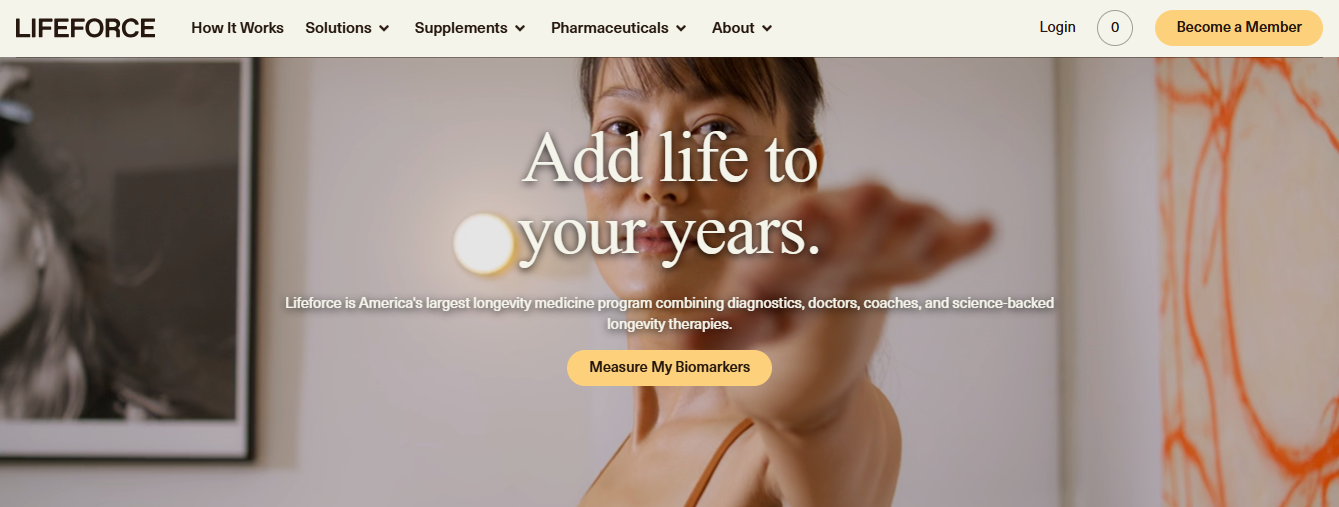
LifeForce is a great example of this approach. I like that it combines comprehensive testing for 50+ diagnostic biomarkers with a tailored plan based on evidence-based norms, rather than just handing you a results page and leaving you to interpret it yourself. Ongoing health coaching and clinical consults support the quarterly follow-up testing, and there are many different packages to choose from so that you can balance your budget with the help you need.
Importantly, services like this prioritize striving not just for ‘normal’ results, but optimal ones. There’s a lot more to what your body is capable of beyond what’s considered normal, and it takes a dedicated team to help you get there.

Taking Your Health Into Your Own Hands
There’s certainly a lot of conflicting information out there about aging, and while the internet has empowered people to do their own research and advocate for their own health, it’s also opened the floodgates.
Even opinions from seemingly informed sources like medical doctors, behavioral psychologists, and so on can be fraught with inconsistencies, and one expert to the next can have a vastly different opinion. By using dedicated biomarker testing in combination with the right lifestyle strategy, you can truly get to a point where you know your body inside and out. Data informs change, and those changes better your life in ways you won’t currently know are possible.
And like I said, you can’t prevent aging from happening. Rather than being something to be feared, understanding the process and how you can take control allows you to see it for what it is – a gift. Everybody makes that journey from A to B, and that’s a beautiful thing, but how you get there can make all the difference in the world.
Related Posts:





Linden is a keen fitness junkie and loves showcasing nutrition’s important for anyone starting a fitness journey. After his training in Sports Nutrition, Linden loves offering health recipes and workout routines for people of all fitness levels and backgrounds. He believes no matter how old you are or how far you have to go, fitness should be fun!