

Has someone ever told you that you should be a personal trainer? Or maybe instead of playing on your phone between sets at the gym, you’re contemplating whether you’d like to have a career in the fitness field?
If you’re considering going to school (or back to school) for a career in the health and fitness industry, you’ve probably come to a fork in the road: four years to a degree or a few months to a certification.
Obviously, a few months sounds easier, but a degree definitely sounds fancier. Which one do you choose? Does a bachelor’s degree in exercise science really pay off, or can a professional certification get you where you want to go faster and cheaper?
Spoiler: There is no single right answer. The choice will ultimately hinge on your career goals, finances, and timeline.
There are several factors that you’ll want to consider as you make the choice between college and certification. Those include the cost of both routes, the time it takes to reach a career, and real-world employability afterward. So pull up a bench, take a seat, and let’s talk about it.
Exercise Science Degree vs. Fitness Certifications
Different means to what is often the same end, a college degree in exercise science and a fitness certification are both viable entry points to the industry.
What is an Exercise Science Degree?
A bachelor’s degree in exercise science is a 4-year undergraduate program that typically covers subjects including anatomy, physiology, kinesiology, nutrition, biomechanics, and research methods.
Depending on the college or university, the program may also be called Kinesiology, Exercise Physiology, or Human Performance. All may have different emphases, but they are similar in nature.
While some degrees have a defined career path, exercise science programs are more effective at opening you up to the field as a whole. It prepares graduates for careers in personal training, strength and conditioning, clinical exercise physiology, and corporate wellness.
It is also a common stepping stone for those wishing to attend graduate school. Graduates of an exercise science program frequently apply for programs in physical or occupational therapy, athletic training, dietetics, or physician assisting.
All of these options tend to make it a love-it or hate-it type of degree. For those who want to make up their own career path, dabble in several parts of the industry, or go on to study more, it’s a great fit. If you want a degree that sets you on a specific path with known outcomes, this is probably not the degree for you.
As someone who is many years and a few careers post-grad, I have loved having my degree. It’s helped me as a personal trainer and a business owner, and it’s been key in my roles in corporate fitness.
That being said, I have other friends who graduated from the same or similar programs who wish they had chosen a more defined path. Many people who have a degree also choose to pursue certifications since a degree alone does not always lead directly to licensure.
Which Fitness Certifications Should You Get?
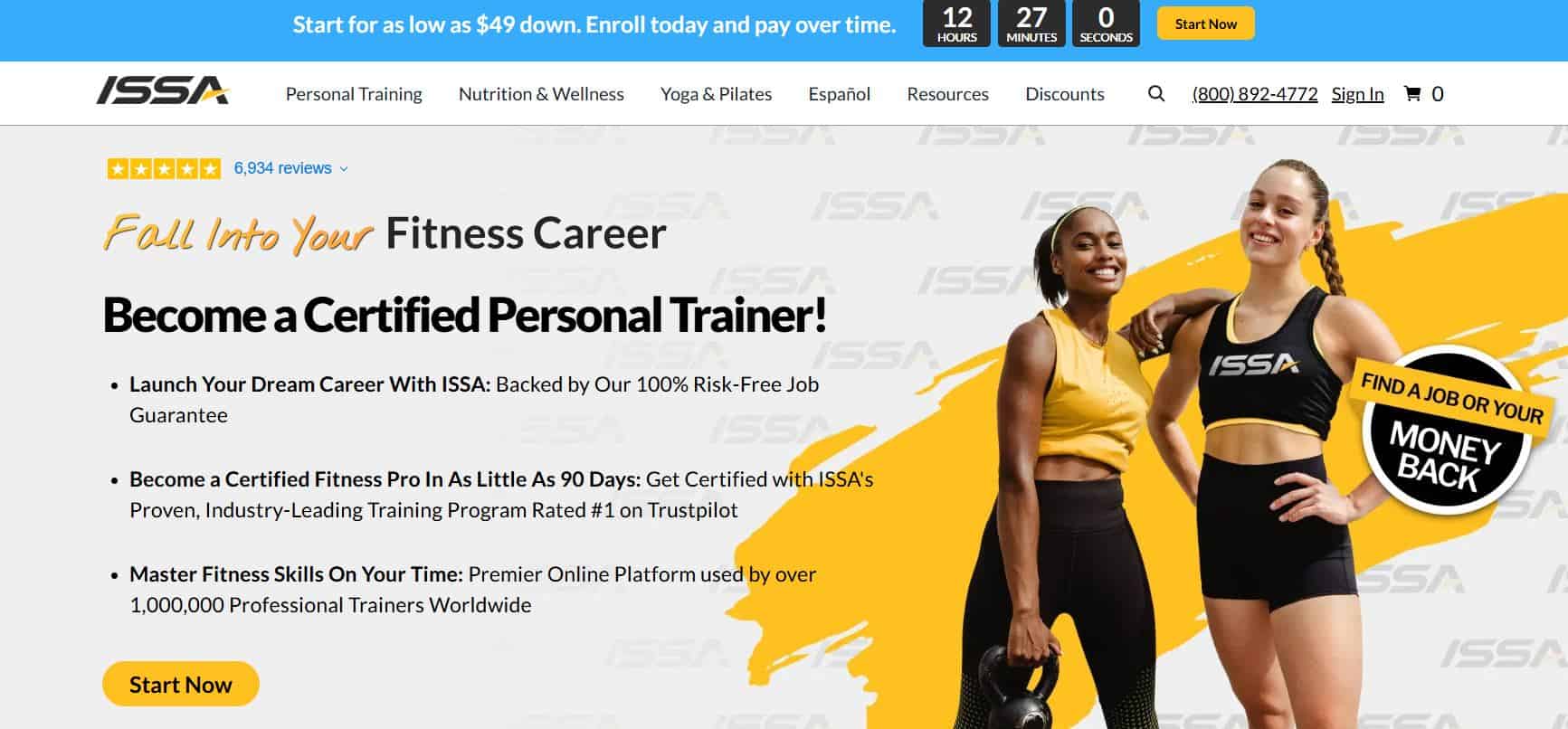
There are many organizations out there offering to make you a top trainer or a 6-figure fitness coach. But when it comes to lasting success, you want a program built on research and reality, not hype and hope.
If you choose to go the certification route, look for organizations that are accredited by the NCCA, HLC, and/or DEAC. This accreditation ensures that the program has met reasonable standards and is something looked at by many employers.
Major accredited certifying organizations to consider include:
- ISSA (International Sports Sciences Association): ISSA has been around since the 1980’s, and is known for its flexible programs and online learning options. They offer a wide range of certifications and specialties such as personal training, nutrition, and Pilates.
- NASM (National Academy of Sports Medicine): NASM is widely recognized by gyms nationwide as the certification to get for training athletes. Their Optimum Performance Training (OPT) model is popular among many personal trainers.
- ACE (American Council on Exercise): ACE has long been the leader on behavior change-centric coaching. Their certifications are well-known and their methods have a large reach, from general population to special populations.
- ACSM (American College of Sports Medicine): ACSM offers fewer certifications than any of these other organizations, but is considered the gold standard for fitness certifications. Their certifications are particularly respected in clinical and medical fitness settings and are usually considered more rigorous.
Each of these organizations offer a personal training certification as well as other options for specialties. Most certifications require a high school diploma and CPR/AED certification, and most do not require a college degree to sit for their exams (although there are a few that do, so check before you purchase a course).
These programs may take anywhere from a few weeks to a year, depending on the course and your pace. Most courses are online and self-paced, making them a very different experience from an in-person, instructor-paced college class.
Cost Comparison: Dollars and Sense
I don’t need to tell you that there’s a clear winner when it comes to cost here. But dollar signs don’t always tell the whole story. It’s important to consider the amount and type of education you’re receiving for your investment.
You would be hard-pressed to fit 4 years of study into a single course, so you have to expect some give and take when it comes to cost and knowledge.
What Does an Exercise Science Degree Cost?
A bachelor’s degree at a 4-year public university usually costs between $40,000-$80,000 dollars total if you choose an in-state college. If you want to go out of state or attend a private school, your investment may be closer to $100,000-$160,000. Those numbers are just for tuition, and don’t include books, fees, or other costs associated with attending school.
Fortunately, there are grants and scholarships available, but their reach doesn’t extend to all students, making the cost of college prohibitive to many.
Most colleges and universities offer work study to help students offset the cost of attending, and Pell Grants, among others can also help reduce the burden if you qualify. Private funding through scholarships, fellowships, and loans may also be available.
What Does a Fitness Certification Cost?
Fitness certification costs vary widely, depending on the organization, niche, and level of certification you want to obtain. A CPT (certified personal trainer) course typically costs between $400 and $1500. The wide gap between these prices is where quality often comes in.
If you opt for an exam-only option, there are tests that run about $500. However, I would not recommend an exam-only option unless you have already had an education in fitness. This is a popular option for those who have a bachelor’s degree in exercise science but want to get a certification alongside it.
Online, self-study CPT courses range from $600-$900, and this is where a majority of CPT students land. If you want a comprehensive package with workshops, coaching, and possible in-person elements, your bill will be over $1,000.
One thing to note is that several top CPT providers including ISSA and NASM offer a job guarantee upon completion and passing of the course as long as you meet their requirements. This is a big win in an uncertain economy.
Ongoing Cost Comparison
While the initial investment of an exercise science degree is much higher, there are more ongoing costs associated with certification. In order to maintain most major certifications, you will be required to complete continuing education courses and pay a recertification fee, usually every 2 years or so.
The cost of continuing education courses can range from free to several hundred dollars for specialty courses or additional certifications. You will also be required to maintain a CPR/AED certification, which adds an additional cost.
These costs are still likely to be less than a degree, but they do still add up and are ongoing as long as you stay in the industry.
Time to Career: Getting on the Floor vs. Getting Through the Curriculum
If you want to be out on the gym floor training, a personal training certification can get you there in a matter of months. If you want to play the long game and end up as a program manager or fitness exec, a degree will place you ahead of the competition.
When it comes to hiring high-level positions in the fitness industry, you’ll need more than just a few good sales and raving clients. With just a certification, you would likely need several years of experience before being considered for a higher position, whereas an exercise science degree can fasttrack your way there.
So, your time to a career really depends on where you want to go.
Exercise Science Degree Timeline
A bachelor’s degree typically takes 4 years to complete if you’re going to school full-time. The average degree requires 120 credits to graduate, so you would need to take 15 credits for 2 semesters each year for 4 years.
When everything’s said and done, that’s roughly 2,000-2,500 hours of study to get your degree. That time may be extended if you switch majors, attend part-time, or need to take more prerequisite courses.
Most programs have internships or practicum that offer hands-on experience in the field, but they are typically non-paid or low-paying. So you’ll likely need to wait until after graduation to make a liveable wage in the fitness industry.
Since this isn’t appealing or even doable for many people, you may want to consider getting a certification during your time as a student in college.
You may be thinking, “Why would I do two programs at once?!” But there is a good reason for it.
By getting certified before or during your degree work, you’ll be able to work in the field, apply what you’re learning, and in some cases, you might be able to count your work as internship hours toward your degree.
Fitness Certification Timeline

Most fitness certifications can be completed in 3-6 months (or less) of dedicated study. Some self-paced courses can be finished faster if you are a quick learner or already have a background in the material.
After course completion, most certifications require you to sit for an exam. In the past, these exams often had to be scheduled at a proctored facility, but now they are more often available online from the comfort of your home, and some are even open-book.
Some high-level exams or certifications do require a proctored test.
After passing the exam, you can start applying for jobs or building your own business almost immediately. Many certification programs also include business modules and client paperwork, so you can hit the ground running as a self-employed trainer or gym employee.
A Career in the Fitness Industry: What Employers and Clients Actually Want
Some people will tell you that it doesn’t matter whether you have a degree or several certifications, but that’s not always the case. Both will get you places that the other won’t, so it’s important to consider what you want to do before diving into either program.
Where an Exercise Science Degree Wins:
You’re going to have better employability and likely higher pay to go with it in:
- Strength and conditioning roles, especially if you’re looking to work in a NCAA or professional sports capacity. These roles often require a degree and a CSCS (Certified Strength and Conditioning Specialist) certification.
- Clinical settings like cardiac rehab units, physical therapy clinics, and hospitals, where a degree may be required or highly preferred. Like strength and conditioning, you may also be required to hold a degree and a certification, usually an EP (Exercise Physiologist) or CEP (Clinical Exercise Physiologist). Both of these certifications are given through the ACSM, but require a degree to sit for the exam.
- Academic, research, or administrative roles in the health and fitness industry. These careers usually require a bachelor’s degree or higher due to the need for a broader knowledge base than a single certification would provide.
Where a Fitness Certification Wins:
A certification or two will hold more weight in positions like:
- Commercial gyms, where your hirability is based primarily on your certification and actual training experience. Major gym chains like Equinox, LA Fitness, and Anytime Fitness look for nationally-recognized certifications like those from ISSA, NASM, ACSM, and ACE.
- Boutique fitness studios, small group training gyms, and corporate wellness programs like F45 and Orangetheory. These facilities also look for accredited certifications and may encourage or require additional certifications for their branded programs.
- Independent training businesses. If you’re self-employed or employed by another trainer, your business and success are determined more by client results, niche specialization, and reputation.
The reality is that both degrees and certifications often win best together. Many successful exercise science graduates also hold certifications and some certifications require a degree. As someone who has a degree and several certifications, I can attest to the benefits of this route. I wouldn’t trade either. Both have brought me to many places in my career and I lean heavily on each of them.
Degree or Certification: Which Path Should You Choose?
Both options are viable, valuable paths in today’s world.
While some may disagree with me, I believe that degrees aren’t dead. There is absolutely a place for them, if you put in the work turn them into a tangible, concrete career.
On the other hand, certifications are a simple route to a direct career path. They make dream careers affordable. So, how do you choose between the two?
Choose the Exercise Science Degree Route if:
- You’re interested in a career beyond personal training, like clinical work or sports medicine.
- You want to work in collegiate or professional sports.
- You’re planning to go to graduate school in a health, fitness, or medical program.
- You have access to scholarships, grants, or low tuition that makes the financial investment manageable.
- You want the broadest and most in-depth knowledge of the body and how it works.
Choose the Fitness Certification Route if:
- You want to start working in the fitness industry within the next year.
- Your goal is to work in a commercial gym, build a private client base, or pursue online coaching.
- You like to change careers or are looking for a side-hustle or secondary income.
- You’re concerned about the financial burden that comes with a degree.
- You want to test the waters and see if you like the field before diving into a 4-year program.
If you’re still undecided, let me offer you one last piece of advice as someone who’s been in your shoes: start with a certification first and then a degree if you want to get deeper into the field.
I’ve talked with so many people who tell me they love the gym and want to have a career in the fitness industry. But being a fitness enthusiast and fitness professional are not the same thing.
Getting certified helps you get your feet wet and see if your passion can become your profession. If you find that intersection of passion and profession, an exercise science degree can open up a whole new roadmap to a promising career.
Related Posts:






Sara has a B.S. in Exercise Science and is a 200-hr yoga teacher, mat Pilates Instructor, certified life coach, and certified personal trainer. She provides workshops, content, and consulting for individuals and businesses to foster growth and improve well-being. She has worked on the corporate level for international fitness companies, trained other fitness professionals across the U.S., and worked with numerous fitness start-ups and wellness businesses around the globe promoting whole-person wellness. Sara loves helping others live and move in a way that empowers and uplifts them. She encourages people to connect to their bodies and the world around them through fitness, nutrition, and mind-body work. When she’s not in the gym teaching, she’s probably outside somewhere, finding her soul up in the mountains or out in the desert.