
If you ended up here, you’re probably in the same boat I was: scrolling through sleep hacks, supplements, and tech options at an unholy hour, wondering which options would really help you sleep and which ones would just end up collecting dust on your nightstand.
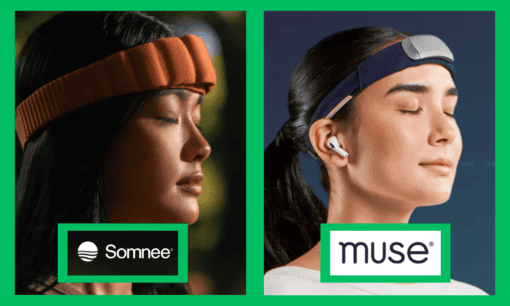
After spending years trying to fix my sleep problems with outdated or overhyped “solutions,” I finally landed on some sleep tech that actually works. When I initially began my search into sleep tech, two of the most talked-about options were the Somnee Smart Sleep Headband and the Muse S Athena. Both are headbands that monitor your brainwave activity through EEG sensors, and both cost enough that it feels like a real investment. And after personally testing both, I can tell you they are very different – and only one of them actually helped me sleep.
Here’s the thing you need to understand upfront: Somnee is a sleep device. It was built to actively treat your sleep using personalized electrical brain stimulation. Muse S Athena, meanwhile, is a meditation and brain health tool that also happens to have some sleep features. That distinction matters a lot more than I initially realized, and it’s the reason one of these stays on my nightstand and the other doesn’t. Let me break it all down.
Topic Contents
The Breakdown
Somnee: The Smart Sleep Headband
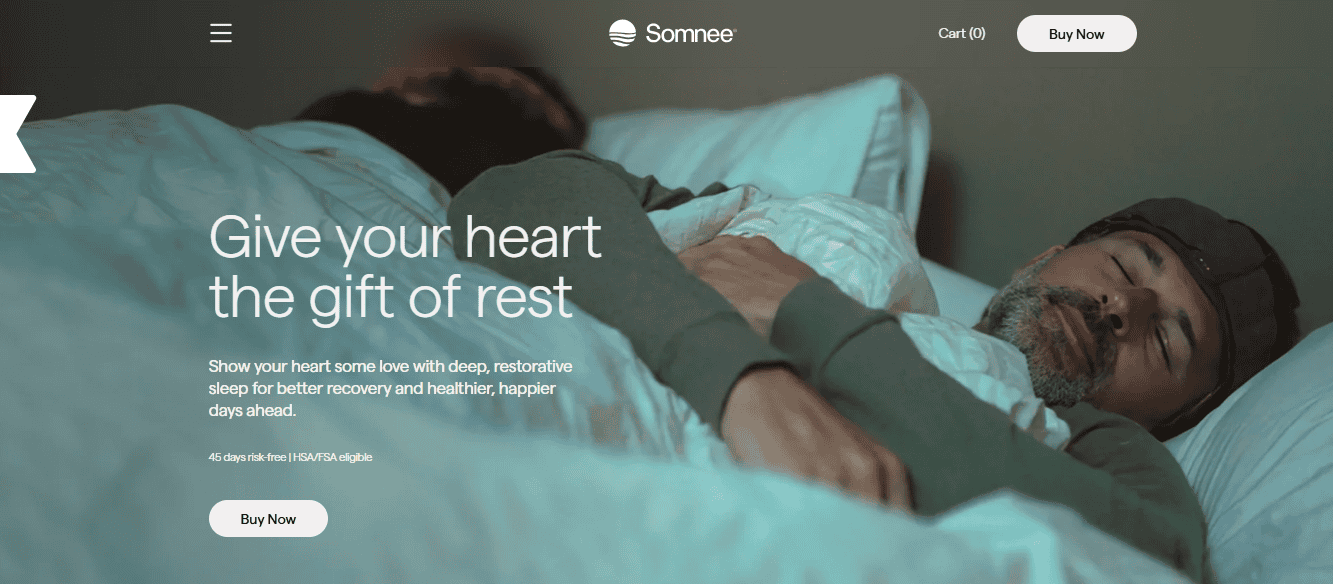
Somnee was developed by neuroscientists at UC Berkeley, including Dr. Matthew Walker, the sleep researcher and author of the bestselling book Why We Sleep. The company launched its first device in 2022 and released a second-generation model in 2025, which is the version I tested. While Somnee does track your sleep, it’s designed as an active sleep treatment. Using tACS, or transcranial alternating current stimulation, it delivers gentle, personalized electrical stimulation to your brain before bed through a hydrogel electrode worn on your forehead.
Think of it as a 15-minute tuning for your brainwaves – guiding them from “awake and wired” into “drowsy and ready for sleep.” The keyword here is personalized. Your brain’s electrical patterns are unique to you, and Somnee maps them over your first seven sessions of use and then tailors the stimulation patterns specifically to you.
The device is $489, which includes the headband and the initial 6-month membership. The membership auto-renews annually (around $160/year) and covers hydrogel electrode replacements, ongoing AI personalization, and full app access. It comes with a 45-day risk-free trial and is HSA/FSA eligible.
Muse S Athena

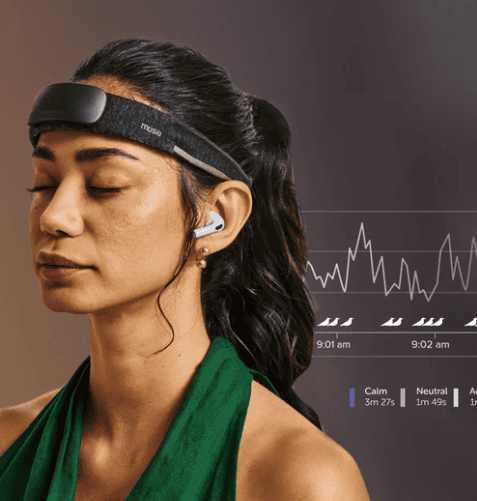
Muse S Athena is an Interaxon device, a Canadian neurotech company that’s been making EEG headbands for over a decade. Muse has always been a meditation device first, and Athena is their most recent and advanced model. It’s the first consumer wearable to combine EEG with fNIRS (functional near-infrared spectroscopy), which measures blood oxygen in the prefrontal cortex. In plain English, it tracks brain activity and how hard your brain is working. Credit where it’s due: the EEG sensor tech in the Athena is cool, and the app provides very detailed brain data.
For sleep, Athena offers overnight EEG-based tracking, a “Sleep Assist” feature that plays audio stories and soundscapes to help you drift off, and a newer “Deep Sleep Boost” that plays quiet “pink noise” timed to your brainwaves during deep sleep (most people have heard of white noise – pink noise is what Muse calls their AI–driven, virtually silent, noise signals that precisely synchronize with desired brainwaves)
The headband is about $475, with a premium subscription ($12.99/month or $99/year) for the full meditation library, AI coach, and advanced features. It has a 30-day money-back guarantee.
The Core Difference: Treating Sleep vs. Playing Sound
On the surface, these devices look really similar, but this is where the real difference matters.
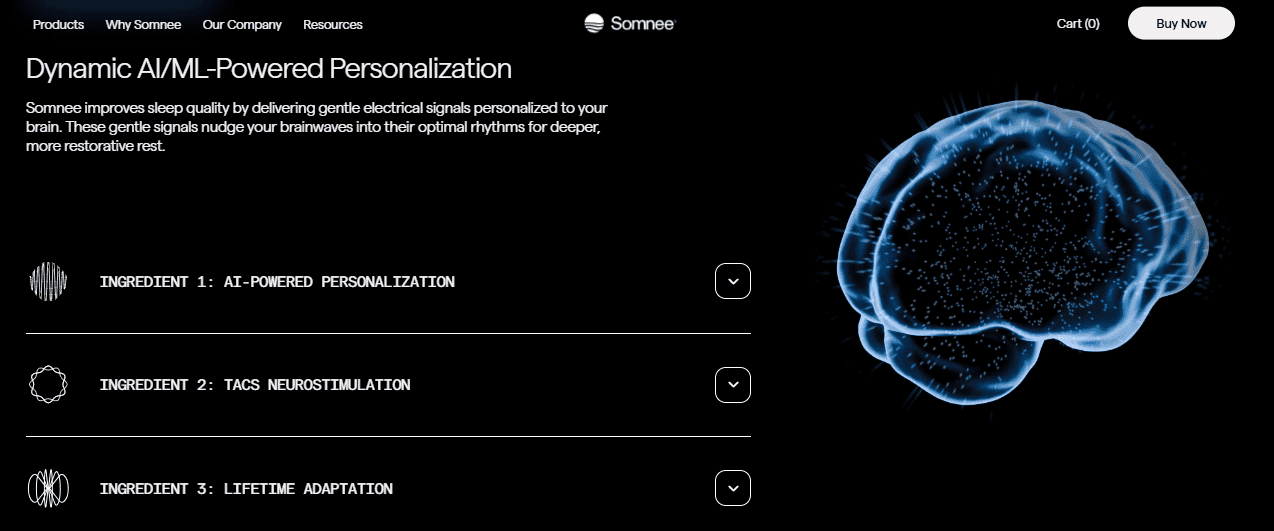
Somnee communicates with your brain in its own language: electricity. Your brain’s synapses run on electrical signals. When it’s time for sleep, brainwave patterns (alpha and theta waves) need to shift in specific ways. Somnee’s tACS delivers gentle alternating currents directly through those forehead electrodes, matched to your unique frequencies, to guide your brain toward sleep. There’s no middleman. The electrical stimulus talks directly to your neural activity. It’s an active, targeted treatment that is safe and effective for influencing brainwave patterns.
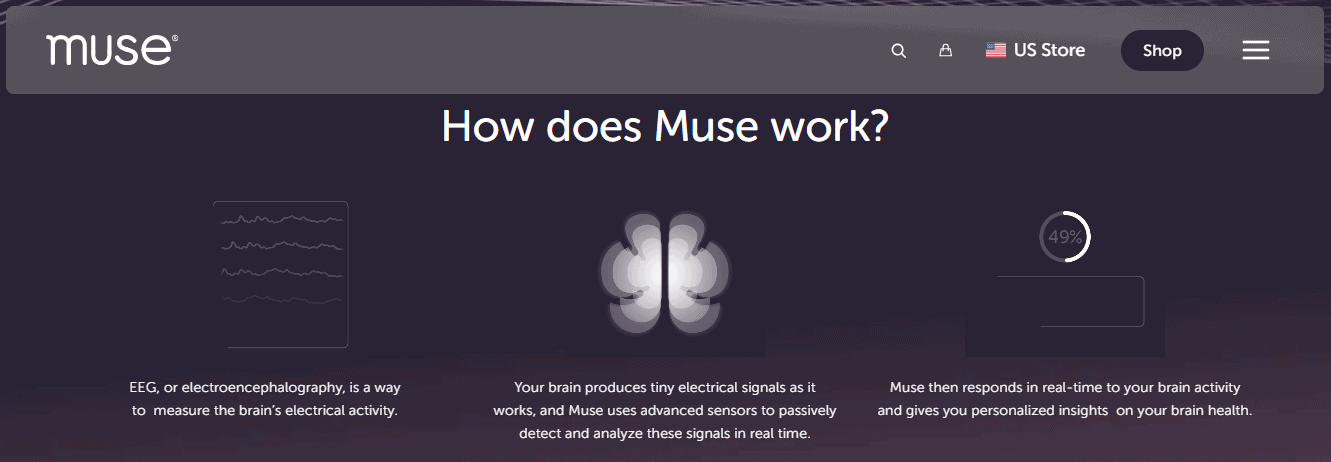
Muse S Athena, at the end of the day, plays sound. To be fair, the body and brain are reactive in nature, so Muse’s EEG-timed sound has been shown to facilitate a response in your brain state. But the mechanism is still audio. Sleep Assist plays bedtime stories and soundscapes. Deep Sleep Boost plays pink noise pulses during deep sleep. Sound enters through your ears, gets processed by your auditory system, and then maybe influences brainwave activity indirectly. Your brain has to translate the audio before it can do anything with it. That’s a fundamentally less direct path than electrical stimulation that speaks the same language your neurons already use.
I don’t say this to be dismissive – there is research behind acoustic stimulation for sleep. But comparing personalized tACS to playing sounds before and during sleep is like comparing a targeted physical therapy session to listening to a podcast about stretching. One is an active intervention; the other is a nice supplement that might help if interpreted and applied as intended.
Personalization: This Is Where Somnee Really Separates Itself
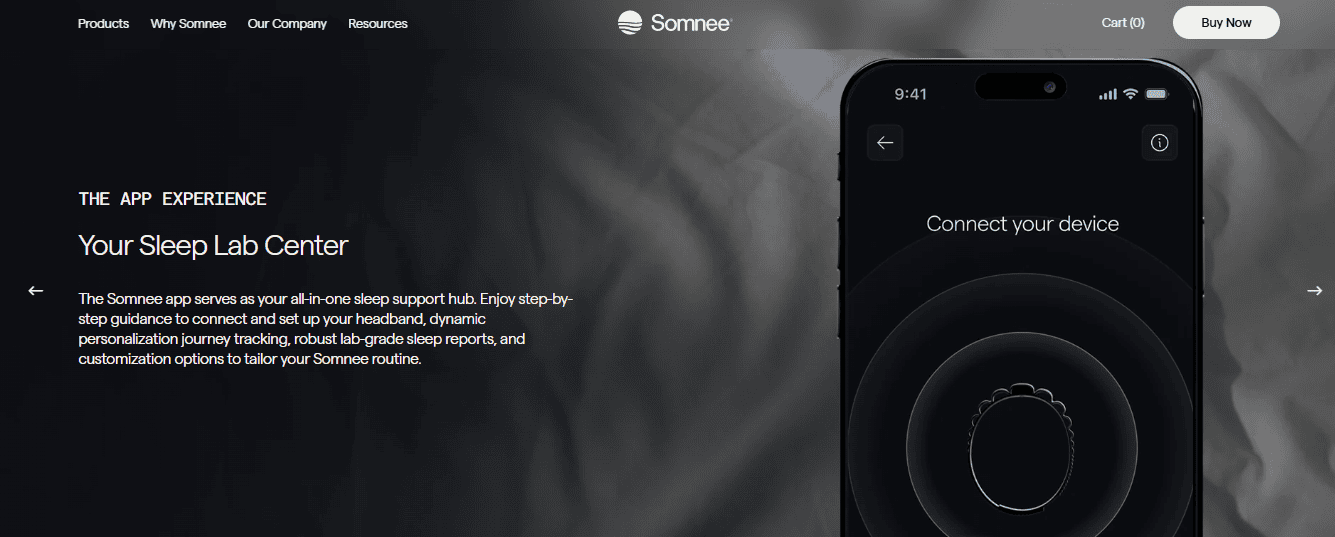
Somnee’s personalization is the real differentiator. Over the first week or so of use (the “Mapping Phase”), its clinical-grade EEG+ sensors record your brain’s unique wave patterns. Then AI analyzes that data and refines the stimulation nightly. After about three weeks, it continues evolving as your routines and stress levels change. Your peak alpha frequency might be 10 Hz, while mine is 11 Hz – Somnee finds your exact peaks and calibrates the stimulation to them. This isn’t a generic setting; it’s a treatment designed for your brain specifically, and it gets smarter with every use.
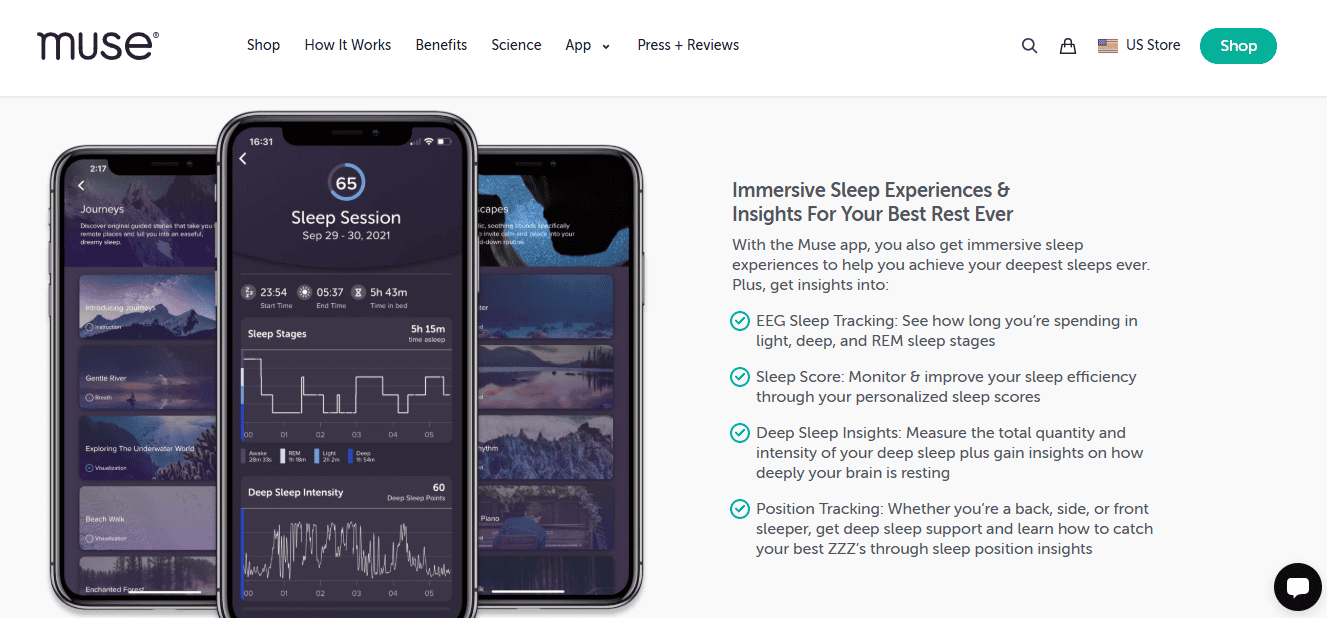
Muse S Athena does personalize in its own way. The AI coach learns from your data and gives tailored recommendations, and the audio features respond to your brain state in real time. That’s cool – and I mean that genuinely, the neurofeedback during meditation sessions is impressive. But for sleep? It’s adjusting the timing of when it plays sounds at you.
That’s a different level of personalization than calibrating electrical currents to your unique neural signature.
For The Nerds: What Does the Research Say?
Somnee’s 2025 study, published on medRxiv, tested personalized tACS for 15 minutes before bed in a controlled setting with a sham comparison. The results showed ~13% improvement in sleep efficiency (How long you sleep vs how many times you wake), sleep onset dropped to ~7 minutes (How fast you fall asleep), and total sleep time increased by ~26 minutes. Another study from 2023 published in Frontiers in Human Neuroscience also showed personalized tACS outperformed fixed-frequency stimulation, adding 19 minutes of sleep and cutting onset by 6 minutes. These are real, measurable, controlled results.
Muse reports that Sleep Assist users fall asleep 55% faster (user-reported) and that Deep Sleep Boost beta testing showed improvements in deep sleep structure. Muse does have a massive research legacy – 200+ third-party studies – but that body of work is overwhelmingly in the meditation and EEG validation space, not in sleep treatment outcomes.
When you’re looking for clinical evidence that a device actually improves sleep, Somnee’s data is clearly stronger.
My Personal Experience

I tested both over several weeks each, using my same sleep hygiene routine – just my own rules I’ve set after reading, along with trial and error (consistent bedtime, no screens after 9 PM, cool room, blackout curtains).
Somnee made a real difference. The first few nights, I had to adjust to wearing it. It’s bulkier than I expected, and as a side sleeper, there was a learning curve with positioning (the headband would often get between my ear and my skull, which would pinch my ear). But by the end of the first week, it was just part of my routine. Press the button, 15 minutes of subtle tingle, and by the time it’s done, I’m usually asleep. My onset dropped noticeably. Fewer wake-ups. And the mornings were different – that foggy grogginess I came to expect was replaced by alertness, and that afternoon rescue coffee became less needful. The app showed my deep sleep climbing, and by day 10-12, the AI personalization was clearly dialing in. Sessions felt more effective each time. Overall, this was a tangible, noticeable improvement.
Full transparency, I tried Muse S Athena after Somnee (because it was delivered later), but it did not help me sleep. I want to be fair, because it’s a well-built device and the app is genuinely impressive. The sleep tracking data and reports are some of the most detailed I’ve seen – the EEG breakdown of sleep stages, brain activity visualization, and the AI coach insights are intriguing, but for most consumers, I think that it could become overwhelming. The Sleep Assist feature is, at its core, bedtime stories and ambient sound. And for me, that just wasn’t enough. When it came to actually helping me fall asleep or stay asleep… on nights when my mind was busy, playing audio at me didn’t cut through the way Somnee’s direct brain stimulation did.
TL;DR – Comparison
Purpose: Somnee is proudly focused on sleep. Every feature – the tACS treatment, EEG mapping, AI personalization, DriftBack midnight sessions, Nap sessions – exists to help you sleep better. Muse S Athena is a brain health platform where sleep is one module alongside meditation, cognitive fitness, and many other guided sessions. If you’re buying a headband to fix your sleep, Somnee was built for exactly that.
Sleep mechanism: Somnee delivers personalized electrical stimulation that communicates directly with your brain’s neural patterns. Muse plays responsive audio and timed “pink noise”. One is a direct, active treatment. The other is a sophisticated sound machine that reads your brainwaves to decide when to play sounds.
App and data: I’ll give credit to Muse here. The Athena’s app is polished, the EEG + fNIRS data is deep, and the AI coach provides genuinely useful insights. The brainwave visualizations and cognitive performance tracking are things Somnee doesn’t offer at the same level. If you love data and want to understand your brain beyond just sleep, Muse’s app is impressive. Somnee’s app is clean and intuitive with strong sleep-specific reporting, but Muse’s broader data presentation is just a notch above… And maybe beyond for some.
Clinical evidence: Somnee has published controlled study data showing measurable improvements in sleep efficiency, onset, and total sleep time. Muse’s sleep-specific evidence is largely internal results and user-reported metrics. For a sleep purchase decision, the strength of evidence matters, and Somnee’s is considerably stronger.
Price: Same ballpark. Somnee is $489 with 6-month membership included (then ~$160/year), 45-day trial, HSA/FSA eligible. Muse S Athena is ~$475 with optional premium membership at $99/year and a 30-day guarantee.
So Which One Should You Get?
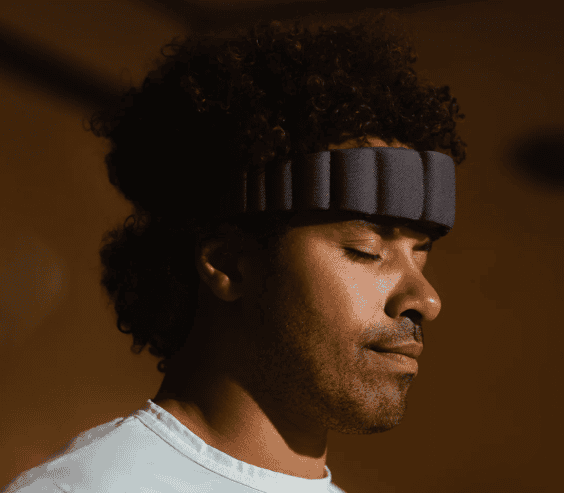
If you need better sleep, I would recommend Somnee full stop. It’s a purpose-built sleep treatment device with clinical data behind it and a personalization AI that gets smarter over time. The tACS approach is direct, effective, and backed by decades of neuroscience research. It’s the device that actually changed my sleep.
If sleep is not your focus and you’re primarily interested in meditation and brain fitness data, Muse S Athena is a solid product for that use case. The neurofeedback meditation is seemingly best-in-class, but I wouldn’t suggest it as a primary way to fix your sleep.
Somnee is, in all the best ways, a one-trick pony. And it does that one trick really well.
My Final Thoughts
I went into this comparison genuinely open to both devices. I wanted both of them to work, frankly, because who doesn’t want options? And if Muse would facilitate my sleep just as well, and it offered so many other perks, then why not use that one? But after spending real time with each one, the difference was clear. Somnee actively changed how I sleep. Muse S Athena gave me cool data about my brain, but didn’t change the thing I was actually trying to fix.
Both products offer trial periods, so you can test them before you fully commit. If your sleep is suffering and you want something that’s going to actively do something about it, I’d invest in Somnee.
Related Posts:






Trevor is a licensed chiropractor with a Master’s degree in Sports Medicine and hands-on experience in rehabilitation and physical therapy. He works daily with patients to restore movement, reduce pain, and improve performance. His real-world experience in injury recovery, mobility training, and evidence-based care allows him to translate complex musculoskeletal and sports medicine concepts into clear, practical guidance so people can move better, recover smarter, and stay active for the long term.