

When I purchased Elemind, I earnestly hoped that it would help me. I had struggled to get adequate sleep for years and when I finally stumbled upon sleep tech, Elemind was the first product I found. So, naturally, that’s the one I started with.
Off the bat, their story is compelling. They use lots of tech-savvy language like, “MIT-founded,” “Acoustic neuromodulation.” “Real EEG sensors,” “No drugs.” At $349, Elemind sits in the comfortable price range where you feel like you’re investing in something serious without going all the way off the deep end. By this point, I had been grinding through the struggle for far too long: think foggy mornings, 3 AM ceiling staring sessions, grumpy day after day…I was ready to believe this headband could fix it.
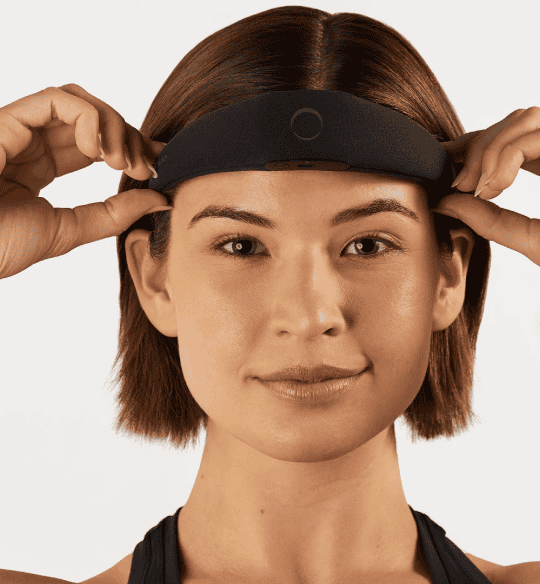
For some people, it seems like Elemind delivers. The clinical research behind their auditory approach is sound. In their published trial, 76% of participants fell asleep faster, with an average 48% reduction in sleep onset time among responders.
But I wasn’t in that 76%. After a few weeks of consistent use, I was falling asleep a little faster on some nights, but my improvements were inconsistent. Some nights, the noise bursts through bone conduction genuinely seemed to quiet my brain down. Other nights, I just felt like I was lying there listening to distributive radio static while my mind kept spinning. For me, the results felt variable in a way that was hard to feel enthusiastic about.
So, I kept looking. I’d already been searching deep down the sleep tech rabbit hole for a while, and I figured if I was going to land on something that actually stuck, I needed to test the real Elemind alternatives. Over several months, I worked through three other devices. All are worth considering if you’re in the same, sleepless boat.
Topic Contents
Comparable Alternative?
Elemind’s approach to direct intervention is neuromodulation. It reads your brainwaves in real time and responds with targeted stimulation to guide your brain toward sleep. If you’re looking for a true alternative, you want something that’s doing meaningful work on the sleep problem, not just tracking it or helping you wind down. With that bar in mind, here are the three I’d suggest you consider – and the one I still use.
Somnee Smart Sleep Headband
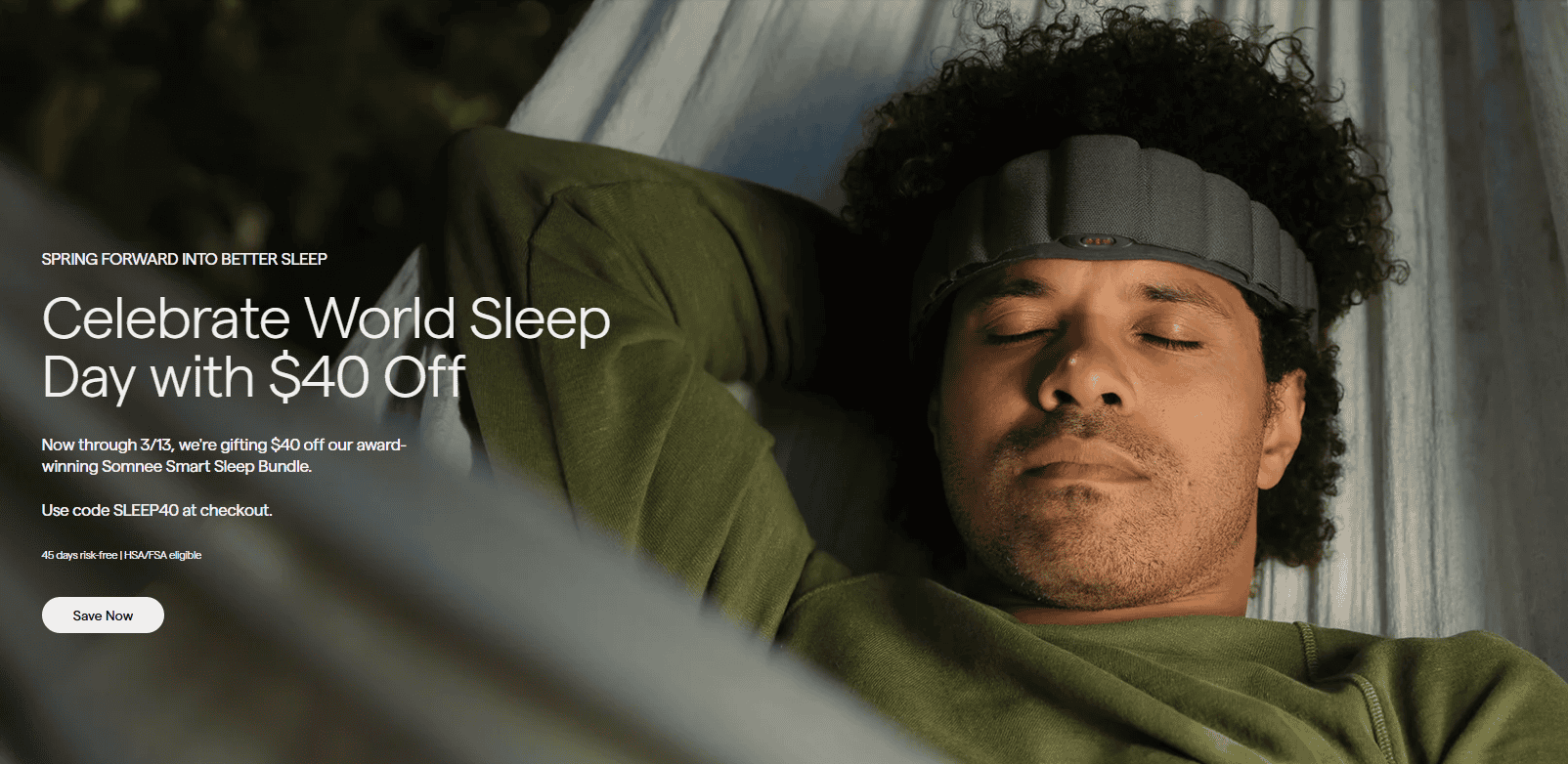
By contrast, Somnee was developed by a team of UC Berkeley neuroscientists. It uses transcranial alternating current stimulation (tACS), direct electrical stimulation delivered through forehead electrodes, which actively modulate the brainwaves that drive sleep. It’s a fundamentally different mechanism than Elemind, and in my experience, a more consistent one. I had fewer wake-ups, what felt like deeper sleep, and more consistent onset times. Not every night was perfect, but the trend was clearly positive.
Somnee delivers an electrical current that speaks directly to your brain in the same language it already uses, targeting your specific alpha and theta wave frequencies based on a personalized mapping charted over your first week of use. You only have to wear it for 15 minutes before bed, then you can take it off to go to sleep. Over time, it continues to adapt to your brain’s unique patterns and delivers tACS calibrated precisely to your peak frequencies.
If you do wear it overnight, their app tracks all of this with detailed reports of sleep data pulled from the EEG+ sensors. I found the reports to be more informative than what my Apple Watch was giving and more consistent with fewer outliers; however, your mileage might vary depending on what you are looking for and how you wear it.
Somnee comes in at $489, which includes the headband and a 6-month membership that covers monthly hydrogel electrode replacements, ongoing AI personalization, and full app access. This auto-renews at $160/year (or $100/bi-yearly). There’s a 45-day risk-free trial, it’s HSA/FSA eligible, and discounts are available for military, teachers, and first responders.
With any headband, the comfort learning curve is real. As a side sleeper, the first week of wearing something on my head overnight was difficult. But after I figured out my pillow positioning and strap tension, it stopped being a thing I had to think about.
Pros
- Direct electrical stimulation (tACS) — a more direct approach to brainwave modulation than sound-based alternatives
- Personalized to your unique alpha/theta peak frequencies — not a one-size approach
- Backed by Clinical Data: 54% reduction in sleep onset latency, 26.3 extra minutes of sleep on average
- Detailed EEG-based sleep reports, hygiene tracking, and AI coaching in the app
- DriftBack sessions for middle-of-the-night wake-ups
- 45-day risk-free trial, HSA/FSA eligible, discounts available
Cons
- $489 upfront is the highest price in this list (includes 6-month membership)
- Side sleepers face a comfort adjustment period
- Results build over the first 2-3 weeks — not an overnight fix
Muse S Athena
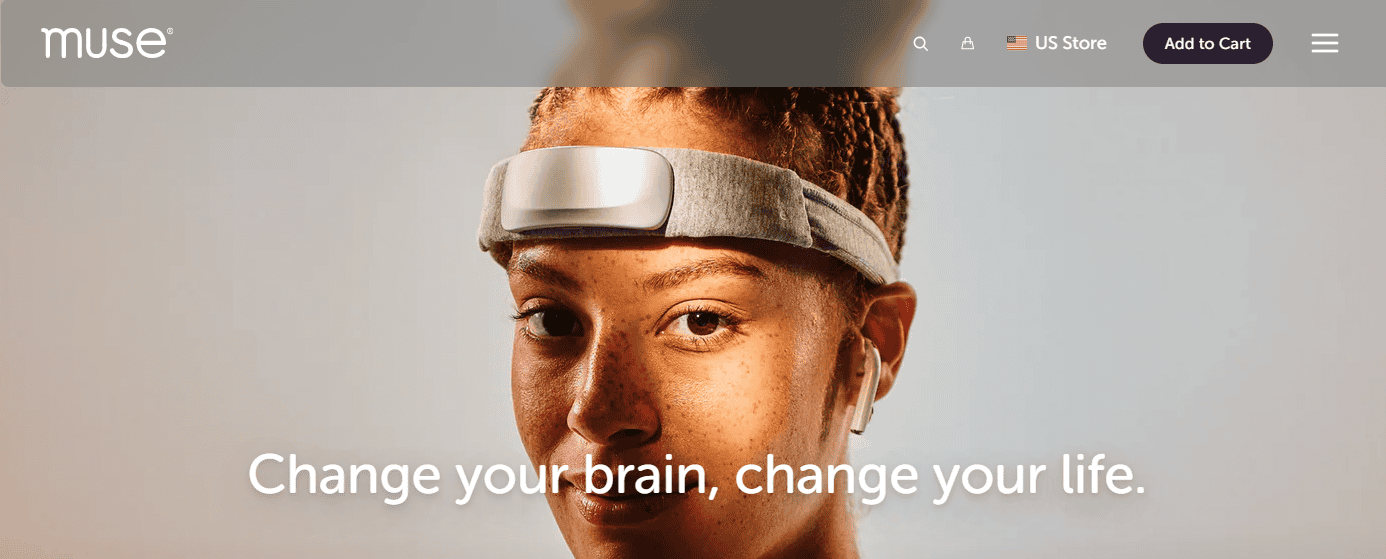
The Muse S Athena is an impressive piece of hardware that I have a complicated relationship with from a sleep-specific standpoint.
Muse has been in the EEG headband space for over a decade, and the Athena is their most advanced model yet. It pairs EEG with fNIRS (functional near-infrared spectroscopy), which measures blood oxygenation in your prefrontal cortex. That’s real neuroscience hardware strapped to your head, and it gives the Muse Athena a level of physiological insight that most consumer sleep devices don’t.
Where it gets disappointing is the sleep features. The Athena tracks overnight sleep using EEG, and it responds to your detected brain state with soothing sounds to help guide you toward sleep. It delivers quiet, EEG-timed “pink noise” to help sustain and enhance sleep stages. Just like Elemind, this device uses indirect sound interventions to address sleeplessness.
Here’s my honest take: if you’re primarily a meditator who also wants better sleep data and some sleep assistance, the Muse S Athena is probably the best piece of consumer neurotech available right now. The meditation library is extensive, the AI coach seems solid, and the sleep tracking data is very detailed.
But as a primary sleep intervention for someone who really struggles to fall asleep and stay asleep? Its audio-based approach hits the same limitations as Elemind — its sound has to be processed before it can influence your brainwaves. And in my weeks with it, the sleep results were inconsistent in much the same way. The device runs $475, plus $12.99/month or $99/year for the full premium subscription, and comes with a 30-day guarantee.
Pros
- Combines EEG with fNIRS — uniquely detailed brain and prefrontal cortex monitoring
- Extensive meditation and mindfulness library
- Deep Sleep Boost offers EEG-timed audio enhancement for slow-wave sleep
- Detailed overnight sleep staging from real EEG data
Cons
- Primarily a meditation device that includes sleep features — not purpose-built for sleep
- Sleep intervention relies on audio (indirect mechanism) — results can be variable
- 30-day guarantee vs. Somnee’s 45-day trial
Apollo Neuro

Apollo Neuro is the outlier in this list, and I want to be clear about what it is and isn’t before you decide if it belongs on your shortlist.
It’s a wristband. Not a headband. It doesn’t read your brainwaves. It doesn’t deliver neurostimulation in the same direct or semi-direct sense as the other devices here.
So why does it belong in this list? Because of what it does: Apollo delivers gentle, silent vibration patterns, what Apollo calls “Vibes”, to your skin, designed to influence your vagus nerve and autonomic nervous system via touch. The theory, supported by decades of touch and nervous system research, is that certain vibration frequencies signal safety to the brain, shifting your body away from fight-or-flight mode and toward parasympathetic rest and recovery.
I tested Apollo, hoping that it would quiet my mind on the nights when my brain just wouldn’t slow down. For that specific situation, Apollo actually helped. The pre-sleep Unwind and Sleep & Renew modes genuinely seemed to soften the edge off an anxious evening. Winding down to go to sleep felt less like a battle on the high-stress nights. I felt more relaxed getting into bed, but that is where the progress ended. During the “Sleep Vibes” I felt like the vibrations became more distracting than actually helpful.
Apollo doesn’t treat your sleep the way the other devices here do. It doesn’t map your brainwaves. It doesn’t deliver targeted neural stimulation. It’s more effective as total nervous system regulation, but less targeted toward the actual mechanics of sleep onset and maintenance. If your sleep issues are more like chronic insomnia rather than situational stresses, the gap between what Apollo can do and what Somnee and Elemind can do becomes pretty apparent pretty quickly.
Apollo runs $349 for the device, with SmartVibes AI membership adding $99/year to the cost, and comes with a 30-day guarantee.
Pros
- Worn on the wrist or ankle
- Effective for stress and anxiety-driven sleep problems
- Works all day for focus, energy, and calm
- Straightforward to use; no EEG mapping phase required
Cons
- No brainwave monitoring or direct/indirect neural stimulation
- Less targeted for chronic sleep onset issues or sleep architecture problems
- Results depend heavily on consistency and daily wear (3+ hours recommended for best sleep outcomes)
Conclusion

For most people who’ve been down the Elemind road looking for reliable, consistent improvement in sleep onset and sleep quality, Somnee is the true upgrade. The direct electrical stimulation mechanism is more effective, precise and personalized.
If meditation and mindfulness are already part of your routine and you want a device that integrates with that, and maybe something that gives you exceptional brain data and also happens to help with sleep, the Muse S Athena might be worth the investment. Just go in knowing it’s a meditation device with sleep features, not the other way around.
And if stress is the primary villain in your sleep story and you want something you can use around the clock to manage your nervous system, Apollo Neuro is a legitimately useful tool — just not a substitute for direct sleep treatment if your problem runs deeper.
All of these products offer trial periods, so feel free to test them risk-free. So if your sleep is really the focus and you’re really struggling, as I did, you are going to want something that actively does something about it. For this, I invested in Somnee.
Related Posts:






Trevor is a licensed chiropractor with a Master’s degree in Sports Medicine and hands-on experience in rehabilitation and physical therapy. He works daily with patients to restore movement, reduce pain, and improve performance. His real-world experience in injury recovery, mobility training, and evidence-based care allows him to translate complex musculoskeletal and sports medicine concepts into clear, practical guidance so people can move better, recover smarter, and stay active for the long term.