
Not too long ago, I noticed that by 2 p.m most days I would be on my way to the coffee pot for my third cup of the day. For years, I have been researching, educating, and treating chronic nervous system dysregulation. What I didn’t realize is that I’ve been watching it creep up on me, in my own life.
I run a clinic in Alabama where most of my patients deal with pain, inflammation, chronic fatigue, and autonomic nervous system issues. These patients also describe experiencing poor sleep, brain fog, and gut irregularity. I have frequently addressed their musculoskeletal complaints with breathing exercises to “reset” the vagus nerve. Although I knew this method was indirect, it was the best I had. That is, until I was exposed to the Nuropod.
For several weeks, I’ve been testing the Nuropod to directly stimulate the vagus nerve, and now, I’m writing this review from two perspectives. Both as a daily user and a clinician.
Full disclosure: This is a sponsored Nuropod review. However, everything below is my honest personal experience with the device. I will share the good, the frustrating, and how I think it earns its investment cost.
What Nuropod Is (and Why the Ear Placement Matters)
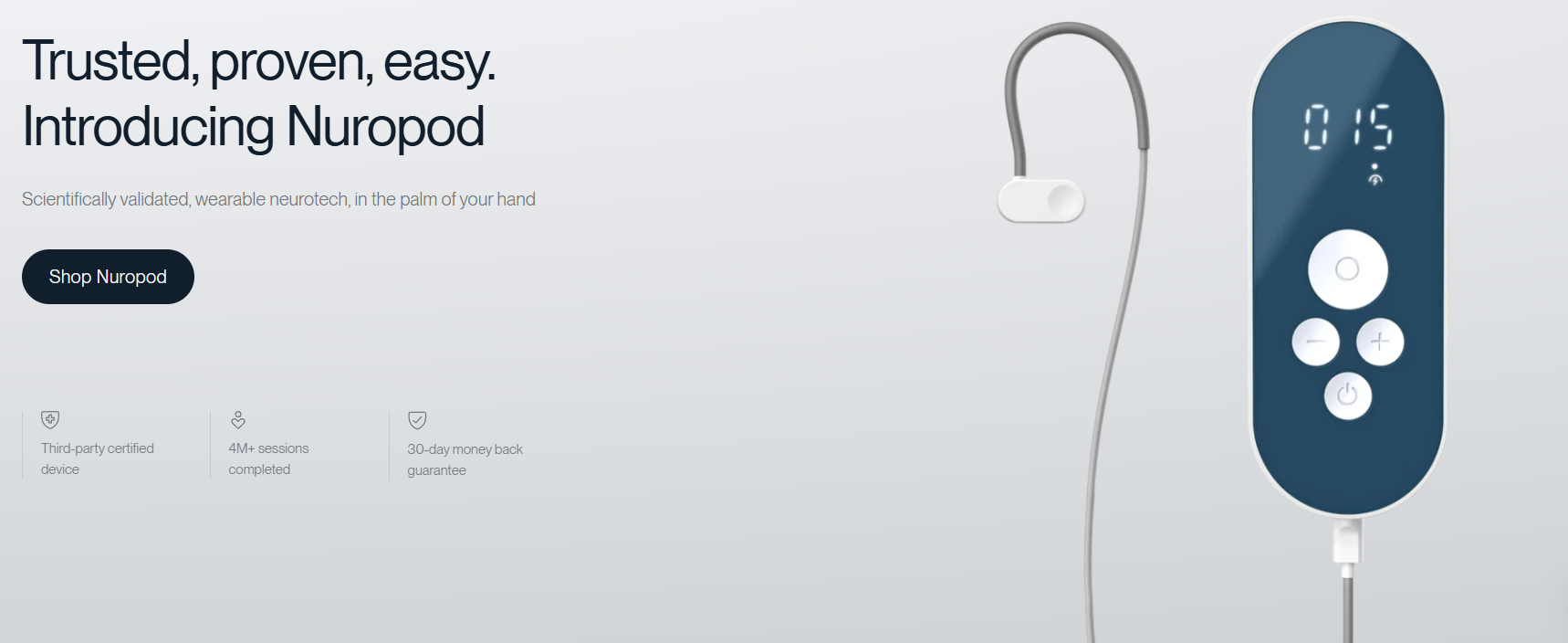
The Nuropod is a non-invasive vagus nerve stimulation device made by Parasym. It clips onto the tragus, the small flap of cartilage in front of the ear canal, just behind the temporal mandibular joint. There, the Nuropod delivers gentle impulses to the auricular branch of the vagus nerve. Those signals travel up to the brainstem, activating the parasympathetic nervous system.
The specific tragus placement is deliberate and crucial. This is the most accessible area to stimulate the vagus nerve because this is where the nerve runs closest to the skin’s surface. The vagus nerve in the neck sits about 34-36mm deep below the surface, where the auricular branch of the vagus nerve is only 1-3mm. This difference is significant, considering that most applications of transcutaneous electrical stimulation can only reach a depth of 15mm below the skin’s surface!
Nuropod and Parasym use a proprietary waveform called AVNT (Auricular Vagal Neuromodulation Therapy), which they cite as having shown positive outcomes in over 50 published clinical trials. Outcomes like improved heart rate variability, reduced inflammatory markers, and decreased fatigue.
Unboxing and Set-Up
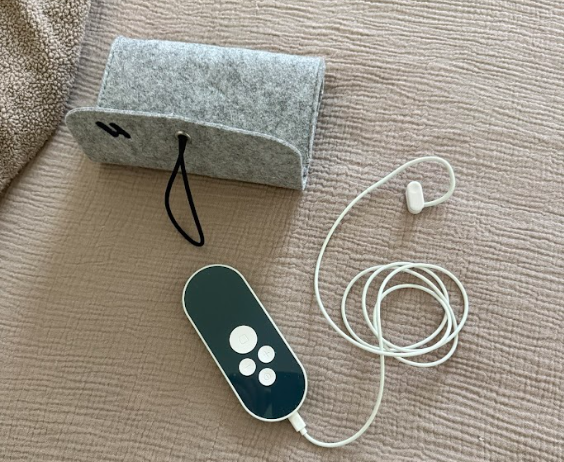
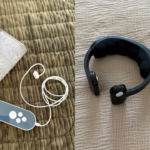
The initial impression was premium. Shipping was fast, and the device arrived securely and double-boxed. The product box was designed to be sturdy, but easy to open. When I opened the box, I was greeted by the actual product, and it was nice to get my eyes and hands on the device first thing. As I unpacked, I found the wired earpiece that clips onto the tragus, a USB charger, a small protective carrying case, and a small start guide.
What stood out to me immediately was how little there was to set up. I charged it, plugged the earpiece wire in, and clipped it on, then turned it up. That’s the entire process.
My First Session and Why It Felt Awkward
My first session was a little confusing. I clipped it on and started turning up the intensity, and I felt nothing at level 5, nothing at level 10. At this point, I double-checked my device to make sure it was charged, plugged in, and making contact. Everything checked out, so I kept going. Still nothing at level 20. I had to get all the way up to around level 25 before I noticed a light tingling at the tragus. The sensation is subtle, and I would describe it as a soft pulsing, prickly feeling.
Nobody warned me about this delay, and what I think new users should know. My sensitivity shifted over time and day to day. After a few sessions, I was picking up the stimulation at lower levels because I knew what to feel for, and during the session, I’d desensitize to it and have to bump it up a level or two. That back-and-forth is normal with electrical stimulation, and Nuropod gives us 45 intensity levels, so plenty of room to adjust. But sitting there at level 25 during the first session, wondering whether the device worked or not, was a little disorienting.
My Experience: What Changed for me
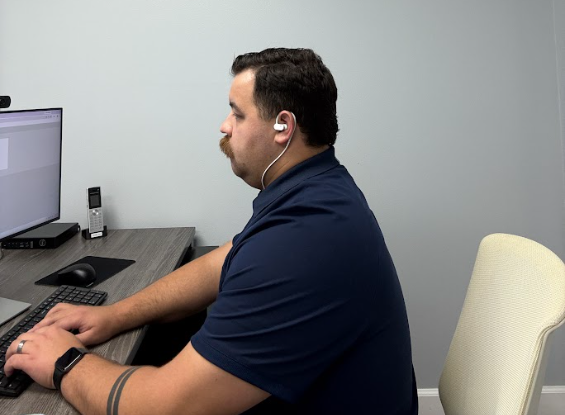
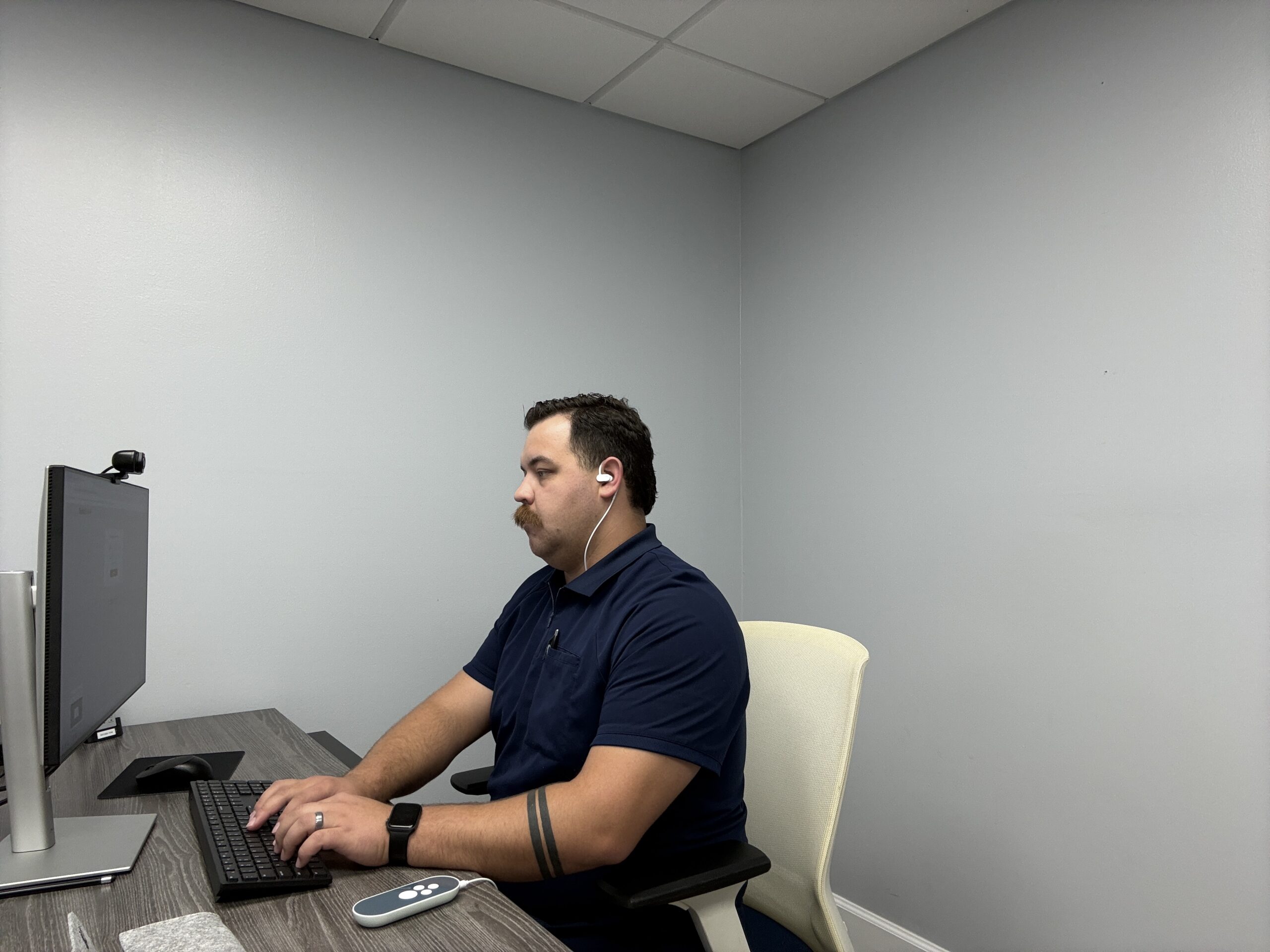
For any modality or therapy to work, consistency is key. So finding a time of day to implement this device when it’s convenient and repeatable will make all the difference. For me, I use the Nuropod during my afternoon paperwork block at the clinic. Parasym recommends sessions between 15 and 60 minutes, and I settled on about 30-45 minutes most days, however long it takes me to finish my notes.
The first improvement I noticed was in my sleep. I started falling asleep faster and waking up feeling rested instead of dragging myself into the shower. This was not an overnight transformation. It was a gradual, consistent improvement over the first two weeks. The grogginess I used to carry into the morning faded.
The second effect I encountered is in my afternoon energy. My 2 p.m. crash is getting less brutal to the point where sometimes I forget to make my afternoon coffee, which, for me, is meaningful. My office assistant pointed out that the pot was still full at the end of the day and asked if everything was okay. It’s become a conversation around the office.
What I Have Liked
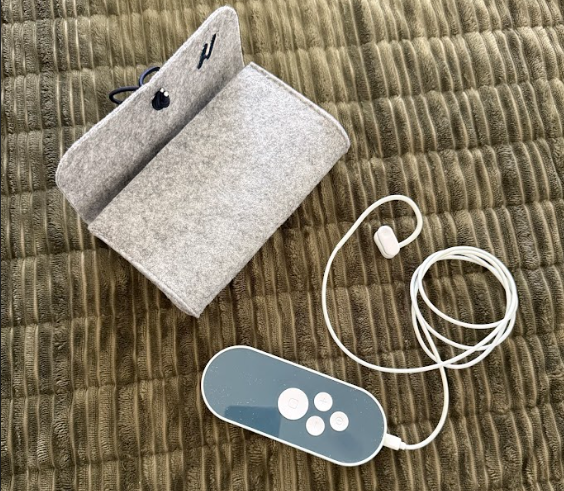
The simplicity is the biggest thing. There is no app to open, no bluetooth to pair, and no gel to apply. I pick it up, clip it on, set the level, and go back to work. This helps with my consistency.
The build quality feels right for the price. The earpiece has a stiffer wire that I could bend and shape to fit my ear, which improved comfort and kept the clip secure during the session.
The battery life has been outstanding. A month on a single charge removes one more reason to skip a day.
As a clinician, the depth of the research is what lets me put this in front of patients. Over 50 completed studies, peer-reviewed publications, and randomized controlled trials provide real evidence to hang my hat on and give me confidence in the recommendation.
What I Didn’t Like
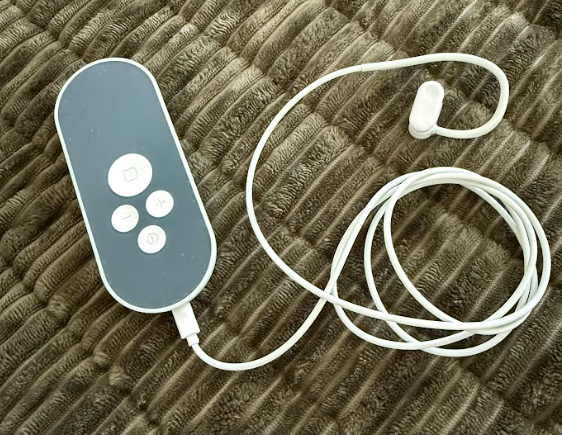
Of course, nothing is exactly perfect, and we can all find faults when we look for them. Here are a few things for me that have been a sticking point.
The cord is my biggest gripe. Everything in my life is wireless, including my headphones, phone charger, keyboard, mouse, and the entertainment center with the cables hidden behind the wall. Being tethered to a wire while I’m at my desk, it gets in the way. My solution for this is slipping the wire under my scrubs and out of the collar of my shirt. I understand that a wireless version would present other issues, but still be annoying.
The storing and carrying case felt underwhelming for a device at this price point. I appreciate that a case is included, but this was the one part when I was doing my initial unboxing that felt cheap to me. Not a dealbreaker, but worth mentioning.
The intensity learning curve deserves a callout. Getting to level 25 on session one and feeling nothing was disorienting. The quick-start guide tells you to start low and work up, which is sound advice. What it doesn’t tell you is you might need to go higher than you’d expect before you feel the tingling sensation for the first time. A single line about what’s normal during the first session would save a lot of new users the “is this thing broken” moment I had.
A Clinician’s Perspective
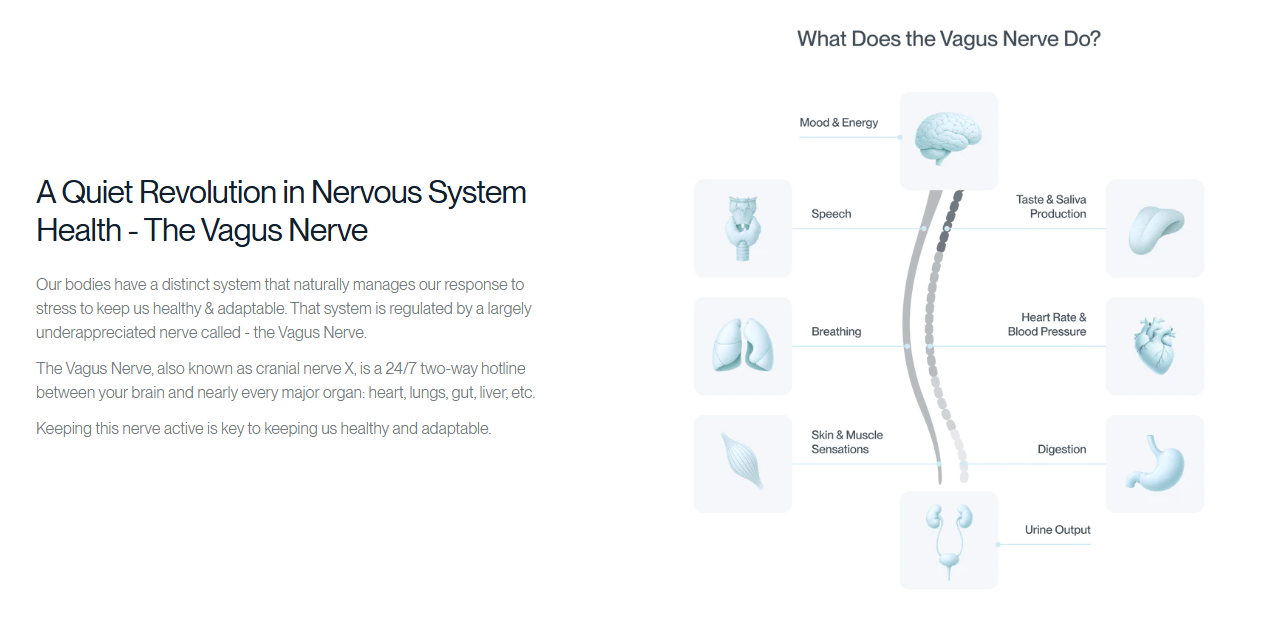
From a provider’s perspective, I want to lend a little insight here.
Low vagal tone shows up in my office just about daily. Patients come in describing poor sleep, chronic fatigue, digestive problems, slow recovery from injury, and difficulty managing stress.
For a long time, the best tools I had to recommend for supporting vagal tone were breathing exercises, which I have seen work for some. I’ve also seen them fail, because they require daily practice, consistency, and a level of focused effort that a lot of people dealing with this kind of dysregulation don’t have the discipline for.
What I appreciate about the Nuropod, specifically as a tool I can recommend for patients, is that it’s passive. You clip it on and go. Simple. Compliance has not been an issue with anyone I’ve recommended it to, and that alone separates it from most of what I’ve offered in the past.
One caveat, though, no single device is a fix on its own. I tell every patient that the Nuropod is not a replacement for the fundamentals. I encourage pairing this device with movement, sleep hygiene, nutrition, stress management practices, and a relationship with a healthcare provider who knows your history. This will achieve the best results.
Pricing, Guarantees, and Who Should Consider It
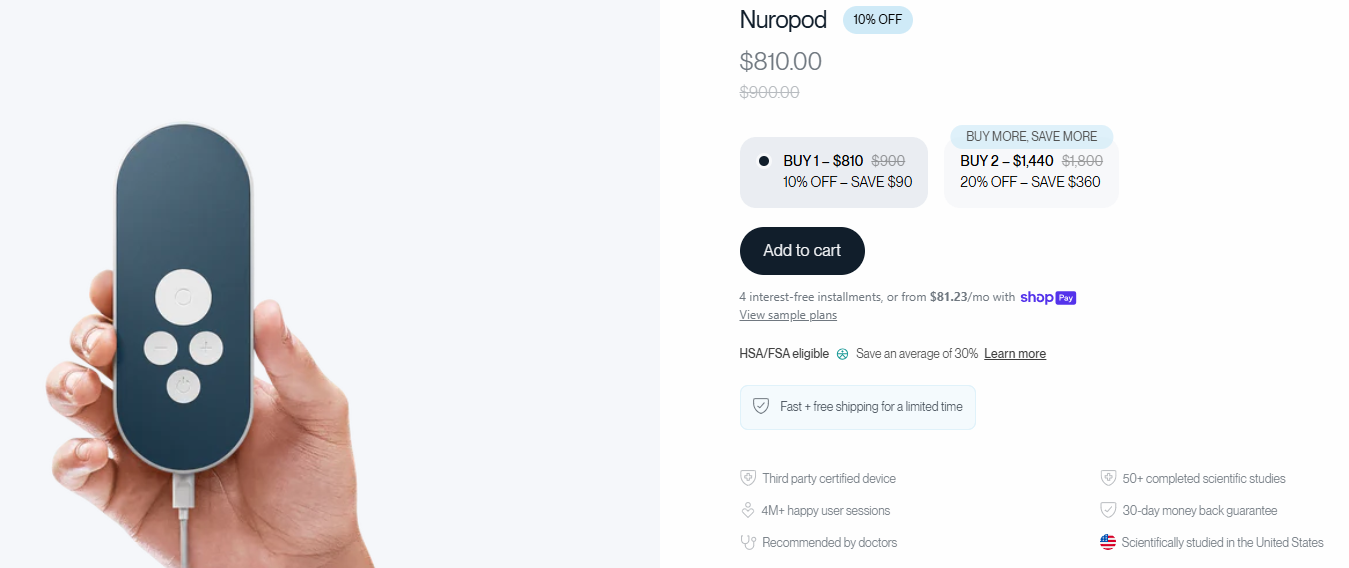
The Nuropod runs around $900, but they are often running discounts of 10% off or 20% if you by two devices. This will drop the price to $810, which helps with affordability. It’s HSA/FSA eligible. Parasym offers a 30-day money-back guarantee and a 2-year warranty, so there is a good window to really test it before fully committing.
The patients that I most recommend this for are those dealing with chronic fatigue, stress-related burnout, or poor sleep, who want to implement a daily routine without learning a new skill. Or for those go-getters who’ve already worked on the foundational stuff and are looking for a catalyst to get them over that hump.
Bottom Line
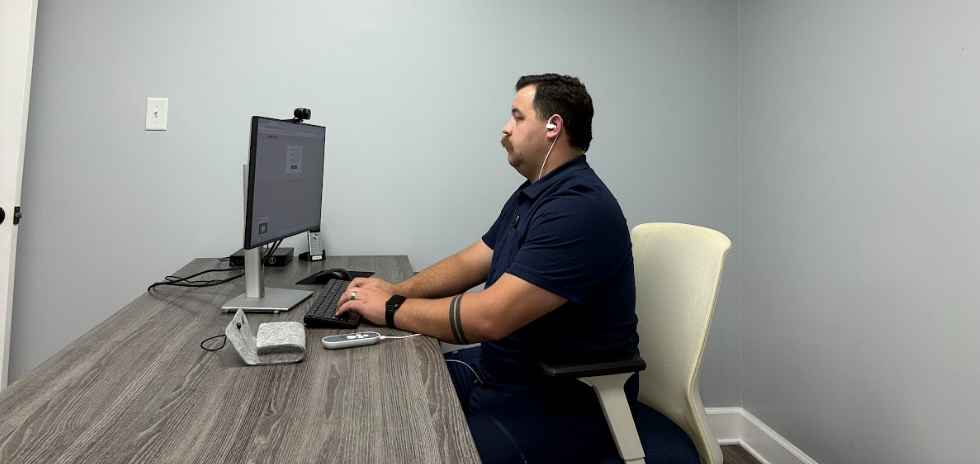
After weeks of daily use, the Nuropod has earned a permanent spot in my afternoon routine. I’m sleeping better, my energy is lasting, and I’m drinking less caffeine. The setup is simple, the research is strong, and the daily inconvenience is as low as I’ve seen.
If you’re considering a VNS device, the Nuropod has been a great fit for me.
Disclaimer: This article reflects my personal experience and clinical perspective. It’s for informational purposes and is not medical advice. The Nuropod is a consumer wellness device and has not been cleared by the FDA for diagnosing, treating, curing, or preventing any disease. Talk to your healthcare provider before starting any new health intervention.
Related Posts:


Trevor is a licensed chiropractor with a Master’s degree in Sports Medicine and hands-on experience in rehabilitation and physical therapy. He works daily with patients to restore movement, reduce pain, and improve performance. His real-world experience in injury recovery, mobility training, and evidence-based care allows him to translate complex musculoskeletal and sports medicine concepts into clear, practical guidance so people can move better, recover smarter, and stay active for the long term.