
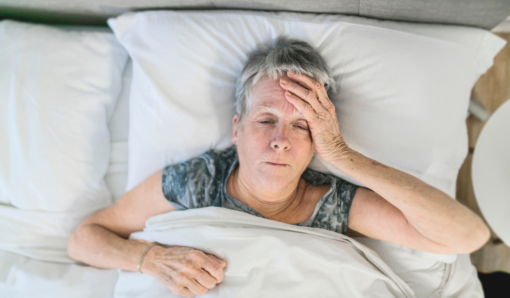
If you’ve started recently waking up in the middle of the night feeling too hot, kicking off the covers, and wondering why your sleep suddenly feels off, there’s probably a reason.
Sleep disruption is one of the most common (and frustrating) parts of perimenopause and menopause. It usually shows up as broken sleep, night sweats, or that familiar feeling of being in bed all night but still waking up exhausted. As a Certified Sleep Science Coach, I’ve spoken to countless women who describe the experience the same way: “I used to sleep just fine. Then, out of the blue one day, I didn’t anymore.”
Before jumping into some of the solutions to sleep disruption better during menopause, it’s important to understand why this is even happening in the first place.
Why Sleep Gets Worse During Menopause
Menopause can affect your cycle, of course, but it also affects your entire nervous system. This includes how your body regulates temperature and transitions between sleep stages.
During this time, hormonal fluctuations, particularly changes in estrogen and progesterone, start to impact systems that were functioning in the background. Sleep is one of the first places many women notice the shift. Two of the biggest drivers behind sleep disruption during this time are hormonal temperature dysregulation and fragmented sleep cycles.
Hormonal Temperature Dysregulation

One of the most noticeable changes is how your body handles temperature. Estrogen plays a role in regulating your internal thermostat, and as levels fluctuate, that system becomes more sensitive and less stable.
Fluctuating estrogen is what leads to hot flashes and night sweats, but the disruption goes beyond just feeling a little warm. These temperature shifts can happen quickly and unpredictably, often in the middle of the night. You might fall asleep feeling perfectly comfortable, only to wake up overheated, sweaty and uncomfortable, an hour or two later.
Even relatively small increases in body temperature can pull you out of deeper stages of sleep. So while it may feel like “just a hot flash,” it’s actually interrupting the part of sleep responsible for physical recovery and restoration.
Fragmented Sleep Cycles
At the same time, menopause can change how your sleep is structured. You may spend less time in deep sleep and more time in lighter sleep stages, which makes you more likely to wake up throughout the night.
These awakenings aren’t necessarily dramatic, sometimes they’re just enough to pull you out of a deeper stage of sleep without fully waking you. Over time, this creates sleep that feels broken or unrefreshing, even if you technically spent enough hours in bed. You wake up wondering why you feel so groggy despite getting a full night of sleep.
Many women describe this as “sleeping, but not feeling rested,” which is often a sign that sleep quality, not just quantity, has been affected.
A lot of traditional sleep advice starts to fall short here. Most sleep tips (even the ones I give to my clients) are around general sleep hygiene. Keep your room cool, avoid screens before bed, stick to a schedule, etc. All of these are typically helpful, but they don’t fully address what’s happening during menopause.
You might go to bed perfectly comfortable and still wake up overheated an hour later, or find yourself cycling in and out of lighter sleep without a clear reason. Many women eventually start seeking out help beyond basic lifestyle changes and moving toward solutions that can adapt as their bodies change.
Where Sleep Technology Comes In
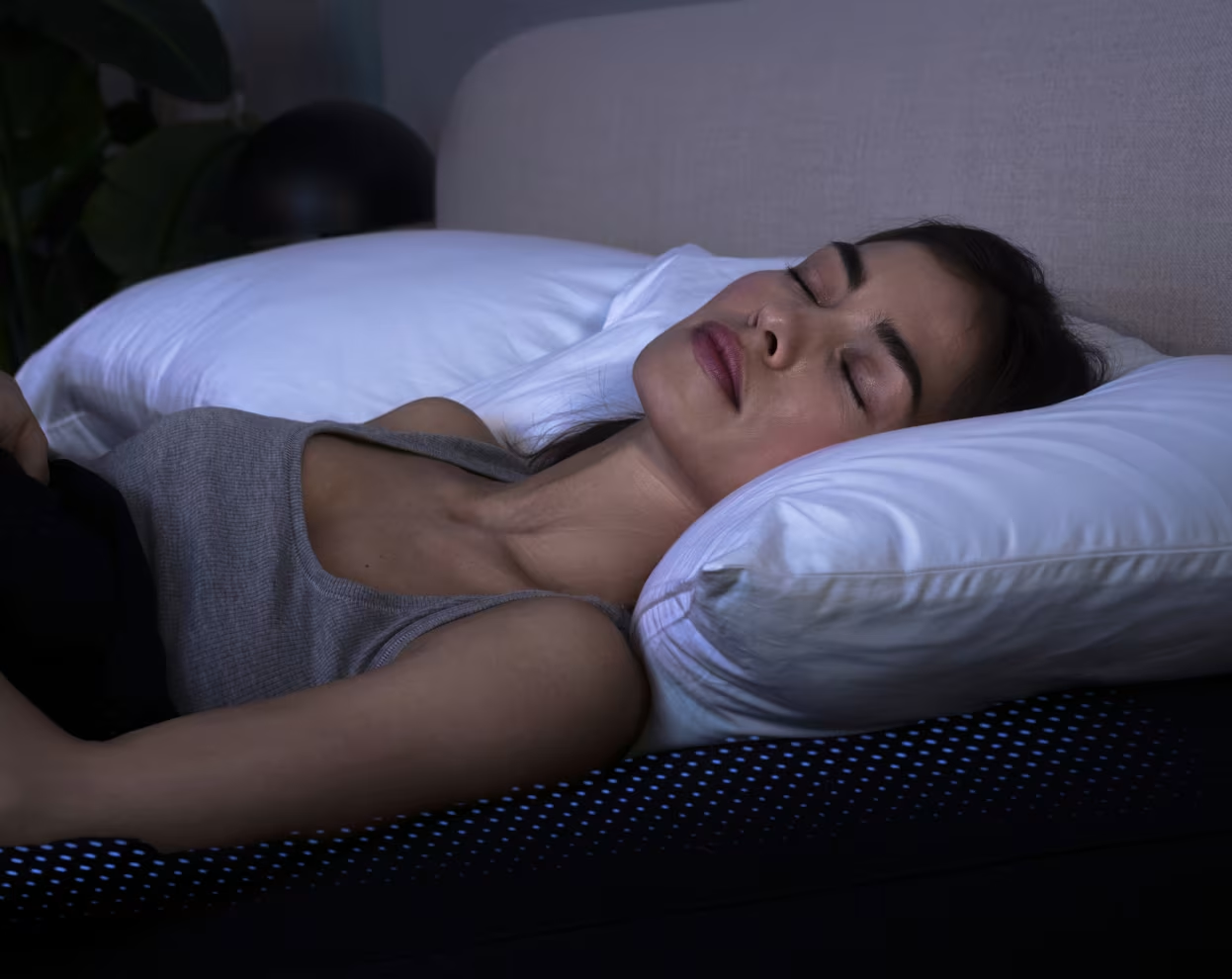
Sleep tech has evolved significantly. It’s no longer just tracking how long you sleep, as that’s not even an accurate measurement anymore. Sleep tech now can actively shape your sleep environment and help you understand how your body is responding.
For menopause-related sleep disruption, let’s go through a few of the categories that come up often.
Wearables and Sleep Trackers
Devices like rings or watches can track things like heart rate variability (HRV), sleep stages, and nighttime awakenings. These can be helpful for identifying patterns, especially if you’re trying to understand how often you’re waking up or whether your deep sleep is being impacted.
For many women, seeing the data can be validating as it confirms that the issue isn’t “in your head.” Your sleep really is, measurably, more fragmented.
I like to use this kind of data as a starting point because it can give you a clearer picture of what’s actually happening at night, especially when someone feels like they’re waking up constantly but can’t pinpoint when or why. Seeing trends over a few nights can help connect the dots between temperature changes, wake-ups, and overall sleep quality.
However, trackers won’t actually get to the root of the problem; they just help you see it more clearly. They’re most useful when paired with changes to your environment or routine, because once you understand what’s happening, you can start adjusting the things that influence it.
Cooling Mattresses and Bedding
Cooling sheets, breathable mattresses, and moisture-wicking fabrics can help reduce heat retention. For some people, that’s enough to make a noticeable difference. But for menopause specifically, there’s a limitation here.
These solutions are passive. They don’t respond when your body suddenly overheats in the middle of the night…which is often the moment where you need support the most.
I see this come up a lot with clients in perimenopause and menopause who tell me their room is cool, they’ve switched to lighter bedding, and they’re doing everything “right,” but they’re still waking up hot and uncomfortable. The issue usually isn’t the baseline environment but the sudden temperature shifts that happen after they’ve already fallen asleep.
Active Temperature Control Systems
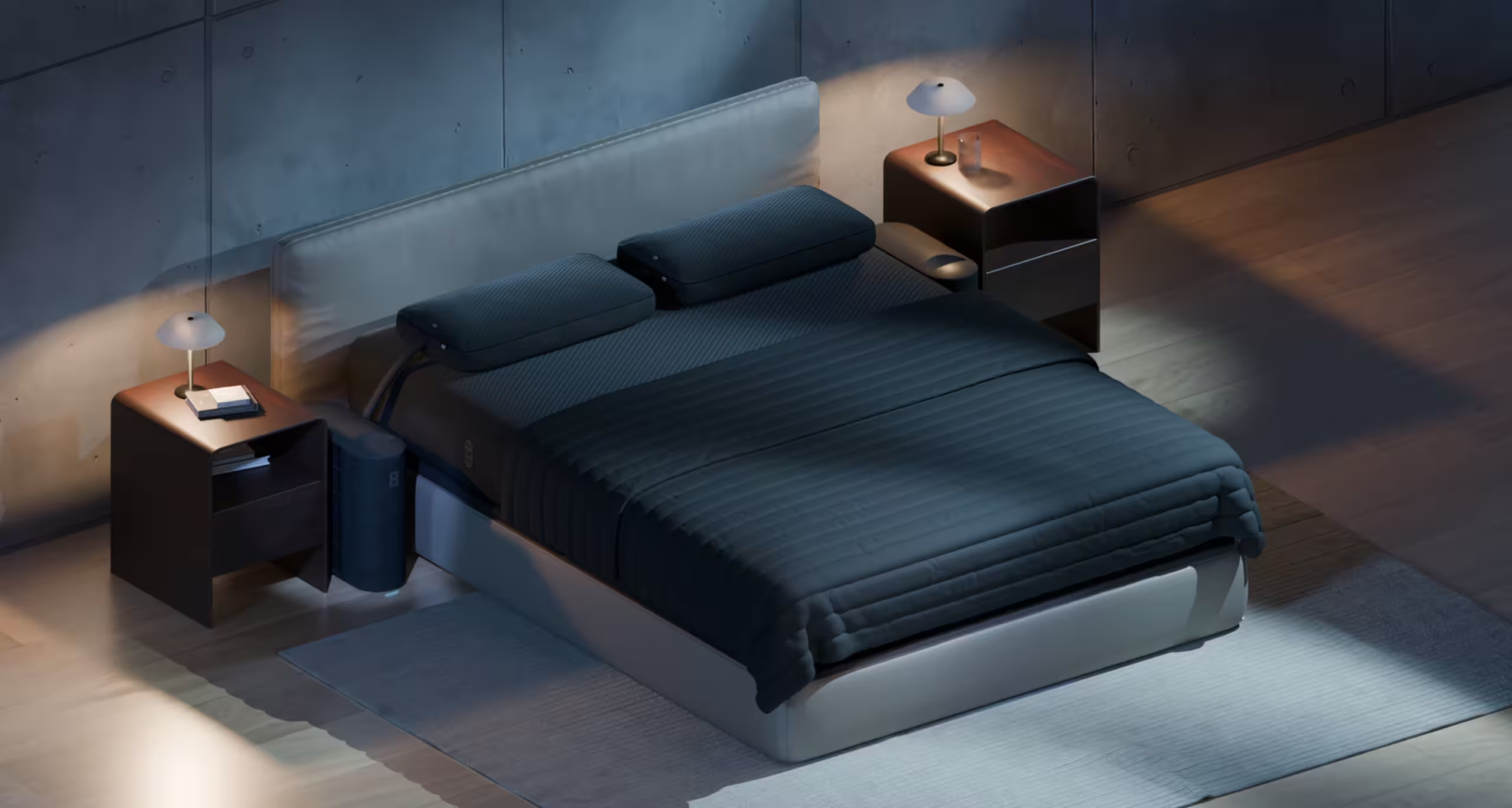
An active cooling system adjusts the temperature of your bed throughout the night. One option in this category is the Eight Sleep Pod which uses water-based temperature control to heat or cool the surface of the bed itself, rather than relying on airflow or fabric alone.
The key advantage is responsiveness. Instead of maintaining a fixed “cool” environment, active systems can adapt to sudden shifts in body temperature. This doesn’t mean that your hot flashes will disappear entirely (we could only dream, pun intended), but the environment you’re in can at least adapt fast enough that it won’t fully pull you out of sleep.
Why This Matters for Menopause
With menopause-related night sweats, the challenge isn’t just feeling too warm, but the speed and unpredictability of those temperature changes.
Sleep systems that regulate temperature can adjust the sleep surface in response to these shifts, helping maintain a more stable environment without requiring you to wake up and make changes. This becomes especially relevant during the night, when disruptions are most likely to occur and when even small disturbances can interrupt deeper stages of sleep.
In that sense, it’s less about how comfortable you feel when you first get into bed, and more about how well your sleep environment adapts during the early morning hours, when temperature fluctuations tend to have the greatest impact.
From a menopause perspective, a few features matter here more than others:
Autopilot Adjustments
The system can automatically adjust temperature throughout the night based on your sleep stages and patterns.
This matters because your needs aren’t static, especially when dealing with menopause. You might find that you need more cooling during certain parts of the night than others.
Dual-zone temperature control
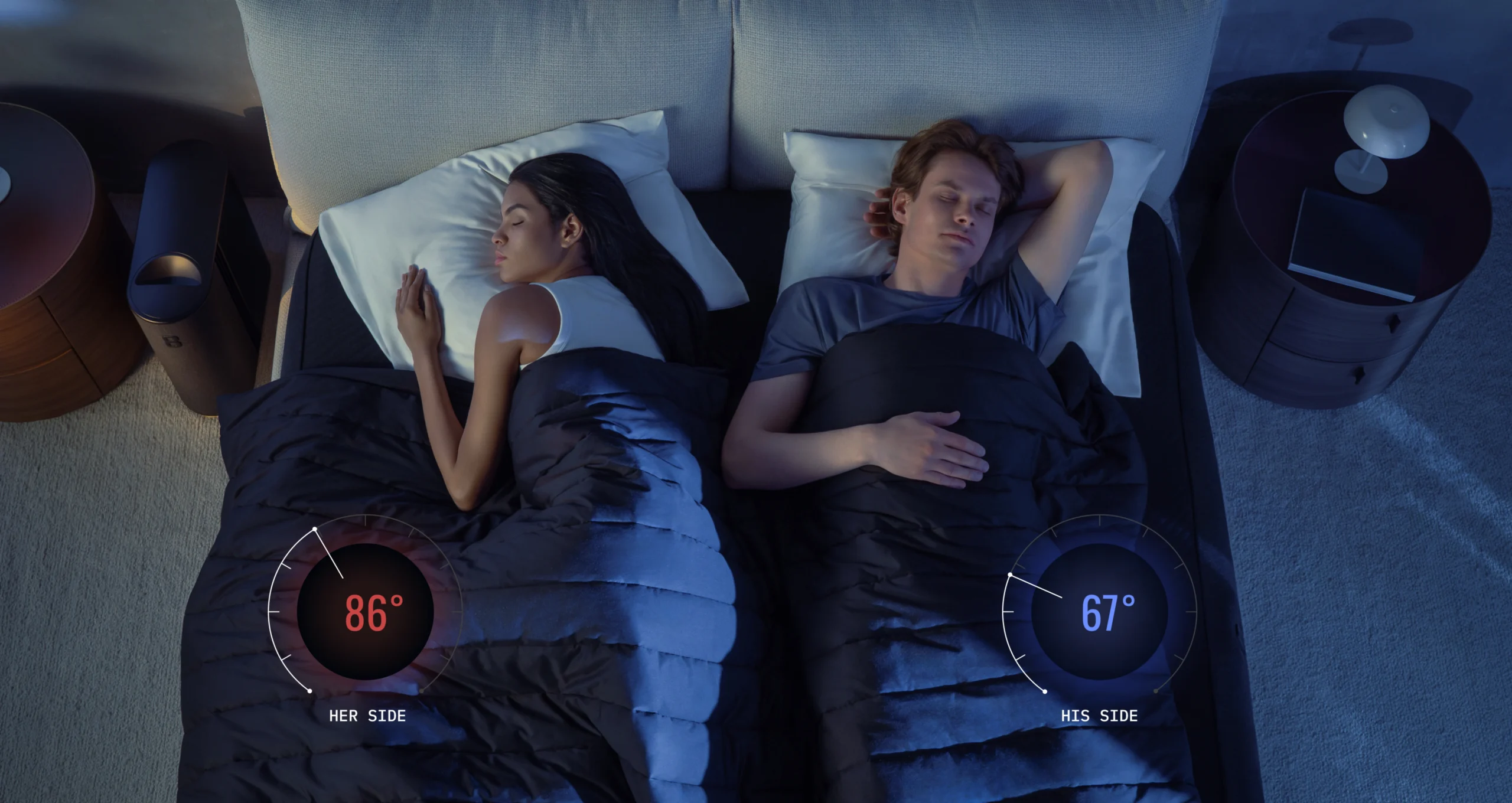
If you share a bed with a partner, this is huge. You can cool your side without affecting your partner’s temperature preferences.
This matters more than people might expect, especially during menopause. One person can be dealing with night sweats while the other is perfectly comfortable or even cold. Without dual-zone control, you’re usually stuck compromising on a temperature that doesn’t really work for either of you.
With separate zones, you don’t have to negotiate the thermostat or pile on and off layers throughout the night. Each side of the bed can stay at a temperature that actually feels comfortable, which can reduce those middle-of-the-night disruptions that come from constantly trying to adjust.
Sleep and HRV Tracking
Beyond temperature, it also tracks things like heart rate and HRV, which can help you understand how your body is responding over time.
The Bigger Picture
Getting enough hours every night during menopause really isn’t the goal. The focus instead should be on getting restorative sleep. That means staying asleep longer, spending enough time in deeper sleep stages, and waking up feeling somewhat like yourself again.
For some women, small changes like better bedding or a cooler room are enough to make a difference to their menopausal symptoms. For others, especially those dealing with frequent night sweats or temperature swings, more responsive solutions can make a meaningful difference.
If your sleep has changed during perimenopause or menopause, there are ways to support it. Sleep tech isn’t a cure, but it can be a tool, especially when it’s designed to respond to your body instead of expecting your body to behave the same way it always has.
Related Posts:






Stephanie Hope is a Certified Sleep Science Coach with additional training in stress management and longevity coaching. With over a decade of experience in digital media, she has created wellness, lifestyle, and commerce content for brands like Fortune, Reader’s Digest, and BuzzFeed. Stephanie is passionate about helping readers find practical strategies that support healthier daily living.