

The FRENZ Brainband has definitely made a name for itself in the “sleep gadget” world. With three CES Innovation Awards under its belt, built-in EEG tracking, and even a peer-reviewed study suggesting it can help users fall asleep faster, it is not just another sleep headband. For an audio-based sleep device, it delivers on a lot of its promises.
But if you have landed here, chances are you are still on the fence.
Maybe the $680 price tag feels like a lot, especially with a 14-day return window that does not leave much time to really test it. Maybe you realized the app only works on newer iPhones, which rules it out if you are on Android. Or maybe you have gone a step further and started looking into newer devices that skip audio altogether and try to stimulate the brain directly.
Is the FRENZ Brainband already a step behind? Let’s take a look at some FRENZ Brainband alternatives and whether any of them might be a better fit for you.
Why Some People Look Beyond FRENZ
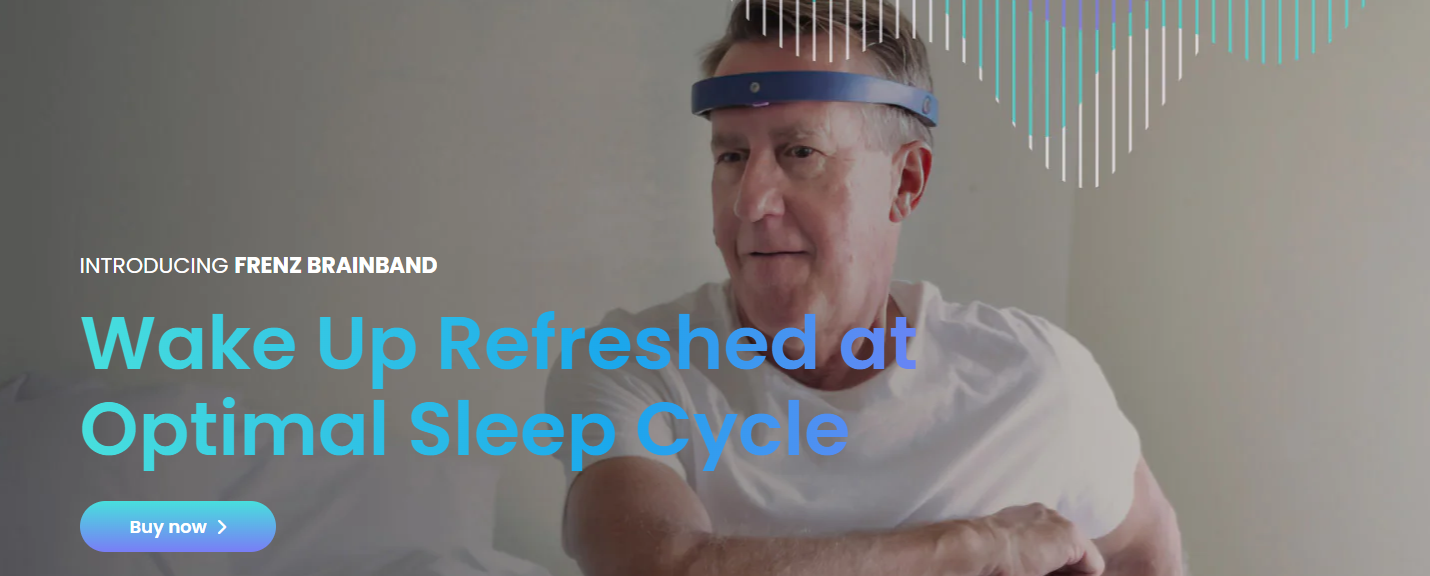
FRENZ reads your brainwaves with EEG sensors and responds with personalized audio like Cognitive Behavioral Therapy, binaural beats, and pink noise, all delivered through bone-conduction speakers. It is a thoughtful system, and it is grounded in real research.
The problem is that it’s indirect. The audio signal has to move through your auditory system before your brain translates it into a neurological response. That extra step introduces some variability, and the results can depend a lot on how your brain processes sound in the first place.
The clinical evidence for this type of therapy is compelling. The primary FRENZ study, led by Nguyen, Vu, and others and published in Nature Scientific Reports in 2023, focused on sleep onset, or how quickly people fall asleep. The results showed users were falling asleep about 24 minutes faster. That is meaningful, but it is also in line with what other sleep devices have reported. Still, the study did not focus as heavily on metrics like sleep efficiency, total sleep time, or deep sleep duration, at least not with the same rigor seen in more recent research in this category.
Then there is the trial period. FRENZ offers a 14-day money-back guarantee, which is on the shorter end for this type of product. For something that needs time to learn your patterns and adjust, two weeks does not leave much room to figure out if it is truly working for you.
Here are a few alternatives to consider if FRENZ isn’t right for you:
1. Somnee Smart Sleep Headband
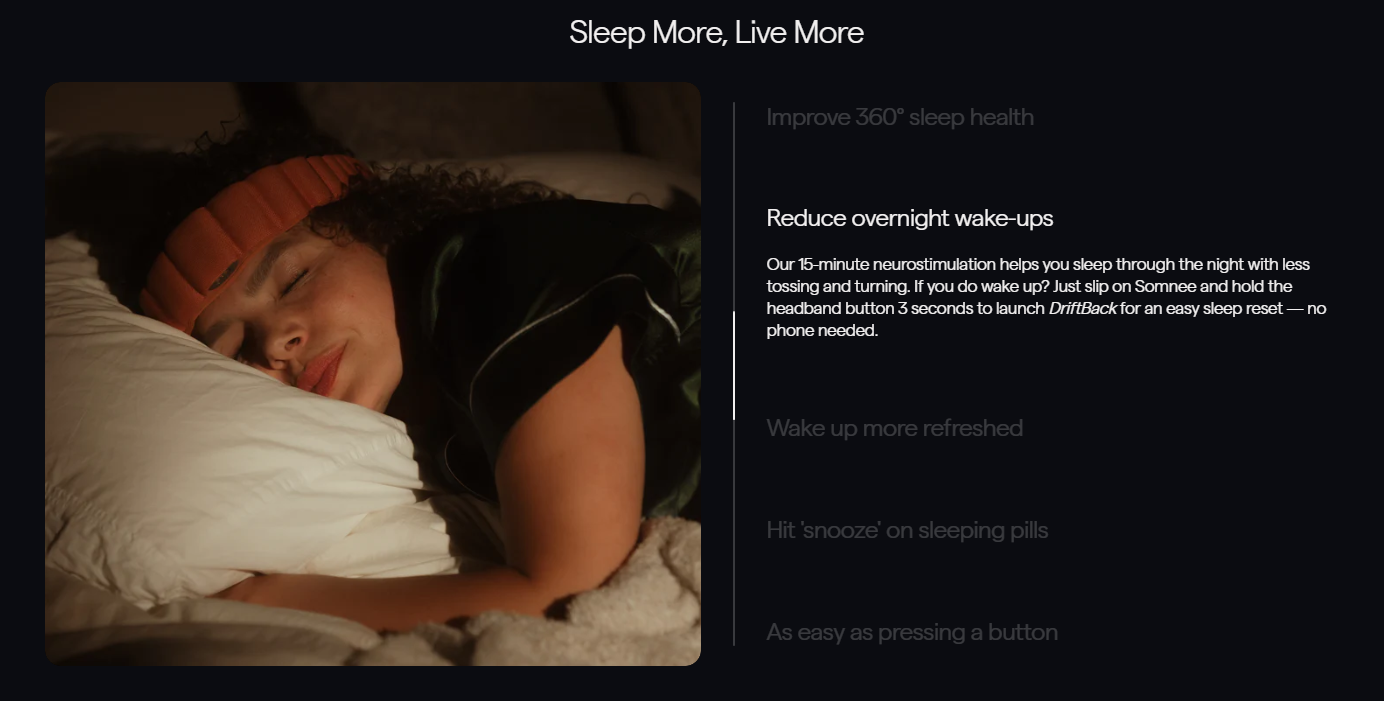
If you are looking for a true alternative to FRENZ, this is the one I would start with. The biggest difference comes down to how it works.
Somnee was developed by a team of UC Berkeley neuroscientists, and it takes a very different approach to improving sleep.
- Instead of audio, Somnee uses transcranial alternating current stimulation (tACS)
- It delivers gentle electrical currents through medical-grade hydrogel electrodes placed on your forehead
- This allows it to communicate directly with your brain’s natural electrical signals
Where FRENZ sends sound that your brain has to interpret, tACS works in your brain’s native language. There is no translation step. That alone can make a meaningful difference in consistency and effectiveness.
Somnee also leans on decades of peer-reviewed research supporting tACS as safe and effective, with no major side effects reported.
Personalization and Adaptation
Both FRENZ and Somnee talk about personalization, but this is where the gap really opens up. FRENZ offers what it calls personalized response therapy, but in practice it is selecting from a set library of audio treatments.
Somnee goes much deeper:
- It maps your brain activity using clinical-grade EEG+ sensors during the first week
- It identifies your individual patterns, like your peak alpha frequency
- It adjusts stimulation nightly based on how your brain responds
- By around session 22, it becomes a closed-loop system that adapts in real time
Your brain is not generic, and Somnee does not treat it that way. It builds a profile around your specific rhythms, stress levels, and sleep patterns. That is a very different level of personalization.
Early Data and Sleep Studies
A 2025 study published on medRxiv by StimScience Inc., looked at personalized tACS sessions lasting about 15.5 minutes before bed. The results stand out:
- Sleep efficiency (how much time in bed is actually spent asleep) improved by 13.4%
- Sleep onset latency dropped to 6.7 minutes, a 54% reduction
- Total sleep time increased by 26.3 minutes compared to sham therapy
These improvements point to better overall sleep quality, with more time asleep and fewer disruptions. It is also worth noting that this is still a preprint, so peer-reviewed replication will make the case even stronger over time.
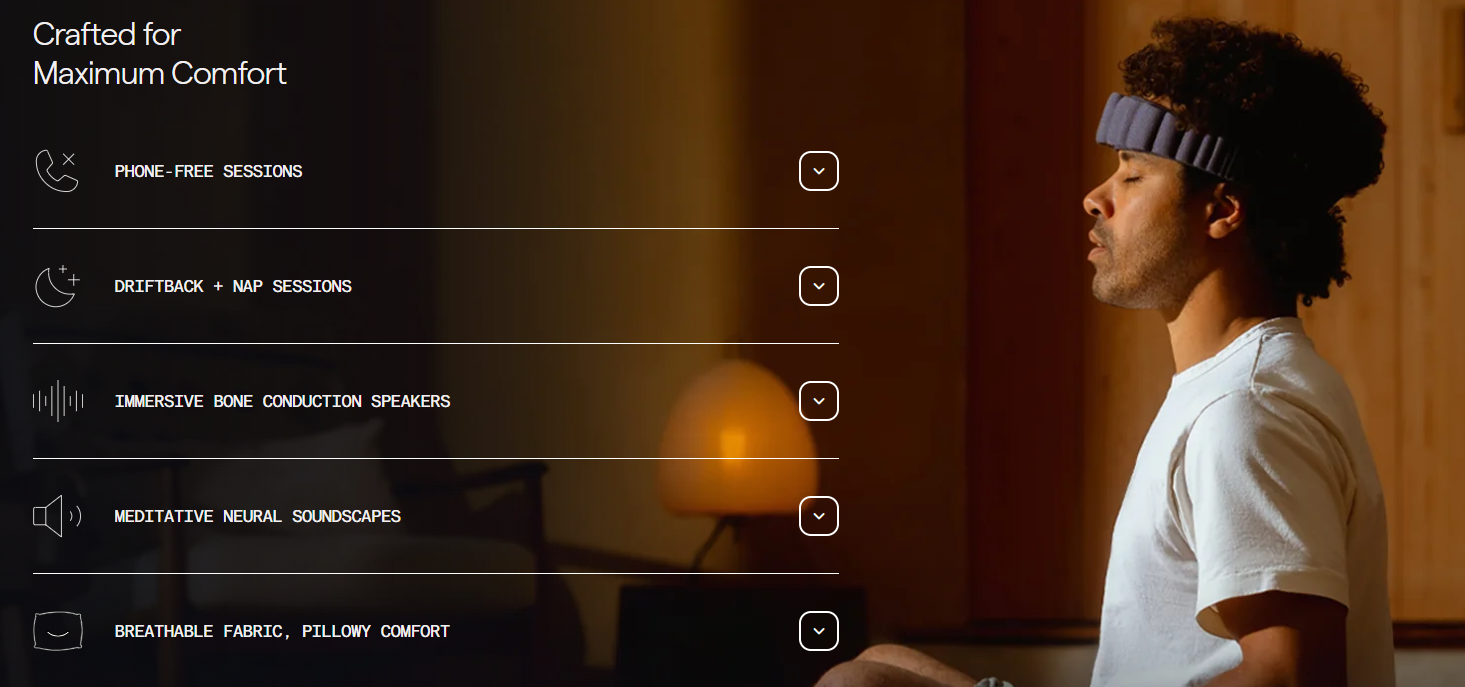
Pricing, Trial, and Extras
Here is how Somnee pricing breaks down:
- Price: $489 upfront
- Includes a 6-month membership
- Membership renews annually at about $160
The membership covers:
- Monthly electrode replacements
- AI-driven personalization
- Sleep reports and insights
Somnee’s membership also offers access to Dr. Matthew Walker’s Sleep Journal. Dr. Matthew Walker, author of Why We Sleep, is one of the most cited researchers in sleep science. Having access to his resources might make the entire process feel more impactful.
Other practical perks of Somnee include:
- A 45-day trial period, which is more than triple what FRENZ offers
- HSA and FSA eligible
- Discounts for military, first responders, and teachers
- The app works on both iOS and Android
Downsides to Consider
No device is perfect, and Somnee does have a few trade-offs:
- The membership is required for full functionality, so there is an ongoing cost
- The headband can feel bulky at first, especially for side sleepers
- It may take a few nights to dial in the right strap and pillow setup
2. Sleep Apps (Headspace or Calm)
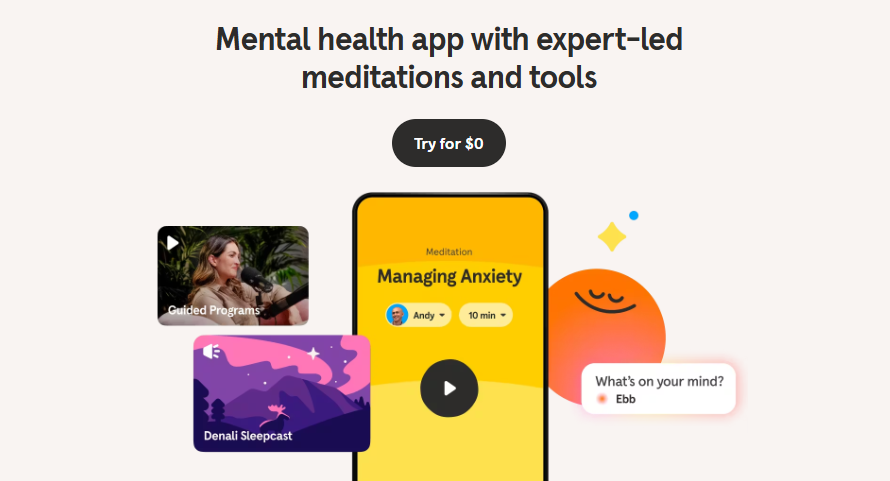
Before spending $400+ on hardware, a lot of people try sleep apps first. It’s a reasonable place to start. Headspace and Calm are the two biggest names in this space, and both have dedicated sleep features that overlap with part of what FRENZ offers.
Headspace includes “Sleepcasts” (45-minute guided audio journeys through calming environments), wind-down meditations, soundscapes, and a “Nighttime SOS” feature for middle-of-the-night wake-ups.
Calm takes a similar approach with its well-known Sleep Stories (narrated by voices like Matthew McConaughey and Laura Dern), breathing exercises, and ambient sound mixes. Both apps also cover meditation, stress management, and focus, so you’re getting a broader mental wellness toolkit alongside the sleep content.
Pricing is dramatically different from hardware. Headspace runs $12.99/month or $69.99/year. Calm is in the same ballpark. Compared to a $680 headband, that’s a fraction of the cost, and both offer free trials so you can test the sleep content before committing.
Where Apps Fall Short

Headspace and Calm deliver audio content. Good audio content, well-produced and thoughtfully structured.
But they don’t read your brainwaves, they don’t adapt to your individual neurological patterns, and they don’t provide any form of direct stimulation. You’re listening to guided narration and hoping your brain cooperates.
For some people, especially those whose sleep issues stem from an overactive mind or poor wind-down habits, that works well enough. For others, the relaxation wears off the moment the content ends, and falling asleep is still a separate battle.
There’s also a tracking and data problem. These apps don’t track your sleep with any precision. They might integrate with your phone’s accelerometer or pull data from a smartwatch, but that’s motion-based estimation, not true EEG.
You don’t get the kind of brain-level insights that FRENZ, Somnee, or any headband-class device provides. If understanding your sleep experience on a deeper level matters to you, these apps leave you guessing.
3. Digital CBT-I Programs (the no-hardware option)

FRENZ’s core therapeutic approach is built on CBT-I (Cognitive Behavioral Therapy for Insomnia), so it’s fair to ask: do you even need hardware to get that benefit?
Programs like Somryst and SleepioRx strip things back to the core. No sensors, no headbands, just structured CBT-I delivered over six to nine weeks.
These programs guide you through proven techniques like sleep restriction, stimulus control, and cognitive restructuring. The goal is to retrain how you sleep over time by changing habits and thought patterns at the root.
Why It Works
There is a reason CBT-I sits at the center of so many sleep solutions. It is one of the most well-validated treatments for insomnia available. Clinical research has consistently shown that it can:
- Match sleep medication in the short term
- Deliver more durable improvements over time
That second point is what stands out. CBT-I is not just about falling asleep faster. It is about fixing the underlying patterns that keep sleep issues going in the first place. If the behavioral therapy side of FRENZ is what drew you in, a dedicated CBT-I program can often deliver that piece more directly, and usually at a lower cost.
The trade-off is that nothing about it is passive. You are expected to participate actively, whether that means keeping sleep diaries, working through weekly modules, or making intentional changes to your routine. In many cases, you will also need a prescription to get started. There is no “put it on and let it work” experience here. The results tend to reflect the effort you put in.
For people who like structure and are willing to stay consistent, CBT-I can be incredibly effective on its own. For others, that level of involvement can be a barrier, especially if follow-through is a challenge, so wearable devices can actually complement the process. While CBT-I addresses behavior, a device can help on the neurological side, potentially making the overall system easier to stick with.
Taking Back Control of Your Sleep

If you are looking for the most direct, evidence-backed sleep intervention available to consumers right now, Somnee stands out.
Somnee’s tACS approach removes one of FRENZ’s core limitations by communicating with the brain in its native electrical language. Add in deeper personalization and a 45-day trial that actually gives your brain time to adapt, and it becomes a compelling option for anyone dealing with chronic sleep issues or optimizing for recovery and performance.
If you’re just starting out and want to test the waters without spending on hardware, Headspace or Calm can help with the wind-down and relaxation side of sleep. Just know that audio content alone doesn’t interact with your brain the way neurostimulation does.
Something to consider is using the apps as a complement to a device like Somnee. Use them for the meditation and wind-down content, then let the headband handle the neurostimulation and tracking. They don’t have to be either/or.
And if it was the CBT-I foundation behind FRENZ that caught your attention, it is worth zooming out. A prescribed digital program can deliver that same behavioral framework more directly, without the added cost of hardware.
Whatever you decide, it’s important to know exactly what might be causing your sleep issues. Speak with a professional, consider undergoing a sleep study, and make sure that when you pick something, give it enough time to work. Pay attention to how your sleep actually changes and be honest about what you are willing to stick with.
Related Posts:




Trevor is a licensed chiropractor with a Master’s degree in Sports Medicine and hands-on experience in rehabilitation and physical therapy. He works daily with patients to restore movement, reduce pain, and improve performance. His real-world experience in injury recovery, mobility training, and evidence-based care allows him to translate complex musculoskeletal and sports medicine concepts into clear, practical guidance so people can move better, recover smarter, and stay active for the long term.