
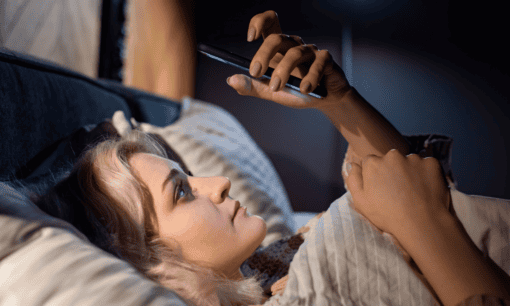
Are you in that familiar loop of waking up and reaching for your phone, only to be met with data on how poorly you slept? It’s a neat little graph. A tidy summary confirming disturbed sleep patterns.
{Insert generic image of sleep graph}
Even if you only half-trust the data, it can still land like you’ve failed at something.
Sleep tracking has become a stand-in for a solution. But for many people, especially those who’ve been tracking for months or even years, it’s not necessarily improving anything. You can collect the numbers and still feel the same. Tired, foggy, and frustrated.
I’m writing this as someone who spends a lot of time thinking about what changes health outcomes, not just what increases awareness. With an MSc in Nursing underway and a background in psychology, I’m familiar with the ripple effects of poor sleep on overall well-being. I also think sleep is one of the most underrated health practices you can work on.
I’m not anti-tracking. I just don’t think tracking is an all-in-one solution. It can be a helpful starting point, but it’s rarely the fix.
Topic Contents
A Quick Safety Note (because it’s responsible, not alarmist)

Most disrupted sleep isn’t dangerous. It’s just miserable. But there are times when it’s worth stepping out of the self-experiment loop and instead speaking with a clinician.
If you experience loud snoring with choking or gasping, severe daytime sleepiness, you fall asleep unintentionally, you’re waking with chest pain or significant shortness of breath, or you have unusual nighttime behaviors such as sleepwalking, acting out dreams, or confusion, get assessed. A wearable can’t rule out conditions like sleep apnea, periodic limb movement disorder, or parasomnias. Those need proper evaluation.
What Tracking Does Well
Tracking has helped bring sleep into greater focus. It takes a fuzzy experience like “I think I slept badly” and gives it shape. For many people, that’s a relief.
Having something concrete can stop you from second-guessing and provide instant validation.
There’s also pattern-spotting. Even imperfect trackers can highlight blunt truths. Alcohol often shows up. Travel shows up. Late, heavy meals show up. The weeks you work late show up. In that sense, tracking can be like turning the lights on in a room you’ve been stumbling around in.
But there’s a point where the lights are on, and you’re still stuck, because knowing something is happening isn’t the same as changing it.
Where Tracking Starts to Stall
Tracking shows you what happened. It does that well. What it doesn’t do is change the brain and body signals that generate sleep.

That’s how people end up stranded in “awareness mode.” They already know they wake at 3 a.m. They already know they lie there, half-alert and half-tired, running through tomorrow’s list. They already know the sleep is light and easily broken.
The tracker confirms a pattern they’re already living, and without a mechanism for change, tracking often does one of two things:
- It becomes noise. More numbers than you can use.
- Or it becomes pressure. A daily reminder that you’re failing at something you can’t directly control.
Sleep is one of the few parts of health that punishes effort. The harder you try, the more alert you become. The more you monitor, the more vigilant you feel. Vigilance is the opposite of what sleep needs.
Clinicians have even coined a term for what can happen when tracking becomes a fixation. It’s called orthosomnia. It refers to the pursuit of “perfect sleep” driven by wearable data. You don’t need to be obsessive for this to affect you.
If you’ve ever thought, “I felt okay until I saw my score,” you’ve felt it.
The uncomfortable truth is that a lot of consumer sleep data is an estimate. Most devices are not measuring sleep the way a sleep lab does. They infer sleep from proxies like movement and heart rate. Some are useful for trends, but they can be unreliable in the finer details, especially sleep stages. You might end up outsourcing your confidence, and your mood, to something that may not be as precise as it looks.
Why “Fixing Sleep” Is Harder Than Tracking Sleep
Tracking fits our cultural model of health. Measure it, manage it, improve it. That works well for steps, workouts, nutrition, and blood pressure.
Sleep is different. Sleep isn’t a behavior you can do harder. It’s a state that emerges when conditions are right.
You can choose when you get into bed. You can choose whether you scroll. You can choose whether you drink coffee at 4 p.m. But you can’t choose to generate deep sleep on demand.
Sleep is shaped by overlapping systems:
- Sleep drive is how much pressure you’ve built up.
- Circadian timing is your internal clock.
- Arousal is how “switched on” your nervous system is.
When those are out of sync because of stress, hormones, pain, breathing issues, medication effects, or irregular schedules, sleep becomes fragile. This is why so many people get stuck.
Most people who track already know when they sleep badly. The problem is the “why,” and then the “what next.”
The People Behind the Data

There are a few versions of this that show up again and again.
There’s the high-functioning person who’s doing everything right. They exercise. They eat well. They’ve cut caffeine. They’ve tried the supplements. Their life looks healthy on paper, and still, they wake early, have restless nights, and never feel fully restored. Their tracker becomes proof that they’re not imagining it, but it doesn’t tell them what lever to pull next.
Then there’s the anxious tracker. They start tracking because they’re struggling, and then tracking becomes their center of gravity. They check the score immediately. They compare nights. They dread bedtime because bedtime now has a performance outcome. With this person, the most helpful move is sometimes to stop tracking for a while. Not because data is bad, but because their relationship with data has become too activating.
There’s the midlife sleeper whose ‘normal’ has changed. Sleep changes can creep in as you age, across your late 30s to 50s. Lighter sleep. Temperature changes. Early waking. A nervous system that feels more reactive than it used to. People often blame discipline or stress, when there’s a real physiological shift underneath.
And then there’s the exhausted parent or caregiver. Sleep is broken because life is broken up. They don’t need an app to tell them they woke four times. They need realistic strategies that work within the constraints of their life. They also need tools that reduce friction, not add another task.
Different stories, same stuck point. Tracking creates a picture, but it doesn’t reliably create a pathway.
What Actually Improves Sleep
When I look at what actually helps us sleep better, it’s rarely one perfect hack. There are handfuls of repeatable habits that we can undertake, and if we start gently, those habits are more likely to stick.
Wake Up at the Same Time
If someone has chronic insomnia, the most evidence-backed behavioral approach is CBT-I, which stands for Cognitive Behavioral Therapy for Insomnia. It’s widely recommended as a first-line treatment because it focuses on changing the patterns that maintain insomnia, not just adding more tips.
But in everyday life, most people start with something simpler. Here’s a two-week experiment I like because it’s realistic and it doesn’t turn sleep into a project:
- Pick a wake time and keep it within the same 60 to 90-minute window most days.
- That’s it. That’s the experiment.
You can be flexible with your bedtime. You can have imperfect nights. But stabilizing wake time helps anchor your circadian timing and sleep drive. It’s one of the few levers that doesn’t require you to try harder at sleep.
Don’t Forget to Wind Down
Then I add one more layer to the experiment: a small wind-down that you do most nights.
The mistake people make is thinking a wind-down has to be elaborate. In real life, the wind-down that works best is the one that you repeat. It might be a shower, dimmer lights, a short walk after dinner, or 10 minutes where you don’t do anything emotionally activating. A repeated wind-down is a reliable signal to your nervous system that the day is ending.
Stop Relying on Your Sleep Score
If tracking helps you take action, great. But if it makes you anxious, hyper-focused, or self-critical, then it’s okay to take a step back.
You can use tracking as a short-term experiment tool. Or track weekly trends instead of judging yourself every single day. You can also choose not to track at all for a certain period of time and rebuild trust in your own body signals.
When Data Helps, and When It Becomes Noise
I like tracking when it does one of two things: reveals a pattern you genuinely didn’t see, or helps you run a short experiment and then move on.
Tracking becomes noise when it keeps you in analysis mode, amplifies sleep anxiety, or distracts you from the next step. If you’re stuck, you probably don’t need a better system. You need support that helps shift the signals your brain and body respond to.
Where Somnee Fits In (and How It Helps You Sleep)
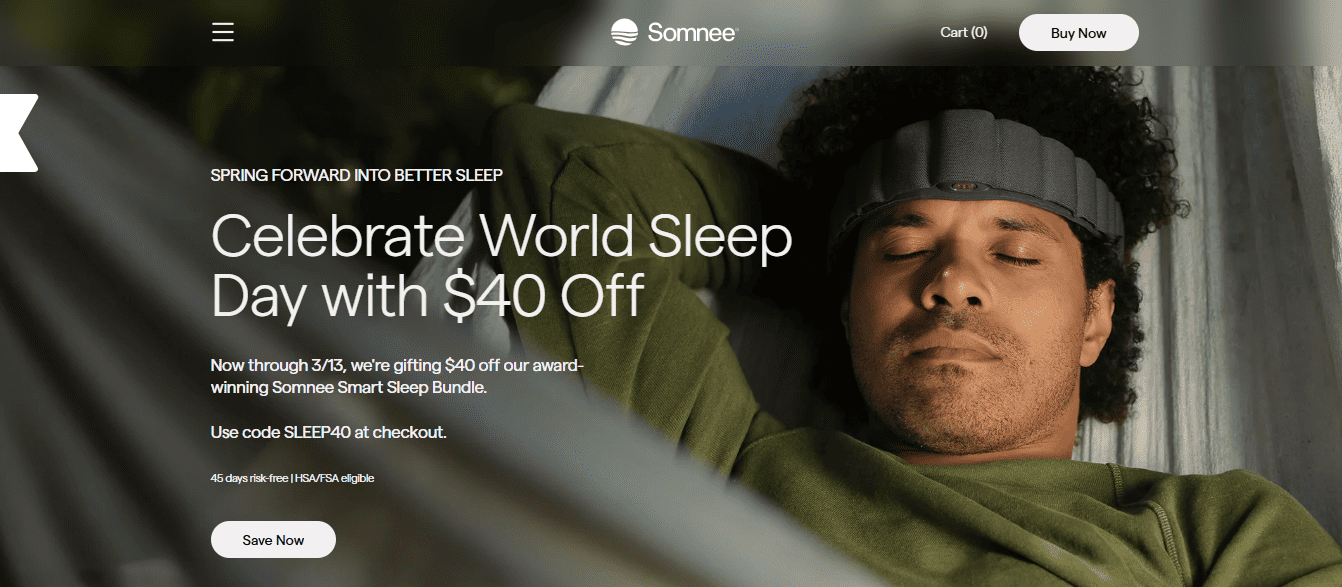
Most sleep wearables are observational: they estimate what happened overnight and score it. But Somnee is built around a different idea. It aims to support that downshift (or wind-down) into sleep; that moment when your brain needs to move from alert to settled.
Somnee says it does that by first reading brain activity using EEG. Then it delivers a short, personalized bedtime session using tACS, which stands for transcranial alternating current stimulation. The simplest way to understand it is that it’s designed to gently nudge your brain’s sleep rhythms in a more sleep-friendly direction, rather than just measuring them.
Somnee describes the core routine as around 15 minutes at bedtime, and you can also choose to wear the headband overnight for tracking. They also describe something that’s relevant to anyone who wakes at 2 to 4 a.m. There’s a DriftBack option. It’s a short session you can trigger if you wake up. The emphasis is that you can start it without grabbing your phone, which matters because bright light and scrolling can wake your brain up even more.
They also frame this as a process rather than a one-night miracle. There’s a mapping phase early on, then a longer personalization period where it adapts over multiple sessions. In other words, it’s meant to learn your patterns over time, not assume everyone’s sleep is the same.
On the app side, Somnee leans into something I wish more trackers did. It helps you connect the dots between your routines and your sleep without turning it into a daily judgment. They include a journal and pre-session check-ins designed to make the “what next?” part easier. Data only becomes useful when it leads to a better decision.
If you want the deeper background and citations Somnee shares, anyone can access their science and clinical studies pages.
Who Somnee Is Likely For, and Who Might Not Be Ready Yet

Somnee is most relevant for people who are done collecting proof and want a next step. You should also be open to a consistent bedtime session, because routine still matters. Somnee is a fit for people who want support that feels more physiological than motivational.
You may not be ready for Somnee if you have symptoms that suggest an untreated sleep disorder, or if your sleep is chaotic due to major schedule upheaval that needs foundational stabilization first.
Also, if you’re in a high-anxiety monitoring loop where any sleep tech becomes another thing to perform, it still may not help you. If a tool makes you check, judge, and worry, it can become part of the problem you’re trying to solve.
The Takeaway That I Keep Coming Back To
If you’ve tracked your sleep for months and nothing has changed, you may have reached the ceiling of what tracking can do on its own. Tracking is great for awareness, but sleep improvement requires real intervention.
Sometimes that intervention is CBT-I. Sometimes it’s addressing breathing, pain, hormones, stress load, or medication effects. Sometimes it’s a layered plan built from small, repeatable downshifts and consistency.
Sometimes, for the right person at the right moment, it’s a tool designed to support physiology rather than just observe it.
Sources (For Readers Who Want To Go Deeper)
Orthosomnia (sleep-tracker-driven anxiety/perfectionism described by sleep clinicians)
AASM clinical practice guideline supporting CBT-I as first-line for chronic insomniaReview/discussion of consumer sleep technologies and accuracy limitations (trends vs. sleep staging)
Related Posts:





Danielle (Dani) Mathieu is a health and medical writer who works with global health and wellbeing businesses to deliver insight-driven, research-backed content at the intersection of psychology and nursing. She has 18+ years of experience in communications, holds an MA in Psychology, and is currently studying for an MSc in Adult Nursing.
Dani is happiest when she’s translating complex health and nutrition science into plain-English stories that feel genuinely useful without being overwhelming. When she’s not juggling clinical placements on the ward, she’s usually writing. She lives on the Scottish coast, loves a cold sea breeze, and is often accompanied by a very opinionated dog.