

If you’re researching personal trainer certifications, you’ve likely come across ISSA vs NCCPT. At first glance, it might seem like you need to compare two competing organizations. In reality, NCCPT has operated under the ISSA umbrella since its acquisition in 2020.
The International Sports Sciences Association (ISSA) delivers the full Certified Personal Trainer (CPT) curriculum. The National Council for Certified Personal Trainers (NCCPT) functions within that system as the proctored exam body, offering an NCCA-accredited testing option.
Topic Contents
Before we dive in further, let’s clarify what kind of weight the NCCA-accreditation holds.
The National Commission for Certifying Agencies (NCCA) is a third-party accrediting organization that evaluates certification programs against established standards for exam development, administration, and governance. In practical terms, NCCA accreditation signals that a certification exam meets nationally recognized benchmarks for fairness, psychometric validation, and oversight. Many large commercial gym chains use this accreditation as a hiring requirement.
Within the ISSA pathway, students complete the same CPT curriculum regardless of which exam route they choose. The distinction appears at the testing stage: you can complete ISSA’s open-book final exam, or sit for the closed-book, proctored, NCCA-accredited exam administered through NCCPT.
The education remains the same. The curriculum remains the same. What changes is the testing format, and whether your credential carries the NCCA-accredited designation.
For trainers targeting large gym franchises or employers with standardized hiring policies, the accredited option may be necessary. For independent coaches, boutique studios, or online trainers, the standard ISSA certification is often sufficient.
At the end of the day, the decision will come down to which testing aligns better with your goals or your intended work environment.
Bottom Line
ISSA delivers the CPT education, while NCCPT adds an NCCA-accredited testing option within that system. You still study with ISSA, but you can opt to do either the standard testing or take the proctored test through their subsidiary, NCCPT.
What Is ISSA?
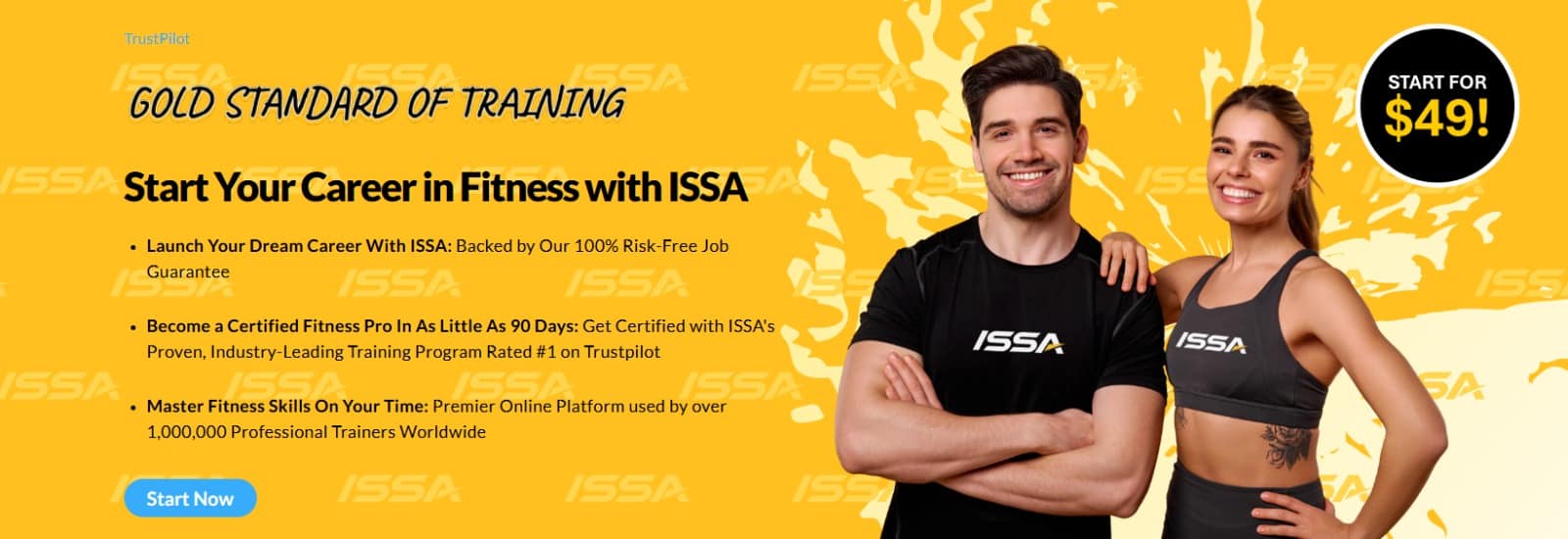
The International Sports Sciences Association (ISSA) is a global fitness education provider founded in 1988. It offers a broad catalog of certifications, including its flagship Certified Personal Trainer (CPT) program, along with specializations in nutrition, corrective exercise, strength and conditioning, and more.
ISSA’s model is education-first and accessibility-driven. Students enroll in a structured CPT curriculum delivered fully online. The online curriculum takes students through coursework that includes guided modules, digital textbooks, quizzes, and applied programming concepts. The program is self-paced, which is appealing for those who may be:
- Career changers
- International students
- Working professionals
- Military members and remote learners
The program concludes with a standard open-book final exam. While that format often sparks debate, it reflects ISSA’s applied-learning model. Rather than relying on timed memorization, the exam focuses on interpreting concepts, applying principles, and building practical programming decisions.
The standard open-book CPT exam isn’t accredited by the National Commission for Certifying Agencies (NCCA). That distinction does not automatically reduce its industry recognition, but it can matter in specific employment environments.
Enrolling in ISSA does not limit your options, it provides the full educational foundation while giving you the flexibility to pursue accreditation where it aligns with your career goals. That adaptability is arguably one of the strongest structural advantages of the ISSA certification system.
What Is NCCPT?
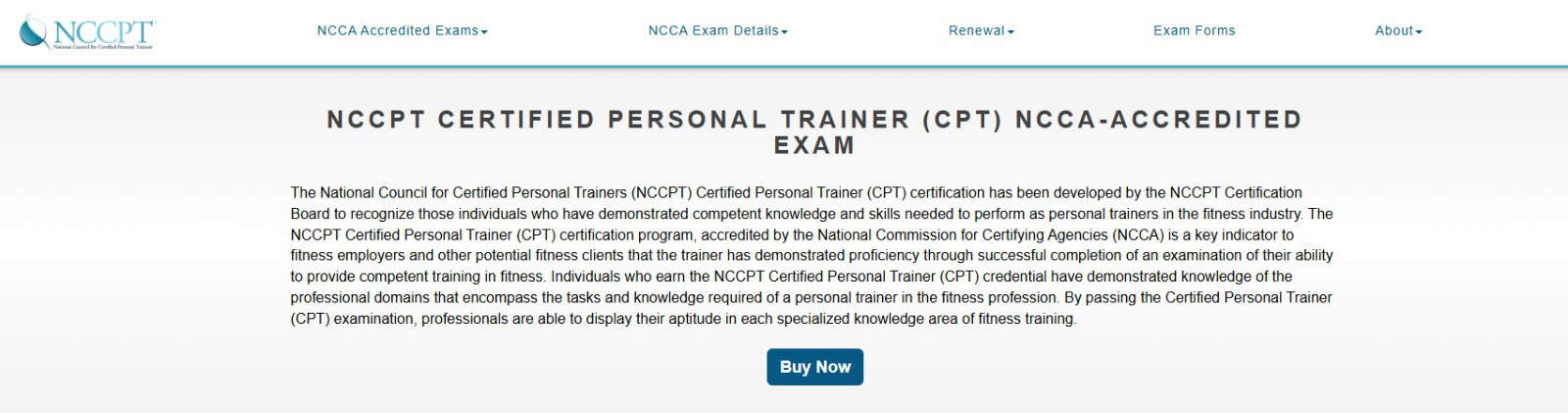
The National Council for Certified Personal Trainers (NCCPT) functions as a certification body that administers an NCCA-accredited CPT exam. If you’ve been hunting down the best CPT in the United States you’re most likely already aware that the NCCA is widely considered the gold standard for fitness certification accreditation in the United States. Many large commercial gym chains require trainers to hold an NCCA-accredited credential as a hiring standard, so this is often the first thing students look for when considering their options.
NCCPT operates as a certification body responsible for administering a standardized, NCCA-accredited CPT examination.
The NCCPT CPT exam is:
- Closed-book
- Proctored (live or remote)
- Timed
- NCCA-accredited
ISSA’s 2020 acquisition of NCCPT effectively folded NCCA accreditation into its certification ecosystem, positioning NCCPT as the proctored, accredited exam arm of the ISSA pathway.
This means that students studying through ISSA can elect to do the NCCA-accredited exam.
How ISSA and NCCPT Work Together
When ISSA acquired NCCPT it streamlined their process and helped them to offer an NCCA-accredited pathway. In practice, the process remains straightforward. You enroll in ISSA’s Certified Personal Trainer program and complete the full curriculum. When it’s time to test, you decide how you want to finish: either through ISSA’s standard open-book final exam or by sitting for the proctored, NCCA-accredited exam administered through NCCPT.
The education and curriculum remains the same while the exam format and accreditation designation attached to your credential is different. If your intended work environment doesn’t require NCCA accreditation, the standard ISSA exam may be sufficient. If an employer does require it, you can pursue the NCCPT exam without enrolling in a separate CPT program elsewhere.
ISSA vs NCCPT: Structural and Strategic Differences
| Category | ISSA Standard Exam | NCCPT Exam |
| Education Provider | ISSA | ISSA |
| Exam Format | Open-book | Closed-book |
| Proctored | No | Yes |
| NCCA Accredited | No | Yes |
| Primary Benefit | Flexibility | Accreditation |
From a strategic standpoint, the decision between ISSA’s standard exam and the NCCPT-accredited pathway is about career portability and professional flexibility, instead of the quality of the education.
Holding an NCCA-accredited credential can open doors with employers who prioritize standardized certification, particularly large gym franchises that operate across multiple states. In these settings, the accreditation acts as a recognized benchmark, giving trainers an advantage when navigating hiring requirements and ensuring their credentials are accepted wherever they work.
How does accreditation matter in the following workplaces?

Online coaching
For trainers working primarily online, accreditation is typically less scrutinized. Clients rarely differentiate between exam formats, and hiring standards are generally irrelevant when you operate independently. In this context, the decision between ISSA’s standard exam and the NCCPT-accredited option often comes down to personal preference rather than necessity. The core CPT curriculum remains the same either way.
Entrepreneurship
If you plan to build your own training business, open a studio, or operate as an independent contractor, employer-imposed accreditation requirements may not apply. In these cases, the distinction between the standard ISSA certification and the NCCA-accredited exam is largely strategic.
By completing the ISSA CPT course, trainers gain the knowledge needed to run their own coaching business confidently. Combining this entrepreneurial foundation with the option to earn an NCCA-accredited credential further enhances credibility with potential clients and partners, giving trainers both practical skills and recognized credentials to support long-term business growth.
International markets
NCCA accreditation carries the most weight within the United States. Outside the U.S., employer requirements vary widely, and accreditation may not be a determining factor in hiring or client acquisition. For trainers planning to work internationally, the choice between exam formats is often less consequential.
If you plan on working internationally, it would be best if you research the country, or countries, you would like to work in. This way you’ll be able to understand exactly how much value that specific demographic (and work environment) will place on U.S-based accreditation standards.
Employer Preferences: Deciding which suits you best

Employer requirements are usually guided by risk management and policy standardization: larger chains and franchises tend to favor NCCA-accredited credentials because they provide a consistent benchmark across locations, while smaller studios or independent gyms may prioritize practical experience and applied knowledge over formal accreditation. In other words, the “preferred” certification is often about how it aligns with an organization’s operational and liability standards
Large Commercial Gym Chains
Many national chains require NCCA-accredited certifications as part of their compliance standards. In these cases, completing the NCCPT exam may expand eligibility.
Boutique Studios
Smaller studios and independently owned facilities may accept ISSA’s standard certification without requiring NCCA accreditation.
Independent and Online Coaches
For trainers building their own brand, accreditation is typically less scrutinized. Clients rarely differentiate between exam formats.
Insurance Providers
Some professional liability insurers prefer NCCA-accredited credentials, though policies vary and ISSA-certified trainers are widely insured across the industry.
Should You Choose ISSA Only or ISSA + NCCPT?

The most practical way to approach the ISSA and NCCPT options is to consider your long-term career positioning.
For trainers who plan to coach independently, work internationally, or in facilities that don’t require NCCA accreditation, completing ISSA’s standard certification alone may be sufficient. Its flexible, remote-friendly format allows for self-paced study and testing, making it a practical choice for many professionals.
On the other hand, if your goal is to maximize employer portability, apply to national gym chains, or have the added security of an NCCA-accredited credential, completing the NCCPT exam as part of the ISSA pathway may be the strategic choice.
Final Verdict: ISSA vs NCCPT
At the end of the day, ISSA and NCCPT are not competing certifications. The International Sports Sciences Association delivers the full Certified Personal Trainer education, while the National Council for Certified Personal Trainers functions as the accredited exam arm within that same system. You complete the same curriculum either way, the only difference is how you choose to test and whether your credential carries NCCA accreditation.
There is no federal requirement that a personal trainer hold an NCCA accredited certification. That said, some large commercial gym chains use accreditation as a hiring standard, largely for risk management and consistency across locations. If you plan to apply to national franchises, adding the proctored NCCPT exam can expand your eligibility. If you intend to coach independently, work online, operate internationally, or join a smaller studio, the standard ISSA certification is often more than sufficient.
ISSA has been operating since 1988 and remains widely recognized across the fitness industry. Its certifications renew every two years through continuing education, which keeps trainers current and professionally active. If you have already completed the ISSA CPT, you can choose to sit for the NCCPT exam later to add accreditation, but you are not required to do so to begin working.
The real decision comes down to career portability. If maximum employer flexibility matters to you, adding the accredited exam is a strategic layer. If flexibility, accessibility, and applied learning are your priorities, ISSA alone provides the full educational foundation you need.
Related Posts:




Alt Protein Team is a team of professionals and enthusiasts committed to bringing you the most up-to-date information on alternative protein, health and wellness, workouts, and all things health-related. We’ve reviewed a lot of products and services so you don’t have to guess when you spend your hard-earned money on them. Whether you want to shed some pounds, build lean muscle or bulk, we can help you figure out what you need to do and what you need to have to achieve your goals.