

If you’re a guy who “should be fine” on paper but your energy is sliding, your sleep is off, your workouts aren’t translating, or your libido has changed, hormone testing can be a useful starting point. Not because testosterone explains everything, but because the right panel can show whether hormones are part of the picture and what else may be contributing.
A lot of online hormone testing companies give you a number and a dashboard, but the ones that stand out provide comprehensive labs plus clinician review and repeat testing, so results turn into a plan, and the plan gets checked.
Quick safety note: if you have chest pain, shortness of breath, feel unsafe, notice a new testicular or breast lump, or develop a sudden severe headache or vision change, skip online testing and get seen urgently. If you’re considering TRT, ask exactly how hematocrit is monitored and remember that telehealth prescribing rules vary by state.
Who Is Testing For?
Men who want clarity without hype. They have symptoms that could be hormone-related and want a clear way to test, interpret results, and retest, instead of making decisions off one lab value.
This isn’t for anyone looking to start testosterone as a shortcut, or for men who only want a single “T level” and nothing else. Clinical guidelines diagnose testosterone deficiency in symptomatic men with consistently low testosterone and confirmatory testing (see the American Urological Association guideline on testosterone deficiency and the Endocrine Society guideline on testosterone therapy).

What “Good” Hormone Testing Looks Like
A solid men’s hormone workup usually includes more than testosterone. These are the markers I look for:
- Total testosterone: the main “how much testosterone is in your blood” number.
- Free testosterone (or calculated free T): the portion available to tissues; symptoms often line up here.
- SHBG: a carrier protein that binds testosterone; high SHBG can make free T low even if total T looks normal.
- LH and FSH: pituitary signals that tell the testes to produce testosterone and sperm; help separate a “testes problem” from a “signal problem.”
- Estradiol (E2): an estrogen that can affect libido, mood, and breast tissue; in men, a sensitive LC-MS/MS method is often preferred because levels are low.
- Prolactin: a pituitary hormone; elevated levels can suppress libido and testosterone.
- Thyroid (TSH, sometimes free T4): thyroid issues can mimic “low T” symptoms like fatigue, weight change, and low mood.
- CBC (complete blood count) and hematocrit: checks red blood cell concentration; essential baseline if TRT is on the table.
- Lipids: cholesterol and triglycerides; metabolic risk often overlaps with hormone symptoms.
- A1C and glucose: screens for insulin resistance and diabetes, which can affect energy and sexual function.
- PSA (age and risk dependent): a prostate marker used in screening or monitoring conversations, especially if considering TRT.
- Liver enzymes (AST/ALT): baseline organ health and medication safety monitoring.
If a service only tests total testosterone, it’s rarely enough to make a good decision.
Real Life Snapshots: What This Often Looks Like in Practice

The 38-year-old lifter who feels “off.”
Training is consistent, but recovery is slower, he’s softer around the middle, and he’s more irritable than usual. This is exactly where a single total testosterone result can mislead. You want to know whether free testosterone is actually low, what SHBG is doing, and whether something else is driving the symptoms, like thyroid issues, poor sleep, or early metabolic changes. In this scenario, a broader panel helps you avoid chasing testosterone when the real problem is elsewhere.
The new dad in his early 40s.
Libido is down, he’s waking at 3 a.m., and coffee barely touches the fatigue. Sometimes the labs are normal, and the biggest issue is sleep quality, stress load, and alcohol timing. Other times, something actionable pops up, like thyroid markers drifting off range or prolactin elevated, which can suppress libido and amplify “low T” symptoms even when total testosterone isn’t dramatically low. The point is not “it’s all in your head,” it’s that symptoms are real, but the answer isn’t always testosterone.
The couple trying to conceive.
His testosterone is “fine,” but pregnancy isn’t happening. This is where testosterone-only testing fails men. Fertility is not a testosterone-only problem, and TRT can work against fertility goals. You want LH and FSH to understand pituitary signaling, and you need semen analysis as part of the workup. If fertility is on the table, this is where clinician guidance and the right follow-up plan matter more than any single lab number.
A Quick Note on Timing (It Matters More than People Think)
Testosterone is usually highest in the morning, which is why guidelines often recommend morning testing, and why a late-day result can look lower than it truly is. If you are making treatment decisions, repeat testing matters too, especially if the first result was drawn when you were sleep-deprived, sick, or coming off a stressful week. A good service should explain when to test and should encourage confirmatory testing before you make a big call.
Best Overall: LifeForce (Comprehensive Testing Plus Clinician Review)
LifeForce is for men who want more than a single testosterone number. Their model is repeat testing plus interpretation: they describe an at-home phlebotomist blood draw about every three months, covering 50+ biomarkers, paired with a 1:1 clinician session on the same cadence, plus ongoing membership support.

The key value is not just the number of markers. It’s having someone connect patterns across hormones, metabolic risk, thyroid, training load, and lifestyle, then retesting to make sure changes are working and staying safe.
Another reason LifeForce works well for this category is that it treats testing as a repeatable system, not a one-time verdict. Hormones move with sleep, training load, weight changes, medication shifts, and stress. Seeing your results once is a snapshot. Seeing them again after an action plan is where you actually learn what is changing and what needs attention.
Good fit if you want:
- A broad health and hormone picture (not just testosterone)
- A repeatable rhythm of test, review, adjust, and retest
- Clinician guidance that does not treat TRT as the default endpoint
Worth knowing:
- Comprehensive testing isn’t a shortcut. If symptoms are mostly sleep, stress, alcohol, depression, or overtraining, the best “plan” may still be fundamentals first.
- Any prescribing (including testosterone) depends on medical eligibility and state rules, and who you see (and how often) can vary. Check current program details before committing.
Pricing changes. Check the LifeForce membership page.
Other Options to Compare
These are reputable options to compare if you want a different testing style or a more specific pathway.
Hone Health (Best for a Clear TRT Pathway and Published Lab Schedule)
Hone offers multiple testing routes (at-home and partner labs) and publishes lab schedules for patients on therapy. Their help-centre guidance lays out what they monitor at specific intervals and which markers get repeated for safety (see Hone’s TRT lab testing schedule).
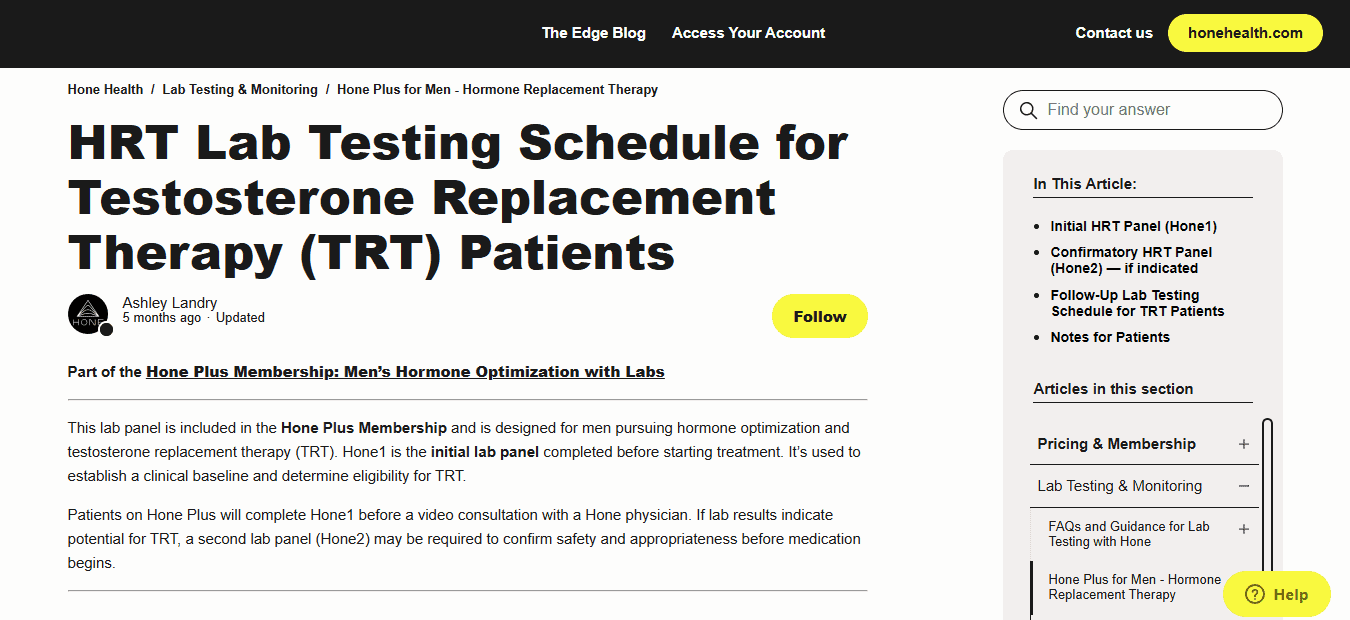
It’s a good fit if you want a structured TRT care pathway with repeat labs you can actually see in writing. Worth knowing: “eligible for TRT” is not the same as “TRT is the best answer.” Confirmatory testing and guideline-based diagnosis matter (see the AUA guideline and the Endocrine Society guideline). If you have symptoms of obstructive sleep apnea, get evaluated first (see the AASM OSA fact sheet).
Pricing changes. Start with the TRT lab testing schedule.
Maximus (Best If Fertility Is a Priority, but Confirm the Pathway)
Maximus describes at-home testing shipped to you and notes follow-up testing can be done at home or via Quest Diagnostics (see Maximus lab tests and their follow-up blood work explainer).
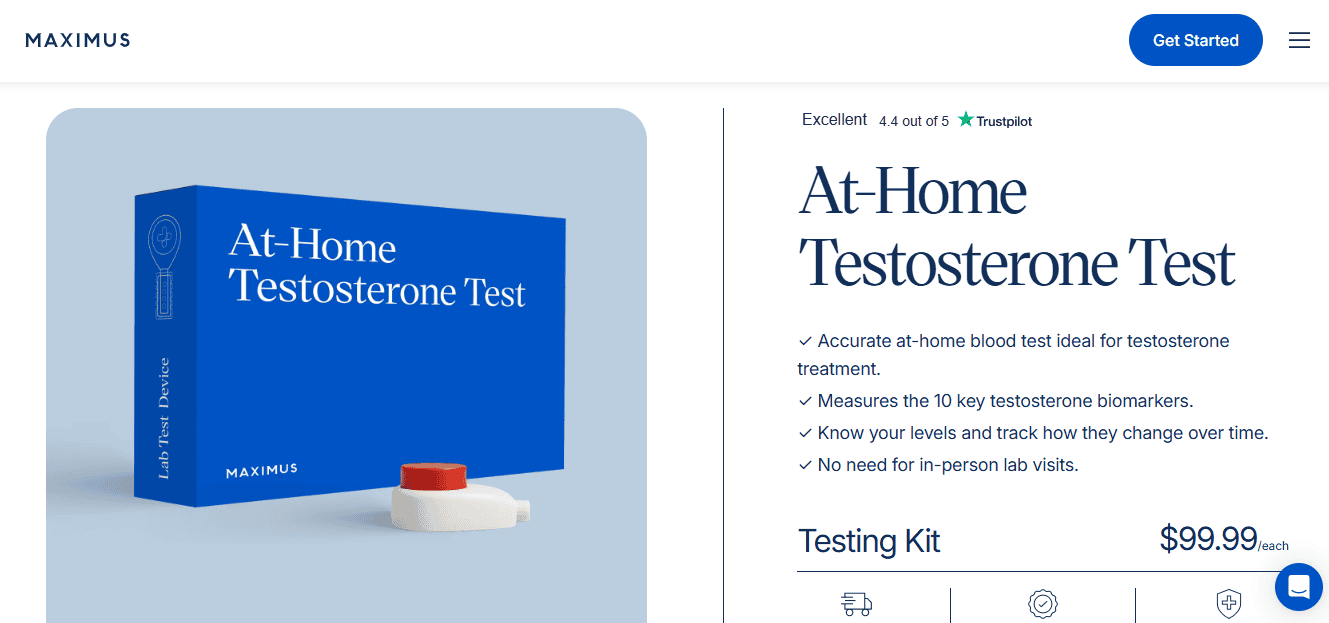
They also describe protocols that may include enclomiphene-based options and TRT pathways. If fertility is the reason you’re here, be explicit about your goal (preserve fertility vs start TRT), what’s offered in your state, and what monitoring looks like. Enclomiphene is not FDA-approved, and availability can depend on compounding pathways and state or provider practice (see Hims’ overview on enclomiphene).
Pricing changes. Check the Maximus lab tests page.
Defy Medical (Best for Complex Cases and Second Opinions)
Defy Medical is a telemedicine clinic focused on hormone replacement therapy and related care. They publish practical information about labs needed to guide care and monitoring over time (see Defy’s What TRT labs do I need? and their Routine lab work on TRT).
This is a good fit if you want a second opinion on labs and protocols or you want a clinic built around repeat labs and scheduled follow-up. Worth knowing: keep your primary care clinician in the loop for blood pressure, sleep apnea evaluation, diabetes risk, and mental health. If you start TRT anywhere, a clear hematocrit plan is non-negotiable.
Pricing changes. Start with What TRT labs do I need?.
Hims (Best Broad Baseline Labs, with a Separate Treatment Pathway)
Hims offers two relevant paths.
First, Labs by Hims: a Quest lab-draw program that provides results and an in-app Action Plan. Hims states a provider visit is not required for the labs program itself (see Labs by Hims).

Second, a low testosterone treatment path. Hims describes an online consultation with a licensed healthcare provider, lab testing to assess testosterone levels, and (if eligible) access to enclomiphene-based compounded options. They note these products are not FDA-approved, and availability varies by state (see Testosterone Rx with Enclomiphene and Is the lab service available in my state?).
Hims is a good fit if you want a broader baseline and a clear “what next” style summary. Worth knowing: if anything is abnormal, plan for real follow-up, not just a dashboard.
Pricing changes. Check Labs by Hims and enclomiphene.
How to Choose (Without Getting Pressured)
If you want an ongoing, clinician-guided system that treats testing as something you repeat and learn from, LifeForce is the strongest fit because it centers on comprehensive labs, clinician review, and repeat monitoring.
If your only goal is a clear TRT pathway with published monitoring, Hone is a straightforward comparison.
If fertility is a major concern, look closely at Maximus, but be specific about whether you want non-TRT options, what is available in your state, and how follow-up labs are handled.
If you’re complicated, already treated, or want a second set of experienced eyes on labs, Defy is built around lab-driven follow-up and consult structure.
If you want broad baseline labs and a separate treatment pathway you can opt into, Hims can be useful, just don’t let app results replace clinician follow-up when something’s off.
And finally, a boring but important reminder: state availability varies for telehealth and prescriptions. Always check current coverage before you commit to a plan.
Related Posts:






Alt Protein Team is a team of professionals and enthusiasts committed to bringing you the most up-to-date information on alternative protein, health and wellness, workouts, and all things health-related. We’ve reviewed a lot of products and services so you don’t have to guess when you spend your hard-earned money on them. Whether you want to shed some pounds, build lean muscle or bulk, we can help you figure out what you need to do and what you need to have to achieve your goals.