

If you’re like me and deal with reflux every single day, you already know Tums isn’t cutting it. GERD gets dismissed like it’s just “a little heartburn,” but when you’re coughing, clearing your throat, nauseous, hoarse, or dealing with that constant upward push after you eat? You need more than a chewable. You need something that actually steps in fast.
Sometimes that means proton pump inhibitors, a proven effective treatment for reflux. However, you may not want the side effects that come with long-term PPI use.This is where alginate therapy comes in. It’s been around longer than most people realize, and it offers something PPIs don’t: support for the mechanical side of reflux — the actual movement of stomach contents upward — not just the acid itself.
Alginate Therapy vs PPIs: The Short Breakdown
Before trying either treatment, it’s ideal to understand the difference between alginate therapy and PPIs, because most people with reflux need support for both mechanical and acid-based symptoms.
Alginate therapy (like Reflux Gourmet and other high-strength alginates):
- Works fast to create a “raft” to block upward movement
- Prevents regurgitation, cough, and other symptoms of reflux
- Safe to use every day
PPIs (like Prilosec, Nexium, Prevacid):
- Lowers stomach acid
- Treats classic heartburn and erosive esophagitis
- May take days to weeks for full effect
- Not as effective for mechanical reflux symptoms
Examples of PPIs include omeprazole (Prilosec), esomeprazole (Nexium), and lansoprazole (Prevacid).
Most people don’t realize that these therapies perform two completely different jobs. That’s why comparing alginate therapy vs PPIs actually matters when you’re trying to manage your reflux symptoms.

Quick Facts: Alginate Therapy & GERD
- Alginate therapy helps with both quick reflux flares and chronic GERD symptoms.
- The “raft” blocks stomach acid and food from coming back up your esophagus.
- Alginates help promote a gentle feeling of fullness, which can reduce overeating triggers.
- They’re safe for regular use and usually well tolerated.
- They’re affordable, natural, and sold over the counter.
- Some alginate products include antacid ingredients to help neutralize excess acid.
- Alginate therapy works quickly and lasts longer than antacids.
Quick Facts: PPIs (Proton Pump Inhibitors)
- PPIs reduce stomach acid at the source by blocking proton pumps.
- They’re highly effective for healing erosive esophagitis.
- They work best for classic “burning” heartburn symptoms.
- They may take several days to reach full effect.
- They don’t stop stomach contents from moving upward, so mechanical symptoms may persist.
- They’re widely available OTC and by prescription.
- Common options include omeprazole, esomeprazole, and lansoprazole.
What Is Alginate Therapy?
Let’s make this simple. Alginates are polysaccharides from brown seaweed. Before you picture chewing actual kelp, don’t worry — these ingredients go through extensive processing, leaving you with a clean, non-fishy therapeutic gel. Examples of alginate products include Reflux Gourmet and Gaviscon Advance.
And unlike PPIs, which work chemically by reducing acid production, alginate therapy provides a physical barrier. That difference matters more than most people realize.
How Does Alginate Therapy Work?
Alginates basically shine in three steps:
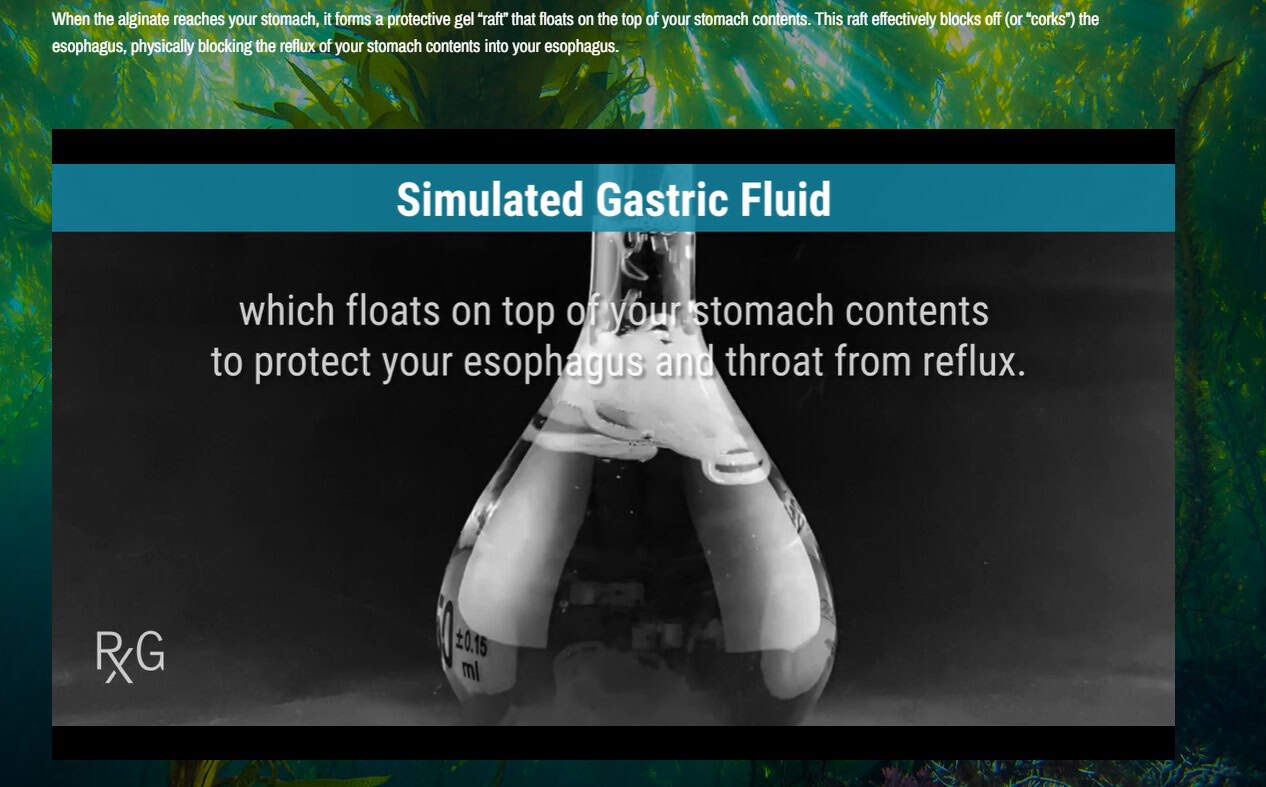
- You swallow them, and they react with your stomach acid.
- This reaction forms a gel-like raft.
- That raft floats to the top of your stomach contents, acting like a lid that blocks upward movement.
If you’ve ever felt reflux simply because you drank something too fast, had a protein shake with too much volume, or felt pressure build from bloating, this is where alginate therapy makes a night-and-day difference.
My Favorite Alginate Therapy
If you’re in the U.S., I always recommend Reflux Gourmet. It’s natural, easy to take, and one of the rare products that actually supported both my reflux and my day-to-day routine.
Why it stood out to me:
- It works quickly.
- It lasts longer than other options I tried.
- It doesn’t rely on a long ingredient list.
- It pairs perfectly with common reflux triggers like protein shakes, overeating, or meals that sit too long.
- It’s doctor-formulated and safe for frequent use.
Mint Chocolate and Vanilla Caramel both taste surprisingly good — not “reflux supplement good,” but actually good.
What Are PPIs?
Prilosec, Nexium, and Prevacid are PPIs. They’re medications that reduce stomach acid production. They work by internally blocking the proton pumps that release acid into your stomach. PPIs work to calm burning, irritation, and inflammation that comes with excessive stomach acid.
Unlike alginate therapy, which works mechanically, PPIs work chemically. That difference explains why each therapy helps tackle different symptoms.
How Do PPIs Work?
PPIs turn down the stomach’s acid-production system. We can look at it like this:
1. They block proton pumps inside stomach cells. These pumps create the acid that digests food.
2. Less acid means less burning and fewer flare-ups.
3. Healing becomes possible. Lower acid gives damaged tissue (like an inflamed esophagus) a chance to repair.
PPIs do not stop upward flow. So symptoms like throat clearing, coughing, or reflux can continue even when stomach acid is down.
Alginate Therapy vs PPIs: Which One Helps Which Symptoms?
- If your reflux is mostly burning in the chest: PPIs tend to help more because they lower acid at the source.
- If your reflux shows up as throat clearing, coughing, hoarseness, or post-meal regurgitation: Alginate therapy usually works better because those symptoms are mechanical, not acid-driven.
- If you want relief after protein shakes or meals: Alginate therapy wins because it works within minutes.
- If you have confirmed esophagitis or chronic acid injury: PPIs are necessary, since alginates can’t heal inflammation alone.
If you’re looking for something safe to use daily for persistent symptoms: Alginate therapy tends to be gentler and doesn’t suppress acid production.
Put simply: PPIs help what’s happening inside the stomach. Alginates help what tries to come back up.

How Does Alginate Therapy Differ from Traditional Medications (Like PPIs)?
This is where things clicked for me.
PPIs — omeprazole, pantoprazole, and all the usual suspects — lower acid. They don’t stop the stomach contents from actually rising. So if your problem is regurgitation, throat clearing, coughing, or LPR symptoms, PPIs can often fall flat.
For me, this difference wasn’t just theoretical — I saw it play out in real life. Even when the “burn” was controlled, the upward movement still happened.
Alginate therapy, however, blocks that movement. It’s mechanical, not chemical. And that’s why many people combine the two:
- PPIs reduce the burn.
- Alginates stop the splash.
Another plus? Alginates are natural, safe for frequent use, and well tolerated by groups who often need gentler options, including pregnant patients, teens, and people who can’t take daily PPIs.
So Where Do PPIs Fit Into All This?
PPIs matter when your reflux is truly acid-driven, especially if you have burning, inflammation, or documented esophagitis. They lower acid at the source, which is something alginates cannot do.
But PPIs don’t address pressure, volume, or mechanical symptoms, which is why many people end up needing both therapies at different times or for different triggers.
The takeaway:
Alginates help what moves upward. PPIs help what’s being produced downward. Both have a place, but they solve different problems.
Pros and Cons of Alginate Therapy
Pros
• Works within minutes to block upward movement
• Helps mechanical symptoms like cough, regurgitation, and throat clearing
• Safe for daily use and non-systemic
• Provides a “floating barrier” even when meals or shakes cause pressure
• Often reduces symptoms tied to slow gastric emptying or volume overload
Cons
• Doesn’t reduce acid production
• Won’t heal erosive esophagitis or chronic acid injury
• Needs to be taken after meals for best effect
• Formulas vary a bit in strength, so some work better than others
Long story short: if GERD symptoms are driven by pressure, volume, or movement — not just acid — alginate therapy often helps more than PPIs alone.
Pros and Cons of PPIs
Pros
• Common treatment for healing erosive esophagitis
• Scientifically proven therapy for acid suppression
• Effective for classic heartburn, burning, and nighttime acid production
• Helpful for chronic inflammation related to GERD
Cons
• Doesn’t help mechanical symptoms (coughing, throat clearing, regurgitation)
• Can take several days to work
• Long-term use may carry risks like nutrient deficiency and even kidney disease when not medically necessary
• Doesn’t address pressure, volume, or delayed gastric emptying
Final Thoughts
Reflux isn’t caused by just one thing, which is why no single treatment works for everyone. PPIs lower acid. Alginate therapy controls movement. When you line each therapy up with the type of reflux you’re actually dealing with, things finally start to improve.
If your symptoms involve burning, nighttime acid, or inflammation, PPIs can be essential. If your symptoms center around regurgitation, throat clearing, cough, or pressure after meals or shakes, alginates often provide faster, more consistent relief.
Used together, they offer a more complete approach than relying on PPIs alone. And if you’ve struggled with mechanical symptoms despite changing your diet or using antacids, alginate therapy is absolutely worth trying.
Related Read:
Related Posts:






Stephanie Wright, RN, BSN is a registered nurse and health writer with over 15 years of experience spanning bedside care, managed care, utilization review, and population health. She
also has a background in communications, which informs her ability to translate clinical evidence into clear, patient-centered health content. Her work focuses on chronic disease
management, prescription medications, preventive care, and healthcare navigation. Stephanie brings a strong, evidence-based perspective to consumer health writing and is passionate about
helping readers understand their options and feel confident advocating for their care.