

Waking up in the middle of the night with the feeling of throwing up or heartburn? Nighttime regurgitation can be both frustrating and frightening. You’re not alone; 14-20% of adults in the U.S. suffer from nighttime GERD at least once a week.
Other than disrupting your sleep and affecting your quality of life, nighttime regurgitation also makes you susceptible to severe forms of gastroesophageal reflux disease (GERD).
Nighttime regurgitation is often not responsive to common treatment options. Hence, it is even more important to know how to manage nighttime reflux using lifestyle changes or medical intervention.
As a PhD-trained biomedical scientist and health communicator, I will share practical tips to get back to your peaceful, uninterrupted sleep.
Quick Preview
- You can get nighttime regurgitation if you eat too late at night, lie down soon after eating, or eat foods that trigger acid reflux.
- Adjusting your meal times, raising your head while sleeping, reducing caffeine and alcohol intake, avoiding spicy foods at night, and identifying your trigger foods can be helpful.
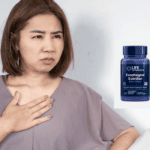
- Alternative and safer therapies using alginates from brands like Reflux Gourmet can be effective in reducing nighttime reflux symptoms.
- A healthcare professional should be consulted in case of persistent or severe symptoms of nighttime regurgitation.
- This guide will provide you with practical, evidence-based, non-systemic treatment and lifestyle options.
What is Nighttime Regurgitation?
Nighttime regurgitation or reflux is a condition in which acid from your stomach flows backward into the esophagus (your food pipe). Sometimes, it can even go into your throat or lungs.
Common symptoms of both day and nighttime regurgitation are heartburn, regurgitation (food coming back up), and chest pain (not related to the heart). However, if you have nighttime reflux, you experience more regurgitation symptoms like a sour/acidic taste, coughing, and choking at night.
Since acid reflux occurs while you sleep, the acid stays in contact with your esophagus for a longer time, causing more irritation and damage. Can nighttime regurgitation cause other serious complications? Yes, longer exposure to acid can cause esophagitis and breathing problems, such as chronic cough, wheezing, or worsening asthma.
Wondering who gets nighttime reflux? Keep reading further to know more.
Why Does Nighttime Regurgitation Occur?
Quick Recap: Regurgitation occurs when your stomach acid flows back into your esophagus.
In our body, there is a circular muscle called the lower esophageal sphincter (LES), which ensures that stomach contents go down the right path. Imagine having a gate that opens and shuts when needed to control the flow of your stomach contents. What happens when the LES weakens or opens too often? Regurgitation or reflux occurs.
If you’re wondering who can get nighttime regurgitation, here’s your quick guide:
- Your LES can weaken if you’re having a hiatal hernia as your stomach pushes up into the chest.
- Your pregnancy can relax the LES due to increased hormones and abdominal pressure.
- Your belly pressure can increase if you’re obese, resulting in a weakened LES.
- Your smoking can impair your LES, increasing stomach acid flow to the esophagus.
- You can also have birth defects that affect the esophagus.
- You suffer from scleroderma, a connective tissue disease.
- You have undergone chest or abdominal surgery in the past.
- You’re on medications such as sedatives, blood pressure drugs, antidepressants, NSAIDs, asthma medicine, and hormone therapy.
In short, anything that increases stomach pressure or weakens the LES can trigger nighttime regurgitation and contribute to GERD.
Expert Insight: Observe your symptoms to differentiate between regurgitation, GERD, and LPR (laryngopharyngeal reflux) to help manage them effectively. GERD mainly causes chronic chest and esophagus symptoms, LPR targets the throat and voice, and regurgitation (day or night) is occasional and mild.
Best Ways to Stop Nighttime Regurgitation

1. Adjust Your Eating Habits
Eat at least 2-3 hours before sleeping, control your dinner portion size, and avoid late-night snacks. This way, your food can digest properly, and will not sit in your stomach for a long time and come up to the esophagus when you lie down at night.
2. Identify Your Trigger Foods and Choose Food That Helps
Avoid common triggers such as fatty foods, chocolate, spicy foods, acidic foods (citrus and tomatoes), caffeine, and alcohol.
3. Choose the Right Foods
Include high-fiber foods (oatmeal, carrots, and green veggies) to keep you full and avoid overeating. Eat alkaline foods (bananas, cauliflower, and nuts) to neutralize your stomach acids. Have lots of watery foods like cauliflower, celery, and watermelon to dilute your stomach acids.
4. Maintain a Healthy Weight
If you have excess weight or belly fat, it can increase your abdominal pressure and worsen your reflux. Losing weight can ease some of the symptoms, such as acid reflux and heartburn.
5. Adjust Head and Sleeping Position
Raise the head of your bed, stay upright after meals, and sleep on your left side. Doing these steps will use gravity to keep the stomach acids from flowing back and decrease heartburn.
6. Wear Loose Clothes at Night
Do not wear clothes that are tight around your waist at night to remove unnecessary pressure on your abdomen.
8. Over-the-Counter and Prescription Drugs
Antacids: Common medications for occasional acid reflux. They neutralize stomach acids, making them less corrosive to the esophagus. Available over the counter.
Alginates (like Reflux Gourmet): Considered to be more effective than antacids and suitable for nighttime regurgitation. They block the stomach acids by creating a barrier between the acid and your esophagus. Available over the counter.
Proton Pump Inhibitors (PPIs): Provide relief for chronic acid reflux (including nighttime regurgitation) and stomach ulcers. They turn off your stomach’s acid-producing pumps. Even though they stay in your body for only 1–2 hours, they provide long-lasting acid control. Available both over the counter and with a prescription.
H2-Receptor Antagonists (H2RAs): Suitable for occasional or rare acid reflux and nighttime reflux (along with PPIs). They block the production of stomach acids through a receptor called histamine. They show a quicker effect compared to PPIs, but they are not effective long-term. Available both over the counter and by prescription.
Potassium-Competitive Acid Blockers (P-CABs): A newer and more effective option when PPIs fail, and can be taken irrespective of mealtime. They prevent the potassium from attaching to the acid-producing pumps and block them, reducing acid production. Available only with a prescription.
Baclofen: Not a direct aid for acid reflux, but usually included as part of the treatment plan. Baclofen relieves the muscle spasms, reducing LES relaxation. Available only on prescription.
Why Look for Safer Alternatives?
If you are having occasional episodes of acid reflux, then you can pop antacids for quick relief. Unfortunately, they can make you feel sick, nauseous, and constipated if you use them for chronic and frequent episodes.
H2RAs are considered more effective than antacids. But if you use them for a long time, they’re not effective. Your body is smart and adapts to them quickly, reducing their efficacy.
Your doctor will most likely recommend you PPIs for chronic nighttime regurgitation. They’re the most effective treatment option, but there’s a problem. You get side effects if you use PPIs for a long time. You can get intestinal infections, vitamin and mineral deficiencies, and gastric cancer and bone fractures in rare cases.
Expert Insight: If you don’t have the usual symptoms and there is no damage to your esophagus, then chances are that PPIs won’t work for you.
So, do we have an alternative option that’s still effective yet safer? That’s where Alginate Therapy comes in.
Alginate therapy has been used for ages for treating refluxes. It uses a sugar derived from seaweed called alginate. This sugar forms a gel-like structure in the presence of stomach acids, forming a raft. This raft acts like a barrier, stops the stomach acids from reaching your esophagus, and prevents your reflux symptoms.
Reflux Gourmet’s alginate therapy offers you a natural, chemical-free solution to your nighttime regurgitation problems. We all hate the nauseous feeling we get after taking antacids before our meals. You can take Reflux Gourmet with or after meals, so no more stomach discomfort before eating your food.
It is even effective for weight loss and appetite control, which can be crucial in managing reflux symptoms.
And guess what? Recent research claims that alginates are more effective than antacids and can be taken several times a day without any side effects.
What’s best is that alginate therapy can work for children, lactating mothers, and even pregnant women. This means you can take alginates without any extra stress or worry.
When to Visit Your Doctor?

It’s okay to go to your pharmacist and try over-the-counter drugs to get relief. But, you have to understand that nighttime regurgitation is a serious form of GERD. Be mindful of your symptoms and seek help when:
- You have symptoms despite trying all the lifestyle changes and over-the-counter drugs.
- You have acid reflux and heartburn most nights.
- Your acid reflux symptoms are severe.
- Your food is getting stuck in your throat.
- You are mostly feeling sick and even losing weight.
- You have breathing difficulties or chest, jaw, or arm pain (could be signs of a heart attack).
Expert Insight: You might have to get an endoscopy done for nighttime regurgitation, which is not common for the usual reflux problems. Your doctor might even perform 24-hour pH monitoring to check how well you’re responding to the treatment. You will be prescribed aggressive medications to help you with your nighttime reflux and symptoms in these cases.
Summing Up
Nighttime regurgitation can be physically and mentally challenging. You can improve your symptoms by implementing some lifestyle changes or taking medication in some cases. Medications available offer temporary relief, but can cause additional damage to your body.
If you prefer safer and non-toxic options that target the cause rather than the symptoms, then alginate therapy from Reflex Gourmet might be something for you. Many choose Reflex Gourmet because it’s natural and free from glycerin, potassium, and paraben. Still, that doesn’t necessarily mean it’s best for you, but it’s still worth looking into. Alginates might make you constipated or bloated, or if you have kidney disease, you can’t take them.
Assess your symptoms, and together with your healthcare provider, decide what works for you.
Related Posts:





Neha Rai is a PhD-trained scientist with extensive experience in both academic and industrial research, as well as science education. As a medical writer, she creates SEO-friendly, clear, and evidence-based content. She is passionate about making complex health information accessible and promoting health equity.